Quick Easy Japanese Shrimp Curry | 25 Minute Dinner
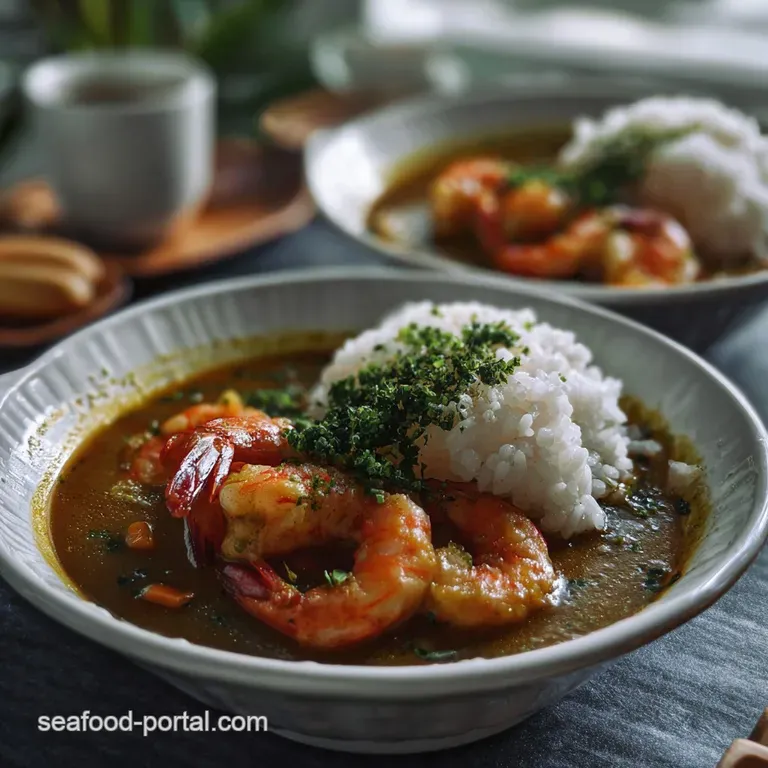
- Effort/Time: Low effort, 25 minutes total.
- Flavor Hook: Deeply savory umami balanced by the crisp acidity of grated Fuji apple.
- Perfect for: High-speed weeknight dinners and meal-prep enthusiasts seeking Quick Easy Japanese Shrimp Curry.
- Mastering Fluid Dynamics: Why This Quick Easy Japanese Shrimp Curry Triumphs
- The Chemistry of Umami: Analyzing Your Primary Elements
- Strategic Component Selection for Maximum Flavor Density
- Thermal Precision Tools for Optimal Seafood Texture
- The 25 Minute Assembly Protocol for Silky Curry Perfection
- Troubleshooting Viscosity and Avoiding Rubbery Protein Failures
- Flavor Architecture: Creative Modifications for Diverse Palates
- ⚗️ The Scaling Lab: The Physics of Quantity
- Common Myths Debunked
- Preserving Structural Integrity: Storage and Reheating Guidelines
- The Art of Presentation and Complementary Flavor Pairings
- Recipe FAQs
- 📝 Recipe Card
There is nothing more frustrating than investing $20 into high-quality seafood only to pull a pan off the stove and find the protein has the texture of a rubber eraser. We have all been there, watching a promising sauce turn into a gritty, broken mess because the heat was too high or the timing was off.
The financial sting of a ruined dinner is only eclipsed by the emotional drain of a failed meal after a long workday, especially when aiming for something as rewarding as a proper Quick Easy Japanese Shrimp Curry.
I once destroyed a massive batch of Japanese curry by tossing the seafood in at the same time as the root vegetables, assuming the liquid would protect the delicate fibers. By the time the potatoes were edible, the shrimp had shrunken into tough, flavorless knots that were essentially indigestible.
It was a humbling lesson in thermal mass and the varying denaturation points of different proteins that forced me to rethink my entire assembly protocol for making this dish.
The secret to this Quick Easy Japanese Shrimp Curry isn't found in a secret spice blend; it lies in the physics of carryover cooking and the enzymatic reaction of fresh fruit.
By utilizing the 3.5 oz Japanese curry roux blocks as a stabilized emulsion and introducing the 1 lb large shrimp only during the final 120 seconds of residual heat, we achieve a shattering, snappy texture.
This method allows the starch gelatinization to occur fully while keeping the seafood at its peak succulence, a key element of this particular Quick Easy Japanese Shrimp Curry.
Mastering Fluid Dynamics: Why This Quick Easy Japanese Shrimp Curry Triumphs
- Starch Gelatinization Control: The pre-cooked roux blocks contain flour particles encapsulated in fat, which prevents clumping and ensures a silky, glossy mouthfeel when whisked into the 3 cups dashi.
- Enzymatic Tenderization: Grating 1/2 Fuji apple into the simmer introduces malic acid and natural sugars, which breaks down harsh aromatic notes while providing a bright, acidic counterpoint to the heavy fats.
- Thermal Sequencing: Cooking the carrot coins and 1/2 inch Yukon Gold potato cubes first ensures they reach the "fork tender" stage without over extracting moisture from the seafood.
- Umami Synergy: Combining 3 cups dashi with 1 tbsp soy sauce creates a "glutamate bomb," amplifying the natural sweetness of the 1 lb large shrimp through chemical synergy.
The Chemistry of Umami: Analyzing Your Primary Elements
| Ingredient | Chemical/Physical Role (Science) | The Pro Secret (Why This Matters) |
|---|---|---|
| 1 lb large shrimp | High speed protein denaturation | Add last to prevent the collagen from tightening into a rubbery texture. |
| 3.5 oz Curry Roux | Fat-flour emulsion suspension | Stabilizes the sauce; prevents the fat from separating during the simmer. |
| 1/2 Fuji apple | Pectin and malic acid integration | Adds body via pectin and balances pH for a "rounder" flavor profile. |
| 3 cups dashi | Glutamate and inosinate synergy | Provides a complex savory base that water or plain stock cannot replicate. |
Strategic Component Selection for Maximum Flavor Density
- 1 lb large shrimp, peeled and deveined: Use 16/20 count for the best ratio of surface area to volume. Why this? Larger shrimp retain internal moisture better during the over high heat finishing stage.
- 3.5 oz S&B Golden Curry Roux blocks: This specific weight provides the exact starch-to-liquid ratio for a medium thick napé consistency. Why this? Commercial roux is precision engineered for stable viscosity at 180°F.
- 3 cups low-sodium dashi or chicken stock: Dashi provides a smoky, oceanic depth that aligns with the seafood protein.
- 1 medium carrot, peeled and cut into small coins: Slice to 1/8 inch thickness to ensure even heat penetration within the 15 minute cook time.
- 1 small Yukon Gold potato, peeled and cut into 1/2 inch cubes: These waxy potatoes hold their hexagonal shape better than starchy Russets. Why this? Lower starch content prevents the curry from becoming unpleasantly "gummy."
- 1 large yellow onion, finely minced: Mincing increases surface area for rapid Maillard browning.
- 1 tbsp Kikkoman soy sauce: Adds fermented depth and necessary sodium to sharpen the curry's aromatic profile.
- 1 tsp fresh ginger, grated: Provides gingerol, which adds a heat that lingers on the back of the palate.
- 1/2 Fuji apple, grated: The high sugar content in Fuji apples caramelizes quickly, adding a honey like note.
- 2 cloves garlic, minced: Essential for the base aromatic layer; contains allicin for pungent depth.
Thermal Precision Tools for Optimal Seafood Texture
To execute this Quick Easy Japanese Shrimp Curry with professional accuracy, your equipment must manage heat distribution effectively. I recommend using a Lodge 6 quart Enameled Cast Iron Dutch Oven.
The heavy walls provide the thermal mass necessary to maintain a steady simmer even after adding the cold vegetables.
For the prep work, a Microplane Classic Zester is the specific technical tool needed for the ginger and apple. A standard grater often produces chunks that are too large, which won't dissolve into the sauce.
For the shrimp, a Wüsthof 8 inch Chef's Knife allows for the precision required to devein and peel without damaging the delicate flesh. Finally, use a Staub Silicone Multi Spoon for whisking the roux; its heat resistance ensures you can scrape the bottom of the pot to prevent the starch from scorching.
The 25 Minute Assembly Protocol for Silky Curry Perfection
1. Sauté the Aromatics
Heat 1 tbsp neutral oil in your Dutch oven over medium heat. Add the finely minced yellow onion and sauté for 5 minutes until the edges turn translucent and the sharp sulfurous smell shifts to a mellow sweetness.
2. Infuse the Base
Add the 2 minced garlic cloves and 1 tsp grated ginger. Stir constantly for 60 seconds until the fragrance becomes pungent and the garlic bits show the faintest hint of pale gold.
3. Par-Cook the Root Vegetables
Toss in the carrot coins and Yukon Gold potato cubes. Sauté for 3 minutes until the potato edges look slightly softened and shiny from the oil coating.
4. Initiate the Simmer
Pour in the 3 cups dashi or chicken stock. Bring the mixture to a boil, then immediately drop to a low simmer for 10 minutes until the potatoes are fork tender and the liquid has reduced by roughly 10%.
5. Integrate the Sweetness and Salt
Stir in the grated 1/2 Fuji apple and 1 tbsp soy sauce. This timing ensures the apple’s pectin integrates into the broth before the thickening agent is added.
6. Emulsify the Roux
Turn off the heat. Break the 3.5 oz Japanese curry roux blocks into small pieces and drop them into the pot. Whisk gently for 2 minutes until the blocks have completely dissolved and the liquid transforms into a thick, mahogany colored glaze.
7. Prepare the Seafood
While the sauce thickens off-heat, season your 1 lb large shrimp with 1/2 tsp salt and 1/4 tsp black pepper.
8. Flash Cook the Shrimp
Return the pot to low heat. Add the shrimp and fold them gently into the sauce for 3 minutes until the shrimp curl into a "C" shape and the color shifts from translucent gray to an opaque, vibrant pink.
9. Final Resting Period
Remove from heat and let the curry sit for 2 minutes. This allows the residual heat to finish the centers of the shrimp until they are firm to the touch but still have a snappy, juicy interior.
10. Adjust and Serve
Taste the sauce. If it is too thick, add a tablespoon of dashi until the consistency coats the back of a spoon without dripping off immediately. Serve over steamed rice.
Troubleshooting Viscosity and Avoiding Rubbery Protein Failures
Why Your Shrimp Is Tough
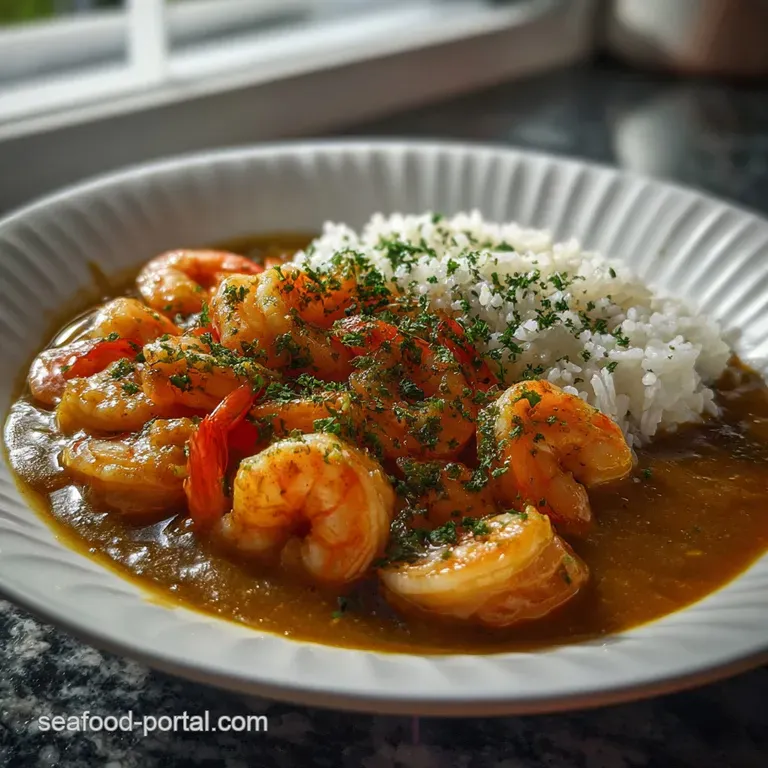
The most common failure in any Authentic Japanese Shrimp recipe is over exposure to high temperatures. When shrimp are boiled for more than 4 minutes, the muscle fibers undergo extreme protein denaturation, squeezing out all internal moisture. This results in a texture that is dry and "squeaky" against the teeth.
| Problem | Root Cause | The Fix | Pro Protocol |
|---|---|---|---|
| Rubbery Shrimp | Overcooking past 140°F | Pull the pot off heat earlier | Use residual heat only for the last 10% of cooking. |
| Lumpy Sauce | Roux added to boiling water | Add roux to hot (not boiling) liquid | Whisk in small chunks off-heat for a smooth emulsion. |
| Thin Curry | Inadequate reduction | Simmer vegetables longer before roux | Let liquid reduce by 1/4 if you want a heavy, paste like sauce. |
Why Your Curry Sauce Breaks
If you see oil separating from the sauce, the emulsion has broken. This usually happens if the curry is brought to a violent boil after the roux has been added. The high heat destabilizes the starch fat bond, causing the fat to pool on top.
To fix this, whisk in a splash of cold dashi or water to rapidly drop the temperature and re-bind the molecules. A broken sauce ruins the smooth finish expected from a high-quality Quick Easy Japanese Shrimp Curry.
Flavor Architecture: Creative Modifications for Diverse Palates
This Quick Easy Japanese Shrimp Curry is a masterclass in balance, but you can pivot the profile depending on your ingredients. If you want more heat, increasing the ginger or adding a dash of togarashi will work. For those looking for a different protein experience, you might consider how the aromatics in this dish would complement a Poached Cod with recipe style finish.
| Original Ingredient | Substitute | Why It Works |
|---|---|---|
| 3 cups dashi | Vegetable stock | Provides a neutral base; lacks the smoky "fish" finish of dashi. |
| Yukon Gold Potato | Sweet Potato | Adds a creamy texture and higher sugar content. Note: Cooks 20% faster. |
| 1/2 Fuji apple | 1 tbsp Honey | Provides the necessary sweetness but lacks the pectin body of fruit. |
| Neutral Oil | Unsalted Butter | Adds a nutty, French style richness to the initial sauté. |
⚗️ The Scaling Lab: The Physics of Quantity
When you decide to double this Quick Easy Japanese Shrimp Curry for a dinner party, the thermodynamics of your kitchen equipment change significantly. You cannot simply double every metric and expect the same results.
- The Evaporation Paradox: If you double the 3 cups dashi to 6 cups in the same pot, the surface area remains identical. This means your reduction time will effectively double, or your sauce will end up 15% more watery. The Fix: Use only 5.25 cups of liquid or use a wider pot to increase the evaporation rate.
- Pan Crowding (Maillard Killer): Adding 2 lbs of cold shrimp to the pot simultaneously will drop the temperature of the sauce below 140°F. Instead of searing or flash cooking, the shrimp will "stew" in their own juices, leading to a gray, unappealing appearance. The Fix: Cook the shrimp in two separate batches or ensure the sauce is at a vigorous simmer before adding the protein.
- Flavor Saturation: Spices and salt do not scale linearly. Doubling the pepper may make the dish overwhelmingly spicy. The Fix: Scale salt and pepper to 1.5x initially, then taste and adjust at the 20 minute mark.
- Thermal Mass: A larger volume of curry retains heat much longer. If you leave a double batch on the stove, the shrimp in the center will continue to cook for up to 5 minutes after you turn off the burner. The Fix: Pull the shrimp out when they are 90% done; the massive heat reservoir will finish the job during plating.
Common Myths Debunked
- Myth: You must marinate the shrimp for hours to get flavor.
Truth: Shrimp are highly porous. Because this curry sauce is a thick emulsion, the flavor coats the exterior immediately. A 2 minute toss at the end is all that is required for a flavorful bite in your final dish.
Myth: "Golden Curry" blocks are just bouillon cubes.
- Truth: Unlike bouillon, which is primarily salt and MSG, these blocks are a cooked roux (fat and flour) infused with a complex spice blend. They are a structural ingredient, not just a seasoning, vital for making this Quick Easy Japanese Shrimp Curry successfully.
Preserving Structural Integrity: Storage and Reheating Guidelines
Japanese curry is famous for being "better the next day" because the flavors have time to undergo molecular fusion. However, seafood is the exception to this rule.
- Fridge: Store in an airtight glass container for up to 2 days. The potatoes will continue to absorb the sauce, so it may thicken significantly.
- Freezing: Not recommended. The 1 lb large shrimp will become spongy upon thawing, and the potatoes will lose their structural integrity due to cell wall rupture from ice crystals.
- Reheating: Use a small saucepan over low heat. Add 1 2 tbsp of water to loosen the starch. Do not microwave on high power; the localized heat will turn the shrimp into rubber pellets. Heat until the sauce just begins to bubble at the edges.
💡 ZERO WASTE PHILOSOPHY Don't discard the shrimp shells! Transform: Simmer the shells in the 3 cups dashi for 15 minutes before starting the recipe.
Science: This extracts astaxanthin and extra glutamate, intensifying the "seafood" profile of your base liquid for an even richer base for your Quick Easy Japanese Shrimp Curry.
The Art of Presentation and Complementary Flavor Pairings
To serve this Quick Easy Japanese Shrimp Curry properly, you need a high contrast base. Short grain Japanese rice (Koshihikari) is the standard, as its sticky texture holds the heavy sauce. For a brighter finish, consider serving a side of pickled ginger (beni shoga) or Fukujinzuke (pickled vegetables).
If you find the curry too rich, you can balance the meal by starting with a light appetizer. I often serve this alongside my Fresh Ginger Sauce recipe drizzled over a simple cabbage slaw. The acidity of the ginger sauce cuts through the fatty roux, cleansing the palate between bites.
For a final touch, sprinkle a few toasted black sesame seeds over the top. The "shatter" of the seeds provides a textural contrast to the velvety sauce and the snap of the shrimp, engaging all your senses in a single forkful.
Trust me, once you master the timing of the seafood, you will never go back to the long simmered, overcooked versions again. Let's get cooking!

Recipe FAQs
How long should the shrimp cook in the curry sauce?
Only 2 3 minutes off the heat or on very low heat. Shrimp muscle fibers seize rapidly above 140°F, causing moisture loss. Add them only when the residual heat is sufficient to reach a safe internal temperature.
Can I use frozen shrimp instead of fresh?
Yes, but thaw completely first. Frozen shrimp retain moisture well, but adding ice crystals drops the sauce temperature too fast. This inhibits proper starch gelatinization required for a smooth sauce.
Why is my curry sauce grainy and separated?
The roux emulsion broke due to high thermal energy. Vigorous boiling after adding the roux destabilizes the fat-starch bond, causing the fat component to separate from the liquid.
- Ensure heat is low before whisking roux in
- Add roux in small, broken pieces
- Whisk constantly until fully dissolved (2 minutes)
Is it necessary to add fruit (apple) to the roux base?
No, but it balances the richness significantly. The malic acid in the apple counters the heavy fats from the roux blocks, preventing the overall flavor from tasting too monolithic. If you prefer deeper complexity, review the flavor synergy achieved when searing aromatics for Rich, Smoky Southern Stew with Traditional Dark Roux.
What is the best liquid substitute for dashi stock?
Low-sodium chicken stock works adequately. Dashi provides inherent umami from bonito flakes, which chicken stock lacks in the marine category. Use chicken stock if seafood flavor is not desired, similar to the neutral base you would use when making Quick Homemade Ramen: 20-Minute Miso Ginger Broth.
Myth Buster: Does this curry freeze well for later meals?
Myth: Japanese curry freezes perfectly, even with seafood. Reality: The structure of the shrimp and potato cells is damaged by freezing and thawing. The texture becomes spongy and mushy when reheated.
What vegetable should I add first for even cooking?
Potatoes must enter the pot before carrots or onions. Denser root vegetables require longer thermal exposure than aromatics to reach the required fork tender stage. This controlled heating sequence is crucial for achieving proper texture consistency across all solids.
Quick Japanese Shrimp Curry
Ingredients:
Instructions:
Nutrition Facts:
| Calories | 341 kcal |
|---|---|
| Protein | 25.8 g |
| Fat | 13.3 g |
| Carbs | 24.5 g |
| Fiber | 2.8 g |
| Sugar | 8.4 g |
| Sodium | 1240 mg |
