Quick and Healthy Fish Stir Fry with Mixed Vegetables
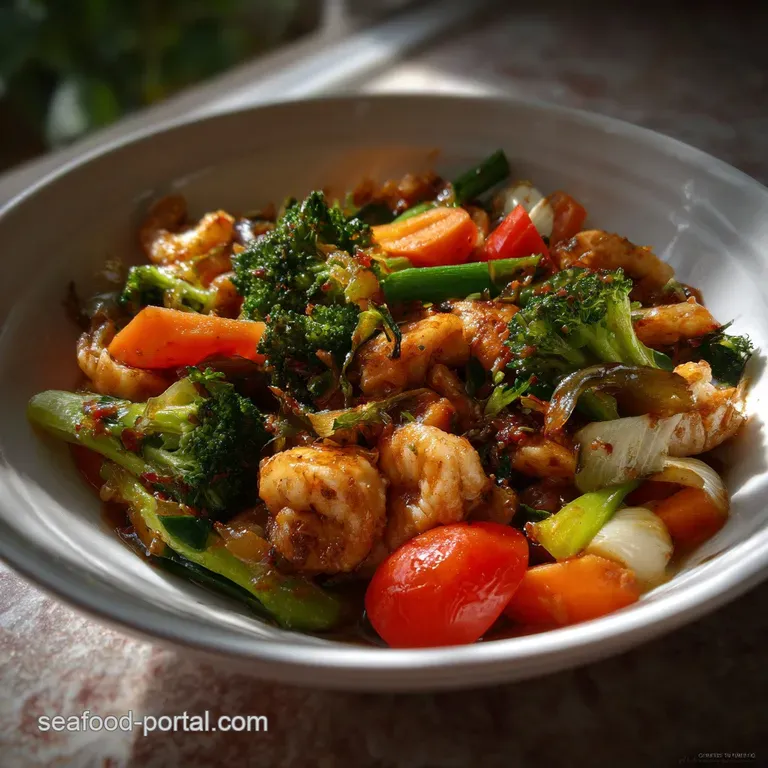
- Effort/Time: Low-effort / 25 minutes total
- Flavor Hook: Umami-rich ginger-honey glaze with a sharp rice vinegar finish
- Perfect for: High-protein weeknight recovery meals or budget-smart meal prepping
The Science of over High heat Searing and Texture Balance
There is nothing worse than investing in fresh seafood only to have it dissolve into a gray, watery slurry the second it hits the pan. I’ve lived through the heartbreak of watching $20 worth of Halibut turn into rubbery nuggets because I didn't understand the physics of pan crowding.
Here's a delicious and simple Quick and Healthy Fish Stir Fry Recipe with Mixed Vegetables. Early in my cooking journey, I once tried to cook the fish and veggies at the same time, resulting in a soggy mess that cost me both my dinner and my pride.
The secret to this Healthy Fish Stir Fry Recipe with Mixed Vegetables isn't a fancy sauce; it's managing the moisture release cycle to ensure the fish undergoes the Maillard reaction before the vegetables can steam it.
We rely on protein denaturation the process where heat unfolds the fish’s tightly coiled amino acids to create a firm, velvety texture. Because fish has less connective tissue than beef, this happens rapidly, meaning the window between "translucent" and "shattering" is small.
By using a high smoke-point neutral oil like Chosen Foods Avocado Oil, we can hit the 375°F (190°C) threshold necessary for that mahogany crust.
This Fry Recipe with Mixed Vegetables succeeds because we respect the different thermal needs of the ingredients, ensuring the snap peas stay vibrant and the fish remains succulent.
The "Quick and Healthy Fish Stir Fry Recipe with Mixed Vegetables" works because of these specific scientific principles:
- Maillard Reaction: High heat transforms amino acids and sugars into complex flavor molecules, creating the savory brown crust on the fish.
- Amylopectin Gelatinization: The cornstarch in the sauce absorbs water and swells upon heating, creating a glossy, emulsified glaze that clings to the food.
- Chlorophyll Preservation: Quick flash frying limits the exposure of vegetables to acid and heat, preventing the magnesium atom in chlorophyll from being replaced by hydrogen, which turns greens drab.
Precision Logistics for the Perfect 25 Minute Weeknight Meal
To execute this Healthy Fish Stir Fry Recipe with Mixed Vegetables with professional precision, you must respect the clock. In a over high heat environment, thirty seconds is the difference between a crisp carrot and a mushy one.
- Prep Time: 15 minutes (Includes "Mise en Place" everything must be cut before the stove is lit).
- Cook Time: 10 minutes (Divided into protein searing and vegetable softening).
- Total Time: 25 minutes.
- Yield: 4 servings.
| Feature | Fresh Fish Method | Frozen/Shortcut Method |
|---|---|---|
| Texture | Flaky and firm with a distinct "snap" | Softer, can become watery if not dried |
| Prep Requirement | Minimal (cutting into cubes) | Requires 12 hour thaw + heavy patting dry |
| Flavor Profile | Clean, oceanic, and sweet | Mildly muted; requires more ginger/garlic |
The Alchemy of Umami: Selecting Your Elements
Selecting the right protein for this Quick and Healthy Fish Stir Fry Recipe with Mixed Vegetables is the foundation of your success. If the fish is too oily, it won't sear; if it's too delicate, it will disintegrate.
We use firm white fish like Cod or Tilapia because their lean structure holds up to the mechanical stress of tossing in a Lodge Cast Iron Skillet.
Ingredient Chemistry Breakdown
| Ingredient | Chemical/Physical Role (Science) | The Pro Secret (Why This Matters) |
|---|---|---|
| Firm White Fish | Low-collagen protein denaturation | Searing happens fast; needs 1 inch cubes to avoid overcooking the center. |
| Low-Sodium Soy Sauce | Glutamate driven umami depth | Provides the savory backbone without overwhelming the fish's natural sweetness. |
| Cornstarch | Starch based thickening agent | Acts as a stabilizer to prevent the sauce from "breaking" or separating under heat. |
| Honey | Fructose based caramelization | Lowers the caramelization temperature, helping the glaze darken before the fish dries out. |
The Elements
- 1.5 lbs firm white fish (Cod, Halibut, or Tilapia): Cut into 1 inch cubes. Why this? Lean proteins with low-fat content sear better in over high heat stir frys.
- 1 tbsp neutral oil (Avocado or Grapeseed oil): Why this? High smoke point (520°F for Avocado) prevents acrid flavors during searing.
- 1/2 tsp Diamond Crystal Kosher Salt: For essential seasoning.
- 1/4 tsp white pepper: Provides a sharp, floral heat that doesn't "spot" the white fish visually.
- 3 tbsp Kikkoman Low-Sodium Soy Sauce: The primary liquid for the glaze.
- 1 tbsp Marukan Rice Vinegar: Why this? Acid cuts through the honey's sweetness and balances the fats.
- 1 tsp Kadoya Toasted Sesame Oil: Adds nutty aroma and complex lipids to the finish.
- 1 tbsp honey: For sweetness and glaze viscosity.
- 1 tbsp fresh ginger, grated: High in protease enzymes that help tenderize the fish surface.
- 2 cloves garlic, minced: Essential aromatic sulfur compounds.
- 1 tsp cornstarch: The thickening engine for the Fry Recipe with Mixed Vegetables sauce.
- 1 cup red bell pepper: Thinly sliced for rapid softening.
- 1 cup broccoli florets: Cut into bite sized pieces to ensure even cooking.
- 1 cup sugar snap peas: Trimmed for a shattering crunch.
- 1/2 cup carrots: Julienned for consistent texture.
- 2 scallions: Sliced (whites and greens separated).
Essential Gear for High Velocity Stir Frying
For this and Healthy Fish Stir Fry Recipe with Mixed Vegetables, the tool is as important as the technique. You need a vessel that can hold a high thermal mass so the temperature doesn't plummet when you add the cold vegetables.
- Lodge 12 inch Cast Iron Skillet or Carbon Steel Wok: These materials retain heat better than stainless steel, preventing the fish from "stewing" in its own juices.
- Microplane Grater: For the ginger and garlic. A fine paste distributes flavor more evenly than chunks.
- Flat Silicone Spatula: Necessary for flipping the fish gently without breaking the delicate flakes.
Mastering the Quick and Healthy Fish Stir Fry Sequence
Success in any Fry Recipe with Mixed Vegetables depends on the "Mise en Place" protocol. Once the heat is on, you cannot stop to chop a carrot.
- Dry the protein. Pat the 1.5 lbs of fish cubes with paper towels until bone dry. Note: Surface moisture causes steaming; dryness allows the Maillard reaction to occur.
- Whisk the emulsion. Combine soy sauce, rice vinegar, sesame oil, honey, ginger, garlic, and cornstarch in a small bowl. Note: This ensures the starch is fully hydrated before hitting the heat.
- Season the fish. Sprinkle with salt and white pepper immediately before cooking. Note: Salting too early draws out moisture through osmotic pressure.
- Heat the skillet. Add avocado oil to the pan and heat until a faint wisp of blue smoke appears.
- Sear the fish. Add fish cubes in a single layer and cook for 3 minutes until the bottom edges turn opaque and mahogany brown.
- Flip and finish. Gently turn the fish and cook for 1 minute until the center is just barely translucent.
- Rest the protein. Remove fish to a plate. Note: This prevents the fish from overcooking while the vegetables sauté.
- Flash fry the aromatics. Toss the scallion whites and carrots into the pan for 1 minute until the garlic fragrance becomes nutty and intense.
- Wilt the greens. Add broccoli, peppers, and snap peas, tossing for 3 minutes until the broccoli turns vibrant emerald and edges slightly char.
- Glaze and serve. Return fish to the pan, pour in the sauce, and toss for 45 seconds until the sauce bubbles and transforms into a glossy, thick glaze.
Chef's Tip: To ensure your broccoli is cooked through but still crunchy, add 1 tablespoon of water right after adding the broccoli and cover the pan for 30 seconds. This "steam fry" technique ensures the stems are tender while the heads remain firm.
Fixing Texture Failures and Flavor Imbalance
When making this Healthy Fish Stir Fry Recipe with Mixed Vegetables, most issues stem from temperature control. If you notice a pool of liquid in your pan, your heat is too low or your pan is overcrowded. Similar to the delicate balance found in a Poached Cod with recipe, fish requires a gentle touch even in a over high heat environment.
Why Your Fish Is Falling Apart
This is usually caused by excessive agitation. Fish proteins are fragile. If you stir it like a beef stir fry, it will shatter. Use a "flip and leave" method rather than constant stirring.
| Problem | Root Cause | The Fix | Pro Protocol |
|---|---|---|---|
| Soggy Fish | Surface moisture or low pan temp | Pat dry with paper towels; use a cast iron skillet. | Heat pan for 4 mins before adding oil. |
| Watery Sauce | Cornstarch didn't reach 175°F | Bring sauce to a full boil for 30 seconds. | Always whisk the slurry right before pouring. |
| Bitter Garlic | Burned aromatics | Add garlic after the harder vegetables or with the sauce. | Use a Microplane for a paste that melts into the sauce. |
Flavor Architecture: Creative Swaps and Budget Shifts
This Quick and Healthy Fish Stir Fry Recipe with Mixed Vegetables is highly adaptable. If Halibut is out of your price range, Tilapia offers a similar structural integrity at a fraction of the cost. If you're looking for a different texture profile, you might enjoy the techniques used in a Crunchy and Classic recipe.
Substitution Table
| Original Ingredient | Substitute | Why It Works |
|---|---|---|
| Cod/Halibut | Tilapia or Swai | Both are firm fleshed white fish that hold their shape. Note: Tilapia is milder and thinner. |
| Honey | Brown Sugar (1 tbsp) | Same sweetness level; adds a hint of molasses depth. |
| Rice Vinegar | Apple Cider Vinegar | Similar acidity (5 6%). Note: Adds a slightly fruitier note. |
| Snap Peas | Green Beans (trimmed) | Provides a similar crunch and sweetness. Note: Requires 2 mins extra cook time. |
⚗️ The Scaling Lab: The Physics of Quantity
When you decide to double this Quick and Healthy Fish Stir Fry Recipe with Mixed Vegetables for a crowd, you cannot simply double everything and proceed.
- Pan Crowding (The Maillard Killer): Doubling the 1.5 lbs of fish in one pan will drop the surface temperature below 300°F. The fish will steam in its own juices and turn gray. Mandatory instruction: Cook the fish in two separate batches, removing the first batch to a warm plate before starting the second.
- Flavor Saturation: Scale spices (salt, white pepper, ginger) to 1.5x (NOT 2x). Volatile aromatics concentrate differently in larger volumes. Taste and adjust at the end.
- The Evaporation Paradox: When doubling the sauce, do not double the water/vinegar exactly. Use 1.75x the liquid to prevent the sauce from becoming too thin, as the surface area-to-volume ratio changes in the pan.
- Thermal Mass: A double batch of cold vegetables will kill your pan's heat. Let your veggies sit at room temperature for 20 minutes before cooking to reduce the thermal shock to the skillet.
Common Myths Debunked
- Myth: "You must use a wok for a real stir fry." Truth: A heavy cast iron skillet actually has more thermal mass than a thin home wok, making it better for searing fish on a standard electric or gas range.
- Myth: "Frozen fish is lower quality for stir frys." Truth: Most fish is flash frozen at sea, preserving its cellular structure. As long as you thaw it completely and pat it extremely dry, it is often "fresher" than "fresh" fish that has sat in a display case for three days.
- Myth: "Healthy Fish Stir Fry Recipe with Mixed Vegetables needs a ton of oil." Truth: You only need 1 tbsp of high-quality oil if your pan is properly seasoned and heated. The steam from the vegetables does the rest of the work.
Preserving Freshness and Structural Integrity
Because this Fry Recipe with Mixed Vegetables relies on the contrast between flaky fish and crisp vegetables, storage requires care. If you're looking for a recipe that holds up even better to reheating, consider the method in this How to Grill recipe.
- Storage: Store in an airtight glass container for up to 2 days. The acid in the rice vinegar will continue to "cook" the fish slightly, making it firmer over time.
- Freezing: Not recommended. The cellular walls of the bell peppers and snap peas will collapse upon thawing, resulting in a mushy texture.
- Reheating: Avoid the microwave, which will turn the fish into rubber. Instead, reheat in a skillet over medium heat with 1 tablespoon of water. Cover for 2 minutes to let the steam gently revive the proteins.
💡 ZERO WASTE PHILOSOPHY Don't discard the broccoli stalks. Transform: Peel the woody outer layer, julienne the sweet core, and toss them in with the carrots.
Science: The stalks contain high levels of sulforaphane and provide a distinct "water chestnut" crunch that balances the softer florets.
Plating Strategies for Maximum Visual Impact
The "Quick and Healthy Fish Stir Fry Recipe with Mixed Vegetables" is a vibrant dish that deserves a clean presentation.
- The Base: Serve over a bed of fluffy jasmine rice or cauliflower rice to soak up the extra glaze.
- The Garnish: Use the reserved scallion greens (sliced on a sharp bias) for a pop of fresh, raw heat.
- The Finish: A light dusting of toasted sesame seeds adds a tactile "crunch" that signals the dish's flavor profile.
If you want a softer, more delicate texture, serve the stir fry immediately while the glaze is thin. If you want a heavier, restaurant style coating, let the dish sit for 60 seconds after turning off the heat; the residual thermal energy will continue to thicken the cornstarch network, creating a "velvety" finish.
This Healthy Fish Stir Fry Recipe with Mixed Vegetables proves that with a little understanding of thermodynamics and the right sequencing, a 25 minute meal can be the highlight of your week.
Recipe FAQs
What is the minimum internal temperature for the fish to be safe?
145°F (63°C). Heat denatures the protein structures, rendering pathogens inert upon reaching this temperature threshold. Always verify doneness with a thermometer for safety.
Can I use frozen fish directly from the freezer?
No. Fully thaw and pat dry first. Water content trapped inside frozen protein blocks the Maillard reaction, causing the fish to steam instead of sear.
- Ensure a 12-hour refrigerator thaw time
- Pat surfaces aggressively dry with paper towels
- Cube before placing on the hot pan
Is it better to use low-sodium soy sauce or regular soy sauce?
Low-sodium soy sauce for better salinity control. Regular soy sauce can introduce excessive sodium, overpowering the delicate flavor of the white fish. You control the final salt level via the initial seasoning step.
Why do my vegetables become soggy during the stir fry process?
Cold vegetables added to an overcrowded, low-temperature pan cause steaming. Introduce vegetables in sequence based on density and maintain aggressive, high heat to flash evaporate their moisture immediately.
- Add carrots first (densest ingredient)
- Ensure oil is shimmering before adding any vegetable
- Cook in batches if the pan volume exceeds 75% capacity
Can I substitute Cod with Tilapia?
Yes, Tilapia is an excellent budget substitute for Cod. Both are firm, lean white fish, but Tilapia has a milder flavor profile that benefits from the assertive ginger in the glaze. If you enjoyed mastering the high heat searing technique here, apply the same timing precision to our How to Grill Blue Fish Perfectly recipe.
Is sesame oil added at the start or end of cooking?
Sesame oil must be added near the end for aromatic preservation. Toasted sesame oil has a low smoke point, and heating it too long causes its volatile flavor compounds to degrade into bitter phenols. Adding it last preserves its rich, nutty flavor profile.
Myth: You need a traditional wok to achieve high heat cooking.
Myth: You need a traditional wok for a true stir fry. Reality: A heavy cast iron skillet retains superior thermal mass on home stovetops, preventing the temperature drop that causes ingredients to stew instead of sear properly.
Quick Healthy Fish Stir Fry
Ingredients:
Instructions:
Nutrition Facts:
| Calories | 237 kcal |
|---|---|
| Protein | 33 g |
| Fat | 6 g |
| Carbs | 11 g |
| Fiber | 3 g |
| Sugar | 6 g |
| Sodium | 685 mg |
