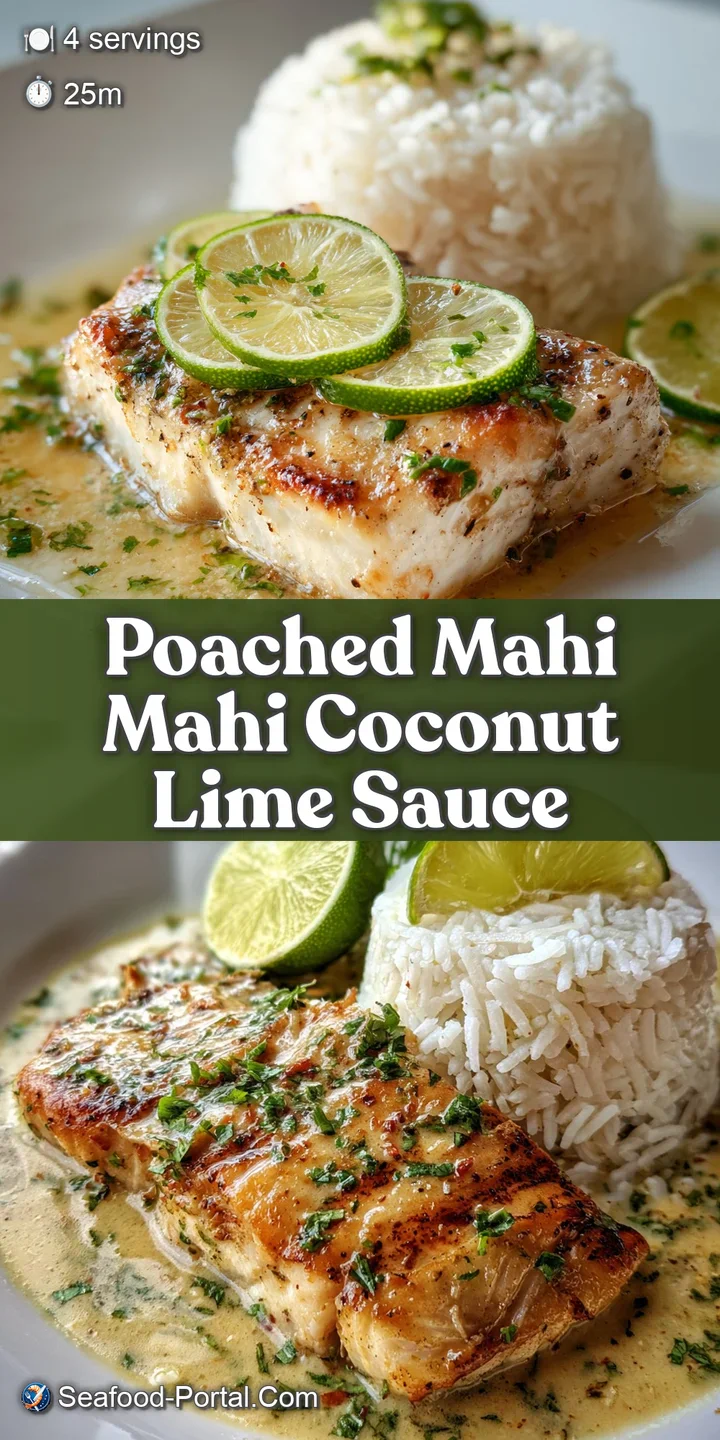
Poached Mahi Mahi Coconut Lime Sauce
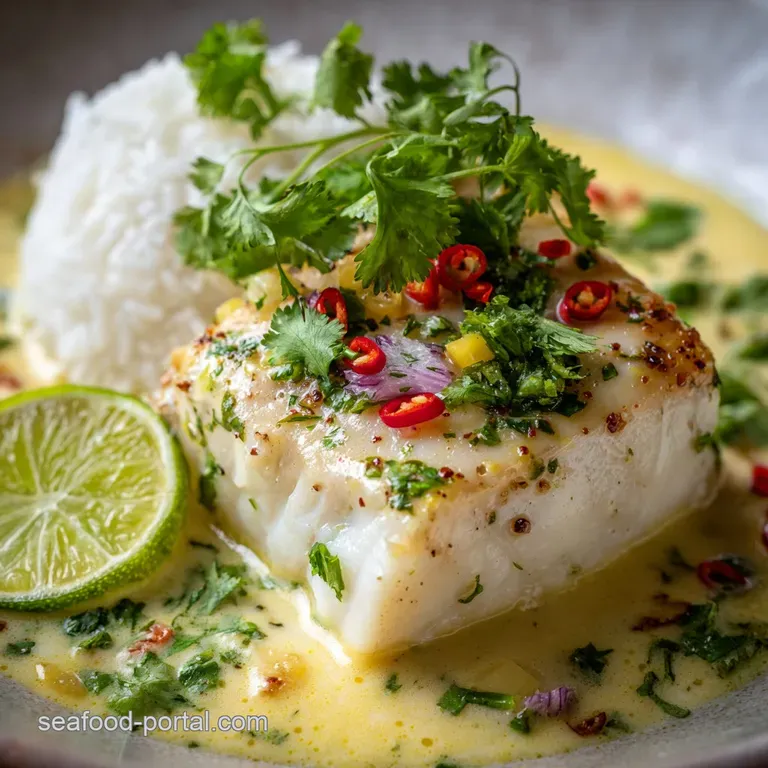
- Time: Active 10 mins, Passive 15 mins, Total 25 mins
- Flavor/Texture Hook: Velvety, citrus forward, and buttery
- Perfect for: Weeknight date nights or healthy meal prep
- Essential Numbers and Recipe Specifications to Know
- Essential Components for a Vibrant Creamy Seafood Base
- Kitchen Tools for a Seamless Poaching Experience
- Steps for Creating a Velvety Coconut Lime Fish Dinner
- Common Cooking Pitfalls and Practical Kitchen Solutions
- Creative Flavor Profiles and Alternative Ingredient Swaps
- Guidelines for Proper Storage and Minimizing Food Waste
- Side Dishes to Pair with This Tropical Main
- Recipe FAQs
- 📝 Recipe Card
Low Temperature Protein Management
Gentle Coagulation: Keeping the poaching liquid below a boil prevents the muscle fibers in the mahi mahi from tightening too quickly and squeezing out moisture. This ensures the texture remains flaky rather than rubbery.
Aromatic Lipid Infusion
Fat Soluble Flavor: Sautéing the ginger and lemongrass in coconut oil first releases their essential oils into the fat, which then carries those flavors throughout the entire coconut milk base.
| Method | Cook Time | Texture | Best For |
|---|---|---|---|
| Poaching | 8-10 mins | Silky, flaky, moist | Retaining delicate moisture |
| Pan Searing | 6-8 mins | Crispy, firm, charred | Building a crust |
| Baking | 12-15 mins | Consistent, tender | Hands off bulk cooking |
Deciding between methods usually comes down to whether you want a crunch or a melt in-your mouth feel. Poaching is the winner for this Mahi Mahi Recipe in Creamy Coconut Lime Sauce because it prevents the lean fish from drying out, which happens easily under high heat.
Essential Numbers and Recipe Specifications to Know
When we talk about poaching, precision is your best friend to avoid that dreaded "overcooked fish" smell. You want your liquid to be at a "lazy simmer" think small bubbles breaking the surface occasionally, not a rolling boil. If you see the liquid churning, turn the heat down immediately.
Controlled Protein Coagulation
The goal is to hit an internal temperature of 145°F, but I usually pull the fillets out at 140°F. The carryover heat while they rest on the plate for a minute will finish the job perfectly. This keeps the center translucent and the exterior tender.
Fat Soluble Flavor Infusion
Full fat coconut milk is non negotiable here. The medium chain triglycerides in the coconut milk act as a vehicle for the ginger and garlic. If you use "lite" coconut milk, the sauce will be watery and won't cling to the fish, leaving the dish feeling thin and uninspired.
Natural Emulsification
The lime juice is added at the very end to prevent the coconut milk from curdling. Acid can sometimes cause the proteins in the coconut milk to clump if boiled too long, so whisking it in just before serving keeps the sauce silky and vibrant.
| Component | Science Role | Pro Secret |
|---|---|---|
| Mahi Mahi | Lean protein base | Pat dry to ensure the salt sticks |
| Fish Sauce | Umami catalyst | Smells strong, but tastes like pure gold |
| Coconut Milk | Emulsion & fat | Use "full fat" for a thick glaze |
| Lemongrass | Aromatic top note | Whack it with a pan to release oils |
The chemistry here is all about balancing that rich coconut fat with sharp acidity. If you feel like the sauce is too heavy, a tiny splash more lime juice will cut right through it. It's similar to the flavor balancing I do in my Zesty Lemon Fish recipe when dealing with buttery bases.
Essential Components for a Vibrant Creamy Seafood Base
Shopping for this dish is straightforward, but the quality of the aromatics makes a massive difference. Look for ginger that is firm and smooth if it’s wrinkled, it’s old and woody. For the lemongrass, you only want the bottom few inches of the stalk where it’s pale and thick.
- 1 tbsp Virgin coconut oil: This doubles down on the coconut profile.
- 3 cloves Garlic: Thinly sliced so they melt into the sauce. Why this? Slicing provides a milder garlic flavor than mincing.
- 2 inch piece Fresh ginger: Peeled and julienned into matchsticks.
- 1 stalk Lemongrass: Bruised and cut into 3 inch segments.
- 1 small Shallot: Finely diced for subtle sweetness.
- 14 oz full fat coconut milk: Provides the velvety body.
- 0.5 cup low sodium seafood stock: Adds depth without over salting. Why this? Controls the final salt level perfectly.
- 1 tbsp Fish sauce: The secret to that savory Thai "umami" punch.
- 2 large Limes: You’ll need the zest and the juice for maximum brightness.
- 24 oz Mahi Mahi fillets: Cut into 4 even portions.
- 0.5 tsp Sea salt: To season the fish directly.
- 0.25 tsp White pepper: Provides heat without the black specks.
- 0.25 cup Fresh cilantro: Chopped for a fresh finish.
- 1 Red fresno chili: Thinly sliced for a manageable kick.
- 4 thin Lime wheels: For a professional looking garnish.
| Original Ingredient | Substitute | Why It Works |
|---|---|---|
| Mahi Mahi | Halibut or Cod | Both are firm white fish that hold up well |
| Fish Sauce | Soy Sauce | Provides salt and umami, though less "funky" |
| Coconut Oil | Avocado Oil | Neutral over high heat oil if you dislike coconut scent |
| Lemongrass | Lemon Zest | Mimics the citrus floral notes in a pinch |
Using fresh lime juice is a "must" here. The bottled stuff has a metallic aftertaste that will ruin the delicate flavor of the Poached Mahi Mahi Coconut Lime Sauce. If you can't find Fresno chilis, a pinch of red pepper flakes works, but you'll miss that fresh "pop" of color.
Kitchen Tools for a Seamless Poaching Experience
You don't need a professional kitchen, but a wide, shallow pan is essential. You want enough surface area so the four fillets can sit in a single layer without overlapping. If they’re crowded, they’ll steam unevenly and the middle ones will be raw while the edges are overdone.
A Wide Sauté Pan
A 12 inch stainless steel or cast iron sauté pan with high sides is the best choice. This allows the poaching liquid to submerge the fish halfway, which is the "sweet spot" for even cooking.
Precise Microplane
A microplane is vital for zesting the limes. You want just the green part, not the bitter white pith underneath. I also use it to grate the ginger if I’m in a rush and don't want to julienne it.
Chef's Tip: To get the most juice out of your limes, roll them firmly against the counter with your palm for 10 seconds before cutting. It breaks the internal membranes and doubles the yield.
Steps for Creating a Velvety Coconut Lime Fish Dinner
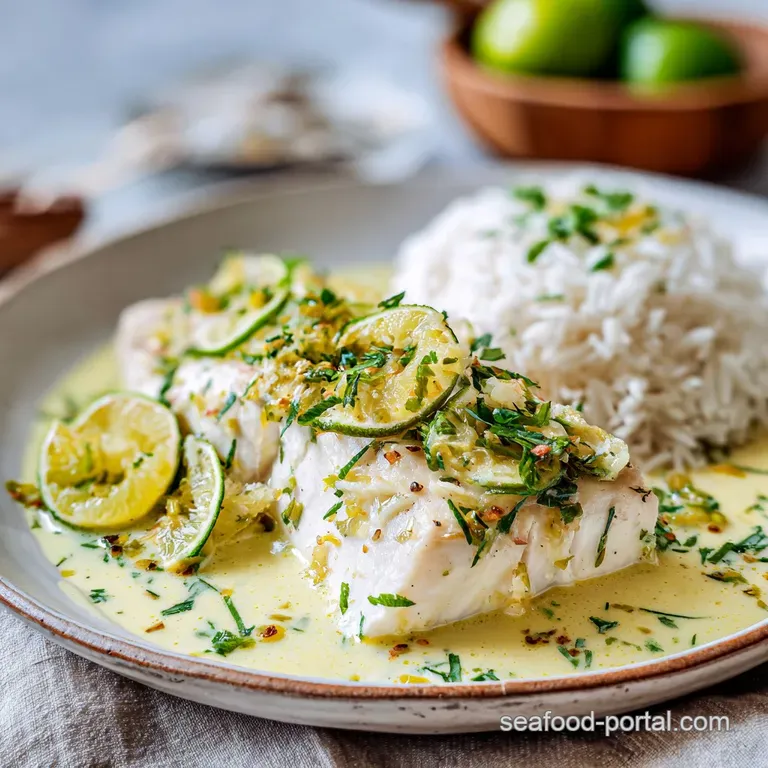
Phase 1: Sauté the Aromatics
Heat the 1 tbsp virgin coconut oil in your pan over medium heat. Add the 3 cloves of sliced garlic, 2 inch piece of julienned ginger, 1 small diced shallot, and the 1 stalk of bruised lemongrass.
Sauté for 2-3 minutes until the kitchen smells fragrant and the shallots are translucent. Don't let the garlic brown, or it will turn bitter.
Phase 2: Build the Poaching Broth
Pour in the 14 oz full fat coconut milk and 0.5 cup low sodium seafood stock. Stir in the 1 tbsp fish sauce and half of the lime zest. Bring the mixture to a very gentle simmer. Note: Using low sodium stock allows the fish sauce flavor to shine without making the dish a salt bomb.
Phase 3: The Gentle Poach
Season the 24 oz Mahi Mahi fillets with 0.5 tsp sea salt and 0.25 tsp white pepper. Carefully slide the fish into the simmering liquid. Cover the pan with a lid and cook for 8-10 minutes until the fish is opaque and flakes easily with a fork.
The liquid should barely bubble during this time.
Phase 4: The Finishing Glaze
Remove the lid and carefully transfer the fish to serving plates. Stir the juice of the 2 limes into the remaining sauce in the pan. Simmer for 2 minutes uncovered to slightly thicken. Turn off the heat and whisk in the 0.25 cup chopped cilantro and sliced red fresno chili.
Spoon the vibrant sauce over the fish and garnish with lime wheels.
| Fresh Ingredients | Shortcut Version | Flavor Impact |
|---|---|---|
| Fresh Lemongrass | Lemongrass Paste | Slightly more sweet/salty |
| Whole Ginger | Jarred Minced Ginger | Less "bite" and aromatic punch |
| Fresh Fresno Chili | Dried Chili Flakes | Adds heat but loses the fresh texture |
This Poached Mahi Mahi Coconut Lime Sauce thrives on the contrast between the tender fish and the punchy sauce. If you’re looking for a similar creamy savory vibe for a different protein, you might love the base of my Rich Buttery Seafood recipe.
Common Cooking Pitfalls and Practical Kitchen Solutions
The biggest mistake people make is boiling the fish. Boiling causes the protein to seize up, resulting in a rubbery texture that no amount of sauce can save. Keep that heat low! Another common issue is the sauce feeling "flat." This usually means it needs a touch more acid or salt.
Fixing Broken Sauce
Sometimes coconut milk can separate if it gets too hot or if the brand has fewer stabilizers. If you see oily beads on top, don't panic. Remove the fish and give the sauce a vigorous whisk. The fats will usually re emulsify into the liquid.
Solving Bland Fish
If the fish tastes unseasoned even with the sauce, it’s likely because it wasn't salted before poaching. Salt helps the proteins open up so they can actually absorb the flavors of the ginger and lemongrass.
| Problem | Root Cause | Solution |
|---|---|---|
| Fish is tough | Liquid was boiling too hard | Lower heat and check at 8 mins |
| Sauce is watery | Used "lite" coconut milk | Simmer longer to reduce or add a cornstarch slurry |
| Too salty | Too much fish sauce or stock | Add a teaspoon of honey or brown sugar to balance |
Common Mistakes Checklist
- ✓ Forgot to pat the fish dry (moisture on the surface dilutes the initial seasoning).
- ✓ Let the garlic burn during the sauté phase (creates a lingering bitter taste).
- ✓ Used a small pan (crowding leads to uneven cooking times).
- ✓ Added lime juice too early (the high heat can turn the citrus flavor dull).
- ✓ Skipped the lemongrass bruising (you won't get the flavor if the fibers aren't broken).
Creative Flavor Profiles and Alternative Ingredient Swaps
If you’re making this for a crowd and need to adjust, poaching is actually very forgiving. You can easily double the recipe as long as you have a large enough pan or work in batches.
Scaling the Recipe
- To Scale Down (2 Servings): Use a smaller pan and exactly half the ingredients. The cook time remains the same since the thickness of the fish doesn't change.
- To Scale Up (8 Servings): Use two separate pans. Don't try to cram 8 fillets into one pan. Keep the aromatics at 1.5x rather than doubling them to avoid overpowering the fish.
- Baking Adaptation: If you must bake it, place the fish and sauce in a 9x13 dish, cover tightly with foil, and bake at 375°F for 15-18 minutes.
Thai Red Curry Variation
Add 1 tablespoon of red curry paste to the coconut oil along with the aromatics. This transforms the Mahi Mahi Recipe in Creamy Coconut Lime Sauce into a spicy, vibrant red curry that pairs incredibly well with jasmine rice.
Low Carb Swaps
This recipe is naturally keto friendly! To keep the carbs even lower, serve the fish over steamed bok choy or zoodles instead of rice. The sauce is so rich that you won't even miss the grains.
Guidelines for Proper Storage and Minimizing Food Waste
Seafood is always best eaten fresh, but you can definitely make this work for lunch the next day. The flavors in the sauce actually deepen as they sit, though the lime might lose a bit of its "zing."
Storage and Reheating
Keep leftovers in an airtight container in the fridge for up to 2 days. To reheat, do NOT use the microwave it will turn the fish into rubber. Instead, place the fish and sauce in a small pan over low heat, add a splash of water or stock, and cover until just warmed through.
Zero Waste Tips
- Lemongrass Scraps: Don't throw away the green tops of the lemongrass. Toss them into a pot of boiling water for a refreshing ginger lemongrass tea.
- Leftover Sauce: If you have extra sauce but no fish, it makes an incredible base for a quick shrimp stir fry or can be drizzled over roasted cauliflower.
- Cilantro Stems: Finely chop the stems and sauté them with the shallots they have more flavor than the leaves!
Side Dishes to Pair with This Tropical Main
This dish is all about the sauce, so you need a side that can act as a sponge. A simple bowl of jasmine rice is the classic choice, but there are other fun ways to round out the meal.
Fluffy Jasmine Rice
Infuse your rice with a bit of coconut milk and a crushed cardamom pod for a floral aroma that mirrors the Poached Mahi Mahi Coconut Lime Sauce. It creates a cohesive flavor profile across the entire plate.
Garlicky Bok Choy
Quickly sautéing baby bok choy with a little sesame oil provides a nice "crunch" that contrasts with the silky texture of the poached fish. The bitterness of the greens helps cut through the richness of the coconut milk.
Flavor Map Comparison
- Richness: Full fat coconut milk and mahi mahi fats.
- Brightness: Fresh lime juice and zest.
- Aromatics: Ginger, lemongrass, and cilantro.
- Heat: Fresh Fresno chili.
Searing meat does not "seal in juices." This is a myth. Moisture loss happens regardless of the crust. In this recipe, we skip the sear entirely to avoid the risk of drying out the lean mahi mahi, relying on the poaching liquid to provide all the moisture and flavor.
Poaching is not just for "diet food." While it is healthy, using full fat coconut milk and aromatics makes this a decadent, high flavor experience that rivals any butter basted steak. Right then, let's get that pan heated up you're going to love how this turns out.
Recipe FAQs
What is the best way to cook mahi mahi for this recipe?
Poaching is ideal for this dish. The gentle heat keeps the lean fish incredibly moist and flaky, preventing the dry texture that can occur with higher heat methods like pan-searing or baking.
Can I use frozen mahi mahi instead of fresh?
Yes, but with a slight adjustment. Thaw frozen mahi mahi completely in the refrigerator and pat it very dry before poaching. While fresh is preferred for optimal texture, frozen can work if properly handled.
What can I substitute for full fat coconut milk?
Use a high-quality, unsweetened full fat coconut milk. While "lite" versions exist, they lack the necessary fat content for a rich, velvety sauce and can result in a watery consistency, much like a bland base would in a sauce like Dreamy Seafood Sauce: Your Versatile King of the Sea.
How do I prevent the coconut milk sauce from curdling?
Add the lime juice at the very end, off the heat. High heat can cause the proteins in coconut milk to clump. Whisking in the lime juice just before serving preserves its silky texture and brightness.
What is the internal temperature the mahi mahi should reach?
Aim for an internal temperature of 145°F (63°C). However, for perfectly tender, moist fish, remove it from the poaching liquid around 140°F (60°C) and let the residual heat finish the cooking process.
Can I make the sauce ahead of time?
Yes, the sauce can be made a few hours in advance. Gently reheat it over low heat, whisking occasionally. Add the lime juice and cilantro just before serving to maintain their fresh flavors, similar to how you'd finish a delicate sauce for salmon like in The Ultimate 5Minute Creamy Dill Sauce for Salmon Recipe.
What are common mistakes to avoid when making this dish?
Avoid boiling the fish or burning the garlic. Boiling will toughen the mahi mahi, and burnt garlic creates a bitter taste. Also, ensure you're using a wide pan so the fillets poach in a single layer for even cooking.
Poached Mahi Mahi Coconut Lime
Ingredients:
Instructions:
Nutrition Facts:
| Calories | 392 kcal |
|---|---|
| Protein | 33.8 g |
| Fat | 26.1 g |
| Carbs | 8.4 g |
| Fiber | 1.2 g |
| Sugar | 2.1 g |
| Sodium | 765 mg |
