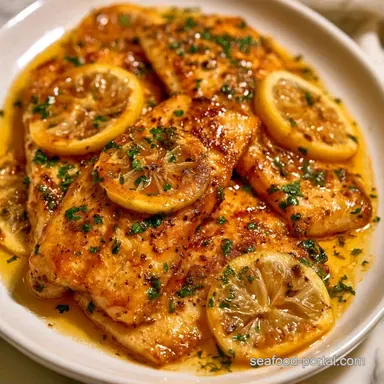
Pan Seared Basa with Lemon-Kissed Brown Butter

- Time: 10 min active + 10 min cooking + 15 min rest out of the refrigerator
- Flavor & Texture: Buttery and flaky
- Best for: Quick weeknight meals
Basa is a staple in Southeast Asian cuisine, particularly in Vietnam where it's harvested from the Mekong Delta. It is loved for its mild flavor and versatility, making it a blank canvas for bold sauces and high heat cooking.
This Pan Seared Basa is all about contrast. You get a deeply browned exterior that cracks slightly when you cut into it, while the inside stays tender and moist. It's a fast way to get a sophisticated result without spending hours in the kitchen.
Expect a process that moves quickly once the pan is hot. You'll smell the garlic and butter foaming in the skillet, which is the signal that the fish is almost ready.
What Makes the Texture Work
- Surface Dryness: Removing moisture means the fish fries instead of steaming, which is how you get that golden crust.
- Butter Basting: Spooning hot butter over the fillets finishes the cooking gently while adding a rich, nutty flavor.
- Heat Management: Starting with high heat for the sear and dropping to medium for the baste prevents the lean fish from drying out.
Recipe Specs
Since you're cooking a lean white fish, the window between "done" and "overdone" is small. I like to have everything measured and ready before the oil even hits the pan.
Ingredient Deep Dive
| Ingredient | Role | Substitute |
|---|---|---|
| Avocado Oil | Stable at high heat for the initial sear | Grapeseed oil |
| Unsalted Butter | Provides richness and for basting | Salted butter (use less salt elsewhere) |
| Lemon Juice | Balances the richness with acidity | White wine vinegar (approximately) |
Ingredients
- 2 (6 oz / 170 g) basa fillets
- 1/2 tsp (3 g) kosher salt
- 1/4 tsp (1 g) ground black pepper
- 1 tbsp (15 ml) avocado oil
- 3 tbsp (42 g) unsalted butter
- 2 cloves (6 g) garlic, smashed Why this? Imparts a subtle, aromatic depth to the butter
- 1 tbsp (15 ml) lemon juice, fresh
- 1 tsp (2 g) lemon zest
- 1 tbsp (4 g) fresh parsley, finely chopped
Equipment Needed
I prefer a 12-inch cast iron skillet because it maintains a steady temperature. A heavy-bottomed non-stick pan is an equally good alternative. Be sure to use a fish spatula, as its slim profile lets you lift the fillets without damaging them.
From Prep to Plate

Preparing the Fillets
Take the basa fillets out of the refrigerator 15 minutes before you begin cooking. Pat all sides of the fish dry with paper towels to remove excess moisture, then season both sides evenly with ground black pepper and kosher salt.
Achieving the Perfect Sear
Warm avocado oil in a 12-inch cast iron skillet or heavy-bottomed non-stick pan over medium-high heat. Once the oil is hot and just starting to smoke, add the fillets and sear them undisturbed for 3 to 4 minutes until a golden brown crust forms. Use a fish spatula to turn the fish over.
Mastering the Brown Butter Baste
Immediately drop the heat to medium and add the smashed garlic and unsalted butter to the pan. As the butter begins to foam and turn a toasted amber hue, stir in the fresh lemon juice.
Spoon the brown butter over the fillets continuously during the final 2 minutes of cooking until the fish is opaque and hits 145°F (63°C) internally.
Finishing the Dish
Pull the pan from the heat. Mix the lemon zest and finely chopped parsley into the remaining butter. Place the fillets on a plate and generously spoon the lemon butter sauce over the top to create a rich, velvety finish that ties the meal together.
When It Does Not Turn Out
If the fillet clings to the surface, stay patient and avoid prying it up. Once a proper crust has formed, the fish will detach on its own. Trying to flip it too early is the quickest way to tear the meat.
Achieving the best Pan Seared Basa depends largely on heat management. If your butter turns black instead of golden-brown, the temperature is too high. Look for a gentle simmer in the foam rather than a violent boil.
Avoiding Sticking
Wait for the fish to "let go." If it feels stuck, allow it to sear for another 30 seconds.
Controlling the Butter
If the butter browns too quickly, lift the pan away from the heat for a few seconds to cool it down.
Preventing Dryness
Use a meat thermometer. Lean white fish can become rubbery in less than a minute if overcooked.
| Problem | Root Cause | Solution |
|---|---|---|
| Fish clings to pan | Pan temperature too low or fillet was wet | Pat drier and allow a deeper sear |
| Butter browns too fast | Heat excessive during basting | Drop heat to medium immediately |
| Fish feels rubbery | Cooked beyond 145°F | Remove from heat once temp is reached |
What to Serve This With
I like serving this with something that can soak up that lemon butter. Steamed asparagus or sautéed spinach adds a nice pop of color. For a heartier meal, a pile of garlic mashed potatoes or a wild rice blend works great.
Freezing and Reheating Guide
Place any remaining basa fillets in an airtight container and refrigerate for a maximum of 2 days.
To prevent the fish from becoming rubbery, avoid using the microwave to reheat. Instead, lightly heat the fillets with a small knob of butter in a skillet on a low setting until the thickest part reaches 165°F (74°C) on a meat thermometer.
It is best not to freeze the fish once cooked, as the texture typically degrades and becomes mushy after thawing.
Easy Swaps and Add-Ins
You can easily change the vibe of this dish with a few tweaks. I like adding a tablespoon of capers to the butter for a briny kick, or using a Creamy Caper Sauce for a richer experience. For a bit of heat, stir in a pinch of red pepper flakes during the baste.
Depending on whether you buy your fillets fresh or frozen, you might need to adjust your prep.
| Fillet Type | Prep Difference | Result |
|---|---|---|
| Fresh Fillets | Standard pat dry | Cleanest flavor, easy to sear |
| Frozen Fillets | Thaw fully and pat dry twice | Higher moisture, requires more drying |
| Pre-brined | Reduce added salt | More succulent, less chance of drying |
Recipe FAQs
How to tell when the basa is fully cooked?
Check that the center reaches 145°F (63°C) using a meat thermometer. The fillets should also look opaque rather than translucent.
Can I use cod instead of basa?
Yes, cod works well as a mild white fish substitute. If you enjoy this style of seafood, you might like our baked haddock for a different preparation.
Should I use oil or butter for searing?
Use avocado oil for the initial sear to achieve a high temperature without smoking. Add the butter later for basting to add richness without burning the fats.
How do I prepare the lemon butter sauce?
Melt unsalted butter with smashed garlic until it turns a toasted amber color. Stir in fresh lemon juice and finish with lemon zest and parsley after removing the pan from the heat.
Pan Seared Basa with Brown Butter