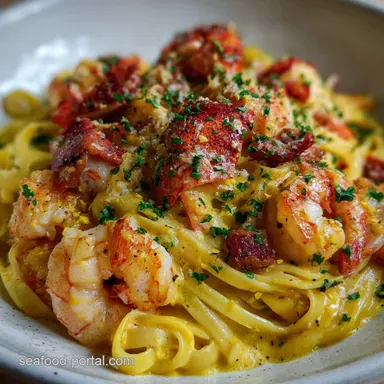
Lobster Shrimp Pasta with Lemon and Cream

- Total25 Mins
- Protein62 g
- Calories927 kcal
- Active Prep: 10 min + Cooking: 15 min
- Taste & Texture: Luscious, creamy, and vibrant
- Best for: A romantic date or an upscale weekend dinner
In Italian seaside towns, garlic and cream are often combined with local shellfish to offset the brine of the ocean. This tradition transforms a handful of premium ingredients into a meal that feels like a coastal retreat.
The aim is to ensure the seafood stays tender while the sauce remains silky and glossy. By following a few specific tips, whipping up this lobster shrimp pasta is a breeze rather than a chore.
You can look forward to a meal where the sauce clings perfectly to the linguine and the lobster remains succulent. It is an indulgent dish, but the lemon keeps it from feeling overly heavy.
Quick Recipe Specs
The most important part of this dish is the timing. If the seafood stays in the pan too long, it turns rubbery.
Keep an eye on your pan temperature. Medium-high is the sweet spot for the sear, but you'll need to drop it low before adding the cheese to keep the sauce stable.
How the Flavors Blend
Dry Seafood: Patting the meat dry removes surface moisture. This allows the seafood to sear quickly rather than steaming in its own liquids.
Pasta Water: Starchy water helps the cream bind to the noodles, which is what gives this lobster shrimp pasta its silky finish.
Acid Balance: The lemon juice in the stock offsets the heavy cream. This ensures the richness doesn't overwhelm the delicate flavor of the lobster.
| Premium Choice | Budget Alternative | Impact | Savings |
|---|---|---|---|
| Lobster Meat | Imitation Lobster | Lacks sweetness and snap | Significant |
| Fresh Shrimp | Frozen Shrimp | Very similar if thawed right | Moderate |
| Heavy Cream | Whole Milk + Butter | Slightly thinner sauce | Minor |
Gathering Your Essentials
| Component | Purpose | Substitute Notes |
|---|---|---|
| Seafood Stock | Delivers oceanic flavor | Clam juice works for a saltier profile |
| Parmesan | Adds salt and density | Pecorino is more pungent and saltier |
| Heavy Cream | Thickens and mellows | Use half and half for a lighter feel |
- 1 lb shrimp, peeled and deveined
- 1 lb lobster meat, cut into bite-sized pieces
- 2 tbsp unsalted butter Why this? Ideal for the initial high-heat sear
- 1/2 tsp salt
- 1/4 tsp black pepper
- 12 oz linguine
- 3 tbsp unsalted butter Why this? Establishes the base of the sauce
- 4 garlic cloves, minced
- 3/4 cup seafood stock mixed with lemon juice
- 1 cup heavy cream
- 1/2 cup freshly grated Parmesan cheese
- 1 tbsp fresh parsley, chopped
Tools You'll Need
A large pot is needed for the pasta. For the seafood and sauce, use a large skillet with high sides, such as a stainless steel or cast iron pan. This gives you enough room to toss the pasta without spilling the sauce.
Step by step Instructions

Preparing the Pasta
Heat a large pot of salted water until it reaches a rolling boil. Stir in the 12 oz of linguine and follow the package instructions to cook it al dente. Before draining, set aside 1/2 cup of the pasta cooking water.
Searing the Seafood
Using a large skillet over medium-high heat, melt 2 tbsp of butter. Pat the lobster and shrimp dry with paper towels. Sprinkle with 1/2 tsp salt and 1/4 tsp black pepper, then sear the seafood for 2 minutes per side until opaque and the internal temperature reaches 145°F (63°C).
Move the seafood to a plate.
Crafting the Sauce
In that same pan, melt the remaining 3 tbsp of butter. Add 4 minced garlic cloves and sauté for 1 minute until fragrant. Pour in 3/4 cup seafood stock and lemon juice, stirring to loosen the browned bits from the bottom.
Mix in 1 cup of heavy cream and simmer for 3-4 minutes until the liquid slightly thickens.
Finishing Touches
Turn the heat down to medium-low and stir in 1/2 cup Parmesan cheese until it melts. Return the cooked pasta and seared seafood to the skillet. Gently toss for 1-2 minutes, adding the saved pasta water a tablespoon at a time if you prefer a lighter sauce. Garnish with 1 tbsp chopped parsley.
Handling Common Issues
The primary risk here is overcooking the protein. Seafood cooks quickly, and residual heat will continue the process even after the pan is removed from the stove.
If the sauce appears greasy or separated, the cheese may have been added while the pan was too hot. To remedy this, try stirring in a small amount of pasta water over low heat.
Be sure to pat the seafood completely dry before adding it to the butter. Any excess moisture prevents browning, which would sacrifice the deep, rich flavor that defines this lobster shrimp pasta.
| Problem | Root Cause | Solution |
|---|---|---|
| Sauce too thick | Too much reduction | Stir in reserved pasta water |
| Rubbery seafood | Overcooked | Pull from heat at 145°F (63°C) |
| Sauce split | Heat too high | Lower heat and whisk in butter |
Searing Truths
Some people think searing "seals in" the juices of the seafood. This isn't actually how it works. Searing creates a brown crust for flavor, but the meat still loses moisture. The real trick to juicy seafood is simply not overcooking it.
Storing Your Leftovers
Place remaining portions in a tightly covered bowl and refrigerate for up to 3 days.
Skip the microwave when reheating, as it often makes seafood tough. Instead, gently warm the pasta in a skillet over low heat, adding a bit of water or milk to thin the sauce, until the centre reaches 165°F (74°C).
This meal isn't suitable for the freezer; the cream sauce typically separates, and the lobster loses its ideal texture.
Customizing the Dish
For a spicy kick, stir in a pinch of red pepper flakes when you sauté the garlic. If you're avoiding gluten, this works great with brown rice pasta or chickpea noodles.
If you want a different flavor profile for your lobster shrimp pasta, try swapping the cream for a garlic butter sauce to make it lighter and more zesty.
You can also use scallops instead of shrimp. Just remember that scallops need a very hot pan and only about 2 minutes per side to get a gold crust.
The Best Sides
A piece of toasted sourdough or a crusty baguette is a must for soaking up the extra sauce. Since the pasta is rich, pair it with something bright and crisp.
Steamed asparagus with a squeeze of lemon or a simple arugula salad with a light vinaigrette works best. These sides cut through the cream and keep the meal feeling balanced.
Frequently Asked Questions
Can I make this pasta without cream?
Yes, you can reduce the seafood stock and butter to create a lighter sauce.
Tip: use a bit more of the reserved pasta water to help the sauce bind.
How to store the leftovers?
Keep the dish in a sealed bowl in the refrigerator for three days.
Tip: reheat over low heat in a skillet with a splash of water to avoid toughening the seafood, until the centre reaches 165°F (74°C).
Is this dish easy for beginners?
Yes, this recipe uses simple searing and simmering steps.
Tip: pat the lobster and shrimp dry first to ensure a proper sear.
Does a jarred sauce work here?
You can use one, but it will lack the fresh garlic and lemon brightness.
Tip: if you prefer a bold, aromatic glaze, try a fresh ginger sauce on the seafood instead.
Lobster Shrimp Pasta in 25 Minutes