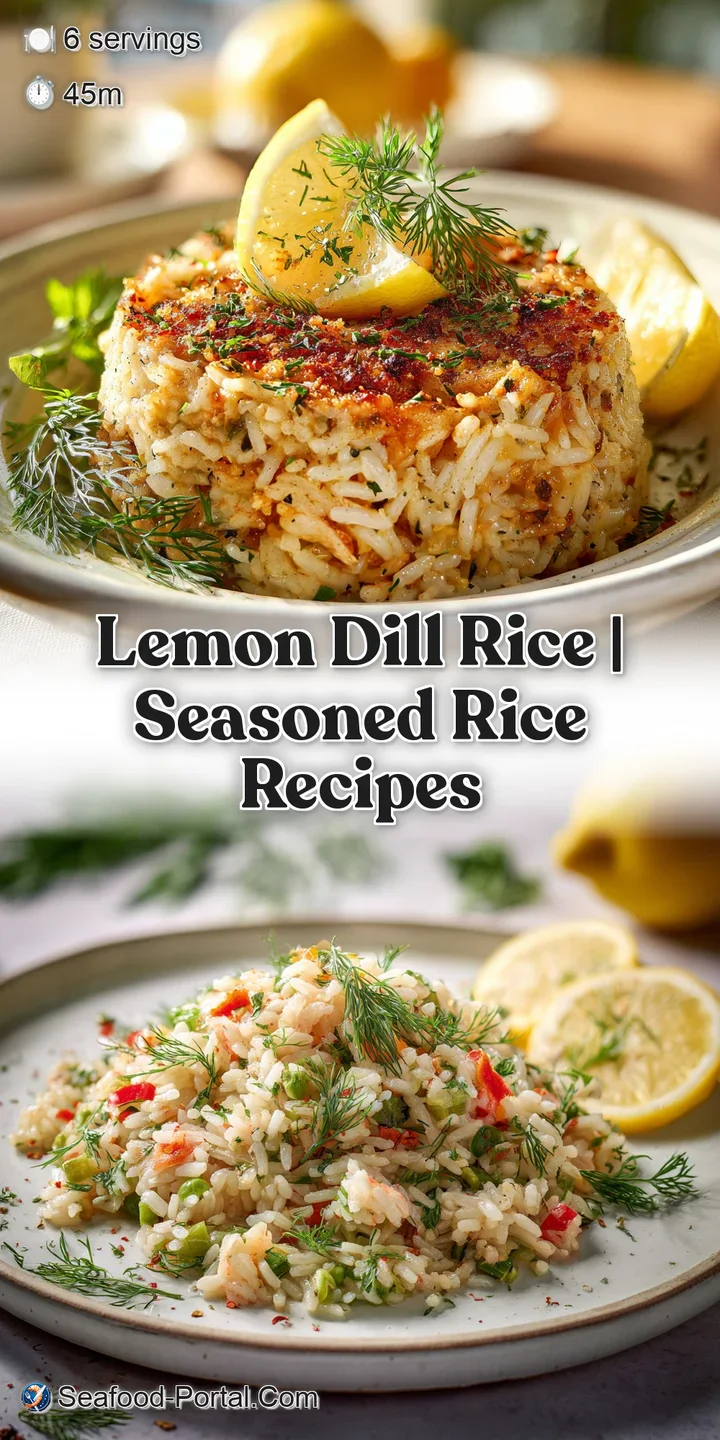
Lemon Dill Rice
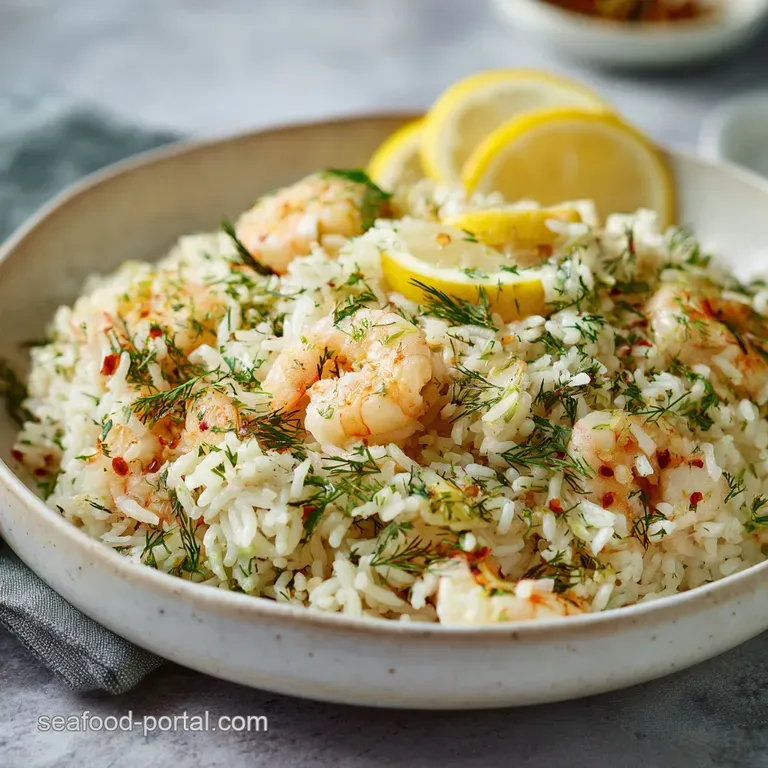
- Time: Active 15 minutes, Passive 30 minutes, Total 45 minutes
- Flavor/Texture Hook: Zesty, herbaceous grains with a distinct, fluffy separation
- Perfect for: Elegant garden parties, Mediterranean feasts, or refreshing shared plates
- The Vibrant Mediterranean Lemon Dill Rice
- Why Thermal Dynamics Create Fluffiness
- Crucial Recipe Time Metrics
- Selecting the Finest Sourced Elements
- Tools for Uniform Heat Distribution
- Mastering the Sequential Cooking Steps
- Fixing Texture and Seasoning Issues
- Regional Variations for Shared Plates
- Storing Leftovers for Peak Quality
- Sophisticated Mediterranean Pairing Ideas
- Recipe FAQs
- 📝 Recipe Card
The Vibrant Mediterranean Lemon Dill Rice
Picture the scent of citrus oils hitting warm, steaming grains as you lift a heavy lid. There is a specific sizzle when the shallots meet the olive oil, a sound that signals the beginning of something truly special for a gathering.
I remember the first time I served this at a sun drenched lunch; the bright green of the herbs against the pale rice transformed the table into a celebration of fresh ingredients. It is not just a side dish, it is an aromatic anchor for your entire meal.
For a long time, I struggled with rice that turned out gummy or, worse, completely bland. I used to think adding lemon was just a quick squeeze at the end, but I learned that the real magic happens when you layer the flavors from the foundation up.
This Mediterranean Rice with Lemon & Dill is the result of many trials, a few burnt pans, and a deep appreciation for how simple grains can become a sophisticated centerpiece when treated with care.
We are moving away from the heavy, buttery rices of the past. Instead, we are leaning into the vibrancy of high-quality extra virgin olive oil and the sharp, clean profile of fresh herbs.
Whether you are hosting an intimate dinner or a large family gathering, this Rice with Lemon & Dill provides the perfect textural contrast to grilled proteins and roasted vegetables. Let’s get into the details of how to make this shine on your plate.
Why Thermal Dynamics Create Fluffiness
The Science of Why it Works: This recipe relies on starch retrogradation and the Maillard reaction. By sautéing the rice in oil before adding liquid, we coat the exterior of each grain, which prevents them from clumping together and adds a nutty depth through light browning.
- Surface Starch Removal: Rinsing the grains removes excess surface amylopectin, ensuring the finished dish is light and airy rather than sticky.
- Acid Base Balance: The citric acid in the lemon juice tenderizes the grain's outer layer while the zest provides volatile oils for a deeper aromatic profile.
- Steam Trapping: Using a tight sealing lid creates a pressurized environment that ensures even hydration across the entire pot.
- Aromatic Infusion: The fats in the olive oil act as a carrier for the garlic and shallot flavors, distributing them evenly throughout the Rice with Lemon & Dill.
| Servings | Rice Quantity | Stock Volume | Pot Size |
|---|---|---|---|
| 2 people | 0.6 cups | 1 cup | Small saucepan |
| 4 people | 1.3 cups | 2 cups | Medium pot |
| 6 people | 2 cups | 3 cups | 3 liter Dutch oven |
Choosing the right vessel is half the battle when you want to create a dish that looks as good as it tastes. If you use a pot that is too large, the liquid evaporates too quickly, leaving you with undercooked grains.
If it is too small, the rice lacks the space to expand into those beautiful, long needles we love in a Mediterranean Rice with Lemon & Dill.
| Component | Science Role | Pro Secret |
|---|---|---|
| Basmati Rice | Amylose structure | Rinse until the water is crystal clear to prevent gummy textures |
| Extra Virgin Olive Oil | Lipid barrier | Use a high-quality oil to carry fat soluble aromatic compounds |
| Chicken Stock | Protein rich hydration | Warm the stock before adding to maintain consistent pan temperature |
Crucial Recipe Time Metrics
Precision is the hallmark of a great cook, and with rice, timing is everything. We aren't just looking at the clock; we are looking for visual cues and the way the steam behaves. For this Lemon & Dill rice, the 45 minutes total time is split between active preparation and the crucial waiting period where the rice actually finishes its "cook" off the heat.
| Method | Time | Texture | Best For |
|---|---|---|---|
| Stovetop Pilaf | 30 minutes | Distinct, fluffy grains | Elegant dinner parties |
| Rice Cooker | 40 minutes | Softer, uniform grains | High volume meal prep |
| Instant Pot | 25 minutes | Dense, tender grains | Quick weeknight solutions |
The choice of method depends on your desired outcome. While a rice cooker is convenient, the stovetop method allows you to toast the aromatics and the grains, which is essential for that signature Mediterranean flavor. This technique is quite similar to the foundation used in a proper Chicken and Rice Soup recipe, where the aromatics are sweat down to build a deep base before any liquid is introduced.
Selecting the Finest Sourced Elements
For this dish, we are using specific ingredients that play well together to create a cohesive flavor profile. I always suggest visiting a local market for the freshest herbs, as the dill is the soul of this recipe.
- 2 cups Extra Long Grain Basmati Rice: This is non negotiable for the texture we want.
- Substitute: Jasmine rice. Why this? Offers a similar length but with a slightly more floral, sticky profile.
- 3 cups chicken stock: Provides the savory backbone.
- Substitute: Vegetable stock. Why this? Keeps the dish vegan friendly while maintaining a rich, umami depth.
- 2 tablespoons extra virgin olive oil: For sautéing and silkiness.
- Substitute: Unsalted butter. Why this? Adds a creamy, French style richness to the Mediterranean base.
- 1 small shallot, finely minced: Offers a delicate sweetness.
- Substitute: Red onion. Why this? Provides a sharper bite but softens beautifully when sautéed.
- 3 cloves garlic, grated: For that essential aromatic punch.
- Substitute: Shallot confit. Why this? Gives a mellow, roasted garlic flavor without any harshness.
- 0.5 cup fresh dill, finely chopped: The primary herb for this Lemon & Dill profile.
- Substitute: Fresh parsley. Why this? A brighter, more peppery finish if dill is unavailable.
- 1 large lemon, zested and juiced: For brightness and acidity.
- Substitute: Lime. Why this? Creates a more tropical, sharp citrus note for different pairings.
- 1 teaspoon sea salt: To enhance all the natural flavors.
- 0.5 teaspoon freshly cracked black pepper: For a subtle, warming heat.
Using high-quality ingredients transforms this from a standard side into a vibrant Mediterranean Rice with Lemon Dill that people will ask for again and again.
Tools for Uniform Heat Distribution
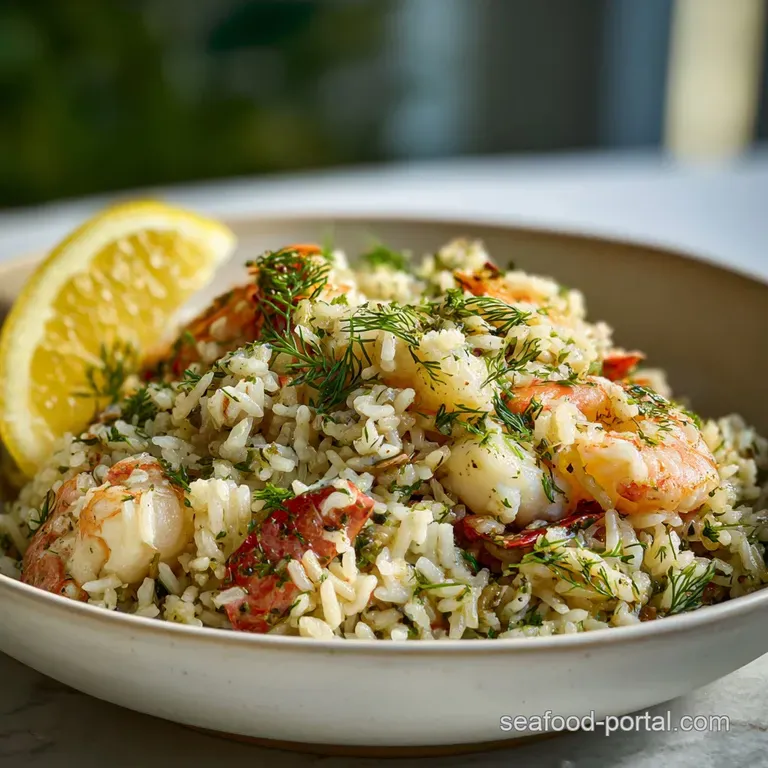
You don't need a kitchen full of gadgets, but a few specific tools will make your life much easier. I prefer a heavy bottomed pot, such as a Le Creuset Dutch oven, because it holds heat beautifully and prevents the bottom of the rice from scorching. A fine mesh strainer is also vital for rinsing the rice properly.
Chef's Tip: Freeze your lemon for 10 minutes before zesting. It makes the skin firmer, allowing the grater to take only the yellow zest without the bitter white pith.
For the aromatics, a Microplane is your best friend. Grating the garlic instead of mincing it allows it to melt into the olive oil, ensuring there are no harsh chunks in the final Lemon dill rice recipe. If you are serving this alongside a more complex main, like a Japanese Shrimp Curry recipe, having your tools ready will make the transition between dishes seamless.
Mastering the Sequential Cooking Steps
Rinsing and Purifying
Place the 2 cups of Basmati rice in a fine mesh sieve. Run cold water over it, agitating the grains with your fingers, until the water runs perfectly clear. Note: This usually takes about 2 to 3 minutes and is the most important step for fluffiness.
Sautéing the Aromatics
Heat the 2 tablespoons of extra virgin olive oil in your pot over medium heat. Add the minced shallot and cook for 3 minutes until translucent and fragrant. Note: Do not let them brown; we want sweetness, not bitterness.
Toasting the Grains
Add the rinsed rice and the 3 grated garlic cloves to the pot. Stir constantly for 2 minutes until the grains look opaque and smell nutty. This coating of oil is what keeps the grains separate.
Simmering with Precision
Pour in the 3 cups of chicken stock, 1 teaspoon of sea salt, and 0.5 teaspoon of black pepper. Bring the mixture to a boil, then immediately turn the heat to the lowest possible setting.
The Steam and Fluff Phase
Cover the pot with a tight fitting lid. Cook undisturbed for 15 minutes. Do not lift the lid, as the trapped steam is doing all the work here.
Finishing with Zest
Remove the pot from the heat and let it sit, covered, for another 10 minutes. This allows the moisture to redistribute. Until the grains feel tender but firm, keep that lid on.
The Herb Fold
Lift the lid and fluff the rice with a fork. Gently fold in the 0.5 cup of fresh dill, the lemon zest, and the lemon juice. The heat from the rice will release the oils from the dill and lemon, creating an incredible aroma.
Presentation Accents
- 1. Fresh Dill
- Save a tablespoon of chopped dill to sprinkle on top at the very end.
- 2. Lemon Zest
- Add long, elegant curls of zest across the surface.
- 3. Toasted Pine Nuts
- Scatter these gold gems over the top for a crunch that contrasts the velvety grains.
Fixing Texture and Seasoning Issues
Why Your Rice Is Sogginess
If your rice ends up clumped together, it usually means there was too much water or the starch wasn't rinsed away. Using a 1:1.5 ratio of rice to liquid is the sweet spot for Basmati.
If you find it's already soggy, you can spread it on a baking sheet and pop it in a low oven for 5 minutes to dry out the surface.
Why Your Rice Is Crunchy
Crunchy rice is the result of the liquid evaporating before the grain is fully hydrated. This happens if the lid isn't tight or the heat was too high. You can fix this by adding 2 tablespoons of hot stock, covering tightly, and letting it sit on the lowest heat for an extra 5 minutes.
| Problem | Root Cause | Solution |
|---|---|---|
| Gummy texture | Excess surface starch | Rinse rice for 3 full minutes before cooking |
| Burnt bottom | Heat too high | Use a heat diffuser or a heavier bottomed pot |
| Bland flavor | Under seasoned stock | Add a pinch of salt to the water or use bouillon |
Common Mistakes Checklist
- ✓ Skipping the rinse (results in a sticky, porridge like texture)
- ✓ Peeking under the lid (lets the essential steam escape)
- ✓ Using dried dill (the flavor is dusty and lacks the vibrant punch of fresh)
- ✓ Adding lemon juice too early (the acid can toughen the grains if boiled)
- ✓ Over stirring during the simmer (breaks the delicate grains)
Regional Variations for Shared Plates
This Greek lemon dill rice is a fantastic base, but you can easily adapt it to suit different Mediterranean or Middle Eastern profiles. I often change the herbs depending on what is growing in the garden or what I'm serving it with.
Boosting the Middle Eastern Profile
Add 0.5 teaspoon of ground turmeric and 0.25 teaspoon of cinnamon during the toasting phase. This turns the rice a beautiful golden hue and adds a warm, earthy depth. You can also toss in a handful of golden raisins for a sweet contrast.
Adding a Briny Kick
Fold in 0.25 cup of chopped Kalamata olives and a tablespoon of drained capers along with the dill. This version is incredible alongside grilled white fish or a simple Greek salad. If you enjoy these briny notes, you might find that it pairs well with a side of Shrimp Spring Rolls recipe for a fusion style lunch.
| Premium Ingredient | Budget Alternative | Flavor Impact | Savings |
|---|---|---|---|
| Saffron strands | Turmeric powder | Saffron is more floral; Turmeric is earthy | Save $15.00 |
| Pine nuts | Sliced almonds | Very similar crunch and nuttiness | Save $5.00 |
| Fresh shallots | Yellow onion | Shallots are milder; Onion is more pungent | Save $1.50 |
Storing Leftovers for Peak Quality
Rice requires careful handling to stay safe and delicious. Once your meal is over, spread any leftovers on a cool plate to let the steam escape quickly before transferring to an airtight container.
- Storage: Keep in the fridge for up to 4 days. The flavors of the dill and lemon actually deepen overnight.
- Freezing: This rice freezes surprisingly well. Place in a freezer bag, press out the air, and store for up to 3 months.
- Reheating: To maintain the fluffiness, reheat in a pan with a splash of stock and a lid, or microwave with a damp paper towel draped over the top to create a mini steam chamber.
- Zero Waste: Use leftover rice as a base for a cold Mediterranean salad. Toss it with cucumbers, tomatoes, feta, and a bit more olive oil for a quick lunch the next day.
Scaling Guidelines If you are scaling this up for a large gathering, remember that the liquid doesn't increase linearly. For 4 cups of rice, use 5.5 cups of stock instead of 6. This prevents the weight of the rice from crushing the bottom layer into a paste.
If you're scaling down, use a smaller pot to ensure the liquid level is high enough to submerge the grains.
Rice Texture Comparison
| Component | Fresh Method | Shortcut (Pre cooked) |
|---|---|---|
| Texture | Light and distinct | Can be dense or rubbery |
| Flavor | Deeply infused aromatics | Surface level seasoning only |
| Aroma | Vibrant and fresh | Muted |
Sophisticated Mediterranean Pairing Ideas
The beauty of this Mediterranean rice pilaf recipe is its versatility. It feels right at home on a table filled with small plates (Mezze) or as a solid foundation for a heavy main course. I personally love serving it with grilled lamb chops that have been marinated in oregano and more lemon.
For a seafood focused evening, try it with seared scallops or a piece of crispy skinned salmon. The acidity in the rice cuts through the fat of the fish perfectly. If you are looking for a sauce to bring it all together, a quick dollop of tzatziki or even a The 5Minute Creamy recipe for dill sauce works wonders.
Myths About Cooking Rice
- "You must boil the water first." Actually, starting with the rice in the pot (the pilaf method) allows for better flavor infusion and a more consistent texture.
- "Rice should be stirred often." Stirring releases starch and breaks the grains. Once the lid goes on, you should never touch it until the timer goes off.
- "Adding oil makes rice greasy." In reality, a small amount of oil coats the grains to prevent sticking and helps carry the flavors of the aromatics throughout the dish.
Regardless of how you serve it, this Lemon Dill Rice is a testament to how focusing on the science of the grain and the freshness of the garnish can create something truly elegant. Trust me on the rinsing it’s the difference between a side dish and a masterpiece. Let's crack on and get that pot simmering!
Recipe FAQs
How do you make Mediterranean lemon rice?
Rinse the rice thoroughly until the water runs clear. Then, sauté shallots and garlic in olive oil, toast the rice for a minute until nutty, add stock and seasonings, bring to a boil, and simmer covered until tender. Finally, fluff with fresh dill and lemon zest and juice.
Is dill used in Mediterranean cooking?
Yes, dill is a popular herb in Mediterranean cuisine. It's frequently used in salads, dips, and as a fresh garnish for seafood and grain dishes, adding a bright, slightly anise like flavor.
What does adding lemon to rice do?
Lemon adds brightness and acidity to rice. The acid helps to tenderize the grains slightly and cuts through richness, while the zest contributes aromatic oils that enhance the overall flavor profile.
Does dill go well with rice?
Yes, dill pairs exceptionally well with rice. Its fresh, herbaceous notes complement the mild flavor of rice beautifully, especially in dishes like this Mediterranean Lemon Dill Rice or when served with fish, as seen in our Creamy Sauce for Salmon: Zesty Lemon Dill Velouté.
How can I make my rice fluffier?
Rinse your rice thoroughly before cooking. This removes excess surface starch that causes stickiness. Also, ensure you use the correct liquid-to-rice ratio and avoid lifting the lid while it steams.
Can I use dried dill instead of fresh?
No, it's best to use fresh dill for this recipe. Dried dill has a more concentrated, somewhat different flavor that can lack the vibrant freshness needed to truly shine in this dish. Fresh dill, like that used in our Easy PanSeared Halibut with LemonHerb Butter Sauce, provides a superior aroma and taste.
How do I prevent rice from sticking together?
Proper rinsing and toasting are key. Rinsing removes excess starch, and toasting the rice grains in oil before adding liquid coats them, preventing them from clumping. Cooking in a pot with good heat distribution, like a Dutch oven used in our Tilapia with Lemon Caper Sauce: Restaurant Quality in 25 Minutes, also helps.
Lemon Dill Rice
Ingredients:
Instructions:
Nutrition Facts:
| Calories | 289 calories |
|---|---|
| Protein | 6.8 g |
| Fat | 5.4 g |
| Carbs | 52.3 g |
| Fiber | 1.4 g |
| Sugar | 0.9 g |
| Sodium | 516 mg |
