How to Make Lemon Cream Sauce Without Curdling

- Effort/Time: 15 minutes total.
- Flavor Hook: Zesty, buttery, and sharp with a hit of fresh herbs.
- Perfect for: White fish, seared scallops, or pan-fried chicken.
- How to Make Lemon Cream Sauce: The Masterclass Guide
- Why This Works
- Essential Ingredients and Substitutions
- How to Make Lemon Cream Sauce Step-by-Step
- Pairing Your Lemon Cream Sauce
- Troubleshooting Common Issues
- Common Myths About Lemon Cream Sauce
- Storage and Reheating
- Variations to Try
- Recipe FAQs
- 📝 Recipe Card
How to Make Lemon Cream Sauce: The Masterclass Guide
The sound of cold white wine hitting a hot All-Clad skillet that sharp, steam filled "hiss" is the turning point of a great dinner. We’ve all been there: you try to whisk together a quick pan sauce, but the lemon hits the dairy and suddenly you’re looking at a grainy, curdled mess.
It’s frustrating because a broken sauce can ruin a perfectly seared piece of fish in seconds.
I remember my first attempt at this years ago. I thought I could just boil everything together and hope for the best. I ended up with a separated, oily puddle that tasted like hot lemonade. It was a disaster.
But after obsessed level testing, I realized that the secret isn't just the ingredients; it’s the sequence of emulsification and the temperature control of your fats.
Learning how to make lemon cream sauce is about mastering the balance between fat, acid, and heat. By following a specific reduction process, we create a sauce that clings to your food rather than sliding off it.
This guide uses scientific cues like watching for the "nappe" consistency to ensure you get a professional result every single time.
Why This Works
- Aromatic Base Layering: Sautéing minced shallots and garlic in unsalted butter creates a foundational depth through mild caramelization.
- Alcoholic Solvent Extraction: Using a dry white wine to deglaze pulls up browned bits (fond) and dissolves flavor compounds that are neither water- nor fat-soluble.
- Casein Buffering: The high fat content in heavy whipping cream prevents the proteins from clumping (curdling) when the acidic lemon juice is introduced.
- Reduction Concentration: Simmering the cream evaporates water, tightening the molecular structure for a velvety, spoon coating texture.
The Science Behind 1 cup Heavy Whipping Cream
- What It Does
- Acts as the primary emulsification agent and flavor carrier for the sauce.
- The Chemistry
- Heavy cream contains roughly 36 40% milk fat, which surrounds the milk proteins in a protective barrier, preventing them from bonding and curdling when acid is added.
- Why This Matters
- This high fat-to-protein ratio allows you to boil and reduce the liquid into a stable, thick glaze without needing a roux or flour thickener.
The Science Behind 1.5 tbsp Freshly Squeezed Lemon Juice
- What It Does
- Provides the "bright" top notes and cuts through the heavy lipids of the cream and butter.
- The Chemistry
- The citric acid lowers the pH of the sauce, which would normally cause milk to curdle, but the previous reduction of the cream makes it resistant to this pH shift.
- Why This Matters
- It balances the palate, preventing the sauce from feeling "cloying" or overly heavy on the tongue.
The Science Behind 1/4 cup Dry White Wine
- What It Does
- Deglazes the pan and adds a complex, tart acidity that lemon alone cannot provide.
- The Chemistry
- The ethanol in the wine acts as a bridge between fat and water molecules, allowing more aromatic compounds from the shallots and garlic to reach your taste buds.
- Why This Matters
- It creates a more sophisticated, multi dimensional flavor profile that mimics high end restaurant sauces.
Essential Ingredients and Substitutions
To master how to make lemon cream sauce, you need high-quality fats and fresh aromatics. Don't reach for the bottled juice here; the volatile oils in fresh zest are non-negotiable for that punchy aroma.
| Original Ingredient | Substitute | Why It Works |
|---|---|---|
| 2 tbsp Unsalted Butter | Ghee | Higher smoke point, but provides the same rich, nutty fat base. |
| 1 Small Shallot | Red Onion (finely minced) | Provides a similar sharp-to-sweet profile when sautéed, though slightly more pungent. |
| 1/4 cup Dry White Wine | Extra Dry Vermouth | Vermouth is a fortified wine with herbal notes that complement citrus perfectly. |
| 1 cup Heavy Whipping Cream | Full fat Coconut Milk | High fat content allows for reduction, but adds a distinct tropical flavor. |
| 1 tbsp Fresh Dill | Flat leaf Parsley | Offers a clean, peppery finish instead of the anise like notes of dill. |
How to Make Lemon Cream Sauce step-by-step
1. Melt the Land O'Lakes Unsalted Butter.Note: Use a medium heat to avoid browning the butter solids, as we want a clean, yellow base for our cream sauce.
2. Sauté the shallot and garlic.Note: Cook until translucent and fragrant; this softens the sulfur compounds in the aromatics for a sweeter finish.
3. Deglaze with the white wine.Note: Use a wooden spoon to scrape the bottom of the pan, releasing the fond into the liquid for maximum flavor extraction.
4. Reduce the wine by half.Note: This concentrates the acidity and removes the raw alcohol bite, leaving only the fruit notes behind.
5. Pour in the heavy whipping cream.Note: Bring to a gentle simmer, not a rolling boil, to begin the water evaporation process.
6. Whisk in the Diamond Crystal Sea Salt and pepper.Note: Seasoning early allows the salt to dissolve completely into the fat molecules of the cream.
7. Simmer until the sauce coats the back of a spoon.Note: This is known as the "nappe" stage, indicating the sauce has reached the ideal viscosity.
8. Remove from heat and stir in lemon juice and zest.Note: Adding acid off-heat is the ultimate insurance policy against curdling and preserves the fresh, bright notes of the citrus.
9. Fold in the fresh dill or chives.Note: Residual heat is enough to release the herbal oils without turning the greens grey or dull.
Chef's Tip: For an ultra smooth texture, pour the finished sauce through a fine mesh conical strainer (chinois) before adding the fresh herbs. This removes the bits of shallot and garlic, leaving you with a silk like consistency.
Pairing Your Lemon Cream Sauce
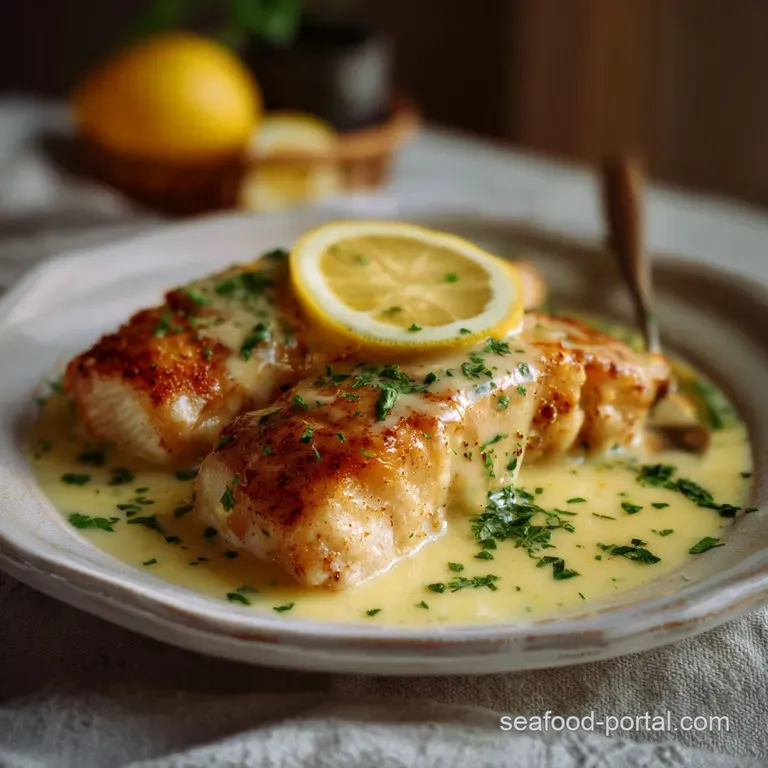
Once you know how to make lemon cream sauce, you'll want to put it on everything. It is a natural partner for seafood because the acidity of the lemon cuts through the natural oils of the fish.
This sauce pairs perfectly with my How to Bake Breaded Fish Perfectly: Ultra Crispy Results. The crunch of the breading against the velvety sauce is a textural masterpiece. If you're looking for something lighter, try drizzling it over Easy Poached Cod with Lemon and Butter Sauce | Quick Dinner.
If you're in the mood for something heartier, this Cream Sauce for Fish also works wonders over roasted asparagus or even a simple plate of linguine. For another decadent treat, try using the leftovers as a dip for How to Make Fried Cod Fillets: The Crispy Secret.
Troubleshooting Common Issues
Even when you know to make lemon cream sauce for baked fish, things can go sideways. Here is how to fix the most common "how to make lemon cream sauce" blunders.
| Problem | Why It Happens | The Fix | Pro Protocol |
|---|---|---|---|
| Sauce is grainy/curdled | Acid added too early or heat was too high | Whisk in 1 tbsp of cold heavy cream | Use a Thermoworks thermometer to keep sauce under 190°F |
| Sauce is too thin | Not enough reduction time | Simmer for 2 3 more mins | Look for the "trail" left by a whisk on the pan bottom |
| Sauce is too salty | Wine was too salty or over reduction | Add a squeeze of honey or more cream | Always use "Unsalted" butter to control sodium levels |
Common Myths About Lemon Cream Sauce
Myth: You must use a roux (flour and butter) to thicken a lemon cream sauce. Truth: Heavy cream naturally thickens through reduction as water evaporates. Skipping flour results in a cleaner flavor and a glossier finish that is naturally gluten-free.
Myth: Bottled lemon juice is just as good as fresh. Truth: Bottled juice lacks the limonene oils found in the skin (zest) and often contains preservatives that can give the sauce a metallic aftertaste.
Myth: You can't reheat cream based sauces. Truth: You can reheat this Lemon Cream Sauce successfully if you do it slowly over low heat, adding a splash of water or milk to loosen the emulsion.
Storage and Reheating
If you have leftovers of this Lemon Cream Sauce, don't toss them!
- Fridge: Store in an airtight glass jar for up to 3 days. The sauce will firm up into a paste like consistency when cold this is normal due to the butter content.
- Freezing: Not recommended. The emulsion of heavy cream often breaks during the thawing process, resulting in a grainy texture that is difficult to emulsify again.
- Reheating: Place the sauce in a small saucepan over the lowest heat setting. Add 1 teaspoon of water and whisk constantly. Do not let it boil, or the fat will separate.
Variations to Try
- Caper & Lemon
- Add 1 tbsp of drained non-pareil capers at the end for a briny, Piccata style finish.
- Roasted Garlic
- Use roasted garlic paste instead of fresh grated garlic for a mellow, caramelized undertone.
- Spicy Lemon
- Add a pinch of red pepper flakes when sautéing the shallots for a "Lemon Cream Sauce for Chicken" with a kick.
Knowing how to make lemon cream sauce is a foundational skill that will serve you in countless meals. Whether you're serving Baked Fish With Lemon Cream Sauce for a dinner party or a quick weeknight meal, this recipe delivers consistent, high impact flavor with minimal effort.
Use your Microplane zester, trust the reduction process, and you'll never settle for a jarred sauce again. Your Cream Sauce for Fish game just leveled up._

Recipe FAQs
What is the ideal heat level for simmering the cream?
Low simmer only; never a rolling boil. Rapid boiling causes the fat molecules to separate from the milk proteins, leading to immediate curdling. Keep the heat just high enough to produce small, lazy bubbles near the edges.
Can I substitute heavy cream with milk?
No, milk yields a thin, broken sauce. Milk lacks the necessary milkfat percentage (36%+) to create a stable, viscous emulsion structure. You will need a thickener like a roux if you use milk, unlike this recipe which relies on reduction for richness, similar to the base in the Perfect Lobster Chowder: Velvety New England Classic.
Does adding lemon juice too early cause splitting?
Yes, acidity destabilizes the cream base. Acid must be incorporated last, off the heat, or it will lower the pH too quickly, causing the cream proteins to coagulate instantly.
- Stir lemon juice in last
- Use fresh squeezed zest for flavor
- Taste before adding salt
Should I use fresh or bottled lemon juice?
Fresh lemon juice provides superior aromatic brightness. Bottled juice often contains preservatives that dull the sharp, volatile citrus oils crucial for cutting through the richness of the cream.
Is butter necessary if I'm using heavy cream?
Butter is essential for final sheen and body. While cream is rich, incorporating cold, emulsified butter (monter au beurre) at the end tightens the sauce, giving it a glossy, restaurant quality finish. This technique is key for many rich sauces, including components found in the Rich Buttery Seafood Boil Sauce Youll Crave.
Must I reduce the cream before adding flavorings?
Myth: Reducing the cream concentrates flavor too much. Reality: Reduction removes water content, thickening the sauce naturally so it clings to food, preventing a watery result. This concentration is necessary before adding herbs or wine.
How long will this sauce hold its texture off the heat?
About 10 minutes if kept warm. The emulsion remains relatively stable due to the high fat content, but it will tighten significantly as it cools. Do not let it cool completely or reheating will almost certainly cause separation.
Lemon Cream Sauce Recipe

Ingredients:
Instructions:
Nutrition Facts:
| Calories | 219 kcal |
|---|---|
| Protein | 1.4 g |
| Fat | 21.7 g |
| Carbs | 3.6 g |
| Fiber | 0.1 g |
| Sugar | 1.4 g |
| Sodium | 258 mg |
