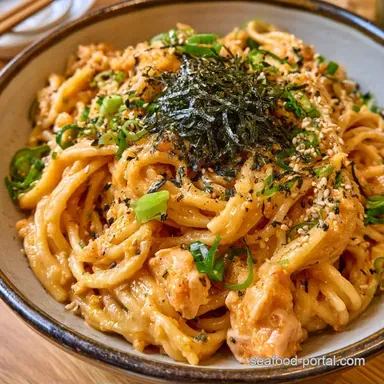
Creamy Japanese Cod Roe Pasta

- Time: 5 min active + 10 min cooking
- Flavor & Texture: Briny and spicy with a creamy consistency and pops of roe
- Perfect for: An umami-heavy weekday dinner when you're in a rush
Cod Roe Pasta
The smell of salty ocean air and melted butter hits you the second the hot noodles touch the roe. It is a specific, savory aroma that tells you dinner is ready in minutes.
Many home cooks find their attempts at this dish result in a grainy, broken sauce that separates into a pool of oil. This happens because they cook the roe over direct heat, which tightens the proteins too quickly.
This cod roe pasta avoids that by using residual heat. By mixing the sauce off-heat, the ingredients meld into a glossy coating that clings to every strand of spaghetti.
What Makes the Texture Work
- Off-Heat Emulsion: Mixing the roe and butter without direct flame prevents the roe from clumping and keeps the sauce smooth.
- Starch Glue: Reserved pasta water binds the olive oil and butter to the noodles, creating a velvety finish that doesn't slide off.
Ingredient Deep Dive
- 7 oz spaghetti
- 1 tbsp extra virgin olive oil
- 1 tbsp unsalted butter, softened
- 1 tsp reduced-sodium soy sauce
- 3½ oz mentaiko (spicy cod roe), membrane removed
- 2 tbsp reserved pasta cooking water
- 1 stalk green onion, thinly sliced
- 1 sheet nori seaweed, shredded
- 1 tsp toasted sesame seeds
| Component | Purpose | Substitute Notes |
|---|---|---|
| Mentaiko | Primary salty, spicy flavor | Canned cod roe is an approximation; use less as it is often saltier |
| Unsalted Butter | Adds richness and body | Vegan butter works, but check for a strong artificial flavor |
| Pasta Water | Emulsifies the fats | Use a pinch of extra salt in the pot to boost the water's impact |
| Nori Seaweed | Earthy, oceanic contrast | Toasted sesame leaves or a pinch of dulse flakes work |
Recipe Details
- Yield: 2 servings
- Prep time: 5 minutes
- Cook time: 10 minutes
- Total time: 15 minutes
Equipment Needed
- Large pot for boiling pasta
- Mixing bowl or wide skillet (for off-heat mixing)
- Tongs for tossing
- Small spoon or butter knife for the roe
Step-by-step Instructions
Step 1: Preparing the Roe
Carefully cut the mentaiko membrane using a butter knife or small spoon. Transfer the orange roe into a mixing bowl. Note: Removing the skin ensures the sauce stays smooth.

Step 2: Cooking the Pasta
Set a big pot of water to boil, adding roughly 1 tbsp of salt for every 2 liters. Stir in the spaghetti and boil for 1 minute shorter than the package's recommended time to achieve al dente. Save 1/2 cup of the starchy pasta water before draining the noodles.
Step 3: Building the Sauce
Mix the cod roe, softened butter, olive oil, and soy sauce together in an off-heat skillet or large bowl. Whisk the ingredients until a smooth, pale orange paste forms.
Step 4: Tossing for Texture
Transfer the hot spaghetti straight into the roe mixture. Pour in 2 tbsp of the saved pasta water right away. Use tongs to toss the noodles energetically until the butter melts and the roe creates a creamy coating.
Should the sauce be too thick, stir in an extra tablespoon of pasta water until glistening.

Step 5: The Garnish
Portion the pasta into serving bowls. Finish with shredded nori, sliced green onions, and toasted sesame seeds.
Common Problems and Fixes
The most common issue is a "broken" sauce. This happens if the pasta is too hot or the pan was left on the burner. When the fat separates from the roe, you get oily noodles instead of a creamy sauce. Adding a splash of cool pasta water and tossing rapidly usually brings it back together.
Another problem is over-salting. Since mentaiko and soy sauce are both briny, adding too much salt to the pasta water can make the final dish harsh. I like to keep the pasta water salty, but I always taste the sauce before adding any extra seasoning.
Fixing Broken Sauce
If the sauce separates, stir in a teaspoon of pasta water and whisk fast. The starch helps re-bind the oil and roe.
Managing Salt Levels
If it tastes too salty, add a squeeze of lemon juice or an extra knob of butter to mellow out the brine.
Preventing Roe Clumps
Ensure your butter is softened before mixing. Cold butter won't integrate with the roe, leaving you with lumps.
| Problem | Fix |
|---|---|
| Sauce is too oily | Add 1 tbsp pasta water and toss vigorously |
| Sauce is too thick | Add pasta water 1 tbsp at a time |
| Texture is grainy | Mix ingredients off-heat and ensure butter is soft |
Make-ahead and Leftover Tips
Enjoy this dish immediately for the best experience. Since the noodles soak up the sauce quickly, the consistency will thicken if you save some for later. According to USDA guidelines, leftovers can be kept in a sealed container and refrigerated for up to 3 days.
When reheating, skip the microwave. Instead, place the pasta in a pan over low heat with a tablespoon of milk or water, stirring gently until the sauce loosens. For safety, ensure leftovers reach an internal temperature of 145°F, as recommended by the USDA on food safety.
What to Serve This With

Given the richness of the roe, I recommend pairing it with something bright and tangy. Sliced cucumbers tossed in sesame oil and rice vinegar offer a refreshing contrast to the butter. If you are hosting a seafood dinner, this clam dip recipe would be an excellent appetizer for your guests.
Variations and Substitutions
If you want to change the profile, try adding a teaspoon of Japanese mayo to the roe mixture. This makes the sauce even creamier and slightly sweeter. For a citrusy kick, zest a lime over the top just before serving. If you're in the mood for a different salty profile, a creamy caper sauce is a great alternative for seafood pasta lovers.
When making cod roe pasta, you can swap the spaghetti for linguine or angel hair for a different mouthfeel.
| Original Ingredient | Substitute | Why It Works |
|---|---|---|
| Mentaiko (3½ oz) | Canned Cod Roe | Similar briny flavor. Note: Check salt levels as canned versions vary |
| Spaghetti | Linguine | Wider surface area for the sauce to cling to |
| Unsalted Butter | Olive Oil (extra) | Keeps it dairy-free. Note: Loses some of the creamy richness |
Storing cod roe pasta in the fridge is fine, but don't freeze it. The emulsion will break entirely, and the roe will lose its texture. Instead, make this on the fly and enjoy it fresh.
Very High in Sodium
2400 mg of sodium per serving (104% of daily value)
American Heart Association recommendation: no more than 2,300 mg of sodium per day
Tips to Reduce Sodium
-
Reduce Mentaiko Amount
The mentaiko is the primary sodium source; try using half the amount and mixing it with a small amount of unsweetened Greek yogurt or cream cheese to maintain the creamy texture.
-
Swap the Soy Sauce
Replace the reduced-sodium soy sauce with coconut aminos, or omit it entirely since the cod roe provides plenty of saltiness.
-
Unsalted Pasta Water
Salt the boiling pasta water as Step 2 directs, and expect the reserved cooking water to carry some sodium into the sauce.
-
Limit Seaweed
Use a smaller amount of shredded nori or look for an unsalted variety to lower the total mineral sodium content.
-
Add Fresh Acidity
Squeeze fresh lemon juice or add lemon zest over the finished pasta to provide a bright, zesty flavor that reduces the need for salt.
Recipe FAQs
What is mentaiko?
It is a type of spicy cod roe.
Tip: look for it in the refrigerated section of Japanese grocery stores.
How to prepare the mentaiko for the sauce?
Slice open the membrane with a small spoon or butter knife and scoop out the roe.
Tip: be gentle to keep the roe intact for a better texture.
Can this recipe be made without dairy?
Yes, replace the 1 tbsp unsalted butter with 1 tbsp extra virgin olive oil.
Tip: add a small amount of extra olive oil to maintain the richness.
How do you control the saltiness of the sauce?
Use reduced-sodium soy sauce as specified in the recipe.
Tip: stir in an extra tablespoon of reserved pasta water if the taste is too intense.
Which other noodles are suitable?
Linguine or angel hair are great alternatives to spaghetti.
Tip: adjust the boiling time to match the specific noodle's package instructions.
Would lime zest improve the flavor?
Yes, it adds a bright, citrusy kick to the dish.
Tip: zest the lime directly over the plated pasta just before serving.
Creamy Cod Roe Pasta in 15 Minutes