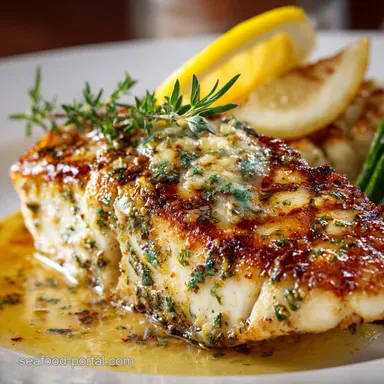
Sea Bass Garlic Lemon Butter in 25 Minutes

- Total25 Mins
- Protein30.8 g
- Calories408 kcal
- Duration: 10 min active / 15 min cook
- Taste & Texture: Zesty, buttery, and crisp-skinned
- Ideal for: An upscale but easy weeknight meal
Sea Bass Garlic Lemon Butter
Why does fish at a restaurant have such crisp skin, while home-cooked versions often turn out mushy? The secret usually lies in how you manage surface moisture and control the pan's temperature.
This approach prioritizes those key elements, delivering a luxurious citrus sauce and a perfectly tender fillet.
Combining sea bass with garlic, lemon, and butter creates a harmonious flavor, as the bright lemon notes balance the decadent butter and fish. It's a quick preparation that tastes like fine dining without requiring hours in the kitchen.
Recipe Specs
The goal is to achieve a crunchy outside and a succulent interior. Using a cast iron skillet provides the steady heat necessary to prevent the skin from sticking.
| Method | Time | Texture | Best For |
|---|---|---|---|
| Stovetop | 25 mins | Crispy skin, tender center | Fast weeknight meals |
| Oven | 35 mins | Soft skin, uniform cook | Larger batches |
What You'll Need
Selecting high-grade fish is key. Choose fillets with the skin still on and a uniform thickness to ensure everything cooks evenly.
For the Fish
- 4 (6 oz / 170 g) Chilean sea bass fillets, skin-on
- 2 tbsp (30 ml) avocado oil Why this? It remains stable at very high temperatures
- 1 tsp (5 g) kosher salt
- ½ tsp (2 g) cracked black pepper
- ¼ tsp (1 g) paprika
For the Garlic Lemon Butter Sauce
- 4 tbsp (55 g) unsalted butter Why this? Provides a luxurious base for basting
- 4 cloves garlic, minced
- 1 medium lemon, juiced
- 1 tbsp fresh parsley, finely chopped
| Ingredient | Role | If You Don't Have It |
|---|---|---|
| Avocado Oil | Searing | Grapeseed oil. Offers similar heat resistance |
| Unsalted Butter | Richness | Salted butter. Decrease the kosher salt |
| Lemon Juice | Brightness | White wine vinegar. Use 3 tbsp (45 ml) in place of the lemon juice |
Essential Tools
A 12-inch cast iron skillet is the best choice because it stays hot when the cold fish hits the pan. You'll also need a sturdy spatula to press the fillets and a meat thermometer to track the internal temperature.
Bringing It Together
Phase 1: The Foundation for Crispiness
Use paper towels to thoroughly dry the sea bass fillets on every side. Season both sides generously with 1 tsp kosher salt and ½ tsp cracked black pepper. Note: Moisture on the skin creates steam, which prevents browning.

Phase 2: The High-Heat Sear
In a 12-inch cast iron pan, warm 2 tbsp avocado oil on a medium-high setting until the liquid is shimmering and just starting to smoke. Lay the fillets skin-side down. To stop them from curling, press down firmly with a spatula for 30 seconds.
Let them sear undisturbed for 5–7 minutes until the skin is deeply browned and lifts easily from the surface.

Phase 3: The Butter Baste Finish
Gently flip the fillets. Lower the heat to medium right away and add 4 tbsp unsalted butter to the pan. As the butter begins to foam, stir in 4 cloves minced garlic and ¼ tsp paprika.
Continuously baste the fish with the bubbling garlic butter for 2–3 minutes until a meat thermometer reads 145°F (63°C).

Phase 4: The Bright Finish
Take the pan off the burner. Stir in 45 ml lemon juice and 1 tbsp chopped parsley. Move the fish to plates and pour the remaining pan sauce over the top.
If Something Goes Wrong
Resist the urge to force the fish if it sticks to the pan. This usually occurs when the surface lacks sufficient heat or you flip the fillet prematurely. Give it another 60 seconds; once the skin is properly browned, it will lift easily.
Since garlic burns easily, be mindful of the temperature during basting. Should the butter darken too rapidly, simply move the pan away from the heat for a few moments.
| Problem | Root Cause | Solution |
|---|---|---|
| Skin sticks | Insufficient pan heat | Wait 60 seconds longer before flipping |
| Burnt garlic | Excessive heat | Reduce to medium before adding butter |
| Rubbery fish | Overcooked | Use a thermometer to hit exactly 145°F |
Creative Twists
For a Mediterranean twist, replace the parsley with fresh oregano and dill. If you prefer a spicier dish, stir some red pepper flakes into the butter for a bit of heat.
To get a smokier profile, you might prefer a grilled sea bass recipe. For a dairy-free alternative, substitute the butter with a vegan stick, though the taste will be a little less rich.
Storage and Reheating
Store leftover fish in an airtight container in the fridge for up to 2 days. I don't recommend freezing cooked sea bass, as the flaky texture changes and becomes mushy upon thawing.
To reheat, avoid the microwave since it makes the fish rubbery. Reheat until the thickest part of the fillet reaches 165°F (74°C) on a thermometer, for example in an air fryer at 350°F for 3–4 minutes or in a toaster oven to bring back the skin's crunch.
Serving Suggestions

This dish is rich, so I like pairing it with something bright or earthy. Roasted asparagus or a simple arugula salad with a light vinaigrette works well. For a heartier meal, serve it over wild rice or a bed of sautéed spinach.
Why This Works
- Dry-Heat Searing: Removing surface moisture and using high heat allows the skin to crisp up quickly without overcooking the center.
- The Basting Method: Spooning hot butter over the fillets cooks the top gently while infusing the meat with garlic and paprika.
- Delayed Acidity: Adding the lemon juice after the heat is off keeps the citrus notes bright and prevents the sauce from breaking.
High in Sodium
915 mg of sodium per serving (40% of daily value)
The American Heart Association recommends a daily limit of no more than 2,300 mg of sodium for most adults to maintain heart health.
Tips to Reduce Sodium
-
Minimize Added Salt
Significantly reduce or omit the kosher salt used to season the sea bass fillets, as this is the primary source of sodium.
-
Increase Acidity
Add an extra squeeze of fresh lemon juice to the butter sauce to provide a bright, zesty flavor that mimics the taste of salt.
-
Boost Aromatics
Increase the amount of minced garlic to build a more robust and savory base for the sauce without needing extra sodium.
-
Layer Herbs and Spices
Use more fresh parsley and paprika to add depth, color, and earthy notes to the dish.
Before You Start Cooking
How to prepare sea bass with garlic lemon butter?
Pat fillets dry and sear skin-side down in avocado oil for 5–7 minutes. Flip and baste with butter, garlic, and paprika until the internal temperature hits 145°F (63°C), finishing with lemon juice and parsley.
Can I bake this fish instead of searing it?
Yes, baking is an option that provides a more uniform texture throughout the fillet. You will lose the deep golden brown crispiness of the skin achieved in the skillet.
Is grilling a good option for this dish?
Grilling works well and adds a smoky charred flavor to the fish. The butter sauce would need to be prepared separately and drizzled over the grilled fillets.
Why is the lemon juice added at the end?
Adding it last prevents the acid from breaking the butter emulsion and keeps the sauce velvety. If you enjoyed this balance of bright and rich flavors, see how we balance aromatics in our fresh ginger sauce.
Do the fillets need to be patted dry?
Yes, removing surface moisture prevents the fish from steaming in the pan. This ensures the skin gets deep golden brown and releases easily from the skillet.
Where should I keep the leftover fish?
Place leftovers in a sealed container and refrigerate them for up to 2 days. Do not freeze the cooked sea bass, as the flaky texture becomes mushy upon thawing.
What is the best way to reheat the cooked fish?
Reheat until the thickest part reaches 165°F (74°C) on a thermometer, for example in an air fryer at 350°F for 3–4 minutes or a toaster oven to maintain the skin's crunch. Avoid the microwave because it turns the fish rubbery.
Pan-Seared Sea Bass Garlic Lemon Butter