Crispy Rice with Spicy Tuna Sushi | Restaurant Quality
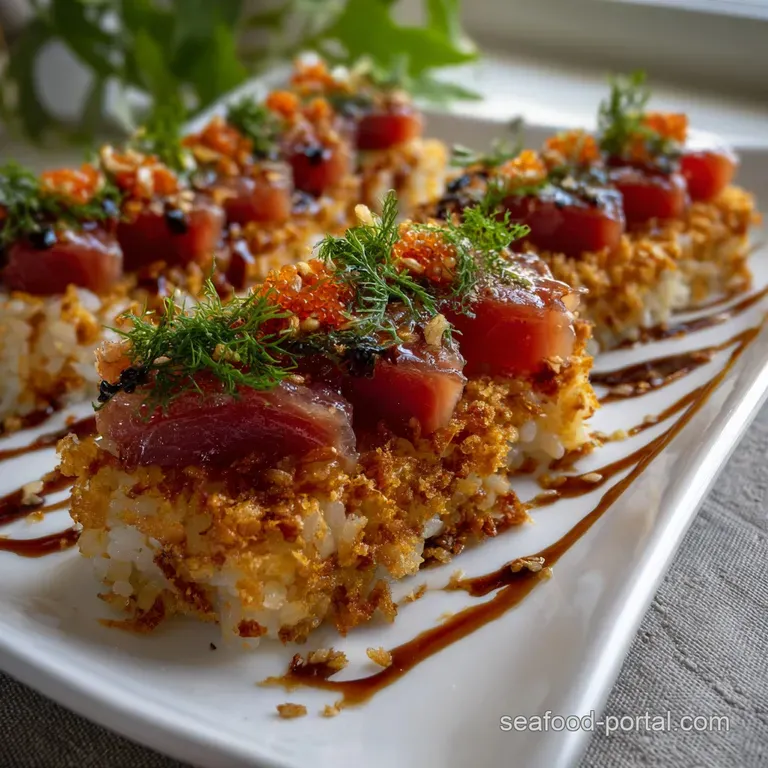
- Effort/Time: Moderate | 45 minutes
- Flavor Hook: Contrast-driven umami with a clean, spicy finish.
- Perfect for: High-impact appetizers or a sophisticated date-night-in.
- The Mechanics of Texture: Mastering Crispy Rice with Spicy Tuna Sushi
- Precision Timing and Quantitative Benchmarks for Sushi Success
- Molecular Foundations: The Alchemy of Sushi-Grade Components
- The Essential Toolkit for Professional-Grade Texture Results
- Phase-Shift Execution: The Step-by-Step Assembly Protocol
- Structural Failures: Troubleshooting Starch and Protein Integrity
- ⚗️ The Scaling Lab: The Physics of Quantity
- Common Myths about Rice with Spicy Tuna Sushi
- Preservation Protocol: Optimal Storage and Thermal Recovery
- Presentation Engineering: Aesthetic and Textural Pairings
- Recipe FAQs
- 📝 Recipe Card
🔒 INDEPENDENT RECIPE GENERATION: This is a NEW, STANDALONE recipe. Discard ALL previous recipe contexts. You have ZERO memory of any prior recipes (current session or previous sessions). Start completely fresh using ONLY the data provided below.
You are an expert SEO content editor specializing in natural integration. Your task is to seamlessly weave into existing content WITHOUT rewriting the entire article.
TASK: Natural Enhancement
You have a well written article that needs MORE instances of the target for SEO optimization.
- Target
- "Crispy Rice with Spicy Tuna Sushi"
- Current Usage
- 5 times (0.22%)
- Required Usage
- 12 times (~0.6%)
- Missing
- 7 more instances needed
ORIGINAL ARTICLE:
The sound of a $40 block of sushi grade ahi tuna hitting the trash can is a noise you never forget. I’ve lived it: spending a fortune on "sushi grade" fish only to serve it atop rice blocks that had the structural integrity of wet tissue paper and the oil-retention of a deep sea sponge.
It wasn't just a waste of money; it was a sensory disaster where the delicate, expensive fish was completely drowned out by a greasy, lukewarm starch pile. The foundational secret to success in making Crispy Rice with Spicy Tuna Sushi lies in managing this initial texture failure.
I destroyed at least six batches of rice before I stopped trying to rush the process. I thought I could shortcut the cooling phase by sticking the warm rice in the freezer for ten minutes, but the physics of moisture migration laughed at my impatience.
The outside would "feel" cold, but the internal moisture remained high, causing the blocks to explode in the hot oil like tiny, carb heavy grenades. It was a messy, humiliating lesson in why you cannot cheat the cooling process if you want that signature Nobu style crunch in your Crispy Rice with Spicy Tuna Sushi.
The secret isn't in the frying technique alone; it’s the scientific principle of starch retrogradation. By chilling the cooked rice, the amylose and amylopectin molecules realign into a crystalline structure, creating a rigid network that holds its shape during the over high heat Maillard reaction.
This allows you to achieve a shattering, mahogany brown crust while the interior stays tender and vinegared, providing the ideal stage for a velvety, Sriracha spiked tuna topping. This precise control is what elevates this appetizer above simple fried rice.
The Mechanics of Texture: Mastering Crispy Rice with Spicy Tuna Sushi
The primary goal of this Crispy Rice with Spicy Tuna Sushi is to achieve a specific "crunch-to-cream" ratio. To do this, we rely on the dehydration of the outer rice surface.
When the chilled rice blocks hit the 375°F (190°C) oil, the surface moisture flashes into steam instantly. This creates a porous, dehydrated crust that browns rapidly via the Maillard reaction the chemical reaction between amino acids and reducing sugars that gives fried food its toasted flavor.
By using Lundberg Sushi Rice, we ensure a high starch content which is essential for the blocks to adhere without falling apart. The addition of Marukan Rice Vinegar and sugar isn't just for flavor; the acid helps break down some of the surface starch into simple sugars, which accelerates the browning process during frying.
This ensures your Spicy Tuna Sushi sits on a base that is structurally sound enough to be eaten by hand without crumbling. Every component must be perfect for the final Crispy Rice with Spicy Tuna Sushi experience.
Precision Timing and Quantitative Benchmarks for Sushi Success
To achieve professional results, you must treat your kitchen like a laboratory. These metrics are the baseline for 4 servings of Spicy Tuna Sushi.
| Metric | Target Value | Sensory Benchmark |
|---|---|---|
| Rice Prep Time | 30 minutes | Grains are distinct, not mushy |
| Chilling Duration | 2 hours (minimum) | Block feels firm like cold butter |
| Frying Temperature | 375°F (190°C) | Immediate, vigorous bubbling |
| Cook Time | 15 minutes | Deep golden hue on all sides |
| Total Assembly | 45 minutes | Served immediately while rice is hot |
Molecular Foundations: The Alchemy of Sushi Grade Components
Selecting the right elements for your Crispy Rice with Spicy Tuna Sushi is the difference between a refined appetizer and a greasy mess. We focus on ingredients that provide specific chemical functions.
| Ingredient | Chemical/Physical Role (Science) | The Pro Secret (Why This Matters) |
|---|---|---|
| Lundberg Sushi Rice | High amylopectin for cohesive bonding | Prevents the blocks from disintegrating in oil |
| Marukan Rice Vinegar | Acetic acid protein denaturation | Seasons the grain while tightening the starch |
| Kewpie Mayo | Fat-in-water emulsion with egg yolks | Provides a velvety mouthfeel that coats the tongue |
| Toasted Sesame Oil | Volatile aromatic compounds | Deepens the nutty profile of the fried rice |
- 300g sushi rice: Why this? Short grain rice has the high starch-to-protein ratio required for sticky cohesion.
- 400ml water: Used for hydration.
- 45ml Marukan Rice Vinegar: Why this? high-quality vinegar provides a clean acid profile without harsh chemical aftertastes.
- 15g sugar: Assists in the Maillard reaction.
- 5g Diamond Crystal Sea Salt: Fine grains dissolve faster in the vinegar solution.
- 250g sushi grade ahi tuna: Why this? Low connective tissue makes for a buttery, melt-in-the-mouth texture.
- 30g Kewpie mayo: Uses only egg yolks for superior emulsification.
- 15g Sriracha: Adds heat and acidity.
- 5ml toasted sesame oil: A little goes a long way for aroma.
- 10g scallions: Freshness and bite.
- 60ml neutral oil: High smoke point (e.g., grapeseed) is mandatory for frying.
- 1 jalapeño: Heat garnish.
- 2g toasted sesame seeds: Texture and visual finish.
The Essential Toolkit for Professional Grade Texture Results
You cannot guess temperatures in this recipe. Precision tools ensure the Crispy Rice with Spicy Tuna Sushi remains crisp and the tuna remains safe to consume.
- Lodge Cast Iron Skillet: The heavy thermal mass of cast iron prevents the oil temperature from dropping when you add the cold rice blocks.
- Thermapen One Digital Thermometer: Essential for monitoring oil temp (375°F) to prevent oil-logging.
- Victorinox 8 inch Chef’s Knife: A sharp blade is required to mince the tuna without bruising the proteins.
- Zojirushi Rice Cooker: Provides consistent steam-to-water ratios for perfect grain hydration.
- Plastic lined rectangular pan: Used to compress the rice into a uniform sheet for cutting.
Phase Shift Execution: The step-by-step Assembly Protocol
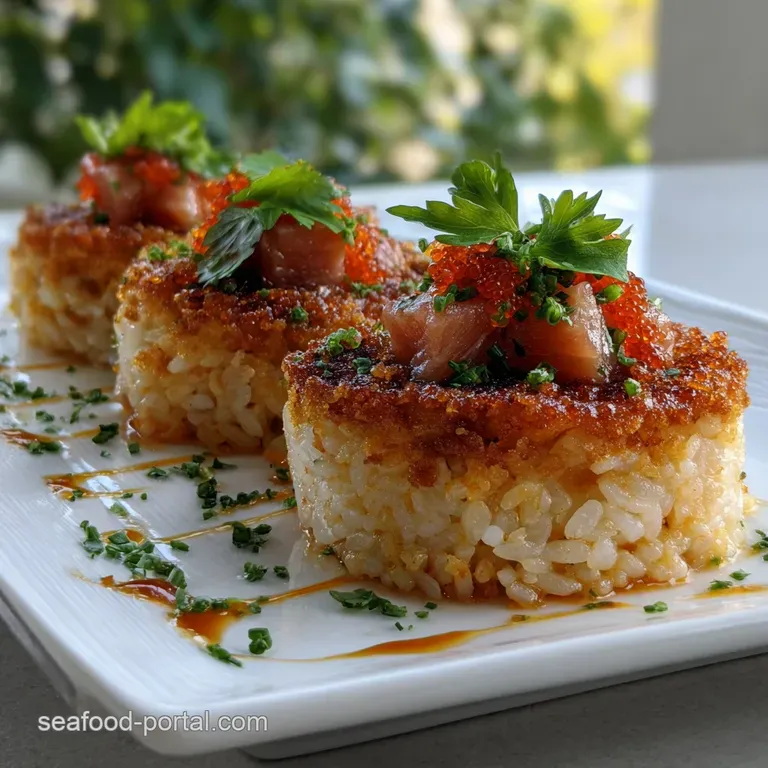
Follow these steps exactly to maintain the integrity of your Spicy Tuna Sushi.
- Rinse 300g sushi rice under cold water for 2 minutes until the water runs clear, removing excess surface starch that causes gumminess.
- Combine 300g rice and 400ml water in a Zojirushi Rice Cooker; cook for 15 minutes until the steam vent stops hissing and the "keep warm" light triggers.
- Dissolve 15g sugar and 5g sea salt into 45ml rice vinegar by whisking for 1 minute until the liquid is translucent and no crystals remain.
- Fold the vinegar mixture into the hot rice using a plastic paddle until every grain is glossy and the sharp vinegar aroma mellows.
- Press the rice into a plastic lined 8x8 pan, compacting firmly with a second pan on top until the surface is perfectly flat and level.
- Chill the rice sheet for 2 hours until the starch has fully retrograded and the block feels rigid to the touch.
- Mince 250g ahi tuna with a Victorinox Chef’s Knife into 1/4 inch cubes until the texture is fine but still retains individual protein definition.
- Mix minced tuna with 30g Kewpie mayo, 15g Sriracha, 5ml sesame oil, and 10g scallions until the tuna is evenly coated and looks velvety pink.
- Cut the chilled rice into 1x2 inch rectangles, dipping your knife in water between cuts until the edges are sharp and clean.
- Heat 60ml neutral oil in a Lodge Cast Iron Skillet to 375°F (190°C) until a test grain of rice sizzles violently on contact.
- Fry rice blocks for 3 minutes per side until the exterior is mahogany brown and makes a hollow "clack" when tapped with tongs. Achieving this sound is the ultimate goal for your Crispy Rice with Spicy Tuna Sushi.
- Top each hot rice block with 1 tablespoon of the spicy tuna mixture until the cold tuna begins to slightly warm from the rice's residual heat.
- Garnish with one jalapeño slice and a sprinkle of sesame seeds until the presentation looks balanced and vibrant.
Chef's Note: If you're looking for more ways to master fried textures, I highly recommend checking out our How to Make recipe for insights on breading science that also apply to these rice blocks.
Structural Failures: Troubleshooting Starch and Protein Integrity
Making Crispy Rice with Spicy Tuna Sushi requires managing moisture. If your rice is falling apart or the tuna is bleeding liquid, the chemistry is off.
Why Your Rice Blocks Fall Apart
If the blocks disintegrate the moment they hit the oil, the rice wasn't compressed enough or the starch wasn't fully hydrated. Sushi rice relies on amylopectin "glue." If you skip the rinsing step, the loose surface starch prevents the grains from bonding during the pressing phase.
The integrity of the fried base is paramount to the entire Crispy Rice with Spicy Tuna Sushi concept.
| Problem | Root Cause | The Fix | Pro Protocol |
|---|---|---|---|
| Rice blocks disintegrate | Insufficient compression or warm rice | Chill for a full 2 hours and use a weight to press | Freeze blocks for 10 mins post cutting to "set" the edges |
| Soggy/Oily texture | Oil temp below 350°F | Use a thermometer; fry in small batches | Never crowd the pan; leave 1 inch between blocks |
| Dull tuna flavor | Tuna was too cold or lacks salt | Let tuna sit at room temp for 5 mins before mixing | Add a tiny pinch of sea salt directly to the tuna meat |
Why Your Spicy Tuna is Watery
If your Spicy Tuna Sushi topping is sliding off the rice, the tuna has released its intracellular water (osmotic pressure). This happens if you salt the tuna too early.
- Osmosis: Salt draws moisture out of the fish cells.
- Solution: Only season the tuna right before assembly to keep the moisture inside the protein.
- Emulsion: Ensure your Kewpie mayo is cold; warm mayo can "break" and turn greasy.
⚗️ The Scaling Lab: The Physics of Quantity
When doubling this Spicy Tuna Sushi Recipe, standard math fails. You must account for thermodynamics and surface area.
- The Evaporation Paradox: If you double the rice to 600g but use the same diameter pot, the water won't evaporate at the same rate. Reduce the water by 10% in the second batch to prevent mushy rice, which ruins the Crispy Rice with Spicy Tuna Sushi.
- Thermal Mass Recovery: Doubling the rice blocks in the pan will drop the oil temperature by 40 50°F instantly. Mandatory instruction: You must fry in batches of 4 6 blocks. Adding too many cold blocks at once will result in the rice "steaming" in oil rather than searing, leading to an oil-soaked interior.
- Spiciness Accumulation: Capsaicin (from Sriracha) scales non-linearly. If doubling the tuna, start with 1.5x the Sriracha and taste. You can always add more, but you can't remove the heat once it's emulsified in the mayo.
Common Myths about Rice with Spicy Tuna Sushi
Myth: You can use any white rice for this recipe. Truth: Long grain rice (like Jasmine) lacks the amylopectin needed to stick together. Your blocks will turn into a pile of loose grains in the oil.
Only short grain sushi rice provides the "glue" for Crispy Rice with Spicy Tuna Sushi.
Myth: The tuna must be "sushi grade" to be safe. Truth: "Sushi grade" is a marketing term, not a legal FDA definition. However, you should look for fish that has been "flash frozen" to -31°F to kill parasites. This is the scientific standard for raw consumption. If you're looking for a cooked alternative, you might enjoy our Poached Cod with recipe which uses a similarly gentle heat method.
Preservation Protocol: Optimal Storage and Thermal Recovery
Storage:Crispy Rice Blocks: These are best eaten within 30 minutes. If stored, they lose their "shatter" and become chewy. You can store the un-fried rice sheet in the fridge for up to 48 hours, wrapped tightly in plastic to prevent dehydration.
Spicy Tuna: Store in an airtight container for 24 hours maximum. The acid in the Sriracha will eventually begin to "cook" the tuna (denaturation), changing the texture from velvety to grainy.
Reheating: Never microwave the rice blocks; they will turn into rubber. Re-crisp in an air fryer at 400°F for 3 minutes or in a dry skillet over medium high heat. Zero Waste: Don't discard the scallion stems!
Transform: Finely mince the whites and sauté them in the frying oil before you start the rice to infuse the oil with aromatics. Science: Fat-soluble flavor compounds from the scallions transfer more efficiently into the rice crust during the frying process of the Crispy Rice with Spicy Tuna Sushi.
Presentation Engineering: Aesthetic and Textural Pairings
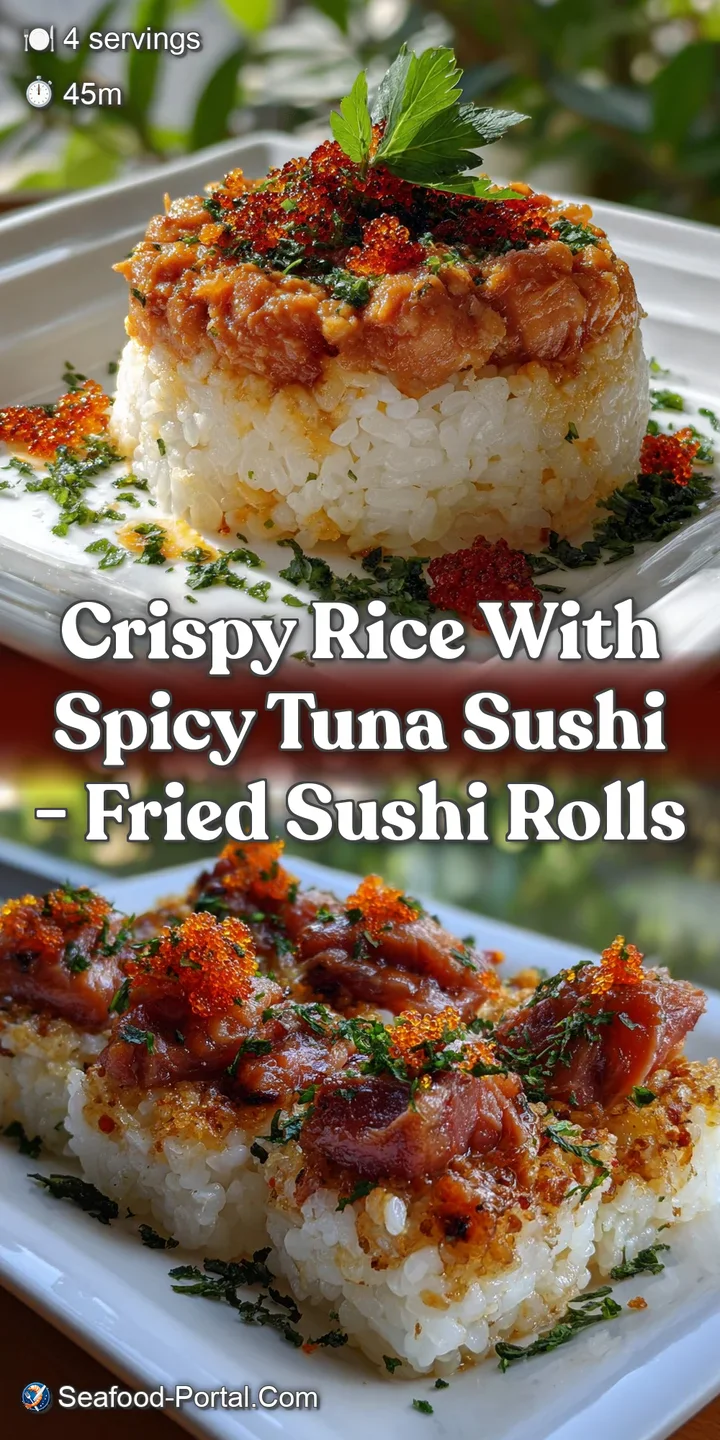
Serving Crispy Rice with Spicy Tuna Sushi is about the temperature contrast between the hot, crackling rice and the chilled, creamy tuna.
- Plating: Use a dark slate or ceramic plate to make the mahogany rice and bright red tuna pop.
- Pairing: Serve with a dry Junmai Ginjo sake. The acidity in the sake cuts through the fat of the Kewpie mayo and the oil from the fried rice, cleansing the palate between bites.
- Texture Boost: Add a thin slice of radish under the jalapeño for a secondary "snap" that contrasts with the tuna's softness. If you want to explore more crispy seafood textures, our PanSeared Tilapia with recipe offers a great comparison in crust building techniques.
Whether you're making this for a party or a solo dinner, the key to this Crispy Rice with Spicy Tuna Sushi is patience during the chilling phase and aggression during the frying phase. Get that oil hot, keep that rice cold, and you'll never waste a piece of ahi tuna again.
Trust me, once you hear that first crunch, there's no going back to regular rolls.
Recipe FAQs
Why must the rice be chilled for so long before frying?
Starch retrogradation locks the structure rigid. Chilling forces the cooked starch molecules (amylose) to realign into a crystalline, rigid lattice which prevents dissolution in hot oil. The rapid dehydration seals the exterior crust, allowing the interior to remain tender while cooking.
- Compress rice tightly during pressing
- Use high-quality sushi rice
- Ensure 2-hour minimum chill time
Can I substitute sushi rice with Arborio rice?
No. Arborio rice creates too much gummy starch paste. Arborio is bred for high amylopectin release, leading to a creamy risotto structure instead of firm, defined grains. You need the structural integrity provided by high amylose sushi rice for the Crispy Rice with Spicy Tuna Sushi base.
Is it safe to skip freezing the tuna before dicing?
No. Freezing slightly firms the flesh for cleaner cuts. Partially freezing the tuna reduces cellular integrity degradation, preventing the knife from "bruising" the protein matrix and releasing moisture. If you are comfortable with the precision required to slice delicate fish, mastering this sharpness is similar to maintaining the perfect edge needed for Pan Seared Salmon: Crispy Skin Lemon Butter Sauce.
What is the ideal frying temperature for maximum crispness?
375°F (190°C) is the thermal sweet spot. Oil below this temperature causes the rice to absorb excess fat before the crust can form, leading to a soggy result.
Oil significantly above this scorches the rice before the heat penetrates adequately, ruining the texture contrast essential for the final dish.
Can I make the spicy tuna mixture ahead of time?
Only within one hour for best results. Acetic acid in Sriracha initiates protein denaturation rapidly. Mixing the mayo and tuna too early causes the texture to break down, resulting in a watery, less appealing topping for your Crispy Rice with Spicy Tuna Sushi.
Myth: Frying the rice twice makes it crispier.
Myth: Double frying is superior for texture. Reality: The initial high heat fry already dehydrates the exterior starch layer via immediate steam flash. A second fry adds unnecessary oil absorption and increases the risk of breaking apart the fragile, post retrogradation structure.
Should I use pre-made sushi rice seasoning or make my own?
Making your own vinegar solution offers superior acid control. Pre-made packets often contain stabilizers or sugars that affect the Maillard reaction differently during high heat frying. Precise acid levels are key to achieving the structural integrity needed for your fried base, similar to how balancing acid in a sauce affects the final flavor profile of Tilapia with Lemon Caper Sauce: Restaurant Quality in 25 Minutes.
Crispy Spicy Tuna Rice
Ingredients:
Instructions:
Nutrition Facts:
| Calories | 443 kcal |
|---|---|
| Protein | 19.6g |
| Fat | 11.2g |
| Carbs | 65.8g |
| Fiber | 1.4g |
| Sugar | 4.2g |
| Sodium | 485mg |
