Crispy Fried Seafood Recipes: the Ultimate Crunch Guide
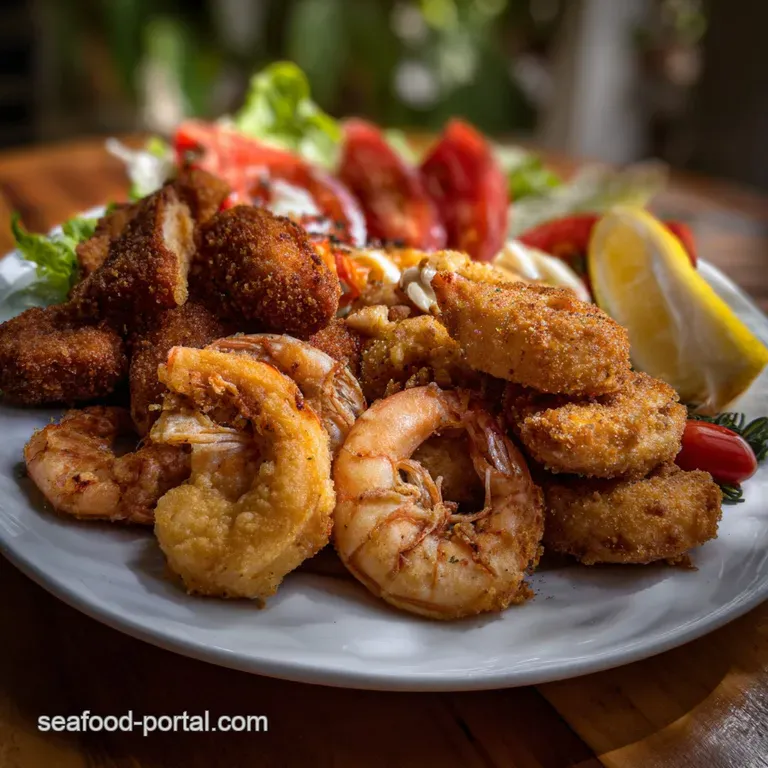
- Effort/Time: Moderate / 35 minutes
- Flavor Hook: Smoky-cayenne heat meets sweet, oceanic brine.
- Perfect for: Weekend-feasts and high-impact-entertaining.
- Master the Art of Ultra-Light Crispy Fried Seafood Recipes
- The Culinary Physics of High-Hydration Batters
- Mission Parameters for Your Crispy Fried Seafood Recipes
- The Alchemy of Crunch: Selecting Your Essential Elements
- Tactical Gear for Precision over High heat Frying Success
- The Three-Stage Protocol for Shattering External Texture
- Solving the Soggy Breading Dilemma and Temperature Drop
- ⚗️ The Scaling Lab: Physics of Quantity
- Common Myths
- Preserving Structural Integrity During Storage and Recovery
- Final Plating Logic and Optimal Flavor Pairing Strategies
- Recipe FAQs
- 📝 Recipe Card
Master the Art of Ultra Light Crispy Fried Seafood Recipes
There is nothing more frustrating than investing in $40 of fresh shrimp and cod, only to have the breading slide off in a greasy, limp pile the moment it hits the plate. I remember hosting a Friday fish fry where the oil temp plummeted, and I served what looked like wet cardboard instead of the Crispy Fried Seafood Recipes my friends expected.
Wasting high-quality protein because of poor thermal management is a culinary tragedy that leaves your kitchen smelling like a fast food dumpster and your guests hungry.
I spent years over complicating batters with beer and baking powder before realizing I was fighting the physics of steam. I used to think more flour meant more crunch; in reality, I was just building a heavy, doughy wall that trapped moisture against the fish, steaming it into mush.
It took a dozen "rubbery" batches to learn that the secret to Crispy Fried Seafood Recipes isn't thickness it's the microscopic air pockets created by specific hydration levels and rapid evaporation. This is why many attempts at Crispy Fried Seafood Recipes fail at home.
The scientific breakthrough came when I combined cold sparkling water with a high starch flour blend. By utilizing the CO2 in the water and the amylose in the cornstarch, we create a thermal barrier that shatters upon impact.
This technique ensures a mahogany colored, airy crust that protects the delicate protein denaturation inside, resulting in a Crispy Fried Seafood Recipe with Flour that maintains its structural integrity from the first bite to the last.
Mastering these elements transforms your basic approach to Crispy Fried Seafood Recipes.
The Culinary Physics of High Hydration Batters
- Carbon Dioxide Expansion: Cold sparkling water releases gas bubbles that expand instantly in hot oil, creating a light, aerated crumb.
- Amylose Retrogradation: The 0.5 cup cornstarch prevents gluten over development, ensuring a brittle, glass like snap rather than a chewy texture.
- Surface Area Optimization: Cutting fish into 3 inch strips increases the crust-to-protein ratio, maximizing the Maillard reaction sites.
- Moisture Evaporation: The high smoke point oil flash fries the exterior, sealing the juices inside before the internal temperature causes protein toughening.
Mission Parameters for Your Crispy Fried Seafood Recipes
| Metric | Value |
|---|---|
| Yield | 4 servings |
| Prep Time | 20 minutes |
| Cook Time | 15 minutes |
| Total Time | 35 minutes |
| Protein Weight | 2 lbs total (1 lb fish / 1 lb shrimp) |
The Alchemy of Crunch: Selecting Your Essential Elements
Ingredient Chemistry Breakdown
| Ingredient | Chemical/Physical Role (Science) | The Pro Secret (Why This Matters) |
|---|---|---|
| 0.5 cup Cornstarch | Lowers protein content; interrupts gluten network | Results in a "shattering" texture rather than bread like chew |
| 0.5 cup Cold Sparkling Water | CO2 provides leavening; cold temp slows gluten | Creates a micro porous crust for maximum aeration |
| 2 Large Eggs | Protein binder and emulsifier | Acts as the "glue" that prevents breading-to-meat separation |
| 1 qt High Smoke Point Oil | Conductive heat transfer medium | Prevents acrolein formation (bitter smoke) at 375°F |
- 1 lb white fish fillets (cod, haddock, or tilapia): Why this? Lean, firm white fish flakes cleanly without releasing excessive oil during frying.
- 1 lb large shrimp (peeled/deveined, tail on): Why this? Large surface area allows for even batter distribution and quick cooking.
- 1.5 cups All-Purpose Flour (Gold Medal): Why this? Provides the structural matrix for the dredge and batter.
- 1 tbsp Smoked Paprika: Adds depth and a mahogany hue to the finished crust.
- 1 tsp Cayenne Pepper: Provides a clean, sharp heat that cuts through the fat of the oil.
- 1 tsp Fine Sea Salt (Diamond Crystal): Why this? Fine grains dissolve quickly into the flour for even seasoning.
- 0.5 tsp Black Pepper: Sharp aromatic contrast to the sweet seafood.
- 1 tbsp Garlic Powder: Concentrated umami that survives over high heat frying.
Substitutions & Trade offs
| Original Ingredient | Substitute | Why It Works |
|---|---|---|
| Sparkling Water | Cold Club Soda | Same carbonation levels; adds a hint of mineral salt |
| All-Purpose Flour | Rice Flour | Results in an even lighter, gluten-free crunch; holds less oil |
| Smoked Paprika | Chipotle Powder | Increases heat level and adds a distinct earthy, smoky profile |
Tactical Gear for Precision over High heat Frying Success
- Lodge 6 Quart Dutch Oven: The heavy cast iron provides high thermal mass, preventing temperature drops when the cold seafood is added.
- Thermapen One Instant Read Thermometer: Critical for monitoring oil temp (375°F) to avoid grease soaked breading.
- Stainless Steel Spider Strainer: Allows for quick removal of Fried Fish Recipes without carrying excess oil.
- Wire Cooling Rack: Essential for airflow; placing fried items on paper towels creates steam, which ruins the crunch.
The Three Stage Protocol for Shattering External Texture
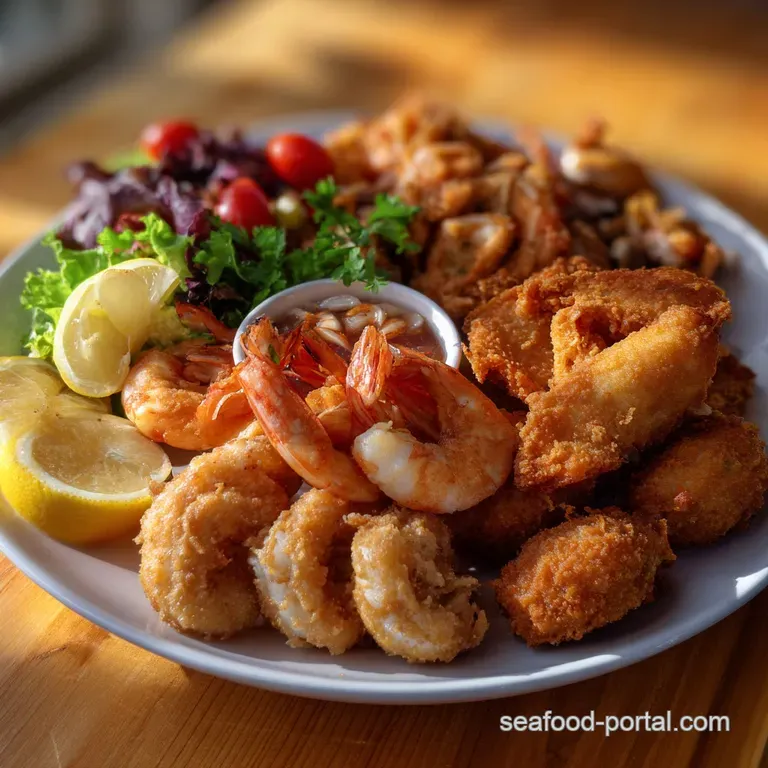
- Pat dry 1 lb fish and 1 lb shrimp.Note: Surface moisture causes the coating to slide off during frying. Use paper towels until the seafood is tacky to the touch.
- Whisk 1.5 cups flour, 0.5 cup cornstarch, and all spices.Note: Thorough distribution of salt and leavening ensures consistent flavor in every bite.
- Beat 2 large eggs with 0.5 cup cold sparkling water.Note: Mixing just before frying preserves the carbonation for a lighter batter.
- Heat 1 quart oil to 375°F (190°C) in your Dutch oven. Note: Proper temperature ensures the Maillard reaction begins the second the fish hits the oil.
- Dredge seafood strips in the dry flour mix.Note: This creates a dry "primer" layer for the wet batter to cling to.
- Dip floured seafood into the egg and sparkling water mixture.Note: Ensure full coverage to lock in the juices.
- Return seafood to the dry flour for a final coating.Note: This double dredge method is the secret to Deep Fried Seafood Recipes with a craggy, crunchy exterior.
- Fry fish strips for 4 minutes until mahogany brown and the sizzle subsides. Note: Auditory cues indicate the moisture has evaporated from the crust.
- Fry shrimp for 2 minutes until opaque and the exterior is golden and firm. Note: Overcooking shrimp leads to a rubbery texture; they cook significantly faster than fish.
- Rest on a wire rack for 3 minutes until the internal temperature stabilizes. Note: Carryover cooking finishes the center without over frying the outside.
Solving the Soggy Breading Dilemma and Temperature Drop
Why Your Fish Coating Falls Off
This usually happens because of a "steam barrier." If the fish is even slightly damp before dredging, the heat of the oil turns that moisture into steam, which pushes the breading away from the flesh. This is a common pitfall in many Crispy Fried Seafood Recipes.
| Problem | Root Cause | Solution | Pro Protocol |
|---|---|---|---|
| Breading is limp/greasy | Oil temp below 350°F | Fry in batches to maintain heat | Wait for oil to return to 375°F between batches |
| Coating is patchy | Incomplete first dredge | Ensure seafood is 100% dry before flouring | Use one "wet hand" and one "dry hand" to avoid clumps |
| Fish is dry/overcooked | Strips cut too thin | Cut fillets into 3 inch thick portions | Pull fish at 140°F internal; it will reach 145°F resting |
⚗️ The Scaling Lab: Physics of Quantity
When you decide to double these Seafood Recipes for a crowd, the thermodynamics change drastically. Doubling the oil doesn't mean you can double the fish per batch.
Achieving the same level of crunch as the single batch requires strict adherence to temperature control, which is the foundation of all excellent Crispy Fried Seafood Recipes.
- Thermal Mass Recovery: Adding 2 lbs of cold seafood to the oil instead of 1 lb will cause a 50°F drop in temperature. This leads to "oil logging," where the batter absorbs fat instead of crisping. The Protocol: Maintain the same batch size regardless of total quantity.
- The Spice Saturation Rule: If doubling the recipe, scale the cayenne and salt to 1.5x (not 2x). Spices provide non-linear flavor impact in deep frying; you don't want the heat to overwhelm the delicate sweetness of the shrimp.
- Evaporation Control: If you're making a dipping sauce, like the one in this Tartar Sauce Recipe, remember that larger volumes in a wide bowl lose moisture faster. Keep sauces covered to maintain emulsion stability.
Common Myths
- Myth: You must use beer for a crispy batter.
Truth: Carbonation is what matters, not alcohol. Sparkling water provides the same lift without the yeast forward flavor profile that can mask the seafood's natural taste.
Myth: Frying at 400°F makes things crispier.
- Truth: Excessive heat burns the exterior spices (like paprika) before the fish center reaches safety. 375°F is the "sweet spot" for most Fried Shrimp Recipes.
Preserving Structural Integrity During Storage and Recovery
- Fridge: Store in an airtight container for up to 2 days. The crust will soften, but the flavor remains intact.
- Freeze: I don't recommend freezing already fried seafood. The ice crystals destroy the protein structure of the shrimp, and the breading will never regain its "shatter" quality. This applies universally to any batch of Crispy Fried Seafood Recipes.
- Reheating: Avoid the microwave! Place leftover Crispy Fried Fish Recipes on a wire rack in a 400°F oven for 5 7 minutes. This allows the oil within the breading to re-fry the crust.
💡 ZERO WASTE PHILOSOPHY Don't discard those shrimp shells! Transform: Simmer them with a bit of butter and water for 20 minutes to create a concentrated shrimp butter.
Science: The shells contain chitin and glutamate, which provide an incredible umami punch for future pasta dishes.
Final Plating Logic and Optimal Flavor Pairing Strategies
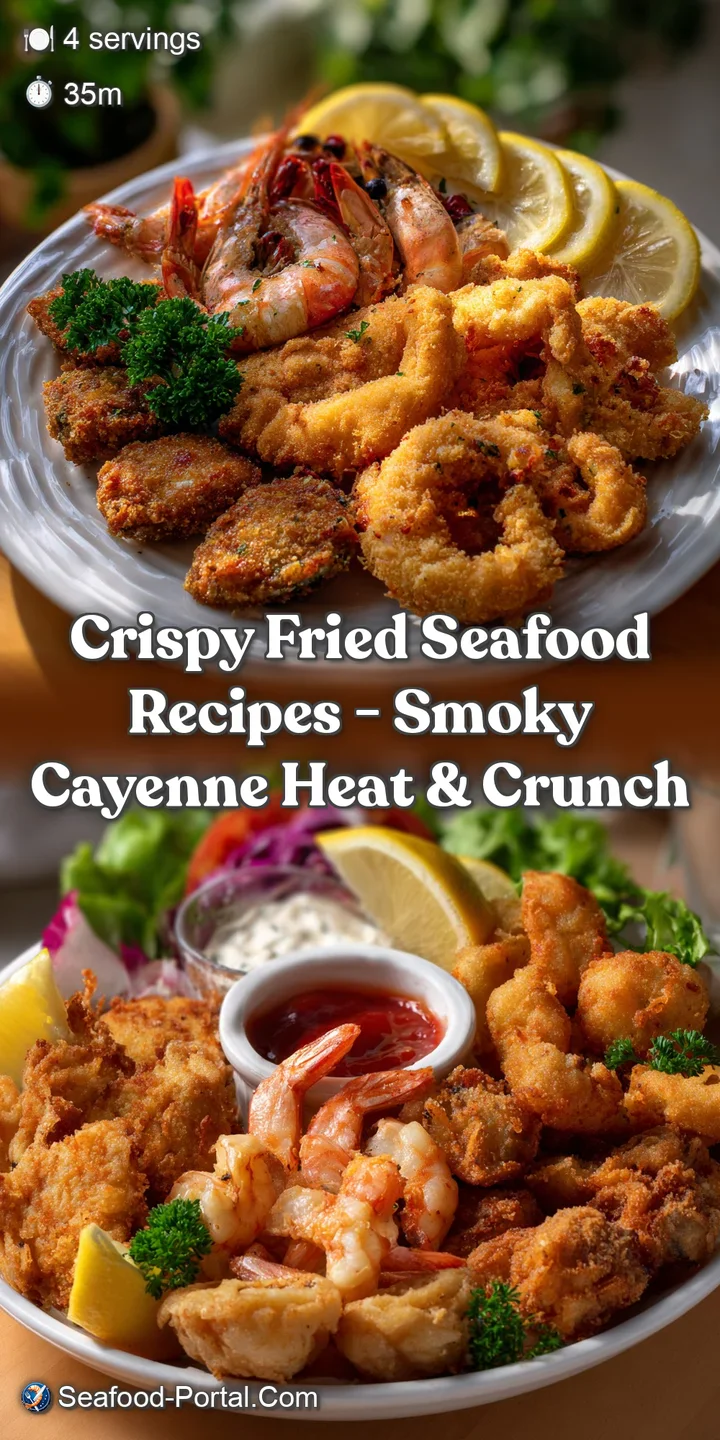
To truly honor these Deep Fried Shrimp Recipes Easy style, serve them immediately while the crust is still "hissing." The contrast between the hot, salty crunch and a cold, acidic accompaniment is vital.
I always serve mine with charred lemon halves; the heat caramelizes the citrus sugars, making the juice less harsh and more floral.
For a complete seaside experience, pair this dish with a side that offers a different texture. This How to Make recipe focuses on the fish specifically, but adding a crunchy slaw or a chilled potato salad creates a balanced plate. Trust me, once you master the CO2-starch ratio, your home kitchen will rival any coastal shack. Let's get that oil heating the perfect Crispy Fried Seafood Recipes are just 15 minutes away!
Recipe FAQs
how to make crispy fried fish recipe?
Use a high starch, low-hydration batter with very cold sparkling water. The carbonation creates internal air pockets that expand rapidly in the hot oil, resulting in a brittle, non-greasy crust. If you enjoyed mastering the technique of controlling the batter consistency here, see how the same principle of precise hydration works when developing the crust for our Spicy Southern Fried Catfish With Mustard Sauce: Crisp Tangy Dinner.
how to make crispy fried fish?
Use a wire rack for cooling, never paper towels. Paper towels trap steam released from the cooling crust, causing immediate softening and sogginess. Proper airflow ensures moisture vaporizes completely, maintaining the thermal shock's crisping effect.
how do you make fried calamari crispy?
Ensure oil maintains exactly 375°F during the entire process. If the temperature drops below 360°F when adding the rings, the batter absorbs excess fat instead of rapidly dehydrating, leading to a limp, heavy coating.
- Dry calamari thoroughly before dredging
- Use a high smoke point oil like peanut
- Avoid overcrowding the fryer basket
how to make fried fish extra crispy?
Use a double dredge technique involving a starch slurry. After dipping the floured fish into the wet batter, immediately return it to a dry flour/cornstarch mix. This creates a craggy, textured surface maximizing the Maillard reaction sites.
can you fry frozen seafood?
No. Always thaw and pat seafood completely dry first. Any residual ice will immediately drop the oil temperature and introduce excessive surface water, causing the coating to steam off the protein.
What oil is best for crispy frying?
Peanut oil offers the highest stable smoke point for frying. Canola oil is a close second but has a lower smoke point, increasing the risk of oil degradation and off-flavors if overheated.
Myth: Adding cornstarch to the flour ruins the crust.
Myth: Adding cornstarch to the flour ruins the crust. Reality: Cornstarch is essential; it actively inhibits gluten formation from the all-purpose flour, resulting in a lighter, more brittle "shatter" rather than a chewy, bread like texture.
Crispy Fried Seafood Masterclass
Ingredients:
Instructions:
Nutrition Facts:
| Calories | 626 kcal |
|---|---|
| Protein | 50.8 g |
| Fat | 20.4 g |
| Carbs | 54.2 g |
| Fiber | 2.8 g |
| Sugar | 0.6 g |
| Sodium | 722 mg |
