Crispy and Savory Fried Fish and Rice Recipe
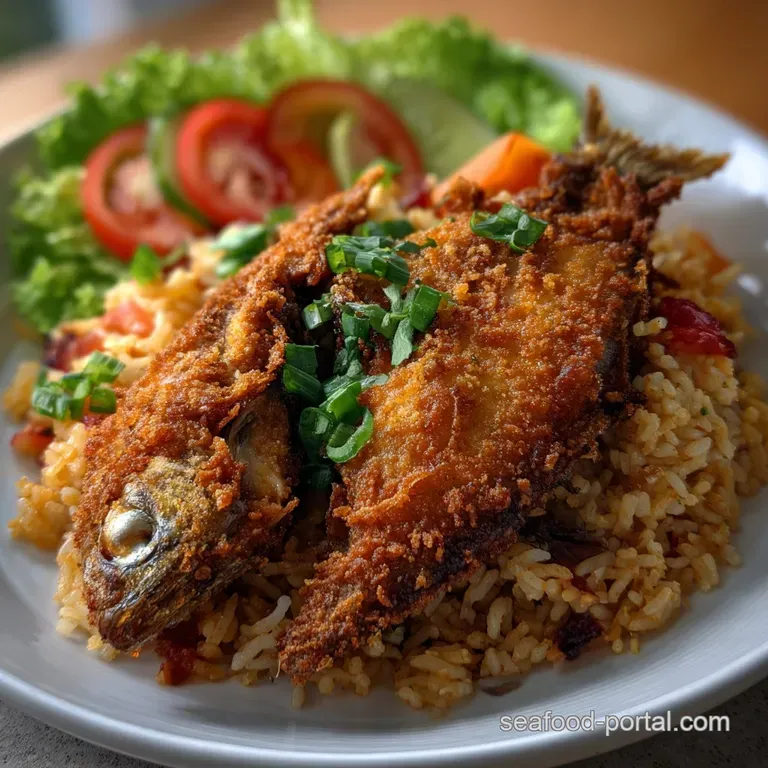
- Time: Active 20 min, Passive 25 min, Total 45 min
- Flavor/Texture Hook: Shatteringly crispy exterior with velvety rice
- Perfect for: Weeknight dinner or casual hosting
- Crispy and Savory Fried Fish and Rice Recipe
- The Science of Achieving Perfect Texture
- Essential Measurements for Perfect Results
- Why These Specific Ingredients Matter
- Minimal Tools for Maximum Flavor
- Step by Step Cooking Instructions
- Fixing Common Fish and Rice Issues
- Delicious Ways to Change Flavors
- Storing and Using Your Leftovers
- Scaling the Recipe for Crowds
- Debunking Common Kitchen Myths
- Garnishing and Serving Your Plate
- Recipe FAQs
- 📝 Recipe Card
Crispy and Savory Fried Fish and Rice Recipe
Have you ever noticed that sound when a fork hits a perfectly fried fillet? It’s a sharp, satisfying crackle that promises a tender, flaky center. Get ready to cook an incredible Crispy and Savory Fried Fish and Rice Recipe!
This meal feels like a coastal getaway right in your own kitchen, but without the hassle of a professional deep fryer or a dozen complex steps.
Most of us struggle with getting that restaurant quality crunch. I used to end up with soggy batter that slid right off the fish or rice that felt like school cafeteria mush. It was frustrating, but after a few trials (and many errors), I found the shortcut that actually works.
We are going to skip the heavy beer batters and instead use a starch focused dry dredge that stays crispy even after it hits the plate.
Right then, let's crack on. This isn't just about frying fish; it's about timing. While the rice simmers and absorbs all that savory chicken stock, we'll get the oil up to temp. By the time the fish is golden and crackling, the rice will be fluffy and ready to serve.
Trust me on this, the combination of the smoked paprika in the dredge and the hit of soy sauce in the rice is a total winner.
The Science of Achieving Perfect Texture
The Science of Why it WorksMechanism: The cornstarch flour blend creates a moisture resistant barrier that shatters rather than bends. Mechanism: Protein denaturation occurs quickly in the hot oil, locking in the natural juices of the fish fillets while the starch dehydrates into a crust.
The secret to this Rice Recipe is the toasting phase. By frying the dry rice grains in a bit of Unsalted butter before adding liquid, you are performing a mini Maillard reaction. This browns the exterior of the grain, adding a nutty depth and creating a protective shell.
This shell prevents the rice from releasing too much starch into the stock, which is exactly why this Savory Fried Fish and Rice Recipe results in distinct, fluffy grains rather than a sticky clump.
But what about the sogginess in the fish? We'll get to that. The high smoke point of Canola oil allows us to fry at 350°F (175°C) without the oil breaking down. At this temperature, the water in the fish's outer layer evaporates instantly. This steam pushes outward, preventing the oil from soaking into the flesh. It's like a tiny steam powered shield that keeps your dinner light and crispy. Similar techniques are often used in the Crispy Pan Seared recipe to ensure the fish remains juicy under a firm crust.
Chef's Tip: Freeze your butter for 10 minutes before adding it to the rice pot. The cold fat creates tiny pockets of steam as it melts, which helps separate the rice grains even further.
Why does the cornstarch flour blend create a better crust?
Cornstarch is pure starch with no gluten. When combined with All purpose flour, it dilutes the protein content. This prevents the coating from becoming "bready" or tough. Instead, you get a glass like crunch that stays firm.
How does toasting the rice improve the texture?
Toasting the grains in fat coats each piece of rice. This creates a barrier that slows down water absorption. It ensures the rice cooks through without bursting and becoming gummy.
Why is the "Rest and Pat" method essential for the fish?
Moisture is the enemy of a crisp fry. If the fish is wet, the steam gets trapped under the flour, making the coating fall off. Patting it dry with paper towels is the single most important step for success.
Essential Measurements for Perfect Results
| Feature | Specification |
|---|---|
| Active Prep Time | 20 minutes |
| Total Cooking Time | 25 minutes |
| Oil Temperature | 350°F / 175°C |
| Rice to Liquid Ratio | 1:1.66 |
| Fish Thickness | 1 inch (ideal) |
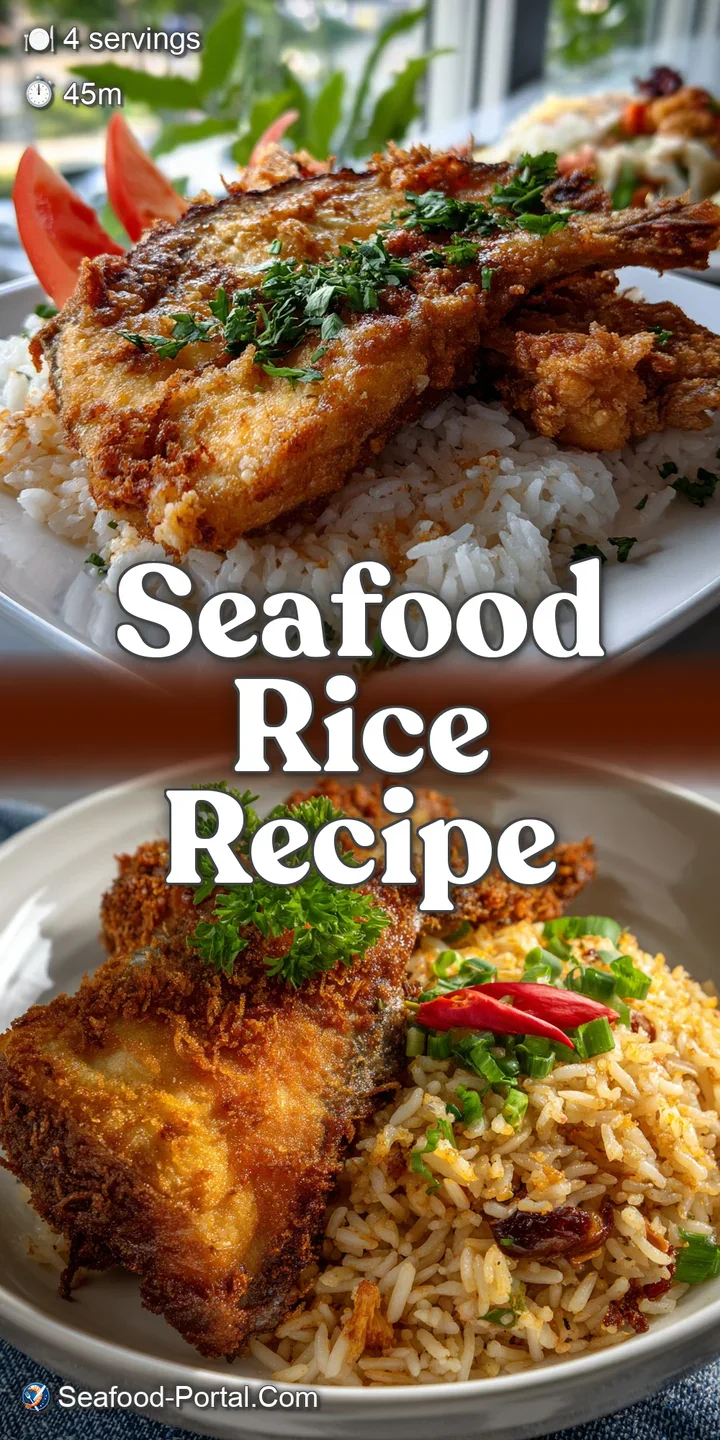
To ensure your Savory Fried Fish and Rice Recipe turns out exactly like the photos, precision matters. We are using 1.5 lbs White Fish Fillets, which usually equates to four decent sized portions. If your fillets are particularly thin, like tilapia, reduce the frying time by about 60 seconds.
For thicker cuts like cod, you might need the full 4 minutes per side.
When it comes to the rice, we are using 1.5 cups Long grain Jasmine or Basmati rice. These varieties are higher in amylose, a type of starch that helps grains stay separate. If you swap for short grain rice, it will be significantly stickier, which might change the vibe of this Seafood Rice Recipe.
I always use a Pyrex glass measuring cup to ensure my 2.5 cups Low sodium chicken or seafood stock is exact.
Why These Specific Ingredients Matter
Selecting the right components for your Crispy and Savory Fried Fish and Rice is the difference between "okay" and "extraordinary." I always reach for Diamond Crystal Kosher Salt because the flakes are easier to pinch and distribute than fine table salt.
For the spice, McCormick Smoked Paprika adds a wood fired aroma that mimics a professional grill without the actual smoke.
Component Analysis
| Ingredient | Science Role | Pro Secret |
|---|---|---|
| Cornstarch | Inhibits gluten development | Mix 50/50 with flour for a "glass like" shatter |
| Jasmine Rice | Aromatic starch profile | Wash until the water runs clear to remove surface starch |
| High Smoke Oil | High heat stability | Keep it at 350°F to prevent oil absorption into the fish |
Ingredients & Substitutes
- 1.5 lbs White Fish Fillets: I prefer Cod or Snapper. Why this? These hold their shape well during the flipping process.
- Substitute: Haddock or Catfish. Both offer a similar flaky texture.
- 1/2 cup All purpose flour: The base for the dredge.
- Substitute: Rice flour for an even lighter, gluten-free crust.
- 1/2 cup Cornstarch: This is the crunch factor.
- Substitute: Arrowroot powder works identically for crisping.
- 1.5 cups Long grain Jasmine rice: Provides the floral aroma.
- Substitute: Basmati rice. It's slightly less sticky and very fragrant.
- 2.5 cups Low sodium chicken stock: The savory liquid base.
- Substitute: Vegetable broth or water with a bouillon cube.
- 1 tbsp Soy sauce: Adds umami and a golden hue to the rice. Why this? It provides depth without needing a long list of spices.
- Substitute: Tamari (for gluten-free) or liquid aminos.
- 1 tsp Smoked paprika: Adds color and a hint of campfire flavor.
- Substitute: Regular sweet paprika or a pinch of chipotle powder for heat.
- 2 cups Canola oil: For frying. Why this? It has a neutral flavor and high smoke point.
- Substitute: Grapeseed oil or peanut oil.
Minimal Tools for Maximum Flavor
You don't need a high end kitchen to pull off this Fish and Rice Recipe. In fact, I prefer using a Lodge 12 inch Cast Iron Skillet for the fish. Cast iron holds heat better than stainless steel, so when you drop the cold fish into the oil, the temperature doesn't plummet.
This is vital for that instant sizzle.
For the rice, a simple heavy bottomed saucepan with a tight fitting lid is all you need. If the lid is loose, steam escapes, and you'll end up with crunchy, undercooked rice. I've used a Le Creuset Dutch Oven for the rice before, and it works brilliantly because the heavy lid locks in every drop of moisture.
- Victorinox Fish Spatula: The thin, flexible blade slides under the delicate fillets without breaking the crust.
- Fine Mesh Strainer: Essential for rinsing the rice to remove excess starch.
- Wire Cooling Rack: Placing fried fish on a rack instead of paper towels prevents the bottom from steaming and getting soggy.
step-by-step Cooking Instructions
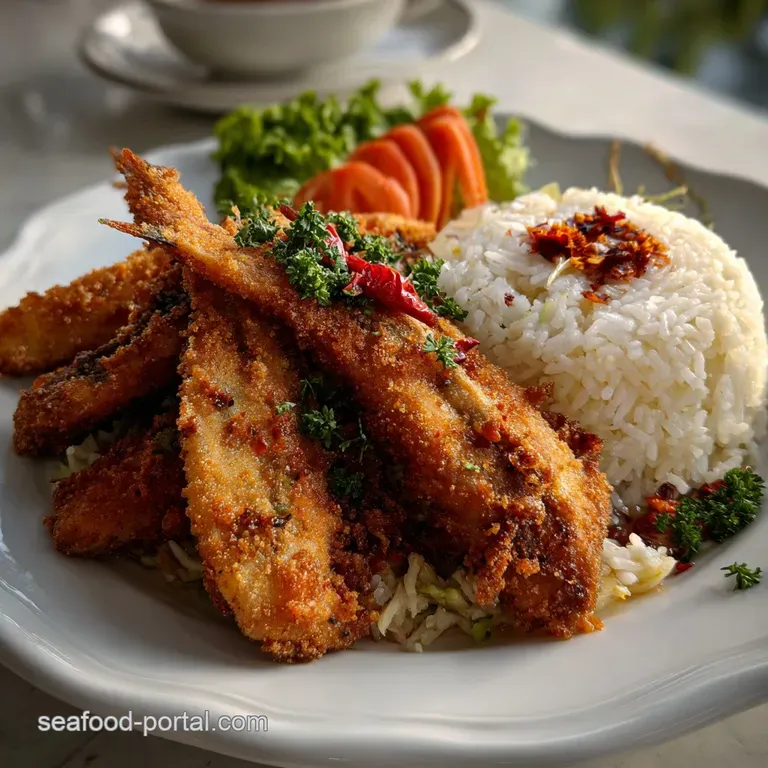
For the Savory Rice
- Rinse the 1.5 cups Jasmine rice under cold water in a fine mesh sieve. Note: This removes surface starch to prevent clumping.
- Melt 1 tbsp Unsalted butter in a saucepan over medium heat.
- Sauté the diced shallot and 2 minced garlic cloves for 2 minutes until soft and fragrant.
- Add the rinsed rice to the pan and stir for 3 minutes until the grains look opaque and smell nutty.
- Pour in 2.5 cups chicken stock and 1 tbsp soy sauce.
- Bring to a boil, then reduce heat to low, cover, and simmer for 15 minutes until liquid is fully absorbed.
- Remove from heat and let it sit, covered, for 5 minutes. Fluff with a fork just before serving.
For the Crispy Fish
- Pat the 1.5 lbs White Fish Fillets dry with paper towels. Note: Surface moisture causes the coating to steam off rather than fry.
- Whisk the 1/2 cup flour, 1/2 cup cornstarch, and spices (paprika, garlic powder, cayenne, salt, pepper) in a shallow bowl.
- Heat 2 cups Canola oil in your Lodge Cast Iron Skillet to 350°F (175°C).
- Dredge each fillet in the starch mixture, shaking off any excess.
- Place fish in the oil, frying in batches if necessary to avoid overcrowding.
- Cook for 3-4 minutes per sideuntil the crust is golden brown and shatters when poked.
- Transfer to a wire rack and season with a tiny pinch of extra salt immediately.
Fixing Common Fish and Rice Issues
It happens to the best of us sometimes the fish isn't as crunchy as we'd like, or the rice is a bit firm. Don't panic! Most kitchen "disasters" are just minor temperature or timing tweaks away from being fixed.
Why Your Fish Coating Is Soggy
If your fish comes out limp, the oil wasn't hot enough. When oil is too cool, the starch absorbs the fat instead of crisping up. If you don't have a thermometer, dip the end of a wooden spoon into the oil; if it bubbles vigorously, you’re good to go.
Why Your Rice Is Gummy
Gummy rice usually comes from skipping the rinse or the toasting step. If it's already cooked and sticky, you can spread it out on a baking sheet and pop it in a 300°F (150°C) oven for 5 minutes to dry it out.
| Problem | Cause | Fix | Pro Tip |
|---|---|---|---|
| Bland Rice | Not enough salt in stock | Add a splash of soy sauce at the end | Use bouillon for more depth than plain water |
| Fish Coating Falling Off | Fish was too wet before dredging | Pat dry with multiple paper towels | Let dredged fish sit for 1 min before frying |
| Burnt Spices | Oil temperature too high | Reduce heat and add a splash of fresh oil | Keep the oil below 375°F (190°C) |
Delicious Ways to Change Flavors
Once you've mastered the basic Crispy and Savory Fried Fish and Rice Recipe, the sky is the limit. You can easily pivot the flavor profile based on what's in your pantry. For example, I sometimes swap the soy sauce for fish sauce and add lime zest to the rice for a Southeast Asian twist.
Can I make this a "Cajun Style" dish?
Absolutely. Swap the smoked paprika and cayenne for 2 tablespoons of a pre mixed Cajun seasoning. In the rice, replace the shallots with the "holy trinity": finely diced celery, bell pepper, and onion.
What if I want a zesty "Lemon Herb" version?
Omit the soy sauce and paprika. Add the zest of two lemons to the flour dredge and stir fresh parsley and dill into the finished rice. It makes the whole dish feel much lighter and brighter.
If you are looking for another variation of crispy seafood, you might enjoy the textures in The Homemade Fried recipe which uses a different breading technique but offers that same satisfying crunch.
Storing and Using Your Leftovers
Fried fish is notoriously difficult to store because the crust loses its "shatter" in the fridge. However, you can keep it for up to 2 days in an airtight container. The rice will stay fresh for up to 4 days.
- Reheating: Never use the microwave for the fish! It will turn into a rubbery mess. Instead, use an air fryer at 375°F (190°C) for 3 minutes or a toaster oven. This brings back the crunch.
- Freezing: You can freeze the cooked rice for up to 3 months. I don't recommend freezing the fried fish, as the texture suffers significantly upon thawing.
- Zero Waste Tip: If you have leftover fish that just won't get crispy again, flake it into a bowl, mix with a little mayo and lime, and turn it into fish tacos. Those crispy bits of batter add great flavor even if they aren't "shattering" anymore. Use the leftover rice as the base for an Almondine Fish recipe the next night to save on prep time.
Scaling the Recipe for Crowds
Scaling this Rice Recipe is straightforward, but you have to be careful with the frying. If you are doubling the recipe for 8 people, do not try to fry all the fish at once.
- Scaling Down (2 servings): Use half of all ingredients. For the rice, use a smaller 1 quart pot to ensure the liquid doesn't evaporate too quickly.
- Scaling Up (8 servings): Double the rice and stock. For the fish, fry in 3 or 4 batches. Keep the finished fish in a 200°F (95°C) oven on a wire rack to stay warm while you finish the rest.
- Pro Tip for Large Batches: If doubling the spices, only use 1.5x the salt. You can always add more salt at the end, but you can't take it away!
Debunking Common Kitchen Myths
- Myth: Searing/Frying "seals in" juices. This is a classic kitchen tale. Moisture loss happens regardless of the crust. The crust is there for flavor and texture, not to act as a physical seal. The real key to juicy fish is not overcooking it past 145°F (63°C) internal temperature.
- Myth: Rinsing rice removes all the nutrients. While some surface level enrichment might be washed away, the benefit of having fluffy, non gummy rice far outweighs the microscopic loss of vitamins. Most of the nutrients are inside the grain anyway.
- Myth: You need a deep fryer for "real" fried fish. Not true! A shallow fry in a heavy skillet uses less oil and gives you more control over the browning. It's much easier for the home cook to manage.
Garnishing and Serving Your Plate
Presentation is the final step in making this Savory Fried Fish and Rice Recipe feel special. I like to serve the rice in a small mound using a ramekin as a mold, then lean the crispy fish fillet against it.
- The Greenery: Don't skip the sliced scallions. They provide a fresh, sharp bite that cuts through the richness of the fried fish.
- The Acid: Always serve with a lemon wedge. A quick squeeze of acid brightens the fats and makes the flavors pop.
- The Sauce: While this dish is savory enough on its own, a small side of tartar sauce or a spicy remoulade never hurts.
Decision Shortcut
- If you want it spicier: Double the cayenne pepper and add a teaspoon of chili flakes to the rice water.
- If you want it crunchier: Use only cornstarch for the dredge and skip the flour entirely (this is the secret to "extra crispy" tempura).
- If you want it faster: Use a rice cooker for the rice, but still sauté the garlic and shallots in butter first and stir them into the cooker.
This recipe is all about confidence in the kitchen. By understanding the science of the starch and the importance of the rice toasting phase, you're not just following a list of steps you're mastering a technique. Enjoy your homemade, restaurant quality meal!
Recipe FAQs
Can I substitute the white fish with salmon fillets?
Yes, but adjust cooking time. Salmon has a higher fat content and is thicker, so it will require slightly longer frying time to cook through without burning the crust.
Why is my fish coating becoming soggy immediately after frying?
No, the oil temperature is likely too low. If the oil temperature drops below 350°F (175°C) when the fish hits the pan, the starch absorbs oil instead of rapidly crisping, leading to a soggy texture.
Is it possible to make the rice ahead of time?
Yes, the rice can be prepped. You can toast the dry rice up to two hours in advance before adding the stock and simmering, which helps lock in the nutty flavor.
What is the best way to reheat leftover fried fish?
No, never use the microwave. Use an air fryer or toaster oven at 375°F (190°C) for about 3 minutes to reactivate the crispiness of the cornstarch coating.
Can I use standard tap water instead of chicken stock for the rice?
Technically yes, but it is not recommended. Using stock adds significant savory depth to the finished grains; water results in a very bland base.
If I skip rinsing the rice, what happens to the texture?
No, the rice will become gummy and stick together. Rinsing removes the excess surface starch that causes clumping, which is crucial for this distinct, fluffy rice preparation.
Are there variations for an extra spicy coating?
Yes, increase the cayenne pepper in the dredge. You can also use the same technique of dusting in a dry coating, similar to how we prepare the fish in the Sizzling Seared Ahi Tuna for added flavor complexity.
Crispy Fried Fish And Rice
Ingredients:
Instructions:
Nutrition Facts:
| Calories | 618 kcal |
|---|---|
| Protein | 39.5 g |
| Fat | 12.5 g |
| Carbs | 84 g |
| Fiber | 1.8 g |
| Sugar | 1.1 g |
| Sodium | 745 mg |
