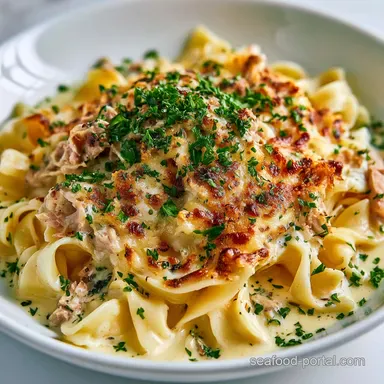
Traditional Tuna Noodle Casserole: Creamy and Crunchy
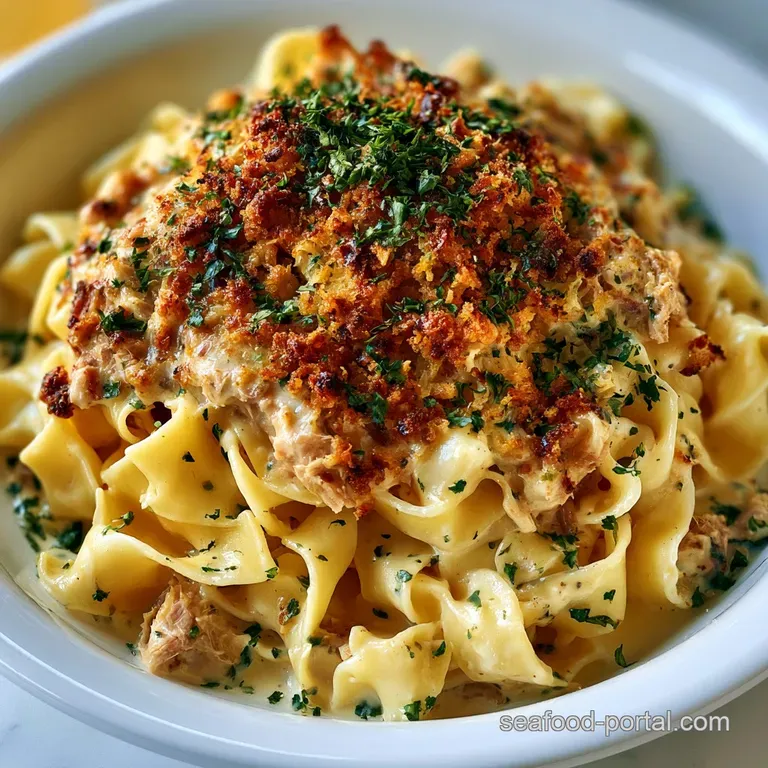
- Time:15 minutes active + 30 minutes bake = Total 45 minutes
- Flavor/Texture Hook: Savory, creamy interior with a golden, crunchy potato chip topping
- Perfect for: Cozy weeknight dinners, budget-friendly family meals, or comfort food cravings
The sound of that first scoop hitting the plate is what gets me - that distinct crack of the buttered potato chip crust giving way to a steaming, velvety center. For me, this dish is a time machine.
It takes me straight back to my grandmother's kitchen in the 60s, where the air always smelled like toasted butter and simmering cream. Back then, this was the gold standard of "fancy" weeknight dinners, a cultural staple of mid century American homes that turned a few pantry staples into something that felt like a hug in a bowl.
Growing up, I thought every house had a version of this. It was the ultimate comfort food, though some versions I tried as a kid were a bit too "mushy" for my liking. I spent a few years trying to figure out why some versions felt like baby food while others had a bit of bite and a rich, layered flavor.
The secret, as it turns out, isn't about adding more ingredients, but about how you handle the ones you already have.
You can expect a meal that is hearty and satisfying without being overly heavy. This Tuna Noodle Casserole hits all the right notes: the saltiness of the tuna, the sweetness of the peas, the tang of the lemon, and that unmistakable crunch on top.
It's a straightforward process, but we're going to use a couple of tricks to make sure the noodles don't turn into paste and the sauce stays silky.
The Secret to Tuna Noodle Casserole
When you first look at the ingredients, it seems simple. But there's a lot happening under the surface to ensure the texture stays right. We're not just mixing things in a bowl; we're building a structure.
The Starch Buffer: Undercooking the noodles means they finish cooking in the sauce, absorbing the flavor without releasing too much excess starch that would make the dish gummy.
The Fat Bridge: Using a roux (butter and flour) before adding milk creates a stable emulsion, ensuring the sauce doesn't separate or break when it hits the high heat of the oven.
Acidity Balance: A splash of lemon juice acts as a foil to the heavy cream and cheddar, brightening the whole dish and cutting through the richness.
Texture Contrast: The potato chip topping provides a necessary "shatter" effect, preventing the casserole from feeling one dimensional in the mouth.
Since we're talking about a classic, you might wonder if you should stick to the traditional method or go for a shortcut. I've tried both, and here is how they actually stack up in the kitchen.
| Method | Prep Time | Texture | Best For |
|---|---|---|---|
| From Scratch Roux | 20 mins | Velvety & Stable | Special family dinners |
| Condensed Soup Only | 10 mins | Thicker & Saltier | Extreme time crunches |
| Slow Cooker | 6 hours | Very Soft | Set it and forget it days |
It's worth noting that while the soup provides a great base, adding a small homemade roux makes a world of difference in the final mouthfeel. It's the difference between a "canned" taste and a "homemade" taste.
Component Analysis
Understanding what each part does helps you adjust the recipe on the fly. If you've ever had a casserole that felt too dry or too soupy, it's usually because one of these roles was ignored.
| Ingredient | Science Role | Pro Secret |
|---|---|---|
| Wide Egg Noodles | Structural Base | Use wide noodles for more sauce surface area |
| Unsalted Butter | Flavor/Binder | Brown it slightly for a nuttier depth |
| Sharp Cheddar | Salt/Emulsifier | Grate it yourself to avoid anti clumping starch |
| Lemon Juice | pH Balancer | Adds a "fresh" note that masks the canned tuna taste |
You'll notice I specify unsalted butter. When you're using condensed soup and potato chips, you've already got a lot of sodium in the mix. Controlling the butter salt lets you dial in the seasoning perfectly.
The Building Blocks
Right then, let's look at what you need to get this on the table. I've listed everything exactly, but I'll give you some options if your pantry is looking a bit bare.
- 12 oz wide egg noodles Why this? Holds sauce better than thin pasta
- 4 quarts water
- 1 tbsp salt
- 3 tbsp unsalted butter Why this? Creates the base for the sauce
- 3 tbsp all purpose flour
- 2 cups whole milk Why this? Fat content keeps the sauce silky
- 1 can (10.5 oz) condensed cream of mushroom soup
- 1/2 tsp garlic powder
- 1/4 tsp black pepper
- 1/4 tsp salt
- 2 cans (5 oz each) albacore tuna in water, drained Why this? Firm flake doesn't disappear in the sauce
- 1 cup frozen peas, thawed
- 3/4 cup shredded sharp cheddar cheese Why this? Strong flavor that cuts through the cream
- 2 tbsp fresh lemon juice
- 2 cups crushed potato chips Why this? Superior crunch and salt profile
- 2 tbsp melted butter
If you find yourself without some of these, don't panic. I've put together a list of swaps that won't ruin the dish.
| Original Ingredient | Substitute | Why It Works |
|---|---|---|
| Wide Egg Noodles | Penne or Fusilli | Similar starch profile. Note: May require 2-3 mins extra bake time |
| Cream of Mushroom | Cream of Celery | Similar thickness. Note: Milder, more "garden" flavor |
| Whole Milk | Heavy Cream | Higher fat. Note: Makes it much richer and denser |
| Potato Chips | Panko Breadcrumbs | Great crunch. Note: Lacks the salty, fried punch of chips |
| Albacore Tuna | Canned Salmon | Similar protein. Note: Salmon is oilier and more distinct |
But a word of warning: don't swap the lemon juice for vinegar. Vinegar is too aggressive and can curdle the milk if you aren't careful. Stick to citrus.
Necessary Kitchen Gear
You don't need a professional kitchen for this, but a few specific tools make the process smoother. I usually use a medium saucepan for the sauce and a large mixing bowl for the final assembly.
For the noodles, a large pot (at least 5 quarts) is essential. If the water is too crowded, the noodles will clump and cook unevenly. I also highly recommend a whisk; trying to get the lumps out of a roux with a spoon is a nightmare I wouldn't wish on anyone.
Finally, you'll need a 9x13 inch baking dish. Glass or ceramic works best here because they distribute heat evenly, preventing the edges from burning before the center is bubbling.
From Prep to Plate
Let's crack on. This is where we bring everything together. Pay close attention to the cues - the smells and sights are more important than the timer.
Phase 1: The Pasta Foundation
- Bring the 4 quarts of salted water to a rolling boil.
- Add the egg noodles and cook for 2 minutes less than the package directions. until they have a firm bite (al dente). Note: They will finish cooking in the oven.
- Drain in a colander and set aside. Do not rinse them; that starch helps the sauce stick.
Phase 2: The Velvety Sauce
- In a medium saucepan, melt 3 tbsp butter over medium heat.
- Whisk in the flour and cook for 1 minute until it smells nutty but stays pale. Note: If it turns brown, you've gone too far.
- Slowly pour in the milk, whisking constantly until the mixture thickens and becomes smooth.
- Stir in the condensed mushroom soup, garlic powder, pepper, and salt. Remove from heat immediately.
Phase 3: The Final Fold & Bake
- In a large mixing bowl, combine the undercooked noodles, creamy sauce, drained tuna, peas, lemon juice, and shredded cheese.
- Fold gently until every noodle is coated in sauce. Note: Be careful not to mash the tuna into a paste.
- Pour the mixture into a 9x13 inch baking dish and spread it evenly.
- In a small bowl, toss crushed potato chips with 2 tbsp melted butter.
- Spread the chip mixture evenly over the top of the casserole.
- Bake at 375°F (190°C) for 20-25 minutes until the edges bubble and the topping is a deep golden brown.
Chef's Note: To get that professional look, don't over mix the tuna. You want distinct chunks of fish throughout the dish, not a homogenized tuna cream. It adds a much better texture to every bite.
If you're looking for other ways to use tuna, you might enjoy learning how to cook tuna steak for a lighter, fresher alternative to a heavy bake.
Pro Tips & Pitfalls
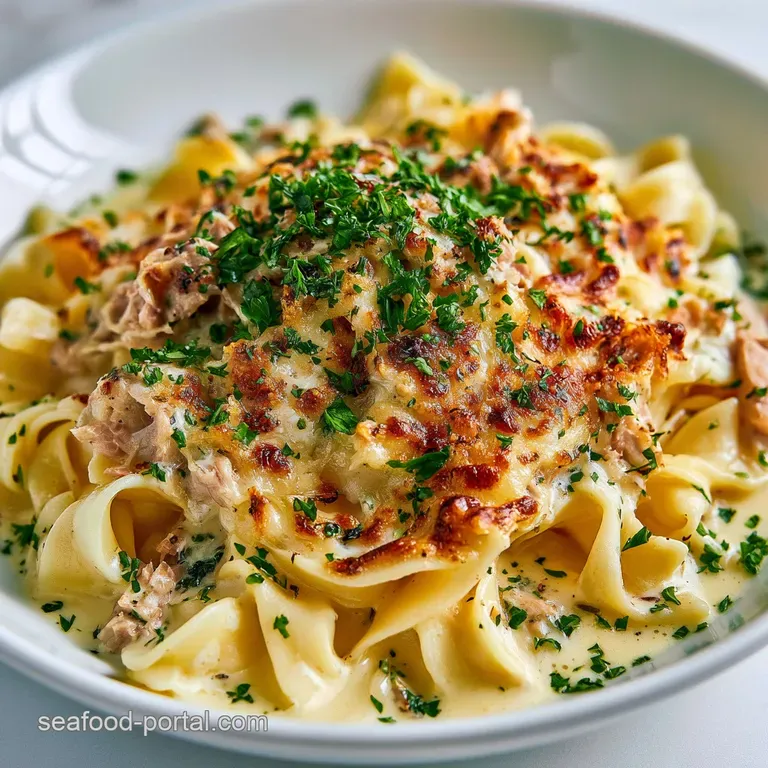
I've made every mistake in the book with this recipe. I've had casseroles that were basically tuna soup and others that were as dry as a bone. Here is how to avoid those traps.
Troubleshooting Common Issues
| Issue | Solution |
|---|---|
| Why Your Casserole Is Watery | This usually happens for two reasons: you didn't drain the tuna well enough, or you overcooked the noodles. When noodles are overcooked, they release too much starch and water into the sauce, breaking |
| How to Stop Noodle Absorption | Ever notice how a casserole is creamy at first, but by the time you serve it, the noodles have sucked up all the sauce? The trick is the "under cook" method I mentioned. By leaving those two minutes o |
| Why the Topping Burned | If your potato chips are black but the cheese isn't melted, your oven rack is too high. Move it to the center position. Also, tossing the chips in melted butter creates a protective layer that helps t |
Common Mistakes Checklist:
- ✓ Did you drain the tuna thoroughly?
- ✓ Are the noodles still slightly firm before baking?
- ✓ Did you whisk the milk in slowly to avoid lumps?
- ✓ Is the oven rack in the middle position?
- ✓ Did you use fresh lemon juice instead of bottled?
Adjusting the Batch Size
Scaling a casserole isn't as simple as doubling the numbers, especially when it comes to the sauce and the baking time.
Cutting it in half (1/2): Use a 9x9 inch square pan. Reduce the baking time by about 20%, checking at 15 minutes. For the roux, you'll use 1.5 tbsp butter and flour. If the recipe called for an egg (though this one doesn't), you'd beat it first and use half.
Doubling the recipe (2x): Use two 9x13 inch pans. Do not put all the mixture into one giant, deep pot; the center will stay cold while the edges burn. When doubling, only increase the salt and garlic powder to 1.5x. Spices can become overpowering when scaled linearly.
Baking Adjustments: If you're baking a deeper dish, lower the oven temp to 350°F (175°C) and extend the time by 10-15 minutes. This ensures the middle gets hot without the top turning into charcoal.
If you find yourself making this often, you might want to try a homemade creamy tuna casserole that skips the canned soup entirely for a more refined flavor.
Common Kitchen Myths
There are a few things people tell you about tuna casseroles that just aren't true. Let's clear the air.
Myth: You must rinse the tuna after draining. Truth: Don't do this. Rinsing removes some of the flavor and can introduce too much water into the mix, making your sauce runny. Just press the tuna firmly against the strainer.
Myth: Using a higher temp cooks it faster and better. Truth: High heat just burns the topping. The "magic" happens at 375°F, where the sauce can simmer and the cheese can melt without the chips incinerating.
Myth: Canned soup is the only way to get the right thickness. Truth: A proper roux is actually more stable than the starches in canned soup. The soup is great for flavor, but the roux is what gives you that velvety, professional texture.
Storage Guidelines
This is a great meal prep dish, but you have to handle the reheating carefully to keep the texture from becoming a mess.
In the Fridge: Store leftovers in an airtight container for up to 3 days. The sauce will thicken significantly as it cools because the noodles continue to absorb moisture.
In the Freezer: You can freeze this for up to 2 months. I recommend freezing the casserole before adding the potato chip topping. If you freeze the chips, they'll turn soggy during the thawing process. To freeze, wrap the base tightly in foil and plastic wrap.
Reheating Specifics: Avoid the microwave if you can. It tends to make the tuna rubbery and the sauce oily. Instead, put a portion in a small oven safe dish, add a tablespoon of milk to loosen the sauce, and bake at 325°F (160°C) for 15 minutes.
If you must use a microwave, use medium power and stir every 60 seconds.
Zero Waste Tips: If you have leftover peas or a bit of cheese, toss them into an omelet the next morning. Also, don't throw away the tuna can liquid if you have a compost bin; it's rich in nitrogen.
If you have a bit of roux left over in the pan, add a splash of water and a pinch of salt to make a quick savory glaze for some steamed carrots.
Pairing Ideas
Since this dish is quite rich and creamy, you need sides that provide a "snap" or a bit of acidity to cleanse the palate.
The Fresh Route: A crisp arugula salad with a sharp lemon vinaigrette is the best pairing. The peppery greens and the acid cut right through the cheddar and cream sauce.
The Veggie Route: Steamed broccoli or roasted asparagus works beautifully. Avoid other creamy sides (like mashed potatoes) - you don't want your whole plate to be "soft." You need a vegetable with some structural integrity.
The Drink Route: A chilled glass of Sauvignon Blanc or a sparkling water with a lime wedge complements the seafood and lemon notes in the casserole.
Right then, you've got everything you need. This Tuna Noodle Casserole is more than just a throwback; it's a reliable, comforting meal that works every single time if you just follow those few texture rules. Trust me on the lemon juice and the undercooked noodles - they're the real game changers here.
Let's get cooking!
High in Sodium
950 mg 950 mg of sodium per serving (41% 41% of daily value)
The American Heart Association recommends a limit of 2,300mg of sodium per day for most adults to maintain heart health.
Tips to Reduce Sodium
-
Swap the Condensed Soup-30%
Replace the condensed cream of mushroom soup with a homemade version using fresh mushrooms, milk, and a touch of flour to eliminate the highest source of sodium.
-
Change the Topping-25%
Substitute the crushed potato chips with panko breadcrumbs or crushed unsalted walnuts for a crunchy topping without the added salt.
-
Eliminate Added Salt-20%
Remove the 1 tablespoon of salt from the pasta water and the 1/4 teaspoon in the sauce; the cheese and tuna already provide significant salinity.
-
Use Low-Sodium Tuna-15%
Opt for no-salt added canned tuna or rinse the drained tuna thoroughly under cold water to remove excess brine.
-
Moderate the Cheese-10%
Reduce the amount of sharp cheddar or use a low-sodium cheese alternative, as the strong flavor allows you to use less.
-
Enhance with Aromatics
Add fresh parsley, thyme, or a squeeze of extra lemon to brighten the dish and provide flavor without increasing sodium.
Recipe FAQs
How do you make an easy tuna casserole?
Boil egg noodles for 2 minutes less than package directions. Fold them into a mixture of butter, flour, milk, mushroom soup, tuna, and cheese, then bake at 375°F with a potato chip topping.
What is the secret to preventing mushy noodles?
Undercook the pasta. Leaving the noodles slightly firm before baking ensures they absorb the sauce during the oven time without losing their structure.
How to make a tuna casserole without mushroom soup?
Increase the butter and flour roux. This creates a thick béchamel that mimics the canned soup's consistency, similar to the creamy base used in a tuna melt sandwich.
What are some good sides to serve with a tuna casserole?
Pair it with a crisp green salad. Fresh greens with a citrus vinaigrette cut through the richness of the cheese and cream sauce.
Is it true that tuna casserole should be frozen with the potato chip topping?
No, this is a common misconception. Freeze the base only and add the chips immediately before baking to prevent the topping from becoming soggy.
Why is my tuna casserole watery?
Drain the tuna completely. Watery casseroles usually result from poorly drained fish or overcooking the noodles before they go into the oven.
How to reheat tuna casserole leftovers?
Add a splash of milk before heating. Because the noodles absorb moisture while stored in the fridge, extra milk restores the original creamy texture.
Creamy Tuna Noodle Casserole 4