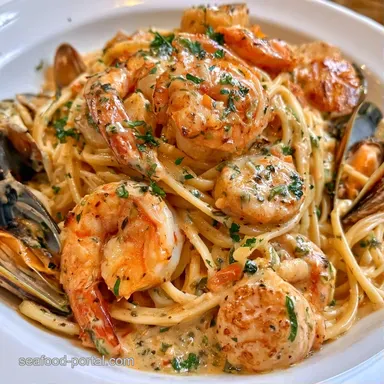
Creamy Seafood Linguine with Shellfish

- Time: 20 min active + 30 min cooking
- Flavor & Texture: Briny shellfish and bright lemon in a rich, smooth sauce
- Perfect for: Elegant dinner dates or small gatherings
Creamy Seafood Linguine
Coastal Italy has a long tradition of "Frutti di Mare," where the meal depends entirely on the morning's catch. It's a way of eating that celebrates the Mediterranean, focusing on a few high-quality ingredients and a lot of heat.
This easy seafood linguine brings that celebratory energy to your table. It's the kind of plate that looks and smells like a harbor town, balancing the deep saltiness of the ocean with a bright, citrusy finish.
You can expect a dish that feels indulgent but doesn't weigh you down. The key is the balance between the heavy cream and the lemon juice, ensuring every bite feels vibrant and fresh.
At a Glance
The Pasta Finish: Cooking the noodles two minutes short lets them soak up the sauce rather than just being coated by it.
Searing Order: Shrimp and scallops leave the pan first. This prevents them from turning rubbery while the slower-cooking clams and mussels open.
Starch Bind: Reserved pasta water ties the cream and seafood juices together, creating a stable sauce that clings to the pasta.
| Selection Style | Seafood Mix | Flavor Profile | Cost |
|---|---|---|---|
| Premium | Shrimp, Scallops, Mussels, Clams | Deep, complex briny notes | Higher |
| Budget | Shrimp and Mussels only | Lighter, simpler ocean flavor | Lower |
I like using a mix of shellfish because the scallops add a buttery sweetness that cuts through the salt of the clams.
Ingredients and Swaps
| Component | Purpose | Substitute Notes |
|---|---|---|
| Heavy Cream | Gives the sauce body and richness | Full-fat coconut milk: lends a tropical vibe and reduces dairy |
| Fish Stock | Adds a briny, savory depth | Vegetable broth: offers a milder flavor with less "sea" essence |
| Shellfish | Main source of protein and taste | Firm white fish: modify the cooking time according to thickness |
- 8 oz shrimp, peeled and deveined
- 8 oz sea scallops, patted dry
- 1/2 lb mussels, scrubbed and debearded
- 1/2 lb clams, purged of sand
- 2 tbsp olive oil
- 2 tbsp unsalted butter
- 1 medium onion, finely diced
- 4 cloves garlic, minced
- 1/2 cup fish stock Why this? Adds deep, salty ocean flavor
- 1 tbsp fresh lemon juice Why this? Cuts through the rich cream
- 3/4 cup heavy cream
- 1/2 tsp salt
- 1/4 tsp cracked black pepper
- 1/4 cup fresh parsley, chopped
- 8 oz linguine pasta
- 4 qts water
- 2 tbsp salt for pasta water
| Original Ingredient | Substitute | Why It Works |
|---|---|---|
| Heavy Cream (3/4 cup) | Coconut Cream (3/4 cup) | Similar fat content. Note: Adds a coconut flavor, best for tropical twists |
| Linguine (8 oz) | Fettuccine (8 oz) | Comparable width and surface area for sauce adhesion |
I wouldn't recommend substituting vinegar for the lemon here. The citrus is what really makes the seafood shine.
Kitchen Tools
Grab a large pot for the pasta and a deep skillet. The depth is essential for steaming the mussels and clams in the sauce, otherwise, a shallow pan will overflow. I suggest using a stainless steel pan to achieve a better sear on the scallops.
Step-by-step Instructions
### Prepare the base
- Bring a large pot of water with 2 tbsp salt to a rolling boil. Add 8 oz linguine and boil for 2 minutes shy of the package instructions to ensure it is al dente.
- Set aside 1 cup of the cloudy pasta water before straining the noodles, then set the pasta aside. Note: This water is the glue for your sauce.
- Use paper towels to pat the shrimp and scallops completely dry.

### Sear the seafood
- In a deep skillet, warm 2 tbsp olive oil and 1 tbsp butter over medium-high heat.
- Stir in shrimp and scallops, searing for 1-2 minutes per side until just opaque and reaching an internal temp of 145°F (63°C). Immediately move them to a plate.

### Build the sauce
- Turn the heat down to medium. Mix in the final 1 tbsp butter, diced onion, and minced garlic, sautéing for 2-3 minutes until translucent and fragrant.
- Add 1/2 cup fish stock and 1 tbsp lemon juice. Simmer for 3-4 minutes until the volume is halved.
- Stir in 3/4 cup heavy cream and simmer gently for 3-5 minutes until the sauce reaches a nappe consistency, which means it coats the back of a spoon.
### Finish the dish
- Put the mussels and clams into the sauce. Cover and steam for 5-7 minutes until all shells have opened and seafood has reached an internal temp of 145°F (63°C). Discard any shells that didn't open.

- Return the seared shrimp and scallops to the pan.
- Stir in the linguine and 1/4 cup of the saved pasta water. Toss gently over medium heat for 1-2 minutes, adding extra pasta water by the tablespoon if needed until the sauce is velvety and clings to the pasta.
- Stir in 1/4 cup fresh parsley and remove from the heat.
The Trick Behind the Texture
This method relies on two main things: timing and starch. By searing the scallops and shrimp first, you create a flavorful crust without overcooking them.
The final toss with pasta water emulsifies the fat from the cream and butter, preventing the sauce from separating into a greasy pool at the bottom of the plate.
How to Fix Common Problems
### Closed Shells
Any mussels or clams that stay closed after steaming are dead. Throw them away immediately. They won't open regardless of how much longer you cook them and aren't safe to eat.
### Separating Sauce
If the sauce looks broken or greasy, your heat is too high. Take the pan off the burner and whisk in a tablespoon of reserved pasta water quickly. This helps bring the emulsion back together.
### Rubbery Seafood
Rubbery shrimp usually happen when they are left in the pan too long. Use a thermometer to hit 145°F (63°C) and pull them out immediately. Remember, they will continue to cook slightly while resting on the plate.
Freezing and Reheating Guide
Store any remaining portions in a tight-sealing glass jar in the fridge. Per USDA guidelines on leftovers, cooked dishes remain safe for 3 to 4 days. I suggest eating them within 2 days for peak quality, as the pasta tends to soak up the sauce.
The sauce will likely be thick when you reheat it. Stir in a bit of water or milk to thin it out before warming it on the stove over low heat until it reaches 165°F (74°C) in the centre.
Avoid freezing this dish. The cream sauce will break, and the shrimp and scallops will lose their texture and turn rubbery after thawing.
Easy Swaps and Add-Ins
### Seafood Linguine Fra Diavolo
For a spicier kick, mix in 1 tsp of crushed red pepper flakes as the garlic browns. I also suggest adding a pinch of paprika to achieve a smokier profile and a more vibrant red color.
### The Low-Dairy Option
You can create a Homemade seafood linguine by substituting full-fat coconut cream for the heavy cream. This introduces a subtle nutty flavor, but the rich consistency remains identical.
What to Serve This With

This is a rich dish, so you need something to cut through the cream. A crisp arugula salad with a sharp lemon vinaigrette is a great pairing.
I also love serving this with a toasted baguette to soak up the extra sauce. If you're hosting a larger gathering, a clam dip recipe makes a great appetizer to set the ocean theme.
Critical in Sodium
1275 mg of sodium per serving (55% of daily value)
American Heart Association recommendation: no more than 2,300 mg of sodium per day
Tips to Reduce Sodium
-
Reduce Pasta Water Salt
Drastically reduce the 2 tablespoons of salt used for boiling the pasta, as this is a primary source of hidden sodium.
-
Low-Sodium Fish Stock
Replace the standard fish stock with a low-sodium or homemade version to significantly cut down the base sodium levels.
-
Omit Added Salt
Remove the 1/2 tsp of salt from the sauce; the seafood naturally provides a salty flavor to the dish.
-
Increase Acidity
Add an extra squeeze of fresh lemon juice to brighten the flavors and compensate for the reduction in salt.
-
Enhance with Aromatics
Increase the amount of fresh parsley and cracked black pepper to add complexity and depth without adding sodium.
Good to Know
How do I stop the shrimp and scallops from turning rubbery?
Sear them quickly over medium-high heat for only 1-2 minutes per side. Remove them from the pan immediately once they reach 145°F to prevent overcooking.
Can more types of seafood, such as squid or crab, be added?
Yes, these additions work well. If you prefer a lighter profile, you can use a garlic oil sauce instead of heavy cream.
Why is linguine used instead of spaghetti?
Linguine is flatter and wider than round spaghetti. This shape allows the sauce to cling more effectively to the noodles.
When should the pasta be added to ensure everything finishes hot?
Toss the undercooked linguine into the pan for the final two minutes of cooking. This allows the pasta to finish in the sauce without overcooking the seafood.
Could the seafood be prepared a day ahead?
Yes, you can clean and prep the ingredients in advance. Keep them in the refrigerator and sear them fresh for the best results.
Creamy Seafood Linguine for Two