Chicken Fried Steak with Peppery Cream Gravy (Double Dredge Method)
- The Golden Standard: Mastering Classic Chicken Fried Steak
- Essential Cuts and Pantry Staples for the Perfect Coating
- The Science of Crispness: Why Double-Dredging Creates the Ultimate Crust
- How to Make Authentic Chicken Fried Steak and Peppery Gravy
- Expert Troubleshooting: Avoiding Common Chicken Fried Steak Mistakes
- Practical Guide to Storing and Reheating Leftovers
- Elevated Pairings: What to Serve Alongside this Classic Dish
- Recipe FAQs
- 📝 Recipe Card
The Golden Standard: Mastering Classic Chicken Fried Steak
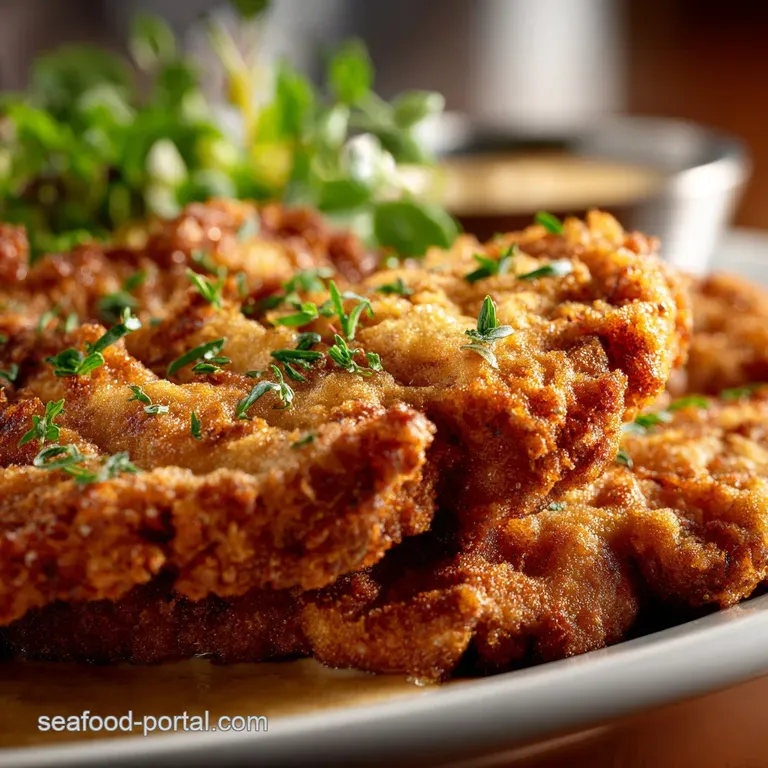
That sound. You know the one. It’s the satisfying, sharp CRUNCH as you cut into that perfect, shatteringly crisp coating, revealing the tenderized steak underneath.
The aroma of black pepper, rich fried goodness, and simmering cream gravy is just everything good about comfort food rolled into one messy plate. I’m telling you, this isn't just a meal; it's a culinary hug that fixes even the worst Monday.
I spent years messing up fried steak, ending up with crusts that slid off or greasy, soggy messes. But this recipe? This technique is fail proof, transforming a cheap, humble cut into something that feels utterly luxurious.
It’s quick, it’s immensely satisfying, and it will save your weeknight dinner budget.
We are diving deep into the absolute fundamentals today no shortcuts, just smart cooking. We’re talking about the crucial double dredge, the essential buttermilk soak, and how to build that classic, super peppery cream gravy right there in the frying pan.
Get ready to stop ordering it at diners because you’ll be making the best version right here at home.
Defining the True Southern Comfort Staple
Chicken Fried Steak, or CFS if you’re a pro, is pure American genius. We are taking a tough cut, tenderizing it mercilessly, and then frying it like fried fowl (hence the name). The resulting slab of crisp goodness is meant to be eaten immediately, drowning under a lake of thick, white gravy.
Distinguishing Classic CFS from Country Fried Steak
This is a fun argument, usually reserved for late nights in Southern diners. Classic Chicken Fried Steak, the version we are making today, is always served with a cream gravy —a thick, peppery white sauce made from the pan drippings.
Country Fried Steak, conversely, is typically pan-fried or lightly dusted and always served with a brown, usually mushroom free, beef stock based gravy. Don't worry, we are sticking to the gold standard: CFS with cream gravy, baby!
A Brief History of the Iconic Diner Plate
Legend says this dish comes straight from German immigrants who brought the concept of Schnitzel to Texas. They simply adapted the European technique, which usually involved veal or pork, to the readily available and tougher local cuts.
What they ended up creating was an economic powerhouse of a meal that defined the 20th-century American roadside diner. It’s a classic for a reason.
Essential Cuts and Pantry Staples for the Perfect Coating
Selecting the Ideal Cut: Cube Steak Explained
Cube steak is simply a thin cut, usually from the top or bottom round, that has been mechanically tenderized (that’s why it has those little dimpled cube marks). It’s perfect for this application because it’s already thin and the tenderizing process breaks down the fibers, guaranteeing a fork tender result after a quick fry.
Do not use a thick, expensive steak here.
Preparing the Tenderized Steak Before Dredging
Even if you buy pre-tenderized steak, I strongly recommend patting it absolutely dry before seasoning. Any residual moisture is the enemy of a crisp crust. Seasoning with simple salt and pepper, right before the initial dredge, is all you need; the heavy flavor comes from the coating itself.
Substitutions for the Gravy Base
| Ingredient | Why We Use It | The Viable Swap |
|---|---|---|
| Buttermilk | Acid for tenderness and adhesion. | Whole milk + 1/2 tsp vinegar (Let it stand 5 minutes). |
| Cube Steak | Economical and pre-tenderized. | Veal cutlets or heavily pounded Top Round. |
| Frying Oil | Neutral flavor, high smoke point. | Half Lard and Half Vegetable Oil (for maximum flavor). |
| Whole Milk (for Gravy) | Rich body and classic color. | Half and half or evaporated milk for extra richness. |
The Science of Crispness: Why Double Dredging Creates the Ultimate Crust
This is where my early failures taught me a huge lesson. If you want that shaggy, craggy texture that holds onto the gravy without going soggy, you must double dredge. My mistake years ago was just doing a simple dip, but that gives you a thin, delicate crust. This method builds layers.
The first dry layer (flour, paprika, garlic powder) acts as the base. The second wet layer (buttermilk and egg) seals that base and, crucially, adds fat and moisture. Then, the third layer the final dry coating, which we press firmly onto the wet surface is what creates those rugged, flake catching peaks. We call this the Triple Stage Dredging Method because you’re passing it through three stations, resulting in a crust superior to just about any other coating method. Need more proof that this works? Check out my technique for a super crusty coating when I make Crispy Fried Grouper Recipe: Get the Ultimate Shatteringly Crisp Crust .
How to Make Authentic Chicken Fried Steak and Peppery Gravy
Achieving Maximum Flake: The Buttermilk Soak Advantage
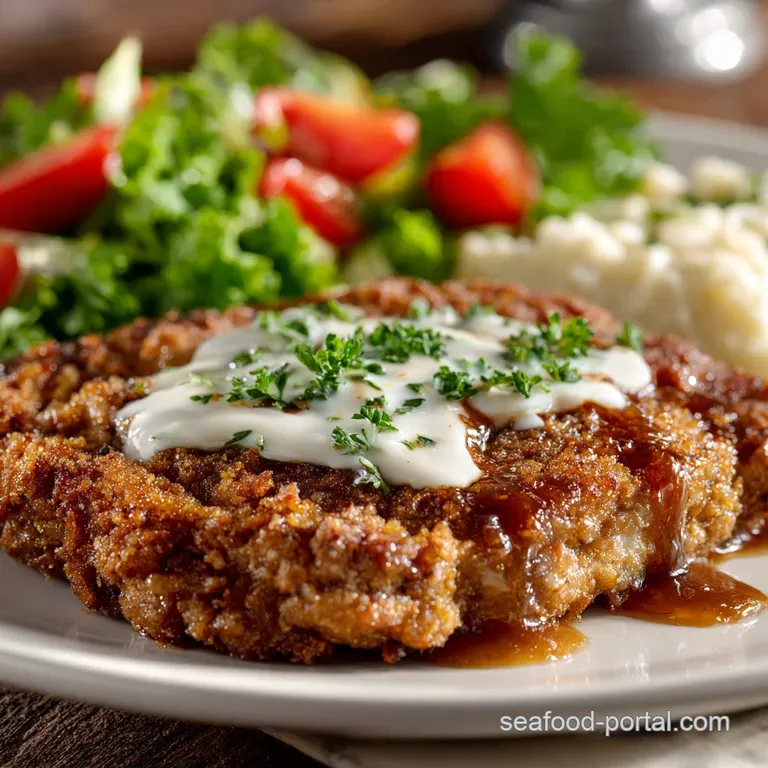
We start by setting up our three stations the initial flour dredge, the buttermilk bath, and the final seasoned flour mix. Dip the steak in the first flour mix, then the buttermilk mix, and finally, press it firmly into the heavily seasoned finishing flour.
The buttermilk’s mild acid begins to tenderize the surface slightly while guaranteeing that the final flour layer glues itself to the surface.
Chef’s Note: Once you’ve breaded the steaks, DO NOT start frying immediately. Place them on a wire rack in the fridge for 30 minutes.
This mandatory rest time hydrates the flour, ensuring the crust sticks to the steak like superglue when it hits the hot oil.
Controlling the Oil Temperature for a Uniform Golden Finish
Use a thermometer, friends, seriously. We are aiming for 175°C (350° F) , and we need to keep it there. If your oil drops too low, the steak will absorb the oil and become dreadfully greasy and limp. If it’s too hot, the crust will burn before the meat is heated through.
Fry one or two steaks at a time for about 3 to 4 minutes per side until they are truly golden brown and delicious.
The Triple Stage Dredging Method
I once skipped the initial flour dust and went straight from the meat to the wet mix disaster! The buttermilk didn't stick evenly, and the final flour clumped up. Remember: Meat -> Dry -> Wet -> Super Dry.
Press, press, press that final coat hard onto the wet surface to ensure that perfect, shaggy texture. Remove the fried steaks to a wire rack to drain, sprinkling immediately with a tiny pinch of salt for maximum flavor pop.
Building the Rich Pan Gravy from Scratch
This part uses the residual flavor those magnificent pan drippings. Pour off most of the oil, reserving about 3 tablespoons of the hot fat in the pan. Whisk in an equal amount of flour to make a white roux, cooking it for about two minutes until it smells nutty but hasn't browned.
Then, slowly stream in warm whole milk, whisking constantly to prevent lumps from forming. The trick to the flavor is simple: once it thickens, you stir in a full tablespoon of freshly ground black pepper. It should be distinctly peppery .
Expert Troubleshooting: Avoiding Common Chicken Fried Steak Mistakes
Preventing the Coating from Falling Off
This is the number one issue! The solution is twofold: the buttermilk soak and the 30 minute chill time . When the crust is losing its grip, it usually means the gluten hasn't had time to activate and fully bond to the meat surface before hitting the thermal shock of the hot oil.
Don't skip the refrigeration step; it makes all the difference.
Dealing with Oil Temperature Fluctuation
If you overcrowd the pan, the oil temperature will plummet, leading to soggy CFS. Fix this by frying in single batches and waiting until the oil returns to 350°F (175°C) before dropping the next steak in.
Always use a thermometer —guessing means you’re relying on luck, and luck is not a recipe ingredient.
Maximizing Gravy Flavor and Texture
Lumpy gravy happens when cold liquid hits hot roux or when you don't whisk enough. Warm your milk slightly before adding it. If you do get lumps, remove the pan from the heat and whisk furiously, or, worst case, push the gravy through a fine mesh sieve before serving.
The secret to great flavor here is really embracing the peppery aspect; don't be shy with the coarse black pepper!
Practical Guide to Storing and Reheating Leftovers
Can You Freeze Cooked Chicken Fried Steak?
Yes, absolutely! Let the cooked steaks cool completely, but do not cover them with gravy yet. Wrap each steak tightly in plastic wrap, then place them in a freezer safe bag or container. They will hold up perfectly for about 2 3 months.
Reclaiming the Crisp: Tips for Reheating
The microwave is an insult to this beautiful dish; it guarantees soggy mediocrity. The best way to reheat is using dry heat to re-crisp the coating. Pop the steaks into a preheated oven at 180°C (350°F) for 10- 15 minutes, or use the air fryer at 190°C (375°F) for about 5- 7 minutes. This is the same principle I use for reheating my Just Bare Chicken Nuggets Air Fryer: Ultra Crispy, Pub-Grade Perfection — dry, high heat is the key to maintaining crunch.
Elevated Pairings: What to Serve Alongside this Classic Dish
Starch and Side Dish Recommendations
We all know the rule: CFS requires mashed potatoes, perfectly creamy and ready to receive that beautiful gravy blanket. But don't stop there! You need something bright and slightly acidic to cut through all the richness.
A vinegary coleslaw or some simple steamed green beans tossed with a squeeze of lemon juice provides that necessary contrast.
We are talking about pure comfort food here. If you happen to have any leftover steaks, they actually make a great sandwich the next day. If you prefer your comfort in liquid form, this CFS pairs perfectly with a big bowl of warm Chicken and Rice Soup: The Ultimate Homemade, Comforting Classic .

Recipe FAQs
Why is my breading falling off the steak during or after cooking?
The main cause is usually moisture. Ensure the cube steaks are patted completely dry before the first dredge into the seasoned flour. Critically, after the double dredge process is complete, let the steaks rest on a wire rack for 10 15 minutes before frying; this 'hydration rest' allows the coating to adhere firmly to the meat.
My Chicken Fried Steak is tough and chewy. What went wrong?
This typically indicates the meat was overcooked, causing the connective tissues to seize up, or the oil temperature was too low. Cube steak should be cooked very quickly, about 2 3 minutes per side, at a consistent temperature of 325 350°F (163 177°C).
If using a non-cubed cut of beef, make sure it is pounded exceptionally thin before coating.
How do I achieve those signature crispy 'crags' or ruffled textures in the crust?
The texture comes from the robust double dredging technique and rough handling. When returning the steaks to the flour for the second time, press the flour firmly onto the steaks and then shake them off vigorously, allowing the excess coating to create those signature, uneven peaks.
Maintaining a consistent oil temperature also encourages quick setting of the flour.
Can I use milk instead of buttermilk or half and-half for the peppery cream gravy?
Yes, you can substitute whole milk, but the resulting gravy will be less rich and may require additional thickening. If using milk, consider adding a tablespoon of sour cream or heavy cream at the end to boost the flavor and luxurious texture.
Always ensure the liquid is warm before pouring it into the roux to prevent lumps.
Can this recipe be made gluten-free?
Absolutely. For the breading, substitute the all-purpose flour with a high-quality 1:1 gluten-free flour blend, which works excellently for frying. For the gravy, use the same GF flour blend to create the roux, or utilize a cornstarch slurry (cornstarch mixed with cold water) to thicken the warmed milk base after the roux stage is skipped.
What is the best way to store and reheat leftover Chicken Fried Steak?
Store leftover steaks and gravy separately in the refrigerator in airtight containers for up to three days. To preserve the crispiness, reheat the steaks in a preheated oven or air fryer at 350°F (177°C) for about 8 10 minutes. Avoid the microwave, as it will steam the crust, making it soggy.
Do I need to tenderize cube steak further before frying?
Cube steak is inherently tenderized, having already been run through a mechanical cuber, making additional pounding unnecessary. Focus instead on seasoning the meat well and cooking it quickly. If you are using a cheaper cut like round steak, however, it must be manually pounded flat and thin before coating.
Classic Crispy Chicken Fried Steak
Ingredients:
Instructions:
Nutrition Facts:
| Calories | 800 calories |
|---|---|
| Fat | 55 g |
| Fiber | 2 g |
