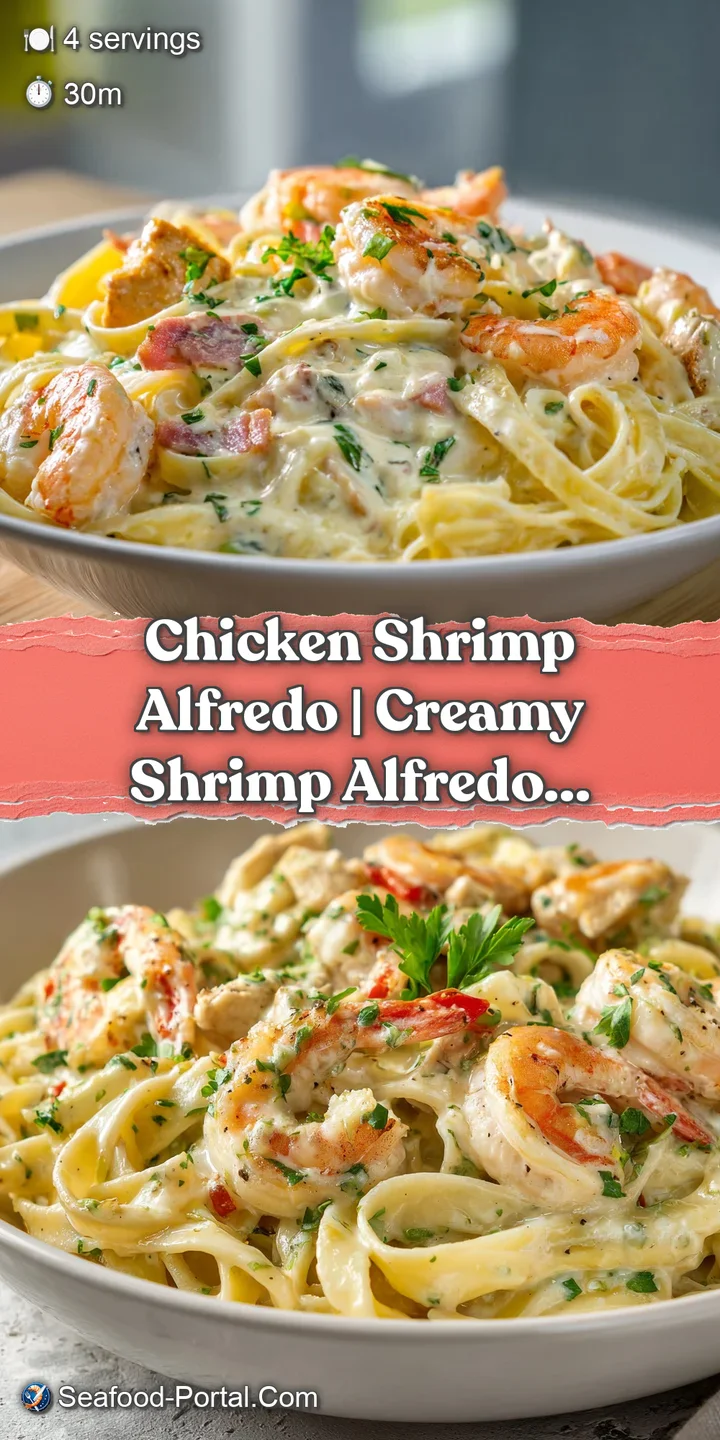
Chicken Shrimp Alfredo: Creamy and Velvety
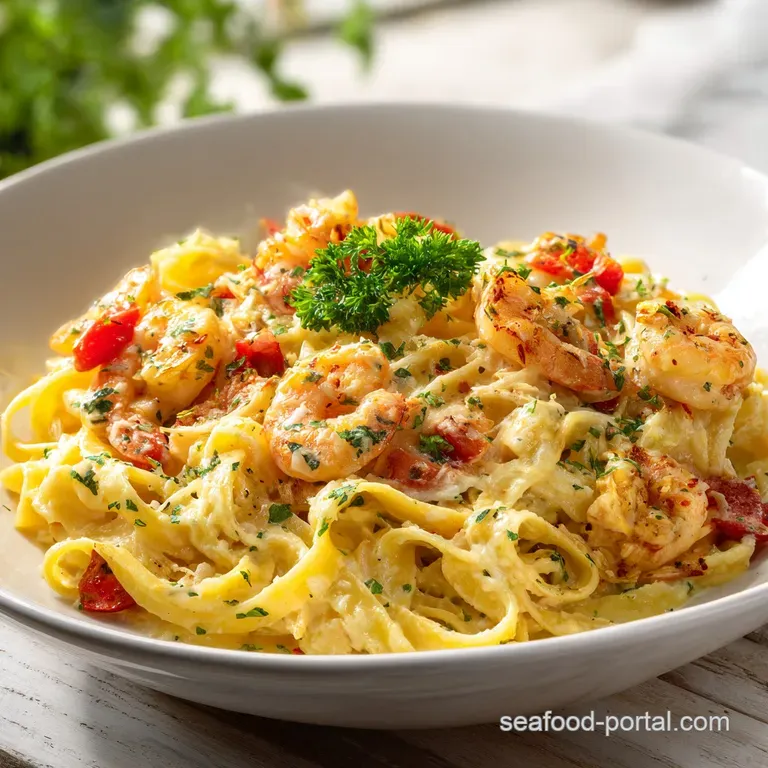
- Time: Active 15 minutes, Passive 15 minutes, Total 30 minutes
- Flavor/Texture Hook: Silky, garlic laced cream with a velvety finish
- Perfect for: Date night or a high protein weeknight dinner
- Crafting the Perfect Silky Chicken Shrimp Alfredo
- Essential Qualities for a Rich Dish
- Analyzing the Main Component Roles
- Sourcing the Best Recipe Elements
- Step by Step Execution Guide
- Solutions for Common Cooking Hurdles
- Adjusting the Recipe Volume
- Dietary and Flavor Modifications
- Debunking Common Kitchen Beliefs
- Practical Storage and Reheating
- Very High in Sodium
- Recipe FAQs
- 📝 Recipe Card
Crafting the Perfect Silky Chicken Shrimp Alfredo
Imagine the sound of the sizzle as pink shrimp hit a hot skillet, followed by that unmistakable aroma of garlic hitting melted butter. The first time I tried making this, I ended up with a sauce that looked more like scrambled eggs and cheese than a smooth coating.
It was frustrating, but it taught me everything about how temperature and timing change the way proteins and fats interact. We are going for a texture that is absolutely velvety, wrapping around every strand of fettuccine without a single lump in sight.
The real secret here is the contrast between the deeply seared meat and the delicate, creamy base. Most people think you just toss everything in a pot and hope for the best, but the layering of flavors is what makes it stand out.
I started using a heavy bottomed skillet for this because it holds heat so much better than thin pans, which prevents the chicken from steaming and ensures you get that golden crust.
In this version, we are putting a major focus on a hero ingredient: fresh lemon zest. While alfredo is traditionally just butter and cheese, the zest acts as a bright bridge between the heavy cream and the seafood. Without it, the dish can feel a bit weighed down. With it?
It's a complete revelation that cuts through the richness and makes the whole meal pop. Trust me, once you add that tiny bit of yellow gold at the end, you will never go back to the jarred stuff again.
Essential Qualities for a Rich Dish
Fond Integration: The browned bits left behind after searing the chicken and shrimp contain concentrated amino acids that dissolve into the butter, providing a savory depth that plain cream cannot achieve alone.
Starch Binding: Using reserved pasta water introduces dissolved starches that act as a natural bridge, helping the fat in the cream and the solids in the cheese stay unified rather than separating into an oily mess.
Temperature Control: Keeping the heat low when adding the parmesan prevents the cheese proteins from tightening and clumping, which is the primary cause of a grainy or "sandy" sauce texture.
Protein Desiccation: Patting the shrimp and chicken completely dry before they hit the oil ensures the energy of the pan goes into browning (the Maillard reaction) rather than evaporating surface moisture.
| Thickness | Internal Temp | Rest Time | Visual Cue |
|---|---|---|---|
| 1 inch chicken strip | 165°F | 3 minutes | No longer pink, juices run clear |
| Large Shrimp (31/40) | 145°F | 1 minute | Opaque white with pink C shape |
| Medium Shrimp | 145°F | 1 minute | Opaque and tightly curled |
When you are looking at that table, remember that the "rest time" is non negotiable. If you slice into that chicken the second it comes out of the skillet, all that moisture we worked so hard to keep inside will just run out onto your cutting board.
Let the fibers relax so the meat stays tender while you focus on the sauce.
Analyzing the Main Component Roles
| Ingredient | Science Role | Pro Secret |
|---|---|---|
| Heavy Cream | Fat Emulsion | Use room temperature cream to prevent the sauce from breaking when hitting the warm pan. |
| Parmesan Cheese | Flavor & Thickening | Grate it yourself from a wedge; pre shredded cheese is coated in cellulose that prevents it from melting smoothly. |
| Avocado Oil | High Smoke Point | This allows for a hard sear on the chicken without the oil burning or tasting bitter. |
| Pasta Water | Emulsifying Agent | The cloudy, salty water is "liquid gold" that adjusts the viscosity without diluting the flavor. |
If you want to try a different flavor profile for your seafood nights, you might also enjoy this shrimp with lobster sauce which uses a completely different thickening technique but delivers just as much comfort.
Sourcing the Best Recipe Elements
- 1 lb chicken breast: Sliced into 1 inch strips. Why this? Strips cook faster and provide more surface area for that delicious blackened seasoning.
- Substitute: Chicken thighs (boneless) for a juicier, more forgiving meat.
- 1 lb large shrimp (31/40 count): Peeled and deveined. Why this? This size stays juicy during the sear without becoming tough or rubbery.
- Substitute: Scallops for an even more decadent seafood experience.
- 2 tbsp avocado oil: For the over high heat sear. Why this? It has a high smoke point, meaning it won't smoke up your kitchen at high temps.
- Substitute: Grapeseed oil or any neutral oil with a high smoke point.
- 1 tsp blackened seasoning or smoked paprika: For the spice base. Why this? This adds a smoky contrast to the sweet cream sauce.
- Substitute: Old Bay seasoning if you want a more traditional coastal vibe.
- 12 oz dry fettuccine pasta: The classic vessel. Why this? The wide, flat noodles hold onto the thick alfredo sauce better than thin spaghetti.
- Substitute: Penne or rigatoni if you prefer a shape that catches sauce inside.
- 2 cups heavy cream: The base of our silkiness. Why this? Milk or half and half lacks the fat content to create a stable, thick emulsion.
- Substitute: Full fat coconut milk (note: adds a distinct tropical flavor).
- 4 tbsp unsalted butter: For sautéing and richness. Why this? Using unsalted lets you control the final sodium levels perfectly.
- Substitute: Salted butter (just reduce the extra salt you add later).
- 1.5 cups parmesan cheese: Freshly grated. Why this? Fresh cheese melts into the sauce rather than sitting on top of it.
- Substitute: Pecorino Romano for a sharper, saltier kick.
- 4 cloves fresh garlic: Minced. Why this? Fresh garlic provides a pungent, sweet aromatic base that jars cannot match.
- Substitute: 1 tsp garlic powder (not recommended, but works in a pinch).
- 0.5 cup reserved pasta water: The binder. Why this? The starch helps the sauce cling to the noodles like a glove.
- Substitute: Warm vegetable or chicken broth.
- 2 tbsp fresh parsley: Finely chopped. Why this? Adds a necessary earthy freshness to balance the fat.
- Substitute: Fresh basil or chives.
- 1 tsp lemon zest: The secret weapon. Why this? It cuts through the cream and makes the shrimp flavor sing.
- Substitute: A small squeeze of fresh lemon juice at the very end.
step-by-step Execution Guide
- Boil the water. Bring a large pot of salted water to a rolling boil. Cook the fettuccine until 2 minutes before it reaches al dente texture. Note: Finishing the pasta in the sauce ensures the noodles actually absorb the flavor.
- Save the starch. Carefully scoop out 1/2 cup of the cloudy pasta water and set it aside before draining the noodles.
- Dry the proteins. Pat the chicken and shrimp extremely dry with paper towels to ensure they sear rather than steam. Season both evenly with the blackened seasoning.
- Sear the shrimp. Heat the avocado oil in a 12 inch heavy bottomed skillet over medium high heat. Cook the shrimp for 1-2 minutes per side until they turn pink and opaque. Remove and set aside.
- Cook the chicken. In the same skillet, add the chicken strips and cook for 5-6 minutes until golden brown and cooked through. Remove the chicken and set it aside with the shrimp.
- Deglaze the pan. Lower the heat to medium and add the unsalted butter. Use a whisk to scrape up the browned bits (the fond) from the bottom until the butter is clear and foamy.
- Aromatics. Add the minced garlic to the melted butter and sauté for exactly 30 seconds until the kitchen smells incredible and the garlic is soft.
- Simmer the cream. Pour in the heavy cream and bring it to a very gentle simmer. Immediately reduce the heat to low.
- Emulsify the cheese. Gradually whisk in the freshly grated parmesan cheese, moving in a circular motion until the sauce is silky and thick.
- Final assembly. Add the pasta, chicken, and shrimp back to the skillet. Toss everything together, adding reserved pasta water 1 tablespoon at a time until the sauce perfectly coats every noodle. Garnish with parsley and lemon zest.
Solutions for Common Cooking Hurdles
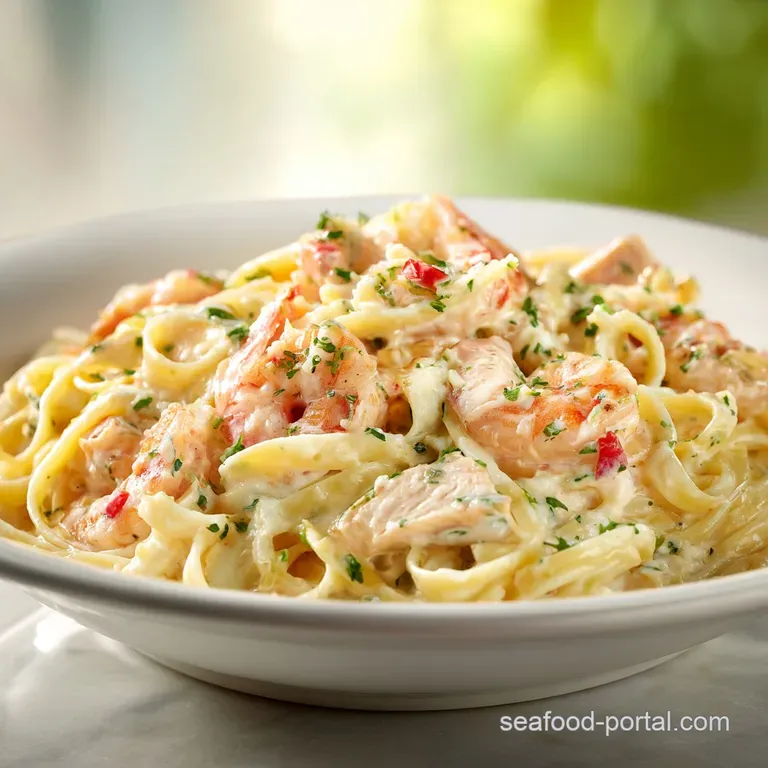
The most common issue I hear from friends is that the sauce turns out too thick or it separates. This usually happens because the heat was too high after the cheese was added. If you see the sauce starting to look oily, that is a sign the fat is separating from the solids.
You can often save this by adding a splash of that starchy pasta water and whisking vigorously off the heat.
Another thing to watch for is the "rubbery shrimp" syndrome. Shrimp cook incredibly fast. If you leave them in the pan while you are making the sauce, they will turn into little bouncy balls of disappointment.
That is why we take them out as soon as they turn opaque and only add them back at the very last second just to warm through.
Resolving a Grainy Sauce Texture
If your sauce feels sandy on the tongue, it’s almost always the cheese. Either you used pre shredded cheese with potato starch on it, or the pan was too hot. When parmesan hits boiling liquid, the proteins clump together.
To fix this, next time, take the pan off the burner for 30 seconds before you whisk in the cheese.
Reviving a Broken Oily Sauce
A broken sauce looks like a pool of yellow oil with white clumps. This happens when the emulsion fails. To fix this, add a teaspoon of very hot water or more cream and whisk like your life depends on it. The extra moisture and mechanical action can sometimes pull the fats back into the fold.
| Problem | Root Cause | Solution |
|---|---|---|
| Thin/Watery Sauce | Not enough reduction or cheese | Simmer for 2 more mins or add 1/4 cup more cheese |
| Dry Pasta | Noodles absorbed all the liquid | Add more reserved pasta water 1 tbsp at a time |
| Bland Flavor | Lack of acidity or salt | Add a pinch of salt and a bit more lemon zest |
A few more things to keep in mind to avoid these issues in the future:
- ✓ Always grate your own cheese from a solid block for the smoothest melt.
- ✓ Never let the cream come to a rolling boil once the cheese is added.
- ✓ Ensure your chicken is at room temperature for 15 minutes before cooking for an even sear.
- ✓ Use a large enough skillet so you don't overcrowd the proteins while browning.
- ✓ Taste the sauce before adding the pasta to check if it needs more blackened seasoning.
Adjusting the Recipe Volume
If you are cooking for a crowd, don't just double everything blindly. When scaling up to 8 servings, keep the spices and salt at about 1.5 times the original amount first, then taste.
Liquids like the cream can be doubled, but you might need to simmer it slightly longer to get that same thick consistency because a larger volume holds onto moisture longer. Use two pans for the searing process if you have to; crowding 2 lbs of chicken into one skillet will just cause it to boil in its own juices.
For a smaller dinner for two, just halve the ingredients. However, when using eggs or very small amounts of liquids, I find it's easier to keep the aromatics (like garlic) at the full amount because you lose so much of it to the surface of the pan.
Use a smaller 8 inch skillet so the sauce doesn't spread too thin and evaporate before the pasta is ready.
| Method | Time | Texture | Best For |
|---|---|---|---|
| Original Skillet | 30 minutes | Classic, silky, seared | Standard family dinner |
| Cast Iron | 35 minutes | Extra crispy chicken edges | Those who love deep browning |
| Slow Cooker | 4 hours | Shredded chicken, soft shrimp | Hands off prep (add shrimp at end) |
If you are a fan of that classic creamy texture but want a slightly different seafood twist, you should definitely check out this silky alfredo pasta which focuses heavily on the technical aspects of the sauce itself.
Dietary and Flavor Modifications
If you are looking to cut back on carbs, this dish actually works surprisingly well with zucchini noodles (zoodles) or spaghetti squash. Just keep in mind that these vegetables release a lot of water.
I recommend sautéing the zoodles separately for 2 minutes and draining them on paper towels before tossing them into the alfredo sauce. This prevents the sauce from becoming a watery soup.
For a dairy-free alternative, you can use full fat cashew cream. Soak raw cashews in hot water for an hour, then blend with a bit of broth until totally smooth. It won't have the exact "parmesan funk," but it provides that fatty mouthfeel that makes alfredo so satisfying.
Pair it with nutritional yeast for a cheesy flavor without the actual dairy.
- If you want a crunch: Topping the finished pasta with toasted panko breadcrumbs adds a wonderful textural contrast.
- If you want more heat: Add a half teaspoon of red pepper flakes to the butter when you are sautéing the garlic.
- If you want more veg: Fold in some steamed broccoli or sautéed spinach at the very end.
Debunking Common Kitchen Beliefs
There is a common myth that you should add oil to your pasta water to keep the noodles from sticking. Please, don't do this! The oil creates a slick coating on the pasta that prevents the Chicken Shrimp Alfredo from actually sticking to the noodles.
Instead, just use a large pot with plenty of salted water and give it a stir every couple of minutes.
Another misconception is that the "Alfredo" we know in America is the original Italian version. Traditional Italian alfredo is actually just pasta, butter, and parmesan cheese tossed together until it forms a creamy emulsion.
The heavy cream version is a modern evolution that makes the sauce much more stable and forgiving for home cooks, which is why we use it here!
Practical Storage and Reheating
If you have leftovers, they will keep in the fridge for up to 3 days in an airtight container. However, alfredo is notoriously difficult to reheat because the fat in the cream tends to separate. The best way to revive it is on the stovetop over low heat. Add a splash of milk or water and whisk gently as it warms up.
Avoid the microwave if possible, as it heats unevenly and usually results in an oily puddle.
Freezing is possible, but I don't generally recommend it for the sauce. The cream and cheese texture can become grainy once thawed. If you must freeze it, do so without the pasta. Freeze the chicken, shrimp, and sauce together, then when you thaw it, whisk in a little fresh cream while reheating to bring the emulsion back to life.
For zero waste cooking, don't throw away those parsley stems! You can chop them finely and add them to the butter along with the garlic for extra flavor, or save them in a freezer bag for your next batch of homemade vegetable stock.
If you have extra parmesan rinds, toss those into a simmering soup or stew to add a massive hit of umami. Every little scrap counts toward a better meal.
Very High in Sodium
1180 mg 1180 mg (51% 51% of daily value)
The American Heart Association recommends no more than 2,300mg of sodium per day for adults, with an ideal limit of about 1,500mg per day for most adults, especially those with high blood pressure.
Tips to Reduce Sodium in Your Fettuccine Alfredo with Chicken and Shrimp
-
Choose Low-Sodium Parmesan-15%
Parmesan cheese is a significant sodium contributor. Opt for a low-sodium variety or use 1 cup instead of 1.5 cups. This can reduce sodium by about 15%.
-
Be Mindful of Seasonings
Many blackened seasonings contain added salt. Consider using smoked paprika and other herbs and spices like garlic powder, onion powder, and cayenne pepper for flavor without the added sodium.
-
Limit Added Salt and Butter-10%
Avoid adding extra salt to the pasta water or sauce. Reduce the unsalted butter from 4 tbsp to 2 tbsp, as butter can contribute to richness and mouthfeel without high sodium.
-
Rinse Shrimp if Pre-seasoned-5%
If you are using pre-peeled and deveined shrimp that may have been processed with sodium, rinsing them under cold water before cooking can help remove some surface salt.
-
Boost Flavor with Fresh Aromatics
Enhance the dish's flavor profile by increasing the amount of fresh garlic and fresh parsley. Adding lemon zest also provides a bright, fresh note that can make the dish taste more vibrant.
Recipe FAQs
Can you mix chicken and shrimp for Alfredo?
Yes, combining them creates a surf and-turf effect. Ensure you sear the shrimp first for 1-2 minutes per side and remove them before cooking the chicken for 5-6 minutes to prevent the shrimp from becoming rubbery.
Is Alfredo high in potassium?
No, this is a common misconception. While some ingredients like parmesan and garlic provide trace amounts, the heavy cream and butter base do not contribute significant levels of potassium to this dish.
What is the secret to a good Alfredo sauce?
Use freshly grated parmesan and reserved pasta water. If you enjoyed mastering the emulsification process here, you can apply similar logic to our authentic shrimp etouffe when building your base sauce.
Do shrimp and Alfredo sauce go together?
Yes, the richness of the cream complements the delicate sweetness of the shrimp perfectly. Always sear the shrimp in avocado oil until pink and opaque to ensure they stand up to the heavy cream sauce.
How to keep the sauce from breaking?
Remove the skillet from direct heat before whisking in the parmesan. Incorporating the cheese off-heat prevents the fat from separating, keeping the sauce silky rather than oily.
How to ensure the pasta absorbs the sauce flavor?
Drain the fettuccine 2 minutes before it reaches al dente texture. Finishing the cooking process directly in the skillet with the sauce and reserved pasta water allows the noodles to soak up the garlic infused cream.
How to get a perfect sear on the proteins?
Pat the chicken and shrimp extremely dry with paper towels before seasoning. Excess surface moisture causes the proteins to steam instead of browning, so ensure they are bone dry before hitting the hot avocado oil.
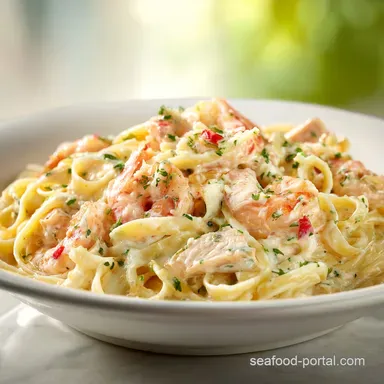
Chicken Shrimp Alfredo
Ingredients:
Instructions:
Nutrition Facts:
| Calories | 1329 kcal |
|---|---|
| Protein | 83.5 g |
| Fat | 76.8 g |
| Carbs | 67.4 g |
| Fiber | 3.1 g |
| Sugar | 4.2 g |
| Sodium | 1180 mg |
