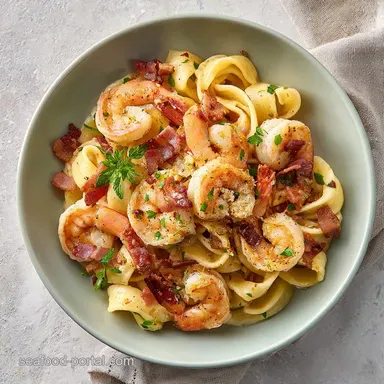
Easy Chicken and Shrimp Carbonara: Silky and Creamy
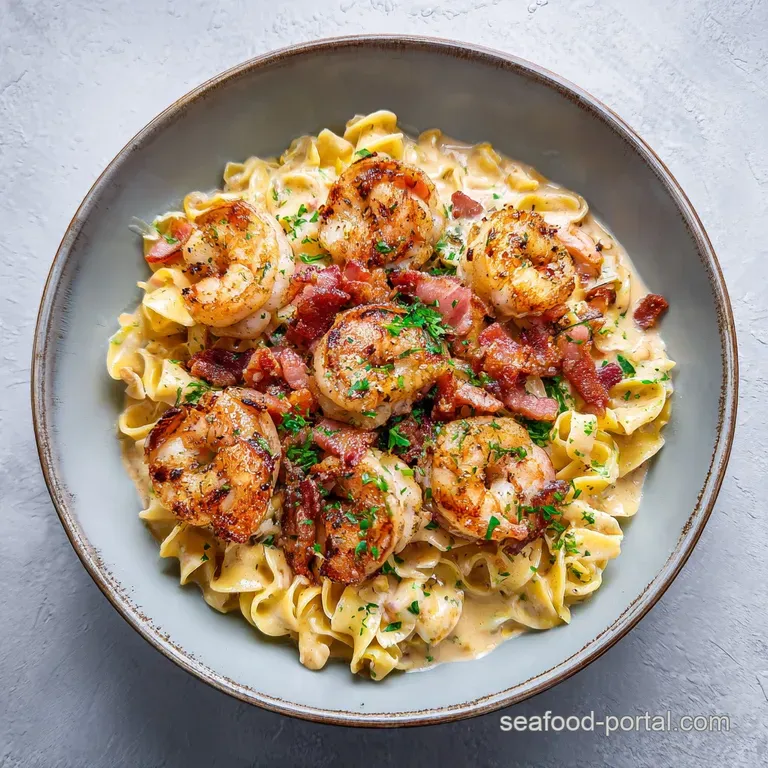
- Time: 10 min active + 25 min cooking = Total 35 minutes
- Flavor/Texture Hook: Silky, creamy sauce with shatter crisp bacon and tender seafood
- Perfect for: Impressive date nights or a high protein family dinner
- The easy chicken and shrimp carbonara recipe
- Why you'll love this
- Essential ingredient breakdown
- Required kitchen tools
- Step-by-step cooking guide
- Common cooking fixes
- Swaps and variations
- Adjusting the portions
- Storage and leftover tips
- Perfect side dish pairings
- High in Sodium
- Recipe FAQs
- 📝 Recipe Card
The easy chicken and shrimp carbonara recipe
That first sizzle of bacon hitting the pan is where the magic starts. There is something about the smell of rendering pork fat mixed with the sharp, salty aroma of freshly grated Parmesan that just tells your brain it's time to eat.
I remember the first time I tried to make this, I used the pre shredded cheese from a bag. It never actually melted, just clumped into these weird, waxy little balls. Honestly, don't even bother with the bagged stuff.
The secret is the block of Parmesan. When you grate it yourself, it's light and airy, which means it integrates into the egg mixture instantly. It creates that luxurious, velvety coating that clings to every strand of pasta.
It's a total contrast, too, pairing the heavy richness of the cheese and egg with the clean, snap fresh taste of shrimp and the golden sear of the chicken.
You're going to get a dish that feels fancy but actually comes together in about half an hour. We're looking for a specific balance here: the salt from the bacon, the richness of the cream and eggs, and the tender bite of the seafood.
Trust me on this, once you nail the timing of the sauce, you'll never go back to the jarred Alfredo stuff.
Why you'll love this
The beauty of this dish is the contrast. You have the crunch of the bacon against the silky sauce, and the tender chicken against the slight snap of the shrimp. It's a heavy hitter in terms of flavor but feels cohesive because the carbonara base ties everything together.
- Richness
- Egg yolks and heavy cream
- Salt
- Pancetta and Parmesan
- Umami
- Seared chicken and garlic
- Bright
- Freshly cracked black pepper
Right then, let's look at why this specific method works so well.
- The Temperature Gap
- Using the pan's residual heat instead of a direct flame prevents the eggs from turning into an omelet.
- Starch Power
- The reserved pasta water acts as a bridge, helping the fat and water based ingredients bond.
- Protein Sequencing
- Cooking chicken first, then shrimp, ensures nothing is overcooked or rubbery.
- Fat Integration
- Frying the proteins in bacon fat adds a layer of smoky depth that olive oil alone can't provide.
| Approach | Prep Effort | Texture | Best For |
|---|---|---|---|
| Fresh Method | Medium | Silky/Velvety | Dinner Parties |
| Shortcut (Jarred) | Low | Grainy/Heavy | Extremely Rushed Meals |
| No Cream Version | Medium | Thicker/Saltier | Traditionalists |
Essential ingredient breakdown
Everything in this dish has a specific job. If you skip the black pepper or use a low quality cheese, the whole profile shifts.
| Ingredient | Science Role | Pro Secret |
|---|---|---|
| Parmesan Cheese | Thickening & Salt | Grate it on the finest setting for instant melting |
| Large Eggs | Emulsifier | Use room temperature eggs to avoid sauce temperature drops |
| Pasta Water | Stabilizer | Use the cloudiest water from the bottom of the pot |
| Heavy Cream | Texture Buffer | Just a splash prevents the sauce from breaking |
Required kitchen tools
You don't need a professional kitchen for this, but a few specific tools make it way easier. I usually use a large stainless steel skillet because it distributes heat evenly. If you use a thin non stick pan, the chicken might not get that deep golden sear we're after.
For the pasta, a large pot is key. You need plenty of water so the noodles have room to move, which prevents them from clumping. Also, a whisk is non negotiable for the egg and cheese mixture. If you try to stir it with a fork, you'll get lumps of cheese that won't dissolve.
Finally, keep a pair of tongs handy. Trying to stir the proteins back into the pasta with a spoon usually results in broken shrimp and snapped noodles. Tongs give you the control to fold everything together gently.
Step-by-step cooking guide
Let's crack on with the actual process. Make sure you have your "mise en place" ready, meaning all your chopping and grating is done before the heat goes on.
The Sauce Base
- Grate the parmesan cheese and whisk the eggs and black pepper in a bowl to prepare the carbonara base. Note: Do this first so the eggs don't sit too long.
Searing the Proteins
- In a large skillet over medium high heat, fry the diced bacon until crisp. Use a slotted spoon to remove the bacon, leaving the rendered fat in the pan.
- Add olive oil to the skillet if needed. Season cubed chicken breast with salt and sear 6-8 minutes until golden brown and cooked through. Remove and set aside.
- In the same pan, sear shrimp for 1-2 minutes per side until opaque and pink. Remove immediately to prevent toughness.
- Sauté minced garlic in the remaining pan fat for 30 seconds until fragrant but not brown.
The Pasta Integration
- Boil pasta in salted water until al dente. Reserve 1/2 cup of starchy pasta water before draining.
- Toss the drained pasta into the skillet with the garlic and bacon fat, stirring to coat the noodles.
Creating the Velvety Bind
- Remove pan from heat. Quickly whisk in the egg and cheese mixture along with heavy cream, stirring constantly to create a creamy emulsion. Note: The residual heat is what cooks the egg safely.
- Use reserved pasta water to adjust consistency until the sauce is glossy and clings to the pasta.
- Fold the cooked chicken, shrimp, and crisp bacon back into the pasta and serve immediately.
Chef's Note: If you're worried about the sauce being too thin, don't add more cheese. Instead, let it sit for 2 minutes off the heat. The proteins in the egg will continue to set, thickening the sauce naturally.
Common cooking fixes
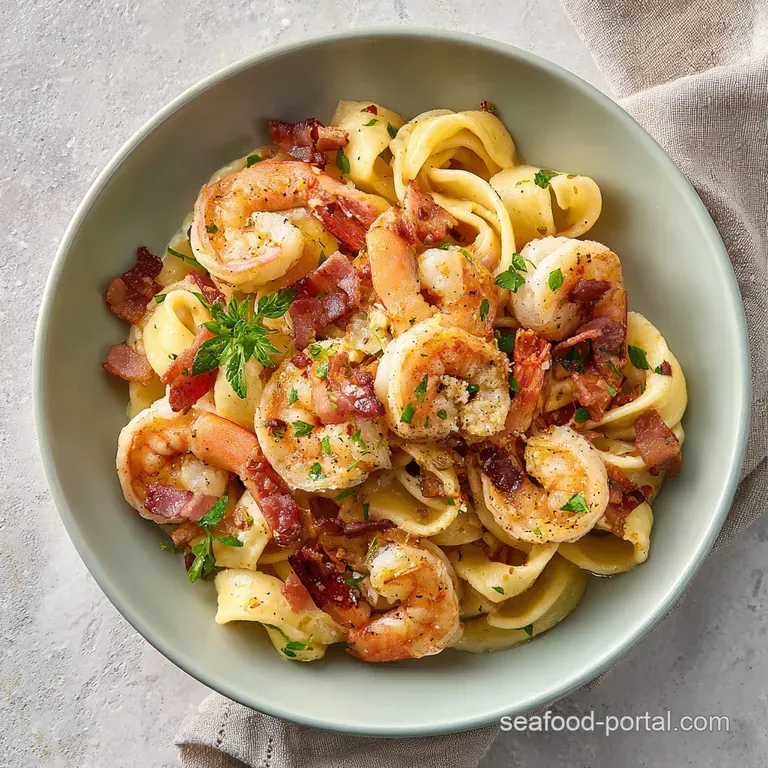
The biggest struggle with carbonara is the "scramble factor." It happens to everyone. I once served a bowl of "pasta with scrambled eggs" to my in laws because I left the burner on. It's a rite of passage.
The Eggs Scrambled
This happens when the pan is too hot. According to Serious Eats, the temperature of the eggs should stay below 145°F to avoid coagulation. If your pan is screaming hot, the eggs will cook instantly into clumps.
The Sauce Thin
If your sauce looks like soup, it's usually because you didn't use enough cheese or the pasta was too wet. Adding a bit more grated Parmesan or letting it rest for a moment usually fixes this.
| Problem | Root Cause | Solution |
|---|---|---|
| Clumpy Sauce | Pre grated cheese used | Use a block of Parmesan and grate finely |
| Rubbery Shrimp | Overcooked in pan | Remove shrimp the second they turn pink |
| Bland Flavor | Lack of pasta water | Add reserved water to carry salt and starch |
Common Mistakes Checklist
- ✓ Never add the egg mixture while the pan is still on the active burner
- ✓ Avoid using "shaker" parmesan; it lacks the fat needed for the emulsion
- ✓ Don't overcook the pasta; it should have a firm bite (al dente)
- ✓ Ensure the shrimp are patted dry before searing for a better crust
- ✓ Remember to reserve the pasta water before you drain the pot
Swaps and variations
If you're feeling adventurous, you can tweak this easy chicken and shrimp carbonara recipe to fit your mood. I sometimes swap the chicken for smoked turkey for a different kind of saltiness.
For those who love a bit more heat, I recommend adding a teaspoon of red pepper flakes when you sauté the garlic. It cuts through the richness of the cream. If you want something even more adventurous, you could try a Bang Bang Shrimp inspired twist by adding a hint of sriracha to the egg mixture.
If you're looking for a completely different profile, my Coconut Shrimp Sauce is a great alternative for a tropical vibe, though it's not a carbonara. For a lighter version, you can substitute the heavy cream with a tablespoon of Greek yogurt, though the texture will be slightly tangier.
- If you want more salt
- Swap Parmesan for Pecorino Romano.
- If you want it creamier
- Add an extra egg yolk (discard the white).
- If you want a smoky kick
- Use smoked pancetta instead of standard bacon.
Adjusting the portions
Scaling a carbonara is a bit tricky because the emulsion depends on the ratio of fat to starch.
Cutting it down (½ or ¼): When making a smaller batch, use a smaller skillet. If you're cutting the recipe in half, beat one egg and then use only half of it to keep the proportions exact. Reduce the cooking time for the chicken by about 20% since there's less mass in the pan.
Scaling up (2x-4x): Don't just quadruple the salt and spices; start with 1.5x and taste as you go. It's very easy to over salt a large batch of carbonara. Work in batches when searing the chicken and shrimp.
If you crowd the pan, the proteins will steam instead of sear, and you'll lose that golden crust.
Storage and leftover tips
Carbonara is best served immediately, but we've all had leftovers. The problem is that the sauce tends to separate or soak into the pasta in the fridge.
Storage: Keep it in an airtight container in the fridge for up to 3 days. Do not freeze this dish; the cream and egg emulsion will break completely, leaving you with a grainy mess.
Reheating: This is the hard part. Do not microwave it on high. Instead, heat it in a pan over low heat and add a splash of milk or water. This helps loosen the sauce and brings back that velvety texture.
Zero Waste: Don't toss the bacon fat if you have some left over. I keep it in a small jar in the fridge to sauté spinach or roast potatoes. If you have leftover pasta water, use it to thicken a soup or a different sauce later in the week.
Perfect side dish pairings
Since this dish is so rich, you need something bright to balance the plate. A heavy pasta with a heavy side is a recipe for a food coma.
A simple arugula salad with a lemon vinaigrette is my go to. The bitterness of the greens and the acidity of the lemon cut right through the cream and cheese. Alternatively, roasted asparagus or sautéed broccolini with a bit of garlic and lemon zest works beautifully.
If you want something more substantial, a piece of crusty sourdough bread is essential. You'll want it to mop up every last drop of that creamy sauce from the plate. Just toast it with a bit of butter and a pinch of sea salt.
High in Sodium
1120 mg 1,120 mg of sodium per serving (49% 49% of daily value)
The American Heart Association recommends a daily sodium limit of 2,300 mg for most adults to maintain heart health.
Tips to Reduce Sodium
-
Eliminate Added Salt-25%
Completely omit the 1 tsp of salt; the bacon and parmesan already provide significant sodium levels.
-
Swap Processed Meat-25%
Replace bacon or pancetta with smoked paprika for flavor or use low-sodium turkey bacon.
-
Reduce Parmesan-15%
Cut the parmesan cheese in half or substitute a portion with nutritional yeast for a similar savory taste.
-
Enhance with Aromatics
Add fresh lemon zest and extra cracked black pepper to brighten the flavor without adding sodium.
Recipe FAQs
What are the 4 ingredients in carbonara?
Eggs, hard cheese, cured pork, and pasta. These traditional components emulsify together to create a creamy sauce without needing additional dairy.
What are the ingredients for chicken and shrimp carbonara?
Fettuccine or spaghetti, chicken breast, shrimp, bacon or pancetta, olive oil, salt, parmesan cheese, eggs, black pepper, garlic, and heavy cream. This combination adds hearty proteins to the classic cheese and egg base.
What are common carbonara mistakes to avoid?
Overheating the pan when adding the sauce. If the skillet is too hot, the eggs will scramble instead of forming a smooth, creamy emulsion.
How is Olive Garden's chicken and shrimp carbonara prepared?
Sear the chicken and shrimp separately, then toss with pasta in a creamy parmesan emulsion. This method ensures the proteins stay tender while the sauce remains velvety.
How to store and reheat leftover carbonara?
Refrigerate in an airtight container for up to 3 days. Reheat gently in a pan over low heat with a splash of water to restore the original texture.
Is it true that this carbonara can be frozen for later?
No, this is a common misconception. Freezing causes the cream and egg emulsion to break, leaving the dish with a grainy, separated consistency.
How to prevent the eggs from scrambling in the sauce?
Remove the pan from the heat before whisking in the egg and cheese mixture. If you mastered the sensory doneness cues here, apply them to our marry me salmon for perfect results.
Chicken And Shrimp Carbonara