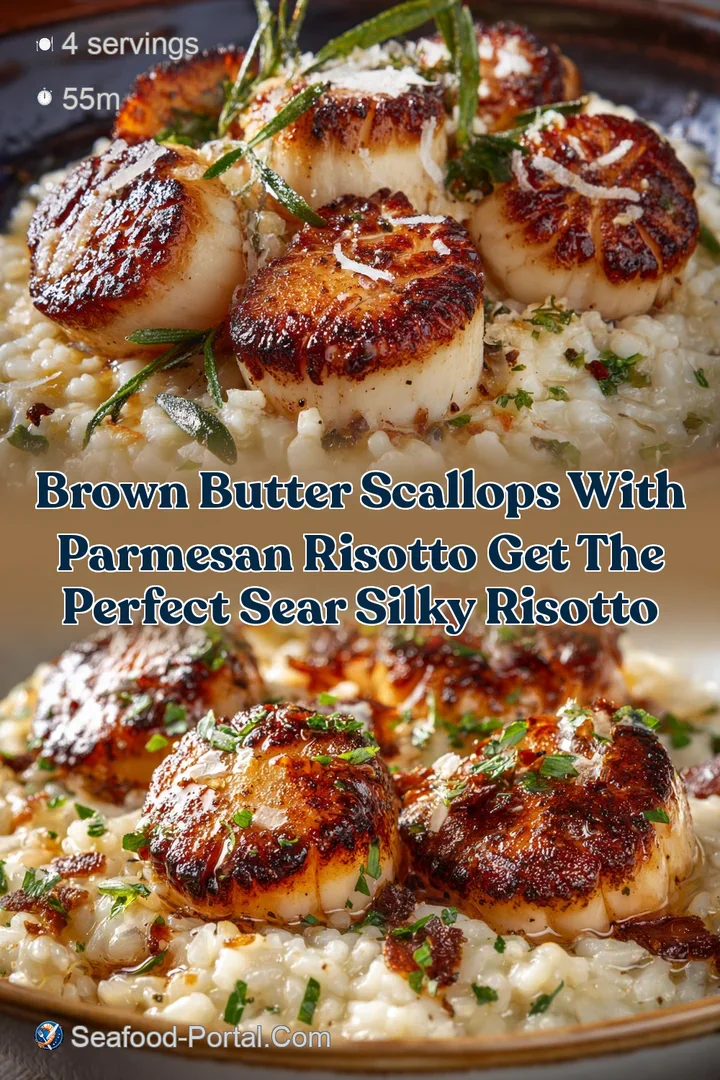
Brown Butter Scallops with Parmesan Risotto the Ultimate Seared Scallops

- Elevating Dinner: Why This Brown Butter Scallops with Parmesan Risotto Recipe Is a Must and Try
- Sourcing the Star Players: What You Need for the Ultimate Dish
- Crafting Silky Parmesan Risotto from Scratch
- Achieving the Perfect Crust: Searing the Brown Butter Scallops
- Expert Tips for Synchronization and Searing Success
- Beyond the Classic: Ingredient Substitutions and Storage
- Recipe FAQs
- 📝 Recipe Card
Elevating Dinner: Why This Brown Butter Scallops with Parmesan Risotto Recipe Is a Must and Try
If you’ve ever walked into a restaurant, smelled that amazing, nutty, complex aroma of butter being cooked just a little bit too far, and seen a plate of perfectly crusted scallops, you know exactly what I’m talking about. That dish? You can make it at home. It sounds fancy. I get it. But honestly?
Once you master two simple, attention and required techniques risotto stirring and searing you’ve unlocked a lifetime of culinary bragging rights. This Brown Butter Scallops with Parmesan Risotto recipe is the ultimate dinner party knockout, combining luxurious texture with serious depth of flavor.
We aren't aiming for good here; we're going for spectacular.
The Magic of Beurre Noisette (The Brown Butter Technique)
Beurre noisette. It literally just means hazelnut butter, and that's exactly what it tastes like. It’s butter, but amplified. We use it twice here: first, to sear the scallops, and second, to create a stunning, aromatic sauce to drizzle over the whole plate.
The technique involves melting butter, letting the water evaporate (it foams wildly!), and then cooking the remaining milk solids until they caramelize into those tiny, delicious brown specks at the bottom of the pan. I learned this the hard way, by scorching a few batches until they were black and bitter.
The key is medium and high heat and constant observation right after the foaming stops. When you smell that deep, nutty scent, it’s done. It’s brilliant.
A Study in Contrasts: Achieving Texture and Flavor Harmony
The reason this dish works is the contrast. We’re aiming for creamy, flowing, almost liquid risotto what the Italians call all’onda (wavy) that coats the palate.
Against that backdrop, we need the sea scallops to provide a textural shock: a deep, crispy, golden and brown exterior and a sweet, yielding interior. Who wants chewy scallops sitting on a pile of gluey rice? No one.
The over high heat sear and the constant stirring of the risotto guarantee that perfect yin and yang of texture.
The Time Investment vs. Culinary Reward
Let's be real, this isn't a 15 minute meal. Risotto demands about 25 minutes of active stirring and attention. You can’t put the broth in and wander off to check Instagram. You need to be there, monitoring, tasting, and adjusting. Is it quick? No.
Is it worth the 35 minutes of stirring and synchronizing? Absolutely. The payoff is a dish that feels like it cost $40 a plate, but you made it in your own kitchen. It truly is one of those special occasion meals that’s accessible any weeknight you feel like treating yourself.
Sourcing the Star Players: What You Need for the Ultimate Dish
The quality of your ingredients here matters deeply. Because we have so few components, each one needs to really shine. Don't skimp on the dairy, and please, for the love of food, listen to me about the scallops.
Selecting Pristine Dry and Packed Sea Scallops
This is the non and negotiable step. When you buy scallops, you will often see them labeled as "wet and packed." Wet and packed scallops are soaked in a sodium tripolyphosphate solution to preserve them, which is a tragedy. That solution makes them absorb water.
They look bigger, but when they hit the hot pan, they immediately weep water, preventing any decent sear. They steam. They turn gray and rubbery. You must find dry and packed scallops. They cost more, but they are essential for that golden and brown crust we are chasing.
Also, don’t forget to pull off that little side muscle; it’s tough and makes the scallop cook unevenly.
Essential Dairy and Aromatics for Creamy Risotto
For the risotto, the key players are the Arborio rice, the hot stock, and the final additions. Always use good quality unsalted butter so you control the salt content. The Parmesan must be freshly grated. Don't even look at the pre and shredded stuff in a tub.
It has anti and caking agents that mess up the final creamy emulsification. Use a dry white wine (like Pinot Grigio) that you would actually drink. If you wouldn’t drink it, don’t cook with it.
Tools of the Trade: Skillets and Spatulas Required
You need two heavy and hitters here. For the risotto, a large, wide, heavy and bottomed pot or Dutch oven is great because it distributes heat evenly, preventing scorching. For the scallops, you need high, retained heat. That means a dedicated cast and iron skillet or a good quality stainless steel pan.
Forget the non and stick skillet for searing; it just won't get hot enough quickly enough to form that crust. A wooden spoon is my preferred tool for stirring the rice.
Crafting Silky Parmesan Risotto from Scratch

Developing the Base Flavor (Sofrito and Toasting the Rice)
The foundation of any great risotto is the soffritto —the shallots and garlic slowly cooked in butter and oil until sweet and translucent. Then comes the critical step: tostatura .
You add the dry Arborio rice to the hot, fatty aromatics and toast it for a minute or two, stirring constantly. You should hear the grains sizzling. This process toasts the exterior of the grains, helping them retain their shape during the long cooking time, which is exactly why the rice doesn't turn to mush.
Once toasted, splash in that wine and cook it off completely before moving on.
The Gentle Art of Broth Incorporation and Stirring
Remember that simmering hot stock we prepared? Now it’s time to incorporate it. You only ever add one ladle of hot stock at a time. The trick is to wait patiently until the rice has almost completely absorbed the liquid before adding the next ladle. You stir frequently, not constantly.
Frequent stirring agitates the starches, causing them to slowly release, building that beautiful, natural creaminess. If you add all the stock at once, you’re just making boiled rice, not risotto.
Mantecaura: Finishing the Risotto with Butter and Cheese
Once the rice is al dente —chewy but not hard you remove it from the heat. This step is mantecatura , the final mounting of the risotto. You vigorously stir in the remaining cold, cubed butter and the freshly grated Parmesan.
The cold butter shocks the hot starches, forcing them to emulsify with the cheese and the remaining liquid. The result is pure liquid gold. It should spread slightly but hold its shape when served.
Related Recipes Worth Trying
- Poached Salmon Effortless Court Bouillon Method for Moist Buttery Fish — Master the perfect Poached Salmon with our effortless court bouillon technique This quick salmon recipe yields healthy salmon dinner fillets that are...
- Broiled Lobster Tails with Garlic Butter RestaurantQuality Recipe — Broiled Lobster Tails with Garlic Butter are surprisingly easy to make at home Learn the piggyback method for a perfect restaurantquality Lobster Tail...
- Swiss Steak The Best ForkTender Recipe with Rich Tomato Gravy — Swiss Steak is the ultimate comfort food transforming inexpensive cube steak into a tender triumph Braised low and slow in a rich tomato gravy this easy...
Achieving the Perfect Crust: Searing the Brown Butter Scallops
This part is fast, so read ahead!
Patting Dry: The Critical Step Before Searing
I cannot stress this enough. If you skip this, the scallops are ruined. Even dry and packed scallops have surface moisture.
Trust me, if you only take one piece of advice from this entire post, let it be this: Get those scallops bone dry. Use a stack of paper towels. Change them. Then use more. Season them aggressively with salt and pepper right before they go into the pan.
Creating the Nutty Beurre Noisette
Get your skillet screaming hot over high heat. Add the high and smoke point oil (like canola or grapeseed). The second that oil shimmers, lay your scallops in gently. Do not touch them for 2– 3 minutes.
After you flip them, immediately drop the 4 tablespoons of butter right into the center of the pan. As the butter melts, it will foam this is the water leaving then, look for the little milk solids to start turning a dark golden brown. That’s your nutty brown butter.
High Heat Searing and Deglazing the Pan
Once the butter is brown, tilt the pan slightly and use a spoon to baste that gorgeous, nutty foam over the scallops for the final minute. This adds flavor and helps cook the tops. Total cook time is usually 4– 5 minutes. They should be opaque white throughout, but still soft.
Remove them immediately. Then, drop a tiny squeeze of fresh lemon juice into the hot pan it sizzles, lifts those caramelized bits off the bottom, and gives you a magnificent, slightly acidic finish to drizzle on top.
Expert Tips for Synchronization and Searing Success
How to Synchronize the Scallops and Risotto Service
The risotto will wait, but only briefly. Scallops wait for no one. Start searing your scallops when the risotto is about 90% done (i.e., you are about to do the mantecatura ). Once the risotto is finished and resting, start the sear.
The total cooking time for the scallops is short enough that you can complete the sear and plating while the risotto is still piping hot from its final stirring.
Preventing Rubberiness: Mastering Scallop Cook Time
If you overcook a scallop, it seizes up. It becomes tough, dry, and chewy. You want the scallop to have a thick, golden crust on both sides, but when you gently press the side, it should still feel slightly yielding, not rock hard.
They carry over cook when they rest, so pull them just before you think they’re perfectly done.
Troubleshooting: Why Your Risotto Isn't Creamy Enough
There are usually three culprits if your risotto is lacking that silky wave.
- You used cold stock. (It stalls the cooking process.)
- You added all the stock too quickly. (You didn't release enough starch.)
- You skimped on the Mantecatura. (You must use cold butter and grate the Parmesan fresh right before adding it.)
Beyond the Classic: Ingredient Substitutions and Storage
Alternative Pairings for the Parmesan Risotto Base
This creamy Parmesan risotto is actually versatile enough to star on its own. While the brown butter scallops are spectacular, you could easily pair this base with slow and braised short ribs, a perfectly grilled swordfish steak, or even simple roasted heirloom tomatoes tossed with basil and olive oil for a vegetarian main.
It works with almost any rich protein or bold vegetable.
Nutritional Snapshot and Calorie Considerations
Let’s be honest: between the brown butter for the scallops and the butter and cheese for the risotto, this dish is unapologetically rich. This isn't a low and calorie weeknight meal; it’s a luxurious indulgence. We are using fat for flavor and mouthfeel. Think of it as a quality over quantity situation.
Storing Leftovers and Reheating Safety
If you have leftover risotto, you can store it in an airtight container for up to two days. Reheating risotto is tough; it loses that all’onda texture. The best method is to reheat it slowly in a saucepan with an extra splash of broth or water, stirring gently to reintroduce moisture.
Leftover scallops? Honestly, don’t even bother. Seafood reheats poorly. It loses flavor and texture. Just cook exactly the amount of scallops you need for that meal.
Recipe FAQs
Why do my scallops go rubbery and not get that lovely golden brown crust?
The cardinal sin of searing scallops is moisture! You must pat your scallops bone dry think aggressively and use a screaming hot skillet with high smoke point oil. If the pan sizzles rather than immediately forming a crust, the moisture is steaming the scallop, turning it rubbery, so crank up the heat!
Is making this Brown Butter Scallops with Parmesan Risotto dish too tricky for a beginner cook?
While this recipe requires a bit of elbow grease and coordination, it’s certainly manageable for an ambitious beginner. The key is efficient multi tasking: focus on the 20 minutes of stirring the risotto first, and then give the scallops your full, undivided attention right at the end to ensure they are seared perfectly and everything is served piping hot.
My risotto is gluey, not creamy and ‘wavy’ (all’onda) what might have gone wrong?
This usually happens if you've added cold stock, which shocks the rice, or if you skipped the final mantecare stage. Ensure your stock is simmering hot the entire time, and remember to remove the pan from the heat when stirring in the final cold butter and Parmesan to create that signature velvety, flowing texture.
I haven't got Arborio rice or white wine; what are the best swaps for the risotto base?
Carnaroli rice is considered the champion of risottos and is a perfect substitute, offering a slightly higher starch content. If you're out of white wine, don't fret; just substitute with an equal amount of extra hot stock and add a refreshing squeeze of lemon juice at the end for acidity.
Can I save leftovers, and how should I store this dish?
Scallops are always best eaten straight away, but the risotto stores well in an airtight container in the fridge for up to three days. For reheating, gently warm the risotto in a pan with a splash of stock or water, or better yet, roll the cooled leftovers into magnificent crispy Italian arancini!
Brown Butter Scallops And Risotto Recipe

Ingredients:
Instructions:
Nutrition Facts:
| Calories | 680 calories |
|---|---|
| Fat | 35 g |
| Fiber | 3 g |
