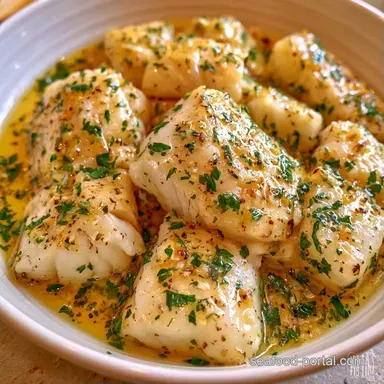
Baked Ling Cod with Garlic Butter

- Time: 10 min active + 20 min baking + 5 min resting
- Flavor & Texture: Garlic-lemon richness with a flaky, tender center
- Perfect for: A quick, healthy weeknight dinner
Baked Ling Cod
Ever wonder why lean white fish often feels like rubber the second it hits the oven? It happens because these fillets have very little fat, so the proteins tighten up and squeeze out moisture almost immediately.
The way to stop that is by coating the fish in a mix of oil and butter. This creates a shield that locks in the juices, leaving you with a velvety interior and a rich, garlic-infused finish.
This baked ling cod recipe focuses on precise timing. Since every fillet is different, we rely on visual cues and a thermometer rather than just the clock.
Why the Texture Stays Juicy
- The Fat Shield: Rubbing oil and drizzling butter creates a barrier that stops moisture from evaporating.
- Gentle Heat: A moderate oven temperature prevents the fish proteins from seizing up too quickly.
| Fillet Type | Prep Note | Texture Result | Best For |
|---|---|---|---|
| Fresh Fillets | Pat very dry | Firm and clean flake | Maximum flavor |
| Frozen-Thawed | Thaw slowly in fridge | Softer, more moist | Convenience |
Ingredient Deep Dive
| Ingredient | What It Does | Best Swap |
|---|---|---|
| Ling Cod | Offers a lean, subtle flavor base | Halibut or Cod (approximate) |
| Unsalted Butter | Brings a rich, fragrant quality | Ghee or Vegan Butter |
| Lemon Juice | Balances the richness | White wine vinegar (use less) |
| Fresh Garlic | Adds a pungent, savory aroma | Garlic powder (1/4 tsp) |
What You'll Need
For the Fish
- 4 pieces of baked ling cod fillet (6 oz / 170g each)
- 2 tbsp olive oil Why this? It has a high smoke point for the oven
- 1 tsp kosher salt
- ½ tsp black pepper, freshly ground
For the Garlic Butter
- 3 tbsp melted unsalted butter Why this? Creates a rich, savory glaze
- 3 garlic cloves, minced
- 1 tbsp fresh lemon juice
- 1 tbsp chopped fresh parsley
Kitchen Tools
The equipment list is simple. Just grab a large rimmed baking sheet and some aluminum foil. For the butter mixture, a small whisk or fork is all you need.
Key Cooking Steps
Phase 1: Preparing Fillets
- Heat your oven to 375°F (190°C) and line a rimmed baking sheet with aluminum foil.
- Use paper towels to pat the 4 (6 oz / 170g) fillets completely dry. Note: This prevents the fish from steaming
- Evenly coat both sides of each fillet with 2 tbsp olive oil.
- Season the fish with 1 tsp kosher salt and ½ tsp freshly ground black pepper.

Phase 2: The Baking
- Whisk 3 tbsp melted unsalted butter, 3 minced garlic cloves, and 1 tbsp fresh lemon juice together in a small bowl.

- Place the fillets on the prepared baking sheet and drizzle the garlic butter mixture over each piece.
- Bake for 12 to 15 minutes for standard fillets, or 18 to 20 minutes if they are thicker than 1 inch (2.5cm). Cook until the center is opaque, the meat flakes easily with a fork, and the internal temperature reaches 145°F (63°C).Note: You'll smell the garlic browning and lemon brightening just before it's done
Phase 3: Finishing Up
- Lift the tray from the oven and immediately top the fillets with 1 tbsp chopped fresh parsley.
- Allow the fish to rest on the pan for 5 minutes so the juices can redistribute before serving.
Fixing Common Problems
If the fish feels tough, it’s usually because it stayed in the oven a few minutes too long. Lean fish doesn't have the fat needed to prevent overcooking. I recommend gently pushing the layers with a fork; they should flake apart with almost no resistance.
A lack of color is another common issue. If the fish looks pale, the fillets were likely too damp before cooking. For a better finish, patting them dry is a mandatory step.
Rubbery Fish Texture
This is caused by overcooking. Use a thermometer to reach exactly 145°F.
No Surface Color
Generally caused by excess moisture on the surface of the fish.
Differing Fillet Thickness
Thicker cuts require more time, which can leave thinner pieces dry.
| Problem | Fix |
|---|---|
| Rubberiness | Pull fish at 145°F |
| Pale Color | Pat fillets completely dry |
| Uneven Cooking | Group thick fillets together |
Flavor Variations
Tuscan Baked Ling Cod
Add a tablespoon of sun-dried tomatoes and a pinch of dried oregano to the garlic butter. It adds a deeper, Mediterranean vibe.
Lemon Pepper Crust
Mix a teaspoon of cracked black pepper and lemon zest into a tiny bit of melted butter and dot it on top before baking.
Dairy-free Alternative
Use a high-quality vegan butter or extra olive oil. The flavor shifts slightly but the texture remains the same.
Storage and Reheating
Keep the leftovers in a sealed glass dish in the refrigerator for 3 to 4 days. Follow USDA guidelines on perishable food and don't leave the fish out for more than 2 hours.
Don't freeze this baked ling cod after it's cooked. The lean proteins break down during the freeze-thaw cycle, and the texture becomes mushy and unpleasant.
To reheat, avoid the microwave as it will steam the fish and make it rubbery. Instead, place the fillets in a 250°F oven for 5 to 8 minutes, until the thickest part reaches 165°F (74°C). Add a tiny pat of butter to the pan to keep it moist.
Myths
Some people think searing fish "seals in the juices." That's not actually how it works. Searing adds flavor through browning, but moisture is lost regardless of whether you sear or bake. The real way to keep fish juicy is managing the internal temperature.
Simple Serving Ideas

I like serving this with a side of steamed asparagus or a light quinoa salad. For a more indulgent meal, a side of creamy caper sauce complements the garlic butter perfectly. A squeeze of fresh lemon right before eating always brightens the dish.
High in Sodium
1050 mg of sodium per serving (46% of daily value)
American Heart Association recommendation: no more than 2,300 mg of sodium per day
Tips to Reduce Sodium
-
Reduce Added Salt
Omit or significantly reduce the kosher salt, as the fish naturally contains some sodium and other ingredients provide flavor.
-
Increase Citrus
Add more fresh lemon juice to the butter sauce to provide a bright, acidic punch that mimics the taste of salt.
-
Boost Aromatics
Increase the amount of minced garlic to enhance the savory depth of the dish without needing extra salt.
-
Fresh Herbs & Spices
Use a larger handful of fresh parsley or add a pinch of smoked paprika to elevate the overall flavor profile.
-
Amp Up the Pepper
Increase the freshly ground black pepper to add a spicy bite that compensates for lower salt levels.
Common Questions
How to cook ling cod in the oven?
Preheat the oven to 375°F (190°C) and bake the oiled, seasoned fillets. Drizzle the garlic butter mixture over the fish and cook until the center is opaque and reaches 145°F (63°C).
At what temperature should ling cod be cooked?
Set your oven to 375°F (190°C). This moderate heat ensures the lean fillets cook through evenly without becoming dry.
Can this fish be prepared another way?
Yes, it can be pan-seared or poached. Pan-searing provides a crispier exterior, while poaching creates a more delicate, moist texture.
What replaces butter for a dairy-free version?
Use melted coconut oil or a plant-based butter substitute. Similar to our baked haddock, using a creamy alternative maintains the necessary fat for flavor.
Which fish works if the cod is hard to find?
Haddock or halibut are excellent alternatives. These white fish offer a similar mild flavor and flake similarly when cooked.
Is parsley replaceable with another herb?
Yes, fresh cilantro or chopped chives work well. These herbs provide a similar bright, fresh finish to the dish.
Could jarred garlic work in place of fresh?
Yes, though the flavor is slightly milder. Use an equal amount of minced jarred garlic if fresh cloves are unavailable.
Where should I store the leftovers?
Keep them in a sealed glass dish in the refrigerator. The cooked fish remains safe to eat for 3 to 4 days.
Baked Ling Cod with Garlic Butter