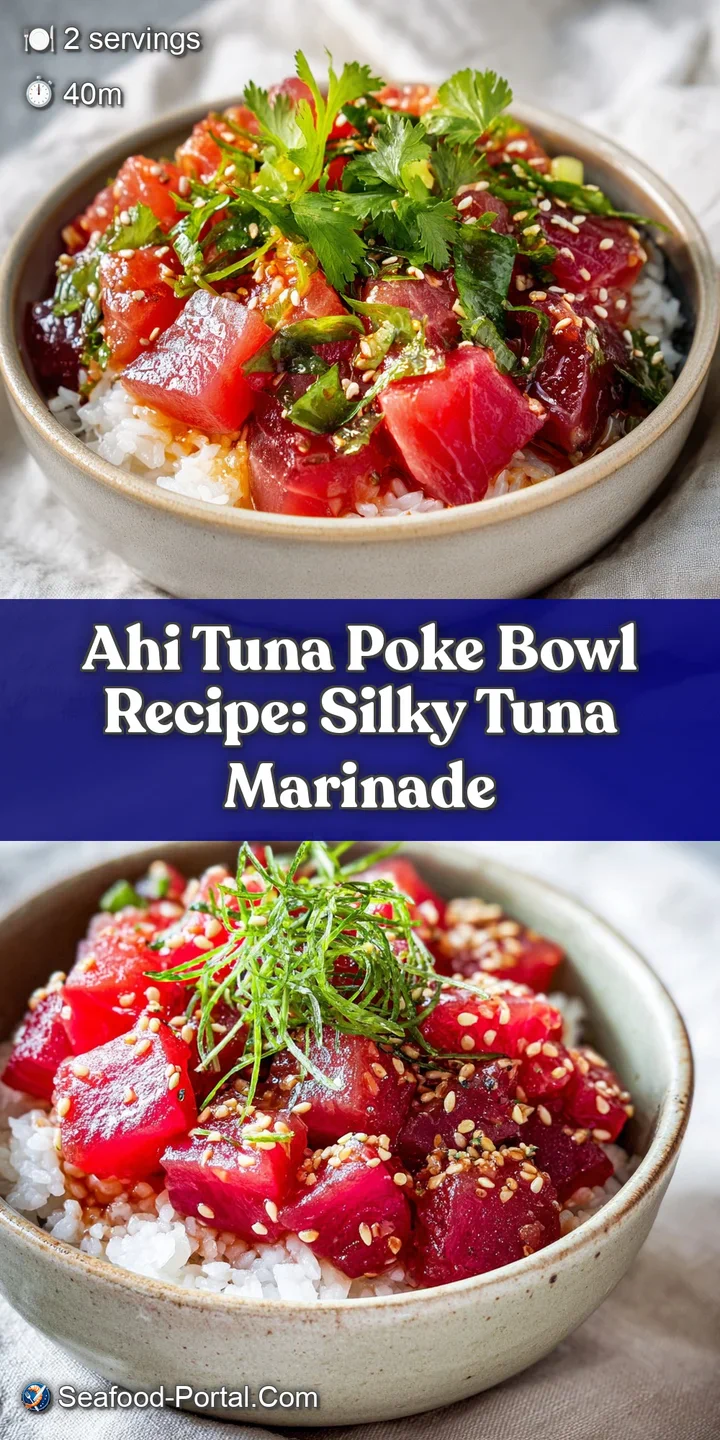
Ahi Tuna Poke Bowl: Silky & Umami Rich
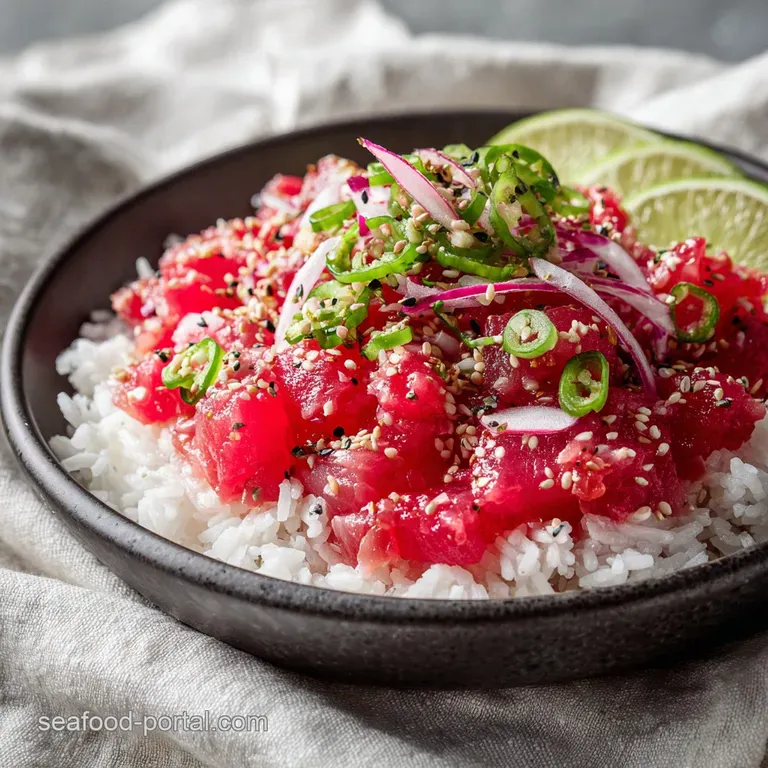
- Time: Active 20 minutes, Passive 20 minutes, Total 40 minutes
- Flavor/Texture Hook: Silky, umami rich tuna with crunchy cucumber snap
- Perfect for: A refreshing weeknight dinner or impressive meal prep
- The Hidden Mechanics of Flavor
- Component Analysis and Selection
- Essential Ingredients and Substitutions
- Step-by-Step Preparation Guide
- Troubleshooting Your Poke Bowl Texture
- Fun Customizations and Creative Swaps
- Scaling Your Recipe for Success
- The Truth About Poke Techniques
- Storing Leftovers and Reducing Waste
- Perfect Pairings for Your Meal
- Critical Level of Sodium
- Recipe FAQs
- 📝 Recipe Card
The Hidden Mechanics of Flavor
- Cold Cure Chemistry: The salt in the 3 tbsp of soy sauce begins to break down the surface proteins of the tuna, allowing the marinade to penetrate without "cooking" the fish like a high acid ceviche would.
- Starch Gelatinization: Rinsing the sushi rice removes excess surface starch, which prevents the grains from becoming a gummy mass and ensures each grain stays distinct and fluffy.
- Emulsification Stability: Using Kewpie mayo for the spicy drizzle works better than standard mayo because the higher egg yolk content creates a richer, more stable emulsion that clings to the ingredients.
- Maillard Depth: Even though we aren't cooking the fish, the toasted sesame oil provides those complex, nutty aromatic compounds that trick the brain into sensing a deeper, "cooked" savory profile.
| Factor | Fresh Sashimi Grade | Grocery Counter Shortcut | Resulting Impact |
|---|---|---|---|
| Texture | Firm, velvety, clean | Soft, grainy, "leaky" | Fresh fish holds its cube shape perfectly. |
| Aroma | Neutral, salty sea air | Slightly metallic or "fishy" | Fresh grade ensures a clean flavor profile. |
| Safety | Flash frozen to kill parasites | Unknown handling history | Sashimi grade is essential for raw consumption. |
Choosing the right fish is the biggest hurdle, but it's simpler than it looks. If you can't find sashimi grade tuna, you can always pivot to my How to Sear recipe which works beautifully with high-quality frozen steaks that you've seared quickly on the outside.
Component Analysis and Selection
| Ingredient | Science Role | Pro Secret |
|---|---|---|
| Ahi Tuna | Primary Protein | Keep it on ice until the very second you are ready to cube it to maintain cell structure. |
| Rice Vinegar | Acidic Balancer | Use unseasoned vinegar for the marinade to control salt, but seasoned vinegar for the rice for that classic "sushi" sweetness. |
| Toasted Sesame Oil | Aromatic Fat | A little goes a long way; too much will overwhelm the delicate sweetness of the tuna. |
| Fresh Ginger | Enzyme Catalyst | Grating it fresh releases gingerol, providing a sharp heat that cuts through the fatty tuna. |
Essential Ingredients and Substitutions
To make a stellar Ahi Tuna Poke Bowl, you need a balance of fresh produce and pantry staples.
- 1 lb Sashimi grade Ahi Tuna: The undisputed star. Why this? Essential for safety and that specific melt in-your mouth texture when eaten raw.
- Substitute: Cooked shrimp or high-quality smoked salmon if raw fish isn't your thing.
- 3 tbsp Low Sodium Soy Sauce: Provides the salt and umami base. Why this? Standard soy sauce is often too salty for a delicate marinade.
- Substitute: Liquid aminos or Tamari for a gluten-free option.
- 1 tbsp Toasted Sesame Oil: For that deep, nutty aroma.
- Substitute: Perilla oil, though it has a slightly different earthy note.
- 1 tsp Freshly grated ginger: Adds a zingy, warming bite.
- Substitute: 1/2 tsp ground ginger in a pinch, though the flavor is less vibrant.
- 1 tbsp Rice vinegar (unseasoned): Brightens the marinade.
- Substitute: Apple cider vinegar, though it’s a bit more "fruity."
- 2 Green onions: For color and a mild allium bite.
- 1 cup Sushi Rice (Short grain Japanese rice): Holds moisture and provides the right chew.
- 2 tbsp Seasoned rice vinegar: Specifically for seasoning the rice base.
- 1 Ripe Avocado: Provides the fatty, creamy contrast to the lean tuna.
- 1/2 cup Edamame and Cucumber: For a necessary crunch and vegetal freshness.
- 2 tbsp Kewpie Mayo & 1 tsp Sriracha: The duo for your Ahi tuna poke bowl with spicy mayo.
step-by-step Preparation Guide
- Rinse the rice. Place 1 cup of sushi rice in a fine mesh strainer and run under cold water until the water runs completely clear. Note: This prevents a gummy texture.
- Cook the base. Combine the rinsed rice with 1 1/2 cups water in a pot. Bring to a boil, then reduce to a simmer, cover, and cook for 20 minutes until all water is absorbed and grains are tender.
- Season the rice. Transfer the warm rice to a large bowl and gently fold in 2 tbsp seasoned rice vinegar. Note: Use a slicing motion with a spatula to avoid mashing the grains.
- Prep the fish. Using a very sharp knife, cut the 1 lb Ahi tuna into 1/2 inch cubes. You want clean, sharp edges, not ragged tears.
- Whisk the marinade. In a medium bowl, combine 3 tbsp soy sauce, 1 tbsp toasted sesame oil, 1 tsp grated ginger, and 1 tbsp unseasoned rice vinegar. Smell checkpoint: You should notice a strong, nutty aroma with a sharp ginger finish.
- Marinate the tuna. Toss the tuna cubes and sliced green onions into the marinade. Let it sit in the fridge for about 15 minutes. Wait until the fish looks slightly glossy and deepens in color.
- Prepare the spicy mayo. Whisk together 2 tbsp Kewpie mayo, 1 tsp sriracha, and 1/2 tsp lime juice. It should be a pale orange and smooth.
- Slice the veggies. Slice your avocado and cucumber. Steaming the 1/2 cup edamame now ensures they are bright green and snappy.
- Assemble the bowl. Scoop a generous base of rice into two bowls. Arrange the marinated tuna, avocado, cucumber, and edamame on top.
- Final garnish. Drizzle with the spicy mayo and top with 2 tbsp masago and 1 tsp toasted sesame seeds. Smell checkpoint: The final dish should smell fresh, like the ocean, with a hint of spicy creaminess.
Chef's Tip: To get the cleanest cubes of tuna, put the fish in the freezer for about 10-15 minutes before slicing. It firms up the fat and proteins, allowing your knife to glide through without dragging.
Troubleshooting Your Poke Bowl Texture
Why Your Rice Is Mushy
If your rice feels like paste rather than distinct grains, you likely skipped the rinsing step or used too much water. Short grain rice is very starchy; if that starch isn't washed away, it creates a thick gel during cooking.
To Fix Grey or Discolored Tuna
If your tuna starts to look grey or dull, it’s oxidizing or reacting too long to the acid in the marinade. Never marinate for more than 30 minutes. If it's already happened, a quick toss in a tiny bit more sesame oil can sometimes restore the sheen, but it won't fix the texture.
| Problem | Root Cause | Solution |
|---|---|---|
| Fish feels slimy | Temperature was too high | Keep tuna over a bowl of ice while prepping. |
| Marinade is too salty | Used regular soy sauce | Dilute with a splash of water or more rice vinegar. |
| Rice is dry/crunchy | Pot lid wasn't tight enough | Add 1 tbsp water and steam on low for 5 more minutes. |
Common Mistakes Checklist
- ✓ Never use "Ahi" that smells even slightly fishy; it should smell like clean water.
- ✓ Don't over mix the tuna in the marinade; you'll break the delicate cubes.
- ✓ Ensure the rice has cooled slightly before adding the fish to prevent "cooking" the tuna.
- ✓ Avoid using long grain rice like Basmati; it won't hold together or provide the right chew.
- ✓ Use a damp towel over your rice while it cools to keep it from drying out.
If you find that raw fish is a bit too intimidating for a first try, you can always start with a Classic Tuna Fish recipe to get used to the flavor profiles of tuna before moving to the sashimi grade level.
Fun Customizations and Creative Swaps
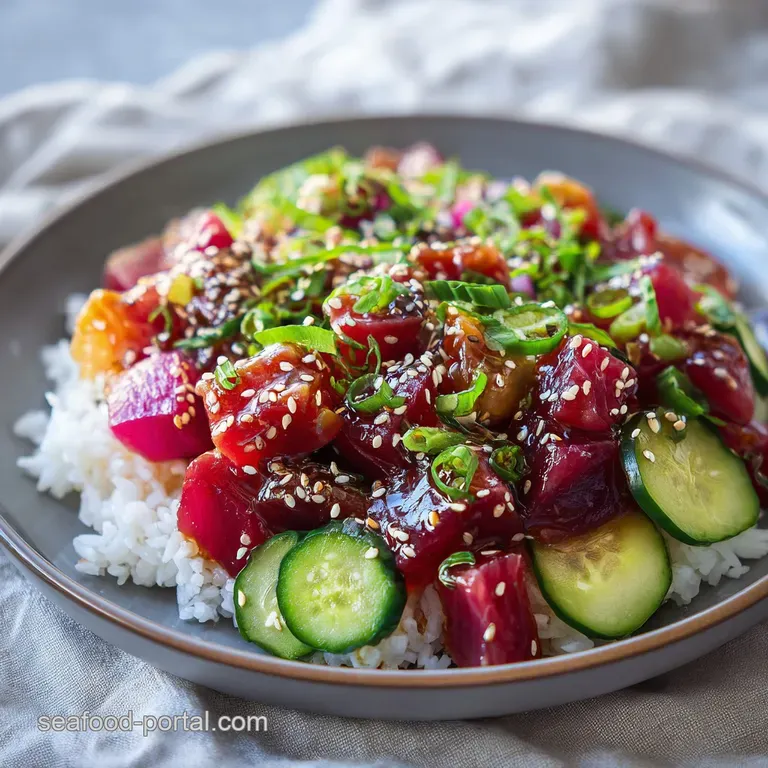
Making an Easy Ahi Tuna Poke Bowl doesn't mean you have to stick to the script every single time.
For a Tropical Twist
Add 1/4 cup of diced fresh mango or pineapple. The sweetness of the fruit plays incredibly well with the salty soy and the heat from the sriracha. The enzymes in tropical fruit also help soften the texture of the fish slightly.
For a Low Carb/Keto Swap
Replace the sushi rice with cauliflower rice or a bed of shredded cabbage. If using cauliflower rice, sauté it briefly with a teaspoon of sesame oil so it doesn't taste raw and "grassy."
For a Nutrient Dense Finish
Mix some seaweed salad (wakame) into the bowl. It adds a slippery, crunchy texture and a massive boost of iodine and minerals. You can also swap the white rice for black "forbidden" rice for a nuttier flavor and striking visual contrast.
Scaling Your Recipe for Success
When you want to turn this into a party spread, scaling is simple but requires a few adjustments to keep the balance right.
Scaling Down (Single Serving): Cut all ingredients in half. Since it’s hard to cook just 1/2 cup of rice, go ahead and make the full cup and save the rest for a stir fry the next day. Use a smaller bowl for marinating so the fish stays submerged.
Scaling Up (Feeding a Crowd): If doubling or tripling for 4-6 people, don't just triple the salt. Increase the soy sauce to 2.5x instead of 3x and taste it. For the rice, use a larger pot to ensure even heat distribution.
I recommend keeping the Ahi tuna poke bowl ingredients in separate bowls (deconstructed style) so guests can build their own; this keeps the fish from sitting in the marinade for too long while people serve themselves.
The Truth About Poke Techniques
Myth: Sashimi grade is an official USDA regulation. In reality, "sashimi grade" is a term used by fishmongers to indicate that the fish has been handled and frozen specifically to be safe for raw consumption. There is no government body that "grades" it like beef.
You are relying on the reputation of your fishmonger, so buy from a busy, high-quality source.
Myth: Adding more vinegar makes the rice "more authentic." Actually, over seasoning the rice with vinegar can make it too wet, causing the bowl to become a soggy mess. The rice should have a subtle tang that supports the fish, not a sharp sourness that overpowers it.
Storing Leftovers and Reducing Waste
Storage Guidelines: Raw Ahi Tuna Poke Bowl components do not store well once mixed. The acid in the marinade will eventually turn the fish mushy. Fridge: The marinated tuna is best eaten within 4 hours.
The rice and veggies will last 2 days in separate airtight containers. Freezer: Do not freeze the assembled bowl or the marinated fish. You can freeze the plain tuna steaks for up to 2 months if they were previously fresh.
Zero Waste Tactics: Don't throw away those green onion roots! Put them in a jar of water on your windowsill to regrow them. If you have leftover cucumber or radish, quick pickle them in a splash of the rice vinegar and sugar for a snack later.
Leftover sushi rice can be transformed into amazing "crispy rice" treats by pan frying blocks of it until golden and topping with any remaining spicy mayo.
If you find yourself with extra tuna but aren't feeling the bowl vibes the next day, a Proper Ahi Tuna recipe can give you some alternative serving ideas to keep things interesting.
Perfect Pairings for Your Meal
To round out the experience, pair your bowl with something light and effervescent. A cold Japanese lager or a crisp, dry Junmai Ginjo sake works beautifully. The bubbles and acidity help cleanse the palate between bites of the rich, fatty tuna and avocado.
If you're looking for a side dish, a simple miso soup or some blistered shishito peppers provide a warm contrast to the chilled bowl. The key is to keep the sides simple so the fresh, vibrant flavors of your homemade poke remain the star of the show.
Enjoy the process there's something incredibly satisfying about assembling a bowl that looks and tastes like professional grade sunshine.
Critical Level of Sodium
1280 mg mg of sodium per serving (56% % of daily value)
The American Heart Association recommends limiting sodium intake to no more than 2,300mg per day for most adults.
Tips to Reduce Sodium in Your Ahi Tuna Poke Bowl
-
Reduce Soy Sauce-25%
The low-sodium soy sauce still contributes a significant amount of sodium. Reduce the amount used from 3 tbsp to 1.5 tbsp, or substitute with a very low-sodium alternative like coconut aminos, using half the amount.
-
Control Sriracha-15%
Sriracha can be high in sodium. Reduce the amount of Sriracha used, or consider a homemade alternative with no salt added. Start with a very small amount and increase to taste.
-
Unseasoned Rice-10%
Omit the seasoned rice vinegar. Instead, use unseasoned rice vinegar, or try a squeeze of fresh lime juice in the rice for flavor. This avoids added sodium.
-
Limit Masago/Tobiko-10%
Masago and Tobiko (fish roe) are naturally high in sodium. Reduce the amount used or consider omitting it altogether. A small amount adds visual appeal but significantly increases sodium.
-
Mayo Alternatives-10%
Kewpie mayo is known for its flavor, but it can be high in sodium. Reduce the amount used, substitute it with plain Greek yogurt, or a low-sodium mayonnaise.
-
Flavor with Herbs & Spices
Enhance the flavor of your poke bowl with fresh herbs and spices like cilantro, red pepper flakes, or different types of chili powder. These additions provide flavor without adding sodium.
Recipe FAQs
Can I use ahi tuna steaks for poke bowl?
Yes, if they are sashimi grade. Standard grocery store steaks might not be safe for raw consumption, so always verify the fish has been flash frozen properly. If you are concerned about the raw preparation, see How To Cook recipe for searing instructions.
What is an ahi tuna poke bowl?
It is a Hawaiian dish featuring diced, marinated raw Ahi tuna served over rice. The "poke" means "to slice or cut crosswise into pieces," and the bowl usually includes fresh toppings like avocado, cucumber, and seaweed, drizzled with a savory spicy sauce.
What do you put in a tuna poke bowl?
Start with seasoned sushi rice, cubed Ahi tuna, and a soy-sesame marinade. Essential additions include avocado for creaminess and crunchy elements like edamame or sliced scallions. The spicy mayo drizzle is what truly brings the flavor profile together nicely.
Can you eat raw ahi tuna poke?
Yes, provided the tuna is sashimi grade. This designation means the fish has been handled and frozen correctly to eliminate parasites, making it safe for raw consumption. Always source your fish from a trusted supplier who understands the requirements for raw preparation.
How do you properly season the sushi rice for a poke bowl?
Gently fold seasoned rice vinegar into the warm, cooked sushi rice. Use an unseasoned vinegar for the marinade to control salt, but use seasoned vinegar for the rice to achieve that signature sweet and tangy sushi flavor profile.
If you're worried about mixing textures, mastering the slicing technique for the tuna ensures your fish cubes stay intact, a skill that carries over well if you ever decide to make The Proper Griddled Tuna Melt Sandwich recipe.
How long should the Ahi tuna marinate in the sauce?
Marinate the tuna for 15 to 20 minutes maximum. The soy sauce and rice vinegar will start to lightly "cook" the exterior of the fish, so a short soak is best to maintain the buttery texture. Any longer risks turning the outside opaque and firm.
Is it true I must use Kewpie mayo for the spicy drizzle?
No, but it is highly recommended for the best texture. Kewpie mayo has a higher egg yolk content, which creates a richer, more stable emulsion that won't break or separate easily. Standard mayonnaise works in a pinch, but you may need to add a tiny splash of lime juice to stabilize it.
Ahi Tuna Poke Bowl Recipe
Ingredients:
Instructions:
Nutrition Facts:
| Calories | 942 kcal |
|---|---|
| Protein | 65 g |
| Fat | 33 g |
| Carbs | 95 g |
| Fiber | 9 g |
| Sugar | 6 g |
| Sodium | 1280 mg |
