Seafood Charcuterie: Coastal Cured Board Recipe

- The Coastal Cure: Elevating Your Appetizer Game with 'Seacuterie'
- The Science of Contrast: Why This Board is Brilliantly Balanced
- Essential Components for the Ultimate Seafood Charcuterie Spread
- Crafting Your Delicacies: Detailed Method for the Trio of Seafood Cures
- Ensuring Success: Expert Tips for Curing and Board Presentation
- Making Ahead and Maintaining Freshness: Storage Solutions
- What to Serve Alongside Your Elevated 'Coastal Cure' Board
- Recipe FAQs
- 📝 Recipe Card
The Coastal Cure: Elevating Your Appetizer Game with 'Seacuterie'
That smell. Seriously, when the dill and gin start melding with the salty salmon curing in the fridge, it’s heaven. I swear, it’s a much more exciting aroma than anything coming off a standard meat platter.
Look, we all love a good charcuterie board, but sometimes you need something lighter, brighter, and frankly, a bit more elegant for those last minute gatherings. This Seafood Charcuterie recipe is my absolute sanity saver; it looks incredibly fancy but relies on techniques that are surprisingly quick once you nail the prep.
You'll impress everyone.
So, if you’re ready to trade in the cured pork for something bracingly fresh, let's crack on and build the ultimate Seafood Charcuterie spread. This isn’t just an appetizer; it’s an experience for your table, focusing on developed textures and coastal flavour bursts.
The Science of Contrast: Why This Board is Brilliantly Balanced
The success of any great board, especially a Seafood Charcuterie spread, hinges on contrast. Think about it: we need something rich and fatty next to something sharp and acidic. That’s the magic trick here, ensuring every single bite tastes different from the last one.
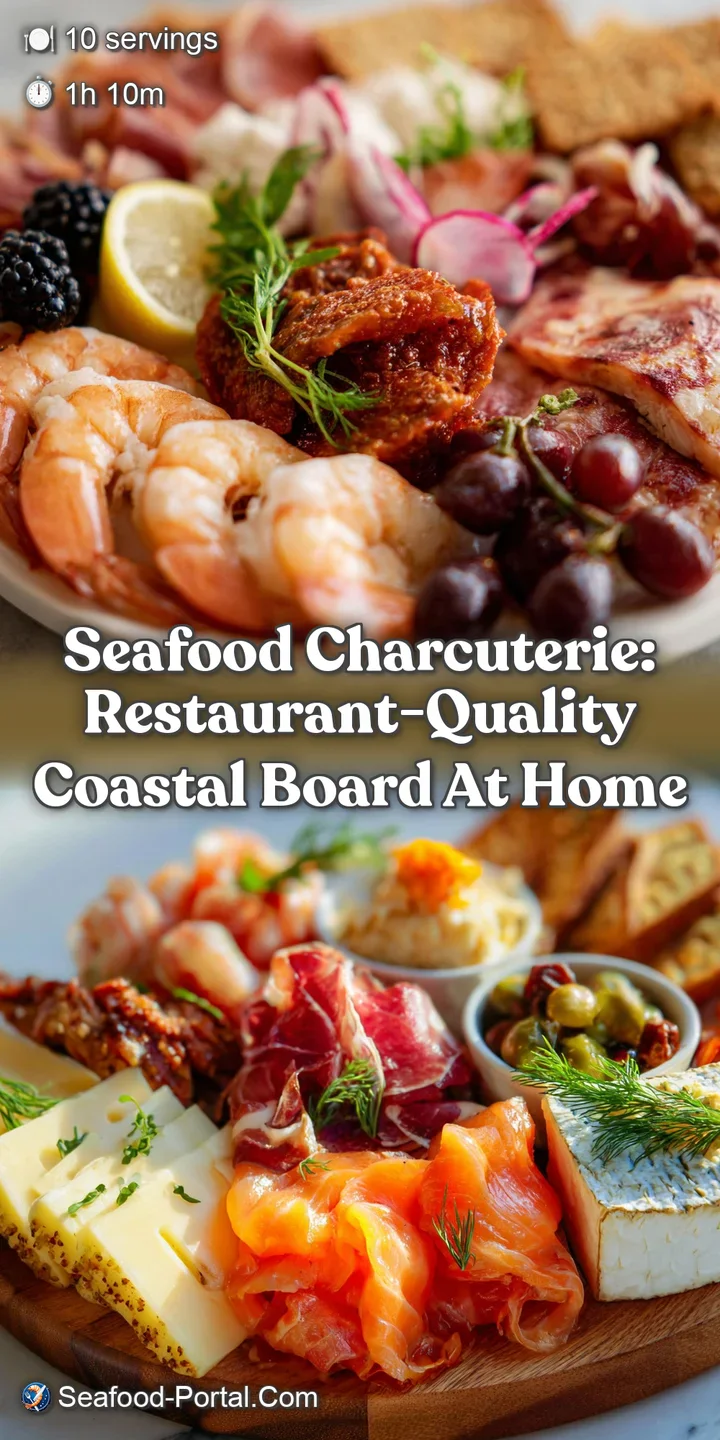
This particular Seafood Charcuterie Recipe delivers that balance by featuring three distinct textures. We have the yielding, delicate melt of the gravlax, the creamy, smoky density of the rillettes, and the snappy, bright pop of the pickled shrimp. It's a textural masterclass!
What is Seafood Charcuterie (And Why Does It Matter)?
At its core, Seafood Charcuterie is applying curing, preserving, and smoking techniques traditionally reserved for meats to high-quality fish and shellfish. It matters because it unlocks deep, concentrated flavour profiles you simply can't get from quickly pan-seared shrimp.
It transforms humble ingredients into sophisticated bites.
It is an amazing approach for those who prefer lighter fare or have guests who avoid red meat. Building a brilliant Seafood Charcuterie means preserving the ocean's bounty beautifully.
Breaking Down the Board: Three Homemade Delicacies (Gravlax, Shrimp, Rillettes)
We are focusing on three stars for this platter. First, the Gin & Dill Gravlax; it cures beautifully and delivers that iconic, silky texture. Second, the Zesty Pickled Bay Shrimp they offer a vinegary snap that cuts through the richness.
And finally, the Smoked Trout Rillettes, which are pure, whipped luxury.
I learned early on that combining these three specific elements elevates a simple gathering into something spectacular. Seriously, this concept of Seafood Charcuterie takes zero actual cooking skill, just patience!
Is This Board Hard to Assemble? Addressing the Medium Difficulty
Honestly, the assembly is a breeze the hardest part is waiting for the gravlax to cure. The "Medium" rating is purely because you need precision when curing fish. If you under cure it, the texture is sloppy; if you over cure it, it gets too salty.
However, making a true Seafood Charcuterie platter means taking ownership of at least one component. Once you nail the gravlax press (more on that later), everything else flows smoothly, including the rillettes which are mixed up in minutes.
Balancing Brine, Smoke, and Citrus: The Flavor Pillars
For this Seafood Charcuterie , the flavour pillars must align. We are hitting brine (shrimp), smoke (trout rillettes), and sharp citrus/herbaceous notes (gravlax and the pickle liquor). Never serve a board where everything tastes vaguely the same!
When planning your own Seafood Charcuterie Ideas , always ensure you have a counterpoint to richness. The lemon slices and cornichons are there specifically to reset your palate between the creamy rillettes and the cured salmon.
From Silky Rillettes to Snappy Shrimp: Mastering Texture
Texture is what makes this Seafood Charcuterie so satisfying to eat. You move from the flaky, delicate crumble of the rillettes to the yielding slice of the cured fish, finishing with the firm bite of the pickled shrimp.
Trust me on this: if you chop your chives for the rillettes too large, the whole texture falls apart. Keep them fine so they integrate seamlessly into the creamy spread. This focus on texture is key to mastering the Seafood Charcuterie trend.
The Magic of Curing: Transforming Salmon with Gin and Dill
Curing salmon isn't just about preservation; it fundamentally changes the protein structure. The salt draws out moisture, firming the fish without cooking it, while the gin adds an aromatic complexity that lifts the whole profile.
This is the cornerstone of making this a real Seafood Charcuterie .
Chef's Note: Do NOT skip draining the liquid from the curing salmon every 12 hours. If you let it sit in the expelled water, you boil the flavour out and get mush instead of firm, beautiful slices for your final Seafood Charcuterie .
Essential Components for the Ultimate Seafood Charcuterie Spread
The quality of your ingredients dictates the success of your board. Since we aren't relying on heat to kill anything off, sourcing the absolute best, high-quality seafood is non-negotiable for a safe and delicious Seafood Charcuterie .
Sourcing the Finest Catch: Salmon, Trout, and Bay Shrimp Selection
For the gravlax, insist on skin-on, center cut salmon fillet sushi grade is preferred because it minimizes risk when consuming it raw (cured). For the rillettes, good quality, already smoked trout works wonderfully, or you can smoke your own!
The bay shrimp must be fully cooked but tender; look for medium size, as the tiny ones get lost in the pickling brine of this Seafood Charcuterie .
Key Curing Agents: Salt, Sugar, Gin, and Fresh Dill Requirements
The cure blend is precise: equal parts coarse sea salt and granulated sugar provides the osmotic balance needed to draw out water correctly. The gin (use one you’d actually drink!) adds a beautiful juniper note that complements the dill perfectly in this context of Seafood Charcuterie .
We need a lot of fresh dill, packed tight. Dried dill just won't cut it here; you need that vibrant, slightly anise like freshness to define the gravlax.
Strategic Swaps: Handling Ingredient Availability (Swapping Smoked Trout)
What if your fishmonger is out of smoked trout? Don't panic! Smoked mackerel is a phenomenal, often cheaper, substitute for the rillettes component of your Seafood Charcuterie Tray . Mackerel is oilier, so you might use slightly less butter.
If you can't find bay shrimp, try substituting small, blanched scallops. They pickle beautifully, though you’ll need to slice them thin before adding them to the brine for your Seafood Charcuterie Platter .
Non-Seafood Accoutrements: Must Have Acidic and Neutral Carriers
The non-seafood items are critical carriers. You need something neutral to scoop the rillettes water crackers or thin, toasted crostini are my go-to carriers for this Seafood Charcuterie .
Acidic elements like cornichons and capers act as palate cleansers. And always, always offer good quality, soft, unsalted butter for the smoked trout it balances the intensity perfectly.
Crafting Your Delicacies: Detailed Method for the Trio of Seafood Cures
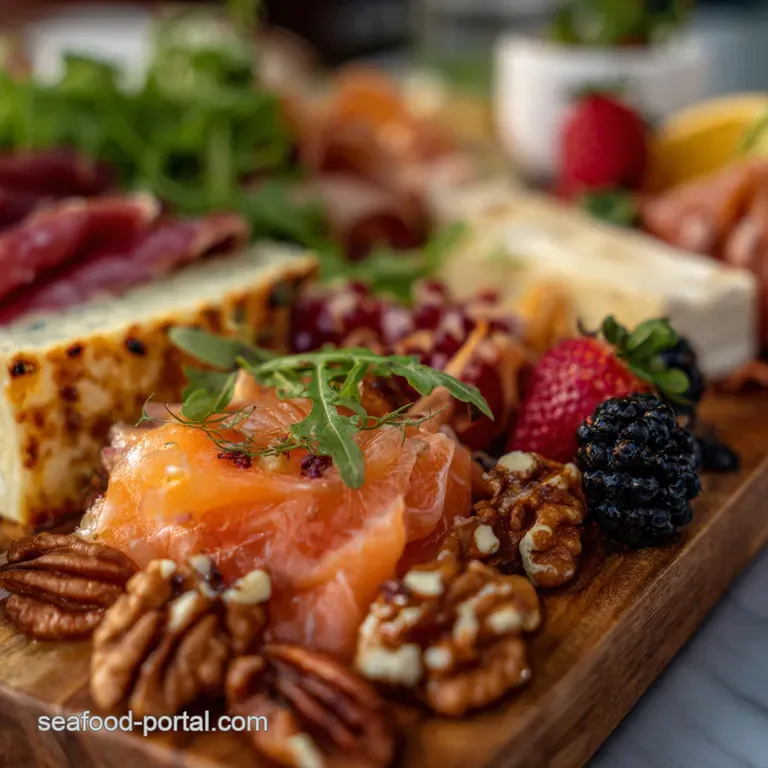
Now we get into the active work. Remember, 48 hours of inactive curing time means you need to start this process a few days before you plan to serve your stunning Seafood Charcuterie Board .
Part 1: Preparing the Gin & Dill Gravlax (Curing and Pressing)
First, mix your cure: salt, sugar, cracked pepper, and that beautiful mound of dill. Now, rub that gin all over the salmon flesh get it into every nook. Cover the flesh completely with the cure mix, wrap it tight in film, and put it in a container. Weight it down.
This pressure is essential for achieving that signature silky texture required for a top-tier Seafood Charcuterie . Flip it every 12 hours religiously!
Part 2: Quick Pickling the Bay Shrimp (Brine Method)
While the salmon is curing, make your brine. Heat the vinegar, water, and sugar until clear, then add the aromatics like shallots, lemon, and bay leaves. Let it steep for about 15 minutes off the heat. Pour this warm (not boiling!) brine over your cooked shrimp and place them in the fridge.
They’ll absorb all that bright acidity needed for the Seafood Charcuterie .
Part 3: Whipping Up the Smoked Trout Rillettes (Mixing and Chilling)
This is the fastest part! Beat the cold crème fraîche and room temperature butter until they look light and fluffy this aerates the mixture. Gently fold in the flaked trout, lemon juice, chives, and that touch of prepared horseradish. You want texture, not soup, so fold, don't mash!
Chill this until firming up before you assemble the Seafood Charcuterie .
The Grand Finale: Assembling Your Sophisticated Coastal Board
Once the gravlax is done (rinse, pat dry, and slice thinly —remember the 20 minute freeze tip!), it’s time for display. Start by placing the three main seafood components centrally on your board. You want the gravlax to look abundant, maybe gently folding the slices for height.
Scatter the crackers and bread around the edges, leaving space for the small bowls of capers and cornichons. A successful Seafood Charcuterie board looks plentiful, colourful, and ready to dive into.
Ensuring Success: Expert Tips for Curing and Board Presentation
If you want your Seafood Charcuterie to be the talk of the town, paying attention to the details in the final 24 hours makes all the difference.
- The Rinse is Real: After curing, rinsing the gravlax must be thorough. If you leave any residual salt cure clinging to the surface, the exterior slices will be inedibly salty. Dry it totally dry afterward.
- Rillettes Chill Time: Give the rillettes ample time (at least 30 mins) to chill after mixing. The fat needs to re-solidify slightly so it holds its shape when scooped onto a cracker as part of your Seafood Charcuterie .
Making Ahead and Maintaining Freshness: Storage Solutions
The beauty of making components for a Seafood Charcuterie ahead of time is that the flavours actually improve!
Shelf Life of the Homemade Components (Gravlax, Shrimp, Rillettes)
The Gravlax, once rinsed and tightly wrapped, will keep wonderfully in the fridge for up to 5 days. The pickled shrimp last about a week in their brine. The rillettes, due to the dairy content, are best eaten within 3 days for optimal flavour and safety.
Notes on Freezing Cured Fish (Specific Guidance for Salmon)
I generally advise against freezing the finished, sliced gravlax if you can help it; the texture suffers. But, if you must , wrap the whole, uncured block tightly in plastic, then foil, and freeze for up to a month.
Thaw it slowly in the fridge for 48 hours before slicing and serving on your Seafood Charcuterie Tray .
Troubleshooting the Gravlax: Preventing an Over Salted Cure
If you find your gravlax cured too long and it's aggressively salty, slice it paper thin (this helps distribute the saltiness) and serve it with unsalted carriers, like plain blinis or lightly buttered toast points.
It’s fixable, but it’s an easy mistake when making your first Seafood Charcuterie .
What to Serve Alongside Your Elevated 'Coastal Cure' Board
We have our three main players, but a great platter is all about the supporting cast. Think about what enhances the brine and smoke of your Seafood Charcuterie .
Maximizing Flavour Depth: Resting Times for Pickled Seafood
The shrimp brine needs time to penetrate. Don’t touch those pickled shrimp for at least 6 hours. Overnight is better. You want them sharp and vibrant, cutting through the fat of the rillettes when you build your perfect bite on the Seafood Charcuterie Platter .
Presentation Matters: Arranging the Components for Maximum Visual Impact
Use height! Put the rillettes in a small glass jar or ramekin so it stands up. Drape the gravlax slices elegantly over the edge of a small platter or cutting board. Don't just lay things flat; make the Seafood Charcuterie Board Recipe look like an edible landscape.
The Perfect Crusts and Carriers (Blinis, Crackers, and Toasts)
If you are serving this for a proper dinner party, look into making quick blinis; they feel incredibly authentic for a spread like this. If you are short on time, grab some good quality butter crackers and slice a baguette thick, brushing the slices lightly with olive oil before toasting.
This approach provides great support for a Charcuterie for Seafood Lovers .
Ultimately, this Seafood Charcuterie Trend is about celebrating simple, high-quality ingredients treated with respect. If you enjoyed crafting this, check out my recipe for Shrimp Bruschetta: Easy Lemon Garlic Seafood Appetizer Recipe for another bright appetizer idea! This entire approach to serving seafood is fantastic for summer gatherings, much like my guide to the Summer Seafood Soup: Light Saffron Tomato Fumet Recipe . Enjoy building your magnificent Seafood Charcuterie spread!
Recipe FAQs
How long can I safely store the individual seafood components before assembling the board?
The Gin & Dill Gravlax should be tightly wrapped and lasts 5-7 days refrigerated after curing. The Pickled Bay Shrimp are best consumed within 3 days, and the Smoked Trout Rillettes should be kept chilled for up to 4 days, stored separately in airtight containers.
My Gravlax seems mushy or overly dry; what went wrong with the curing process?
If the gravlax is mushy, you likely used too much weight or allowed it to cure for too long, squeezing out vital fats and moisture. If it’s dry or overly firm, the ratio of salt to sugar may have been too high, causing excessive dehydration of the fish flesh.
Ensure you use the exact ratio specified and a medium, consistent weight.
Can I use a different fish, like smoked salmon, to make the Rillettes instead of trout?
Absolutely. Smoked salmon is a fantastic substitute, though it tends to be richer and slightly oilier than trout. If substituting, adjust the amount of added fat (crème fraîche or butter) slightly downward to maintain a smooth, luxurious, and spreadable texture.
I don't want to use alcohol. Can I omit the gin from the Gravlax cure?
Yes, the gin primarily adds a delicate juniper and botanical complexity, but it is not essential for the cure's safety or efficacy. You can either replace the small amount of gin with 1 tablespoon of high-quality vodka or simply omit it and increase the fresh dill and lemon zest slightly for compensating flavour.
I can't find small bay shrimp for the pickling; what is a good alternative?
Medium sized pre-cooked salad shrimp or peeled prawns cut into smaller, bite sized pieces work very well as a substitution. Ensure any alternative shrimp is fully thawed and thoroughly patted dry before immersing in the pickling brine, otherwise, residual water will dilute the preserving ratio.
How far in advance can I prepare and assemble the entire Seafood Charcuterie board setup?
The seafood items should never be left out at room temperature for more than two hours due to food safety concerns. It is recommended to assemble the full board including crackers, olives, and condiments no more than 30 minutes before serving, keeping the chilled seafood elements refrigerated until the very last moment.
How do I know when the Pickled Bay Shrimp are optimally marinated and ready to serve?
While the shrimp are safe to eat immediately after the pickling process, the optimal flavour development occurs after resting in the brine for at least 6 to 8 hours. They are perfectly ready when they have a firm texture and the vinegar and pickling spices have fully penetrated the flesh, giving them a tangy finish.
Sophisticated Seafood Charcuterie Board
Ingredients:
Instructions:
Nutrition Facts:
| Calories | 325 kcal |
|---|---|
| Fat | 18 g |
| Fiber | 1 g |
