Proper Lowandslow Smoked Turkey Legs the Theme Park Classic
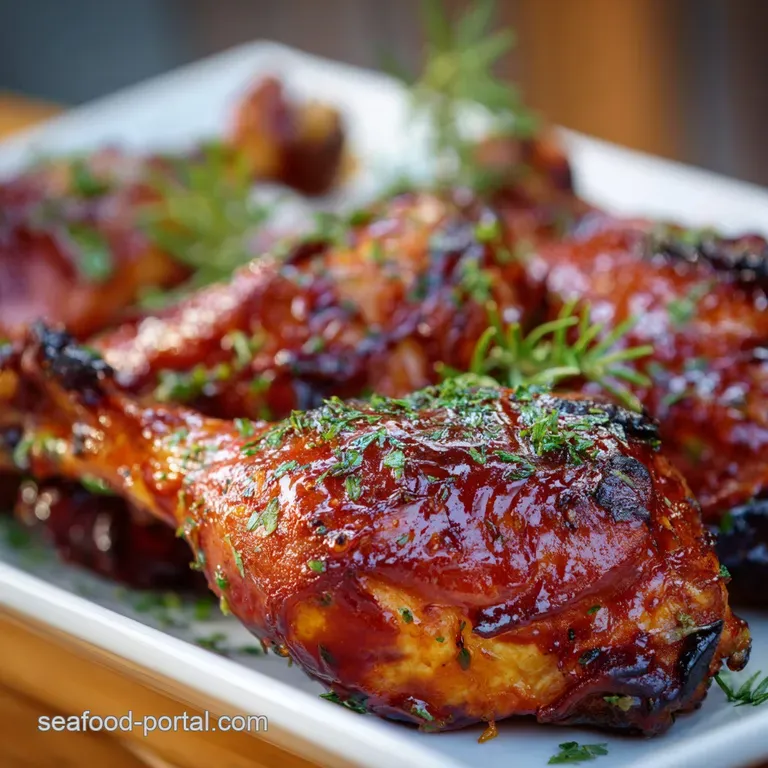
Achieving the Mythic Turkey Leg: Why Brining is Non-Negotiable
The difference between a dry, mediocre piece of poultry and truly magnificent Smoked Turkey Legs lies entirely in the preparation. Unlike chicken, large turkey legs are lean and tough, packed with dense connective tissue that requires a strategic approach.
We aren't just looking for flavor on the surface; we need moisture locked deeply inside the muscle fibers. This is where brining comes into play. The brine allows the meat to absorb water, salt, and sugar, resulting in a significantly juicier final product that withstands the rigors of a long, slow smoke.
On top of that,, the salt denatures proteins, enabling them to retain moisture more effectively a non-negotiable step for any serious Smoked Turkey Legs Recipe .
Replicating Theme Park Texture: The Role of the Cure
If you crave that instantly recognizable, slightly ham-like texture and deep pink hue reminiscent of the legendary Theme Park Turkey Leg , you must incorporate a cure. This isn't just about color; it’s about structure and safety.
We use Curing Salt #1 (Pink Salt or Prague Powder #1) alongside Kosher salt and brown sugar in the brine. This curing agent contains nitrites which inhibit bacterial growth during the low-temperature smoking process and, critically, react with the turkey’s myoglobin to form nitric oxide myoglobin, stabilizing the colour and providing that characteristic smoky, ham-like flavour.
The cure is vital for breaking down the protein matrix, allowing the tough turkey meat to become exceptionally tender during the lengthy cook.
Setting Up Your Smoker for Optimal Heat Flow
Successful low-and-slow barbecue relies on consistency. Whether you are using a gravity fed smoker, an offset smoker, or a modern Smoked Turkey Legs Pellet Grill , maintaining a steady ambient temperature of 225° F ( 107° C) is paramount.
This low heat level is required to slowly render the fat and melt the connective tissue without drying out the exterior. For users operating a Smoked Turkey Legs Traeger or similar pellet device, ensure your hopper is full and your diffuser plate is correctly positioned to provide pure, indirect heat.
Place the legs with ample space between them to allow the heat and smoke to circulate evenly around the surface, ensuring a perfect bark formation.
Understanding Temperature Zones for Connective Tissue Breakdown
One of the greatest mistakes home cooks make when tackling Turkey Drumsticks is pulling them at the standard 165° F ( 74° C) poultry safety mark.
While 165° F is safe for breast meat, the abundance of collagen in the legs needs significantly more time and heat to fully break down into gelatin. This transformation is what guarantees fall off-the-bone tenderness, not dryness.
We aim for an internal target temperature between 175° F ( 80° C) and 180° F ( 82° C).
Using a quality remote probe thermometer is essential for monitoring this progression without opening the smoker lid unnecessarily.
Sourcing Your Feast: Essential Components for Perfect Smoked Turkey Legs
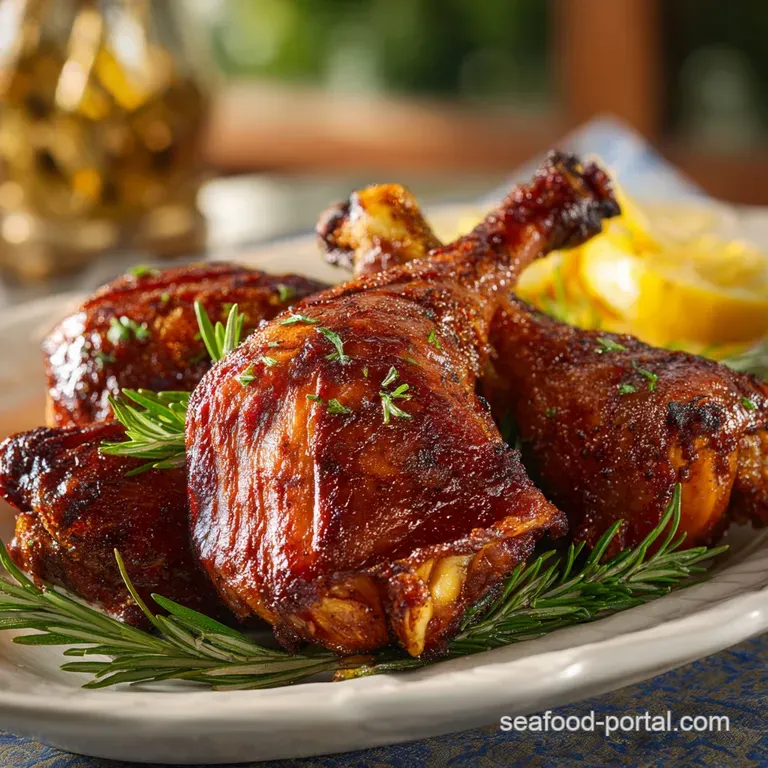
Preparing for this magnificent feast requires intentional ingredient sourcing and the right tools. Because the flavor profile is built in layers starting with the cure, moving to the dry rub, and finishing in the smoke each component matters deeply.
We are looking for large, meaty turkey legs, ideally averaging two pounds each, as these stand up best to the long smoke duration.
Ingredient Checklist: Salt, Sugar, and the Curing Agent (Pink Salt)
For the initial brine, you will need a gallon of cold water, ¾ cup of Kosher salt, and ½ cup of packed light brown sugar. Crucially, the cure requires 1 teaspoon (5 grams) of Curing Salt #1. Because this chemical compound is highly concentrated, it must be measured precisely.
The dry rub that follows is what builds that deep, smoky mahogany bark. It’s a mix primarily composed of smoked paprika for color and depth, dark brown sugar for caramelization, and granulated garlic and onion powder for aromatics.
This complex rub ensures the finished product is richly flavored and visually stunning.
Hardware Required: Thermometers, Trays, and Wood Selection
Beyond the smoker itself, precise temperature measurement is the most critical hardware requirement. A remote probe thermometer allows you to track the smoker's ambient temperature and the internal temperature of the meat simultaneously.
For wood selection, Hickory provides a classic, bold smokiness that pairs beautifully with rich meats like turkey. However, Apple or Oak are excellent alternatives for those who prefer a slightly lighter smoke flavor.
Ensure you use wood chunks or quality pellets that yield thin, clean, blue smoke, avoiding the acrid taste of thick, white smoke.
The Signature Finish: Crafting a Glaze That Pops
While many traditional Turkey Leg Recipes rely solely on the savory bark built by the rub, adding a glaze during the final stage can take the presentation to the next level.
A simple mop sauce or glaze perhaps a combination of melted butter, Worcestershire, and a touch of maple syrup can be brushed on toward the end of the cook. This step dramatically increases the shine, deepens the color, and adds a contrasting layer of sweetness that cuts through the intense smoky flavor profile.
Apply this glaze when the legs are within 10 degrees of their final target temperature, allowing the heat to set the coating without burning the sugars.
Related Recipes Worth Trying
- The Secret to Perfectly Crisp Juicy air-fried Turkey Meatballs — Stop serving dry turkey This foolproof air fryer turkey meatballs recipe delivers tender interiors and crisp edges Get the precise air fry turkey meatballs...
- Golden Crispy Air Fryer Turkey Nuggets Recipe Healthy Fakeaway — Ditch the freezer aisle These air fryer ground turkey nuggets are shatteringly crisp and ready in a flash This is the ultimate healthy comfort food perfect...
- The Ultimate Easy Smoked Salmon Dip with Cream Cheese and Dill — This luxurious Easy Salmon Dip is the perfect starter Whipped salmon dip with cream cheese fresh dill and lemon Velvety smooth and ready in 15 minutes flat
Master the Smoke Ring: The Low-and-Slow Smoking Sequence
The entire cooking process is a deliberate dance between time and temperature, designed to maximize flavor absorption and connective tissue breakdown. Patience is your most important tool during this phase.
The Critical 24-Hour Soak: Preparing the Legs for the Heat
The preparation begins with the mandatory brine and cure, requiring a minimum of 24 hours (and up to 48 hours) to fully penetrate the large muscles of the Turkey Drumsticks .
Once the brining is complete, the single most critical prep step is rinsing. The legs must be meticulously rinsed under cold running water for 3 to 5 minutes to remove excess surface salt from the highly concentrated curing solution.
Failing to rinse adequately will result in unpleasantly salty meat, despite the perfect internal texture. After rinsing, pat the legs completely dry; moisture impedes bark formation.
Maintaining Pure Blue Smoke: Fuel Management During the Cook
Before the turkey even touches the grate, the smoker must be preheated to a stable 225° F ( 107° C) with established, clean blue smoke. This thin, almost invisible smoke is crucial for imparting maximum flavor without imparting a bitter taste.
The low-and-slow cook lasts approximately 4.5 to 6 hours. During this period, resist the urge to constantly open the lid, as every peek extends the cooking time and allows precious heat and smoke to escape.
Monitor the internal progress using the remote probe thermometer inserted into the deepest part of the meat, well away from the bone.
Glazing Phase: Hitting Internal Temperature and Setting the Shine
The focus remains on internal temperature, pushing past the minimum safe threshold until the meat is truly tender. When the legs register between 175° F and 180° F, the connective tissues are fully dissolved, yielding incredibly succulent meat.
If you opted for a glaze, this is the time to apply it, setting the flavor just before removal. At this temperature, the smoked poultry is ready to be pulled. Attempting to cook the legs too quickly at a higher temperature will dry out the meat long before the collagen has had a chance to melt.
The Crucial Rest: Locking in Juices Before Serving
The 30-minute rest is non-negotiable and as vital as the cook itself. Immediately upon reaching the 180° F target, remove the legs from the heat, tent them loosely with foil, and let them rest on the counter.
During this time, the internal temperature stabilizes and, more importantly, the muscle fibers relax, drawing the flavorful juices back into the meat. Serving these beautiful Smoked Turkey Legs immediately off the smoker, without a rest, guarantees that all the accumulated moisture will run out onto the cutting board, leaving you with a drier meal.
Beyond the Bone: Expert Tips for Ultimate Flavor and Presentation
Achieving perfection with smoked poultry requires anticipating and managing common challenges, especially regarding texture and maximizing the rich flavor profile.
Troubleshooting Dry Spots: Mop Sauce Strategies
One common complaint with low-and-slow turkey is rubbery skin, which often occurs because the temperature is too low to crisp the fat. If you find the skin becoming tough or the meat showing signs of dryness late in the cook, a mop sauce can help.
A simple mixture of chicken stock, apple cider vinegar, and melted butter can be lightly brushed onto the legs every 60- 90 minutes. For truly crisp skin, however, remove the legs when they hit 170° F, brush them with butter, and transfer them to a 400° F ( 200° C) oven or a hot broiler for 5 to 10 minutes to rapidly crisp the surface before allowing the final rest.
Side Dish Pairings That Complement Rich Smoked Turkey Legs
Because of the bold, rich flavor imparted by the smoke, the accompanying side dishes should offer acidity and textural contrast. Classic pairings include a creamy, tangy Coleslaw, which provides a refreshing counterpoint to the heavy meat, and warm, fluffy Cornbread.
Homemade Bread and Butter Pickles offer necessary acidity. For dipping, steer toward a bright, mustard forward sauce, such as Carolina Gold, or a traditional Kansas City style sauce to complement the robust smoke flavor of this superb Smoked Turkey Legs Recipe .
Safe Storage and Reheating Methods for Leftovers
Properly smoked and cured turkey legs can be safely stored in an airtight container in the refrigerator for up to four days. To reheat, avoid the microwave, which tends to dry out the meat.
The best method is gentle oven reheating: wrap the legs tightly in foil with a tablespoon of broth or water to introduce steam, and bake in a preheated Smoked Turkey Legs in Oven set to 325° F ( 160° C) until warmed through (about 20– 25 minutes).
This traps moisture and prevents the meat from becoming stringy or dry.
Flavor Variations: Switching Up the Rub and Wood Species
The beauty of barbecue lies in customization. While the cure ensures perfect texture, the flavor can be dramatically altered through the rub and wood selection. For a serious kick, switch out the traditional rub for a robust Cajun seasoning blend and use Hickory or Mesquite wood.
Alternatively, skip the rub entirely and opt for a sweet finish by basting the legs with a Maple Bourbon glaze during the last hour of smoking, using Apple or Pecan wood for a fruitier, milder smoke. These creative Turkey Leg Recipes allow you to tailor the smoked feast to any palate.

Recipe FAQs
Why do I have to cook the turkey legs up to 180°F? Isn't that far too high for poultry?
That's a very sensible question! Dark meat, such as turkey legs, is packed with tough connective tissue and collagen. Unlike lean breast meat, these joints need the extra heat (175°F 180°F) to properly dissolve that tissue and render the fat.
Cooking to this higher internal temperature is actually the secret to achieving that luscious, pull apart, fall off-the-bone tenderness you'd expect from a proper Sunday feast.
I'm a bit nervous about using Curing Salt #1 in this Smoked Turkey Legs recipe. Is it truly necessary?
Curing salt (Pink Salt #1) is essential for this specific style, so treat it with respect and measure accurately. It serves two crucial roles: it prevents bacterial growth during the long, low-temperature brine, and it's what gives the turkey the distinctive ham-like texture and the vibrant pink smoke ring.
If you skip it, the results will be safe but lack that characteristic commercial flavour and colour; if you use it, remember it is NOT table salt and must be used precisely as indicated.
My turkey skin always turns out rubbery in the smoker. How do I get that lovely crispy 'bark'?
Ah, the bane of every home pitmaster! Low-and-slow smoking often leaves the turkey skin chewy because the temperature isn't high enough to fully render the fat. For a brilliant fix, try the finishing trick mentioned in the notes.
Once the internal temperature hits 170°F, remove the legs, brush them with melted butter, and blast them under a hot broiler or in a 400°F (200°C) oven for five to ten minutes until the skin crisps up nicely.
What are the best types of wood chips or chunks to use for the smoke?
When smoking turkey, you want a wood that offers medium intensity stronger than fruitwoods but lighter than mesquite. Hickory is the undisputed classic, providing a deep, slightly bacon like flavour that's just brilliant with this recipe.
If you prefer a milder taste or plan on using a sweet glaze, Apple or Cherry wood are great alternatives that impart a beautifully subtle sweetness to the meat.
How should I store these huge smoked legs, and what is the best way to reheat leftovers?
You can definitely get ahead of the game! The legs can be cured and rubbed up to 12 hours before smoking, kept covered in the fridge. Leftovers keep beautifully for 3-4 days in an airtight container, or you can freeze them whole for up to three months.
To reheat without drying them out because no one wants a dry leg wrap them tightly in foil and warm them slowly in a 300°F (150°C) oven until heated through. Adding a teaspoon of stock or water to the foil packet helps keep the moisture in.
Smoked Turkey Legs Theme Park Recipe
Ingredients:
Instructions:
Nutrition Facts:
| Calories | 1969 kcal |
|---|---|
| Protein | 13.1 g |
| Fat | 36.2 g |
| Carbs | 125.9 g |
| Fiber | 13.3 g |
| Sodium | 9380 mg |
