Silky She Crab Soup: Charleston Classic

- Time: Active 10 minutes, Passive 25 minutes, Total 35 minutes
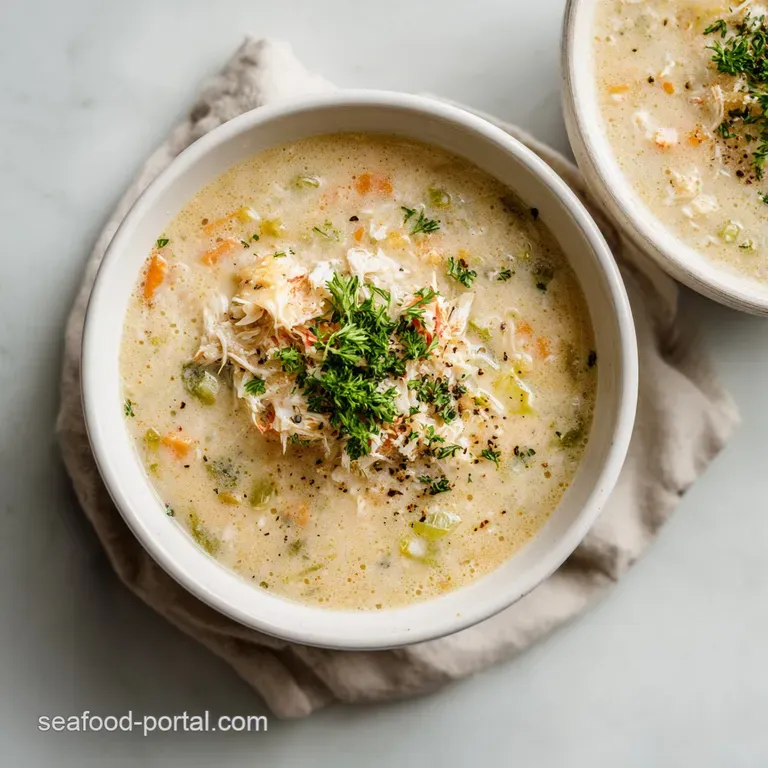
- Flavor/Texture Hook: Velvety cream base with buttery crab morsels and a nutty, floral finish
- Perfect for: Sophisticated dinner parties, holiday starters, or a cozy coastal inspired weekend lunch
- Mastering the Silky Texture of Authentic She Crab Soup
- Precision Timing for a Perfect Coastal Seafood Result
- Selecting Premium Ingredients for This Lowcountry Classic
- Essential Kitchen Tools for a Smooth Creamy Finish
- Step-By-Step Guide to Crafting This Charleston Icon
- Troubleshooting Your Soup for a Flawless Result
- Customizing Your Bowl for Different Dietary Needs
- Preserving Delicate Flavors Through Smart Storage Steps
- Perfect Pairings to Complete Your Coastal Feast
- High in Sodium
- Recipe FAQs
- 📝 Recipe Card
Mastering the Silky Texture of Authentic She Crab Soup
The first time I stood on a rickety wooden pier in Charleston, the air was thick with the scent of salt marsh and pluff mud. It’s a specific, briny aroma that tells you you’re exactly where you need to be.
I remember wandering into a small, dim kitchen where the steam from a massive stockpot smelled like pure liquid gold. The cook didn't use a recipe; she used her senses, listening for the gentle bubble and watching for the exact moment the butter turned nutty before whisking in the flour.
That afternoon changed how I viewed seafood forever.
We’re not just making a "crab soup" here. This is a lesson in patience and the beauty of high-quality fats. When the heavy cream hits that roux thickened seafood stock, it transforms into something that feels like silk on the tongue.
It’s a dish that demands respect for the ingredients especially that lump crab meat that we’ve fought so hard to keep intact. If you’ve ever had a bowl that felt grainy or thin, don't worry. I’ve made those mistakes so you don't have to.
We are going for a texture so velvety it almost shatters the expectations of what a home cook can achieve.
Trust me on this: the secret isn't just in the crab, it’s in the silence. You want a simmer so quiet you can barely hear it. If you boil this, you break the heart of the cream.
We’re aiming for a gentle, rhythmic pulse in the pot that coaxes the flavors of the mace and white pepper into every fiber of the crab meat. Ready to get started? Let's crack on.
Precision Timing for a Perfect Coastal Seafood Result
The Physics of the Velvety Emulsion: The starch granules in the flour swell and trap fat molecules, creating a stable matrix that prevents the heavy cream from curdling when it meets the acidic dry sherry.
This "roux to cream" ratio ensures a thick, coat the-back of-the spoon consistency without the need for excessive reduction.
Chef's Tip: Freeze your butter for 10 minutes before starting. When you hit the hot pan with cold butter, the water evaporates slower, giving you a tiny bit more control over the initial foaming stage before the shallots go in.
Chef's Tip: Sieve your hard boiled egg yolks twice. If you aren't using actual crab roe, the double sieving creates a "dust" that mimics the texture of roe perfectly, dissolving into the soup to provide that iconic orange hue without any sandy grit.
| Method | Time | Texture | Best For |
|---|---|---|---|
| Traditional Stovetop | 25 minutes | Ultra velvety and controlled | Immediate serving and best flavor infusion |
| Oven Finished (Low) | 45 minutes | Denser, more concentrated | Keeping warm for a large party or brunch |
| Slow Cooker (Base only) | 3 hours | Deeply aromatic but less "bright" | Meal prep enthusiasts who want to add crab last |
When you are working with delicate seafood, the temperature is your best friend or your worst enemy. If you're looking for more inspiration from the Chesapeake area, you might notice similarities in the base of my Classic Maryland Crab recipe, though today we are leaning into the creamier Southern tradition.
Selecting Premium Ingredients for This Lowcountry Classic
| Ingredient | Science Role | Pro Secret |
|---|---|---|
| Heavy Cream | Provides the fat soluble flavor carrier | Use room temperature cream to prevent thermal shock and breaking the roux |
| Ground Mace | The "bridge" spice between sweet and savory | This is the hull of the nutmeg; it’s more floral and less "eggnog" flavored |
| Dry Sherry | Acidic brightener and aromatic finish | Never use "cooking sherry" it’s too salty. Buy a bottle you’d actually sip |
Choosing your crab meat is the most vital decision you'll make today. I always advocate for fresh lump Atlantic blue crab. It has a natural sweetness that stands up to the heavy cream. If you see "claw meat," it’s flavorful but can look a bit "shredded" in this specific soup. Save that for a Crab Imperial Recipe where the texture is meant to be more compact.
- 4 tbsp (56g) Unsalted high fat butter: Look for European style butter for a richer mouthfeel.
- Substitute: Ghee, though it lacks the milk solids that help brown the shallots.
- 2 medium Shallots, minced (40g): They offer a sophisticated sweetness compared to sharp onions.
- Substitute: The white parts of green onions (scallions).
- 1/4 cup (30g) Celery, finely diced: Provides the essential "crunch" base and herbal notes.
- Substitute: Diced fennel bulb for a subtle anise twist.
- 1/2 tsp (1g) Ground mace: Why this? Essential for the authentic Charleston flavor profile.
- Substitute: Ground nutmeg (use half the amount).
- 1/4 tsp (0.5g) White pepper: Keeps the soup looking clean while adding a slow, earthy heat.
- Substitute: Finely ground black pepper.
- 4 tbsp (30g) All purpose flour: The thickening agent for our roux.
- Substitute: Cornstarch (use 2 tbsp mixed with water) for a gluten-free option.
- 2 cups (480ml) seafood stock: Why this? Builds the foundational brine of the soup.
- Substitute: Bottled clam juice diluted with a little water.
- 2 cups (480ml) Heavy cream: Creates the signature velvety body.
- Substitute: Full fat coconut milk (note: adds a distinct tropical flavor).
- 1 tbsp (15ml) Worcestershire sauce: Adds the "umami" punch and fermented depth.
- Substitute: Soy sauce or coconut aminos.
- 1/2 tsp (3g) Sea salt: Sharpens all other flavors.
- Substitute: Kosher salt (adjust for volume).
- 1 lb (450g) Fresh lump Atlantic blue crab meat: The star of the show.
- Substitute: Canned lump crab (drained very well).
- 2 tbsp (30g) Crab roe or 2 hard boiled egg yolks, sieved: Why this? Adds richness and the traditional golden color.
- Substitute: Very finely grated zest of half a lemon + pinch of turmeric.
- 3 tbsp (45ml) Dry Sherry: The aromatic finish that defines she crab soup.
- Substitute: Dry white wine with a splash of brandy.
- 1 tbsp Fresh chives, chopped: For a bright, oniony garnish.
- Substitute: Fresh parsley.
Essential Kitchen Tools for a Smooth Creamy Finish
You don't need a mountain of gear, but a heavy bottomed pot (like a Dutch oven) is non negotiable. Thin pots create "hot spots" that will scorch your cream faster than you can say "Chesapeake." You’ll also want a fine mesh sieve if you're using the egg yolk trick.
The goal is to avoid any lumps we want a texture that is completely uniform until you hit those beautiful chunks of crab.
I also highly recommend using a silicone whisk. It allows you to get into the "corners" of the pot where the roux likes to hide and burn. If you’re planning on serving this as part of a larger seafood spread, perhaps alongside a Sauce for Crab Cakes recipe, having all your mise en place (ingredients prepped) ready is key. Since this soup comes together quickly once the liquid is added, you won't have time to chop celery mid simmer.
step-by-step Guide to Crafting This Charleston Icon
1. Sauté and Infuse
Melt the butter in your heavy bottomed pot over medium low heat until it begins to foam and sizzle. Add the minced shallots and diced celery. Sauté for about 5 minutes until the shallots are translucent and fragrant, but do not let them brown.
Note: Browning the vegetables will discolour the final soup.
2. Building the Velvety Roux
Sprinkle the flour, ground mace, and white pepper over the buttery vegetables. Whisk constantly for 2 minutes until the flour smells slightly nutty and looks like a pale paste. This "cooks out" the raw flour taste while maintaining the light color necessary for a bisque style.
3. The Creamy Integration
Slowly pour in the seafood stock, whisking vigorously to prevent any lumps from forming. Once smooth, pour in the heavy cream and Worcestershire sauce. Increase the heat slightly to medium and bring the mixture to a very gentle simmer until the liquid thickens enough to coat the back of a spoon.
4. The Gentle Crab Fold
Reduce the heat to low. Gently fold in the fresh lump crab meat and the sieved egg yolks (or roe). Be careful not to over stir; you want to keep those crab lumps as whole as possible.
Let the soup sit for 5 to 7 minutes until the crab is heated through and the soup is steaming but not boiling.
5. The Sherry Finish
Just before serving, stir in the sea salt and the dry sherry. Taste the soup the sherry should be a bright, aromatic note at the end of the palate. Ladle the soup into warm bowls and garnish with a generous sprinkle of fresh chives. Serve immediately while it's at its most velvety.
Troubleshooting Your Soup for a Flawless Result
Why is my soup grainy?
Graininess usually happens if the roux wasn't fully incorporated or if the egg yolks weren't sieved finely enough. It can also happen if the soup was brought to a violent boil, causing the proteins in the cream to clump.
If it's already grainy, you can try passing the liquid base through a fine mesh strainer before adding the crab, but once the crab is in, you have to be very gentle.
What if I can't find crab roe?
Authentic "she crab" soup originally used the roe of female crabs for color and richness. However, due to conservation efforts and availability, even many Charleston restaurants now use the hard boiled egg yolk trick.
The yolks provide that fatty, richness and the iconic orange gold hue that defines the dish without the difficulty of sourcing fresh roe.
| Problem | Root Cause | Solution |
|---|---|---|
| Soup is too thin | Not enough roux or didn't simmer long enough | Simmer for 5 more mins or add a "beurre manié" (equal parts flour and butter paste) |
| Soup has broken/oily top | Heat was too high; cream separated | Remove from heat, add a splash of cold cream, and whisk gently to re emulsify |
| Flavor is bland | Under seasoned or old spices | Add a tiny pinch more mace or a squeeze of lemon juice to brighten the fats |
Common Mistakes Checklist:
- ✓ Never let the soup reach a rolling boil after adding the cream; it will "break" the silkiness.
- ✓ Always use "Dry" Sherry (like Fino or Amontillado), never sweet cream sherry.
- ✓ Pat the crab meat dry before adding to the pot to prevent excess water from thinning the base.
- ✓ Sieving the egg yolks is mandatory don't just mash them with a fork.
- ✓ Use a heavy pot to ensure even heat distribution and prevent scorching the delicate dairy.
Customizing Your Bowl for Different Dietary Needs
If you need to scale this recipe down for a solo dinner, it's quite simple. Just halve everything, but be extra careful with the roux smaller amounts of butter and flour can burn much faster.
For scaling up (say, for a party of 8), I recommend doubling the ingredients but only using 1.5x the salt and spices initially. You can always add more at the end, but seafood stock can vary wildly in sodium levels.
Can I Make This gluten-free?
Absolutely. Instead of the flour roux, you can use a cornstarch slurry. Mix 2 tablespoons of cornstarch with an equal amount of cold water and whisk it into the simmering cream base. The texture will be slightly more "translucent" than the flour version, but it still feels luxurious.
Alternatively, many high end kitchens use a "rice flour" roux for an even smoother finish that happens to be gluten-free.
Is there a dairy-free version?
This is tricky because the "cream" is such a huge part of the identity. However, full fat canned coconut milk can work. The flavor will shift toward a "Thai inspired" crab bisque, which is actually quite delicious if you embrace it. Just be sure to omit the mace and maybe add a little ginger to complement the coconut.
Preserving Delicate Flavors Through Smart Storage Steps
Storage: This soup will keep in the fridge for up to 2 days. Because of the high dairy content and the delicate nature of crab, it doesn't have a long shelf life. Store it in an airtight glass container to prevent it from picking up other fridge odors.
Reheating: This is the most critical part! Never, ever microwave this soup. Reheat it on the stovetop over the lowest possible heat setting. Stir frequently but gently.
If the soup has thickened too much in the fridge (which it will, thanks to the butter), add a splash of seafood stock or milk to loosen it back up.
Freezing: I generally don't recommend freezing cream based seafood soups. The texture of the crab becomes "rubbery" upon thawing, and the cream often separates into an unappealing grainy mess. If you absolutely must, freeze only the thickened base before adding the cream and crab.
Zero Waste Tip: Don't throw away those celery leaves! Chop them up and mix them with the chives for the garnish. Also, if you bought whole crabs to pick the meat yourself, save the shells in the freezer to make your own seafood stock for next time.
Perfect Pairings to Complete Your Coastal Feast
The richness of this soup calls for high contrast pairings. Think of things that are acidic, crisp, or light. A simple green salad with a sharp lemon vinaigrette is the classic "palate cleanser" between spoonfuls of creamy bisque.
- Sourdough Bread: A thick, toasted slice is perfect for "mopping up" the last bits of velvet from the bottom of the bowl.
- Dry White Wine: A crisp Pinot Grigio or a dry sparkling wine cuts through the heavy cream beautifully.
- Oyster Crackers: For that nostalgia factor and a bit of salty crunch.
The "Lowcountry Myth": Many people believe that the sherry is just a garnish. In reality, the sherry is a chemical necessity. The alcohol helps release flavor compounds in the fat of the cream and crab that aren't water soluble.
Without it, the soup feels heavy; with it, the flavors "bloom" and feel light on the palate.
The "Boiling Myth": You might hear that you need to boil the soup to "thicken" it. False. Once your roux is cooked and the cream is added, the thickening happens as the starch molecules hydrate at a simmer (about 180°F or 82°C).
Boiling past that point just risks curdling the dairy and toughening the crab. Keep it gentle!

High in Sodium
942 mg mg of sodium per serving (41% of daily value)
The American Heart Association recommends limiting sodium intake to no more than 2,300mg per day for most adults.
Tips to Reduce Sodium in Your Crab Bisque
-
Low-Sodium Stock-30%
Replace the regular seafood stock with a low-sodium or no-salt added version. This single change can significantly reduce the overall sodium content.
-
Reduce Added Salt-25%
Eliminate or significantly reduce the amount of sea salt added. Taste the bisque before adding any salt and adjust accordingly. Consider using a salt substitute.
-
Limit Worcestershire Sauce-20%
Worcestershire sauce contributes a noticeable amount of sodium. Reduce the amount used by half or substitute with a small amount of balsamic vinegar for a similar depth of flavor.
-
Fresh Crab Matters-10%
Ensure you're using fresh, high-quality crab meat, and check that it hasn't been pre-treated with salt solutions.
-
Flavor with Herbs & Spices
Enhance the bisque's flavor with a generous use of fresh herbs like thyme, tarragon, or parsley. Increase the amounts of ground mace and white pepper for more flavor complexity without adding sodium.
Recipe FAQs
What are the key distinguishing ingredients that make she-crab soup special?
Dry sherry and crab roe are essential. She-crab soup is defined by its velvety, rich cream base, flavored distinctly with dry sherry and traditionally colored and enriched with roe (eggs) from the female crab.
What's the difference between standard crab soup and she-crab soup?
She-crab soup is thicker, richer, and sherry finished. Standard crab soups (like Maryland style) are usually clear or tomato based broths packed with shredded vegetables, whereas she-crab soup is a pure, silky bisque utilizing heavy cream and the namesake roe.
What are the main ingredients required for an authentic she-crab soup?
Lump blue crab, heavy cream, dry sherry, mace, and sieved egg yolks (or roe). The foundation relies on a classic roux made from butter and flour, then built up with seafood stock and enriched with high fat dairy.
Why is it called she-crab soup in America, specifically in the Lowcountry?
It is named for the female crabs used. The soup traditionally requires the presence of the crab's roe (eggs), which are present only in the "she" crabs, providing richness, color, and a signature savory depth.
How do I achieve that signature velvety texture without boiling the cream?
Temper the cream by adding it slowly to a simmering roux base. After adding the cream, maintain a gentle simmer do not allow it to reach a rolling boil to prevent the fat and proteins from separating, which causes graininess.
If I substitute the egg yolk/roe for color, what technique is crucial?
The yolks must be sieved twice for a smooth finish. If you are using the egg yolk substitute, sieving breaks down the yolk structure completely, mimicking the fine texture of natural roe so it dissolves invisibly into the base, much like mastering the stable emulsion in our Shrimp Newburg The recipe.
Can I use frozen crab meat instead of fresh lump crab for this recipe?
No, freezing ruins the desired texture. Frozen crab meat often releases excessive water when thawed, which dilutes your rich cream base and prevents the lump meat from retaining its satisfying texture among the velvet.
Silky She Crab Soup

Ingredients:
Instructions:
Nutrition Facts:
| Calories | 645 calories |
|---|---|
| Protein | 25.4g |
| Fat | 56.2g |
| Carbs | 13.8g |
| Fiber | 0.8g |
| Sugar | 4.2g |
| Sodium | 942mg |
