Seared Tuna Steak the 5Minute Masterpiece
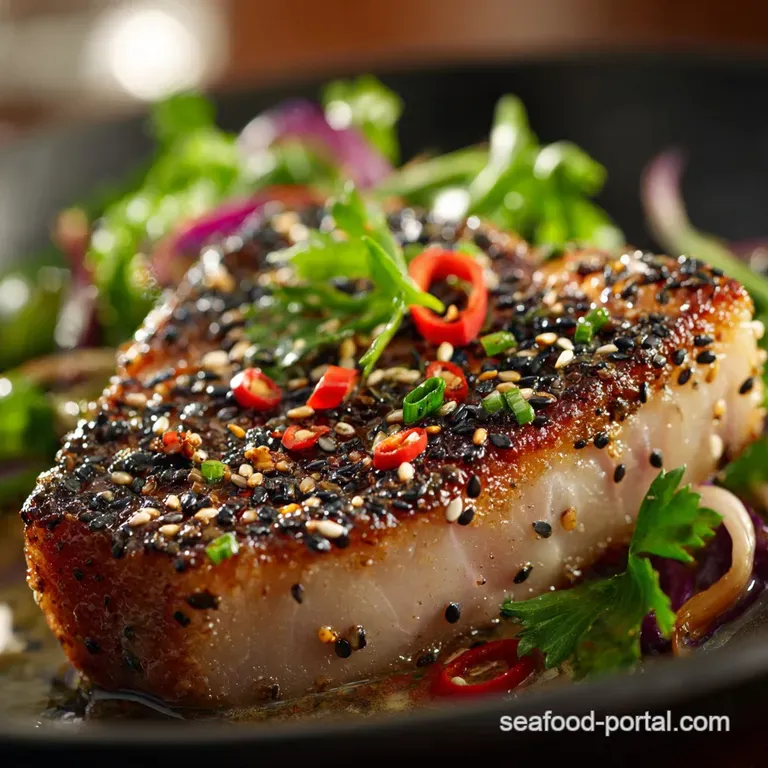
- Unlocking Restaurant Quality: The Secret to Perfect Crust and Crimson Centre
- Sourcing the Star Ingredient: A Guide to Buying the Best Tuna Steak
- The Sear & Slice Protocol: Step and by-Step Instructions for Your Seared Tuna Steaks
- Beyond the Basics: Serving Suggestions, Safety, and Storage
- Recipe FAQs
- 📝 Recipe Card
Unlocking Restaurant Quality: The Secret to Perfect Crust and Crimson Centre
Look, I get it. Seared tuna sounds fancy. Like, "I need a private chef to pull this off" fancy. But trust me when I tell you that Pan Seared Tuna Steak is not just achievable at home, it’s arguably the fastest fancy meal you can ever make.
We are talking less than five minutes of active cooking time.
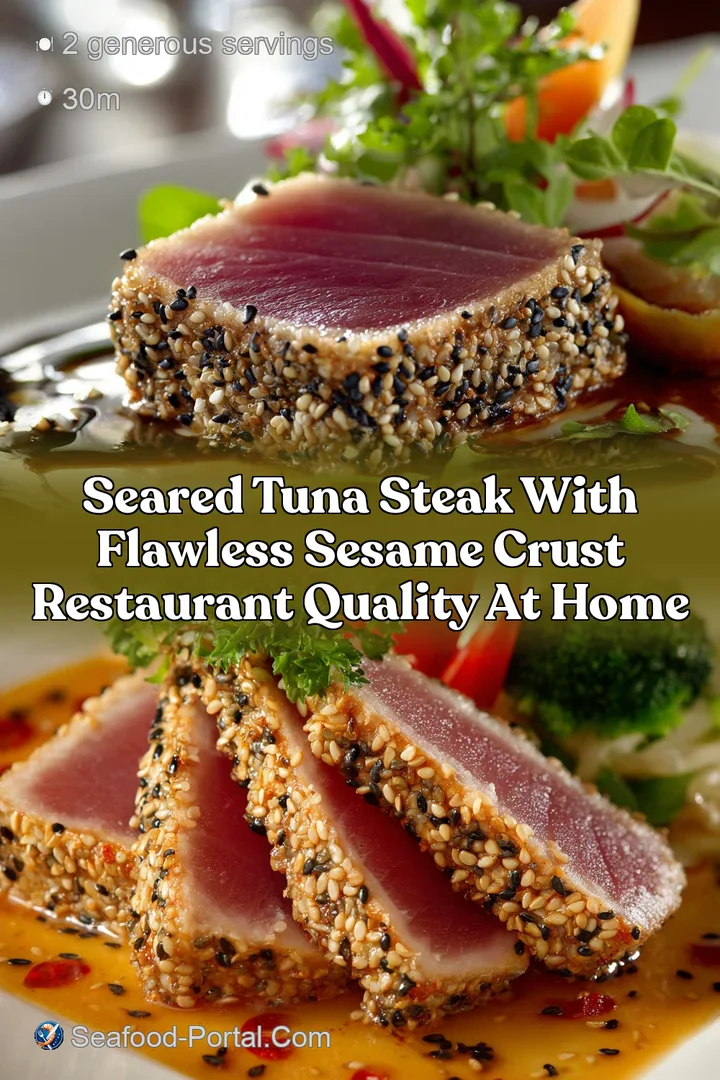
The secret to restaurant quality? It’s the contrast. You need a beautiful, aggressive crust nutty, crunchy, salty and a core that is cool, buttery, and crimson. If you mess up the heat, you end up with a sad, gray fish hockey puck. We are not making sad hockey pucks today.
We are focusing entirely on maximizing the sear while minimizing the cooking time.
Mastering the Maillard Reaction: Why the High Heat is Essential
The Maillard reaction is just a complicated way of saying "browning creates flavor." We need that flavour, but we need it fast . If the pan isn't screaming hot, you don't instantly crisp the exterior.
Instead, the heat slowly creeps inward, creating a thick, unattractive grey band of overcooked fish right beneath the crust.
We need to hit the surface with such intense, focused heat that the exterior proteins caramelize and dry out almost instantly, building that perfect crust, but without having enough time to transfer significant heat to the interior. That’s why we use high and smoke point oil and a very hot pan.
It’s brilliant.
The Myth of Complexity: Cooking a Gourmet Meal in Under Ten Minutes
People think gourmet equals complicated steps or a massive ingredient list. Nope. This recipe proves that wrong. The complexity is only in the confidence to use maximum heat.
Once the prep is done which is mostly just mixing seeds and drying the fish you’re standing over the stove for two minutes, flipping fast. That’s it. If you need a quick, healthy weeknight dinner that feels like a splurge, this is your jam.
What Defines Sashimi and Grade Ahi Tuna?
This is the big one. If you are serving the tuna rare, the center is essentially raw. Safety is paramount, obviously. Sashimi and grade (or sushi and grade) isn't a legally defined term, which is annoying, but it generally means the fish has been immediately flash and frozen on the boat to meet FDA standards for parasite destruction, making it safe for raw consumption.
Crucial Note: Never buy tuna steak for this recipe that smells "fishy." It should smell clean, oceanic, and mild. If your fishmonger can't confirm it's been handled for raw consumption, pivot to a recipe where the fish is cooked all the way through, like Swordfish. Don't risk it.
Sourcing the Star Ingredient: A Guide to Buying the Best Tuna Steak
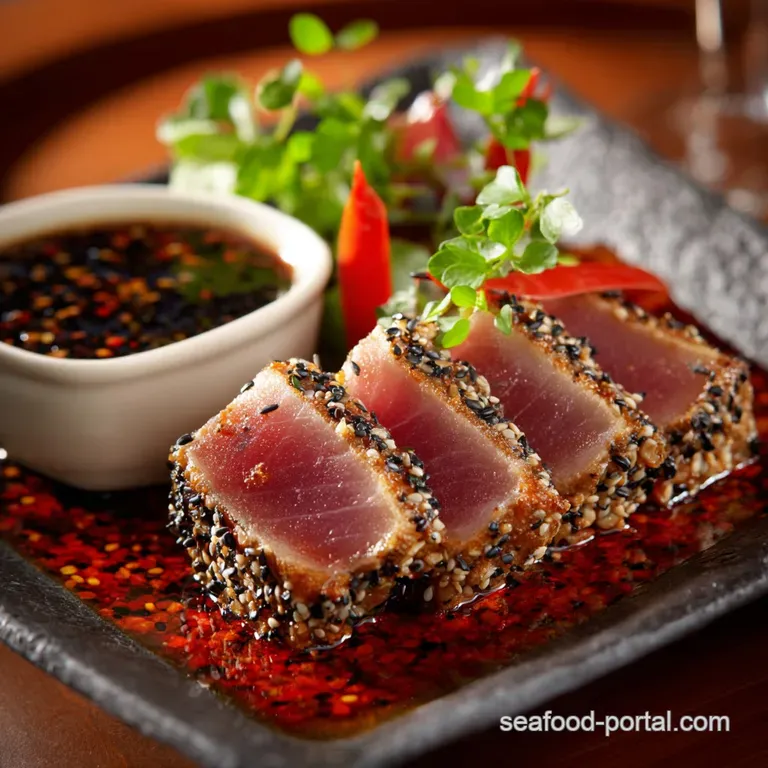
When you go shopping, you’re looking for Ahi tuna (which usually means yellowfin or bigeye). The quality of the fish will define the entire dish, so spend the money here.
You want a steak that is cut from the center loin about an inch (2.5 cm) thick and has a uniform, vibrant cherry and red or deep pink color. Avoid any steaks that show gaps, ragged edges, or an iridescent sheen that looks metallic. That’s a sign of poor handling or additives.
Look for firm, dense flesh. If you poke it, it shouldn’t flake apart. It should spring back.
Crucial Tools for a Flawless Seared Tuna Steak (Pan Choice Matters)
Remember that rubber boot leather anecdote I shared? That was because I used a thin pan. We need heat retention! You simply cannot get the results we’re looking for in a cheap, lightweight pan, especially a non and stick one.
- Cast Iron Skillet: The undisputed champion. It takes longer to heat up, but once it’s hot, it stays hot, even when you introduce cold fish. This is perfect for maintaining the screaming temperature needed to achieve a flawless crust.
- Heavy Stainless Steel Pan: A great second choice. It heats quickly and retains heat better than standard aluminum.
The enemy here is temperature fluctuation. If the pan cools down when the fish hits it, you get steaming, not searing. We need a screamer of a pan.
Building the Perfect Crust: Sesame, Ginger, and Aromatic Components
We are going with a classic sesame crust because it adds texture, nuttiness, and visual appeal. Mixing the white and black sesame seeds gives you that beautiful, speckled look. Adding dried ground ginger is a massive flavour hack here.
It activates beautifully with the heat and offers a fragrant warmth that pairs perfectly with the rich tuna.
Tips for a perfect crust:
- Press the tuna firmly into the seed mixture. Don't just roll it lightly. You want maximum adhesion.
- Use a wide, shallow bowl or plate so you can press down flatly.
- If your steaks are cylindrical, remember to crust the top, bottom, and all four edges!
Prepping Your Steaks: Moisture Removal and Tempering Technique
This is the most critical step you can do before the sear. If there is moisture on the surface of the fish, that moisture immediately turns to steam when it hits the hot oil. Steam is the opposite of a crust.
You must, must, must pat your tuna steaks dry with paper towels until they feel tacky and totally dry. Then, place them in the fridge for 15 minutes. The cold, dry surface is what enables that explosive Maillard reaction.
Some chefs say temper your steaks (bring them to room temperature), but for this specific application (where the center remains raw), I actually prefer starting with them slightly chilled. It gives you a tiny extra window of safety before the heat creeps inward.
Related Recipes Worth Trying
- OnePot Creamy Tuna Noodle Casserole The 35Minute Weeknight Wonder — The OnePot Creamy Tuna Noodle Casserole is the ultimate easy comfort food Make this streamlined Tuna Noodle Casserole Stovetop recipe in just 35 minutesno...
- Tuna Bake Pasta The Ultimate Creamy Cheesy Comfort Food Recipe — Our classic Tuna Bake Pasta recipe elevates this creamy dish with a rich Béchamel sauce and crispy Panko topping Its the Best Easy Tuna Casserole for a cozy...
- Tuna Casserole Creamy Egg Noodle Bake No Canned Soup — This Tuna Casserole is a sophisticated weeknight winner Make this easy tuna casserole without soup featuring velvety sauce egg noodles and a crispy topping
The Sear & Slice Protocol: Step and by-Step Instructions for Your Seared Tuna Steaks
Right then, let’s crack on. The crust is on, the pan is chosen, and the timer is ready.
Step 1: Preparing the Oil for Ultra and High Heat Searing
We need oil that can handle 400°F (200°C) plus without burning. As I mentioned in the ingredients, olive oil is out. It will burn and smoke out your kitchen I made that mistake once. It smells terrible.
Add just one tablespoon of a over high heat oil (Avocado, Canola, or Grapeseed) to your cast iron pan. Place the pan over high heat. Wait until the oil is shimmering wildly and you see a tiny wisp of smoke starting to curl up. That is your signal. The pan is ready.
The Precision Timer: Exact Seconds Per Side for Optimal Rarity
Once the pan is screaming hot, place the tuna steak carefully into the oil. You should hear a deep, immediate, aggressive sizzle. If you don't hear that, your pan wasn't hot enough. Pull the fish out, reheat the pan, and try again. Seriously.
| Desired Doneness | Sear Time Per Side (Approx.) | Center Appearance |
|---|---|---|
| Blue/Very Rare | 30 seconds | Cold, deeply purple and red |
| Rare (Recommended) | 45 seconds | Cool, bright crimson |
| Medium and Rare | 60 seconds | Warm, pink |
For a standard 1 inch thick steak, I aim for 45 seconds per side, and then 15 seconds on each edge. I rely on my eyes here: I watch the crust form and note how far the opaque cooked edge is creeping up the side. I want that white/opaque edge to creep up maybe ⅛ inch, no more.
Why You Must Rest the Tuna (And How Long Before Slicing)
I know you want to slice into that beauty immediately, but wait! Just like steak, tuna needs a brief rest. This allows the internal moisture (which gets driven towards the center during cooking) to redistribute back throughout the muscle fibers.
If you slice immediately, the juices run out all over your cutting board. Resting for two minutes, uncovered, is absolutely essential. It helps ensure the tuna remains moist and tender when you eat it.
Beyond the Basics: Serving Suggestions, Safety, and Storage
Troubleshooting: Avoiding a Grey Band in Your Tuna
This happens when the fish is cooked too slowly, or the pan temperature drops. The heat has time to permeate deep into the fish before the surface crust forms.
Here is the quick fix checklist:
- Did you use a heavy pan?
- Was the pan smoking hot before the oil was added? (I often heat the pan first, then add the oil.)
- Was the fish perfectly dry and cold when it hit the pan?
- Did you use a high and smoke point oil?
If you answered yes to all four, that gray band will disappear.
Pairing Excellence: Best Sauces and Sides for Seared Ahi
Seared Ahi needs bright, acidic, and slightly sweet sauces to cut through the richness.
- My Go and To Sauce: A simple soy and ginger dressing. It takes seconds. Mix 3 parts soy sauce, 1 part rice vinegar, a teaspoon of toasted sesame oil, and finely grated fresh ginger.
- Sides: Keep the sides light and fresh. Sautéed bok choy with garlic, a quick cucumber salad with rice wine vinaigrette, or some cold soba noodles are fantastic choices. Anything heavy and creamy will just compete with the star of the show.
Can You Safely Store and Reheat Leftover Seared Tuna?
Can you safely store it? Yes, absolutely. Place any leftover slices in an airtight container immediately and refrigerate. They are good for up to two days.
Can you safely reheat it? No. Please, please, please don't try to reheat rare fish. If you put it back in the pan, it will overcook instantly, dry out, and taste terrible. The beauty of this fish is the rarity.
If you have leftovers, they should be eaten cold the next day maybe sliced over a salad or turned into an improvised poke bowl.
Nutritional Profile: The Health Benefits of This Lean Protein
Beyond being incredibly tasty, tuna is a superstar on the health front. It’s an exceptionally lean protein, meaning it’s packed with muscle and building fuel without the saturated fat found in red meat.
- Protein Powerhouse: A single serving gives you a huge chunk of your daily protein requirement.
- Omega-3s: Ahi tuna is loaded with those healthy fats (DHA and EPA) that are great for your heart and brain.
- Vitamins: It's a fantastic source of Vitamin B12 and Niacin.
It’s satisfying, fast, and genuinely good for you. Honestly, what’s not to love? Now go get searing!
Recipe FAQs
How do I ensure my Seared Tuna Steak is safe to eat when the middle is rare?
Safety hinges on the quality of the fish; you absolutely must use certified "sashimi grade" or "sushi grade" tuna, meaning it was immediately flash frozen after catch to kill potential parasites.
My crust isn't crisping up properly and the tuna keeps sticking. What am I doing wrong?
The pan isn't hot enough, mate! You need shimmering, nearly smoking high heat oil, and crucially, you must ensure the tuna steaks are bone dry before seasoning moisture is the enemy of a proper crust.
I'm nervous about overcooking it! How can I tell when it’s perfectly rare?
The key is timing and appearance: you are aiming for a thin, opaque grey band (the cooked layer) that should be no more than 1/4 inch thick, leaving the centre a beautiful, deep crimson.
I don't own a cast iron skillet. Will a regular non-stick pan do the job?
For this technique, a non-stick pan is a proper no-go as it can’t handle the required scorching high heat; use the heaviest stainless steel pan you own, as high heat retention is absolutely crucial for the fast sear.
I've got a bit left over. Can I keep seared tuna, and what’s the best way to store it?
Once seared, it’s best eaten fresh, but you can store cooled leftovers tightly wrapped in the fridge for up to two days; use it cold in salads or rice bowls, as reheating seriously ruins the lovely texture.
Sesamecrusted Seared Tuna Steak
Ingredients:
Instructions:
Nutrition Facts:
| Calories | 243 kcal |
|---|---|
| Protein | 57.1 g |
| Fat | 1.8 g |
| Carbs | 0.4 g |
