Fish Ceviche: Peruvian Sea Bass Fresh Zesty

- Peruvian-Style Sea Bass Ceviche: The Ultimate No-Cook Cracking Dish
- Unlocking the Secret of Peruvian Ceviche: Why This Recipe Cracks
- The Ceviche Science: Understanding the Citrus 'Cook'
- Essential Components: Ingredients for Authentic Sea Bass Ceviche
- Crafting Peruvian Ceviche: Step-by-Step Method
- Pro Tips for the Perfect Ceviche and Troubleshooting Errors
- Traditional Pairings: Serving Your Sea Bass Ceviche
- Storing and Handling Leftover Ceviche Safely
- Recipe FAQs
- 📝 Recipe Card
Peruvian Style Sea Bass Ceviche: The Ultimate No-Cook Cracking Dish
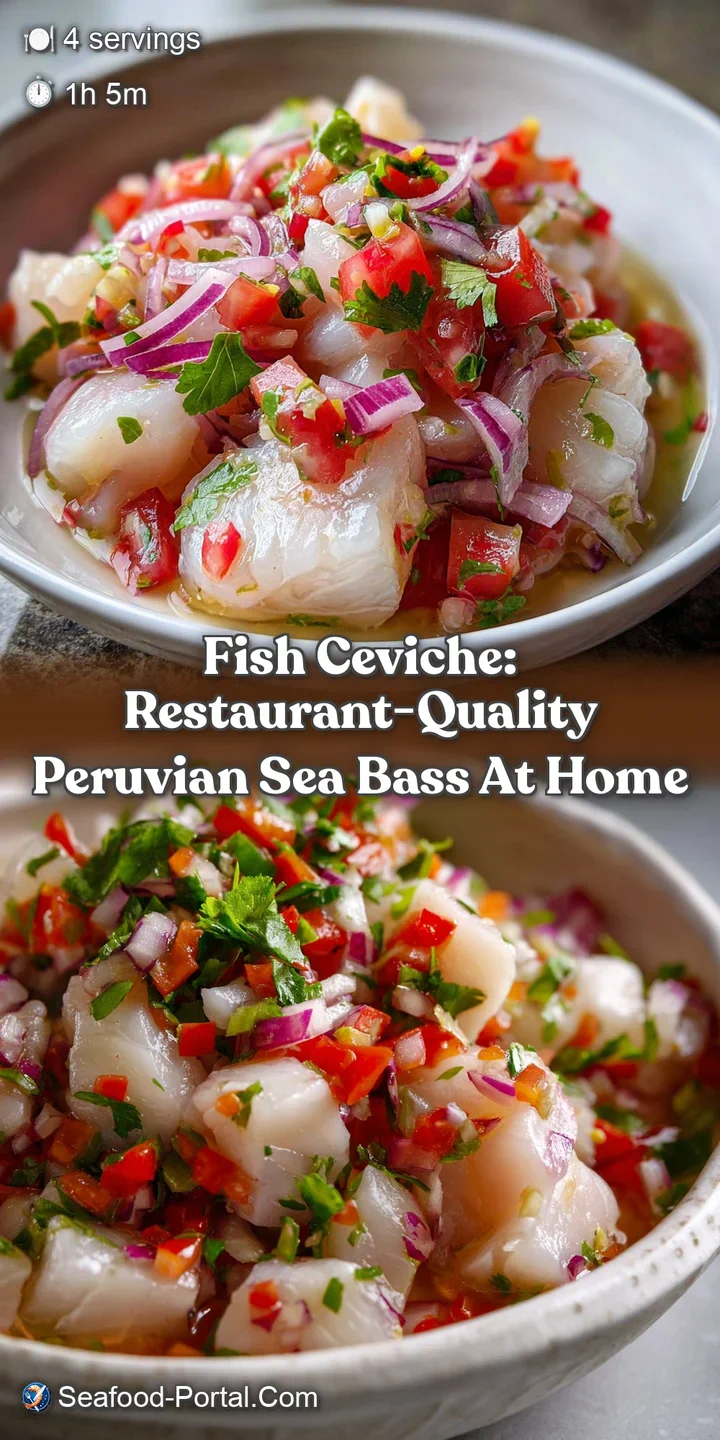
That intense zing, the icy cold crunch of red onion, the firm yet yielding texture of the fish that’s the moment you know you’re eating truly spectacular Fish Ceviche .
When it’s done right, this dish is an absolute explosion of flavor, hitting every single spot: spicy, sour, salty, and utterly refreshing. It smells like the tropics and feels like a luxury starter, but it's deceptively easy to pull off at home.
Forget turning on the oven when it’s 90 degrees outside; this Fish Ceviche recipe is a total lifesaver. You chop, you mix, and 40 minutes later, you have an impressive, restaurant quality appetizer that requires minimal fuss.
It’s perfect for showing off to guests without actually breaking a sweat in the kitchen.
I’ve messed up many batches over the years, from rubbery texture to insufficient seasoning, but trust me, this specific approach to making authentic Peruvian Fish Ceviche is the one that actually works every time.
We are going to nail the timing and acidity so you get that perfect cure without drying out your beautiful, fresh fish. Let’s crack on.
Unlocking the Secret of Peruvian Ceviche: Why This Recipe Cracks
The beauty of this recipe isn't just that it’s fast; it’s that it respects the integrity of the core ingredients. Unlike some recipes that drown the fish for hours, we are going for a quick, high impact cure that preserves the moisture and tenderness.
This specific approach to Fish Ceviche focuses on precise timing and high-quality, chilled ingredients. That's the whole secret.
The single biggest reason this version of Fish Ceviche succeeds is temperature control. Everything the fish, the lime juice, the serving bowls needs to be ice cold.
Cold temperatures slow down the curing process slightly, allowing the acid to penetrate evenly without aggressively seizing the exterior proteins, which is what causes that tragic, rubbery texture. This is how the pros achieve that perfect, buttery finish in their Peruvian Style Sea Bass Ceviche.
The Ceviche Science: Understanding the Citrus 'Cook'
The History of Ceviche in Peru’s Coastal Cuisine
Ceviche is deeply rooted in Peruvian culture, stretching back thousands of years along its coastlines. While methods have evolved, the concept of using acid to preserve and cure fresh catches remains fundamental.
This isn't just a recipe; it's culinary heritage, and mastering the authentic way to make Fish Ceviche connects you to that incredible history.
What is Leche de Tigre (Tiger's Milk)?
Leche de Tigre literally translates to "Tiger's Milk," and it’s the magical, milky marinade left behind after the Fish Ceviche has cured.
It’s spicy, tart, and often served as a highly sought after shot on its own it's supposedly restorative and invigorating (hence the name). We incorporate aromatics directly into this marinade, intensifying the flavor of the final dish dramatically.
Choosing the Best Fish for This No-Cook Starter (Focusing on Sea Bass)
When creating world class Fish Ceviche , the fish choice is paramount. We focus on sea bass because it has a firm texture, a clean flavor, and holds up beautifully under the sharp acid cure. This firmness means it won't disintegrate during the marination process.
Using a high-quality, lean white fish is the foundation of any great white Fish Ceviche recipe.
The Magic of Acid: How Lime Juice Cures the Protein
When you expose the fish protein to acid (citric acid from the lime juice), it begins a process called denaturation. It's essentially the same chemical reaction that heat causes, but without the heat. The opaque white color you see is the visual evidence that the protein strands are tightening up.
Achieving the perfect Fish Ceviche means balancing this denaturation.
Achieving the Perfect Firm Texture
If your Fish Ceviche comes out rubbery, you’ve left it too long. The fish should be opaque on the edges but still slightly moist and tender in the center, not totally firm all the way through.
This is why slicing the fish into even, medium sized cubes is key it guarantees that the acid cures uniformly across all the pieces.
Balancing Acidity and Heat (Aji Limo/Rocoto)
Authentic Peruvian Fish Ceviche relies on the powerful, fruity heat of aji limo or rocoto peppers. These are very hot, but they bring a depth of flavor that a standard jalapeño simply can't match.
If you skip the heat entirely, your Fish Ceviche will taste flat and overly acidic; the chili is crucial for complexity.
Essential Components: Ingredients for Authentic Sea Bass Ceviche

Remember, because we aren't cooking with heat, every single ingredient is exposed and essential. This is one of those easy Fish Ceviche recipes where you truly get out what you put in. Don’t skimp on freshness!
Sourcing Sushi Grade Sea Bass: Safety First
Seriously, this isn’t the time for a bargain bin special. Since we are eating the fish raw (cured, but raw), you must demand sashimi or sushi grade fish. I always tell my fishmonger, "I am making ceviche today." If they hesitate or offer a discount, walk away.
Safety first when preparing this incredible Fish Ceviche starter.
The Role of Peruvian Aji Peppers (Limo or Rocoto)
These chillies are non-negotiable for the true flavor profile. They offer that characteristic bright, slightly smoky heat. If you cannot find them, use Scotch Bonnet or Habanero, but please use gloves and remove all the inner white pith and seeds.
A tiny amount gives maximum impact to your Fish Ceviche ingredients.
Why Freshly Squeezed Key Lime Juice is Non-Negotiable
Bottled lime juice is the number one killer of homemade Fish Ceviche . It’s harsh, lacks the essential oils found in the peel, and tastes processed. Buy a bag of fresh limes, grab your squeezer, and get to work.
Trust me, the sheer volume of fresh juice needed is worth the elbow grease for a bright, Zesty, and Light ceviche.
| Ingredient | Substitute (Use Ratio) | Notes |
|---|---|---|
| Sea Bass | Halibut or Grouper | Must be very firm and fresh. |
| Limes | 75% Lemon + 25% Grapefruit Juice | This blend mimics the complexity better than straight lemon. |
| Red Onion | Shallots | Only use shallots if you are allergic to red onion; the color contrast is part of the appeal. |
| Aji Peppers | Serrano or Habanero | Adjust quantity drastically based on heat tolerance. |
Alternative White Fish Substitutions
Beyond sea bass, I’ve had success making a delightful Fish Ceviche using high-quality snapper or cod loin. The key is thickness. You want thick, dense pieces that can withstand the strong acid cure without turning into mush.
Avoid thin fillets or flatfish, which cure too quickly and often end up tough.
Crafting Peruvian Ceviche: step-by-step Method
This is where the magic happens. We’re going to layer the flavors, not just dump everything together.
Prep Work: Slicing the Sea Bass Fillets Correctly
Pat the fish totally dry first. Moisture is the enemy of a crisp cure. Now, use your sharpest knife to slice the fish into consistent, even cubes, about a half inch each. Consistency is vital because if you have tiny slivers and large chunks, your larger pieces will still be raw when the tiny pieces are already over cured.
Place the fish immediately back into a non-reactive bowl (glass or ceramic is perfect) and chill.
Mixing the Leche de Tigre Base
Squeeze your massive pile of limes until you have that full cup of juice. Add the sea salt directly to the lime juice and stir until dissolved. Now, here’s a tip: add a very thin slice of red onion and a sliver of the chilli directly to the juice and let it steep for 5 minutes.
This creates a highly aromatic, flavor infused Leche de Tigre that forms the base of this amazing Fish Ceviche .
The Initial Marination: Timing the Fish Cure Precisely
Pour the Leche de Tigre base over the chilled fish. The liquid should cover the cubes. Stir gently to ensure all pieces are submerged. Immediately place the bowl in the fridge. Now, set a timer for 30 minutes.
The sight of the fish changing from translucent to opaque white is how you know your Fish Ceviche is working. For some fish, 45 minutes might be necessary, but do not exceed one hour.
Chef’s Note: Taste a piece at the 30 minute mark. It should be fully cured on the outside but still have a soft, almost melt-in-your mouth quality inside. If it tastes dry or squeaky, you’ve gone too far.
Final Assembly and Immediate Plating
Once cured, drain off about half of the Leche de Tigre we don't want the fish still swimming in it, just lightly dressed. Add the washed, thinly sliced red onion and the rest of the finely minced aji pepper. Toss gently. Stir in your chopped cilantro right before serving.
This is a dish that absolutely demands immediate consumption. Do not let your beautiful, Zesty, and Light Fish Ceviche sit around!
Pro Tips for the Perfect Ceviche and Troubleshooting Errors
Mistake: Over Marinating and Drying Out the Fish
The most common mistake people make is treating Fish Ceviche like a typical pickle, thinking longer is better. This is wrong. When the protein seizes too tightly, it squeezes out all the moisture, leaving the fish chewy and dry.
If you are unsure, err on the side of under curing, as the acidity is so high.
The Ideal Temperature for Serving
Serve your Fish Ceviche absolutely ice-cold. If you use martini glasses or bowls, chill them in the freezer for 15 minutes beforehand.
The cold temperature is essential not only for food safety but because it sharpens the flavors and enhances the contrast with the spicy pepper and lime. A warm bowl of Fish Ceviche is a sad, dull experience.
How to Adjust Spice Levels Safely
If you are nervous about the heat, start by only adding a few slices of chili to the Leche de Tigre base while it steeps, then remove them before adding the juice to the fish. You get the flavor, but the heat is tempered.
You can always add a few drops of hot sauce (like tabasco) at the end, but you can’t take heat away.
Accompanying Textures: Choclo and Cancha (Peruvian Corn)
Traditionally, Fish Ceviche is served with two types of corn. Choclo is the large, starchy, boiled corn that offers a soft textural foil to the fish.
Cancha is dried, toasted corn kernels like oversized corn nuts that add an essential, satisfying crunch. This textural interplay is key to the dish’s complexity.
Balancing the Acidity with Camote (Sweet Potato)
The Peruvian addition of camote (sweet potato) is genius. Boiled and slightly sweetened sweet potato slices are plated alongside the Fish Ceviche . The earthy sweetness and soft starch cut through the intense acidity and heat, refreshing your palate between bites.
Don't skip this, it truly balances the dish.
Garnish Ideas: Red Onion and Cilantro Finishes
The visual contrast is important. We use thinly sliced red onion in the mixture, but reserve a few rings for the top. A generous sprinkling of fresh cilantro (coriander) not only adds a lovely bright green color but brings a necessary herbaceous lift to the final presentation of the best Fish Ceviche .
Traditional Pairings: Serving Your Sea Bass Ceviche
When you serve this incredible Fish Ceviche , you want side dishes that complement, not compete. I find that something clean and crisp works best. If you're looking for an earthy green side to balance the acidity, I highly recommend our recipe for Side Dishes for Fish: Crispy Parmesan Asparagus in 25 Mins . The salty cheese and lemon pair beautifully.
For a completely contrasting experience, if you had some leftover sea bass (unlikely, I know!) and wanted to explore other raw fish recipes, you might enjoy trying a Hawaiian classic like Poke Fish Salad: The Authentic Hawaiian Ahi Tuna Recipe . But today, our focus remains on the bright, glorious flavor of this fantastic Fish Ceviche . Serve it with salty tortilla chips or the aforementioned cancha for scooping!
Storing and Handling Leftover Ceviche Safely
This is the sad truth about Fish Ceviche : it does not keep. The fish continues to cure in the residual acid, even when refrigerated. If you have leftovers, they will taste progressively tougher and drier over the next 12 hours.
The window of peak quality for Fish Ceviche is about 3 hours after preparation.
Do not plan to save this dish for the next day. If you must store leftovers, transfer them immediately to an airtight container and use them within 24 hours max. However, the texture will be significantly degraded.
This is why I always recommend only curing the amount of fish you plan to eat immediately. And never, ever try to freeze cured Fish Ceviche ; the texture will be completely ruined upon thawing.
If you follow these steps getting the best fish, using fresh juice, and mastering the timing you will be making perfect Fish Ceviche forever. This Zesty, and Light Fish Ceviche is truly the ultimate summer dish.
Recipe FAQs
How do I know the fish is safe or "cooked" by the lime juice?
The acid from the citrus juice denatures the proteins in the fish, resulting in an opaque, firm texture that mimics the look of cooked fish. For safety, it is paramount that you only use fresh, high-quality, sashimi grade fish that has been previously frozen, as this minimizes the risk of parasites.
Do not consume fish that remains translucent or slimy after the curing time.
What are the best fish substitutions for Sea Bass in this ceviche?
Excellent substitutions include flaky white fish like Halibut, Snapper, Flounder, or Corvina, or crustaceans such as raw shrimp or bay scallops. The key is using a very firm, white fleshed fish with low oil content that can stand up to the highly acidic marinade without falling apart.
Avoid oily fish like salmon or tuna, as they cure unevenly and result in a less traditional flavor.
Why did my ceviche become tough or rubbery?
The fish was most likely marinated for too long. Over marinating (often more than 40 minutes, depending on the thickness of the cut) allows the acid to fully penetrate and strip the fish of its natural moisture, giving it a chewy, tough texture.
Always taste frequently and serve immediately once the exterior reaches the desired opacity and the center remains slightly tender.
Can I prepare ceviche ahead of time, and how long does it last?
Ceviche must be prepared and consumed immediately to ensure the best texture and safety; it is not a suitable make-ahead dish. While leftovers can technically be refrigerated for up to 4 hours, the curing process continues, causing the texture and flavor to degrade significantly.
Discard any ceviche left out at room temperature for more than one hour.
What exactly is "Leche de Tigre" (Tiger’s Milk)?
Leche de Tigre is the name given to the vibrant, intense marinade left at the bottom of the ceviche bowl, enriched by the fish juices, chili, cilantro, and red onion. This potent, savory, and tangy liquid is a Peruvian delicacy, often served separately as a zesty, restorative shot or poured over the remaining fish and vegetables.
Can I freeze ceviche, either before or after curing?
No, ceviche should never be frozen once the curing process has begun. Freezing raw fish causes the cell walls to break down, resulting in a mushy, watery texture when thawed, ruining the integrity of the dish.
If using previously frozen fish, ensure it is thoroughly and slowly thawed in the refrigerator before dicing and marinating.
How can I adjust the heat level of my ceviche?
The heat primarily comes from the Aji Limo or Aji Amarillo chili component. To reduce the heat, ensure you remove all seeds and internal membranes from fresh chilies before adding them, as this is where most of the capsaicin resides.
To increase the spice, reserve a few drops of the chili juice and stir it in right before serving.
Peruvian Sea Bass Ceviche Recipe

Ingredients:
Instructions:
Nutrition Facts:
| Calories | 140 kcal |
|---|---|
| Protein | 19.9 g |
| Fat | 3.1 g |
| Carbs | 8.2 g |
