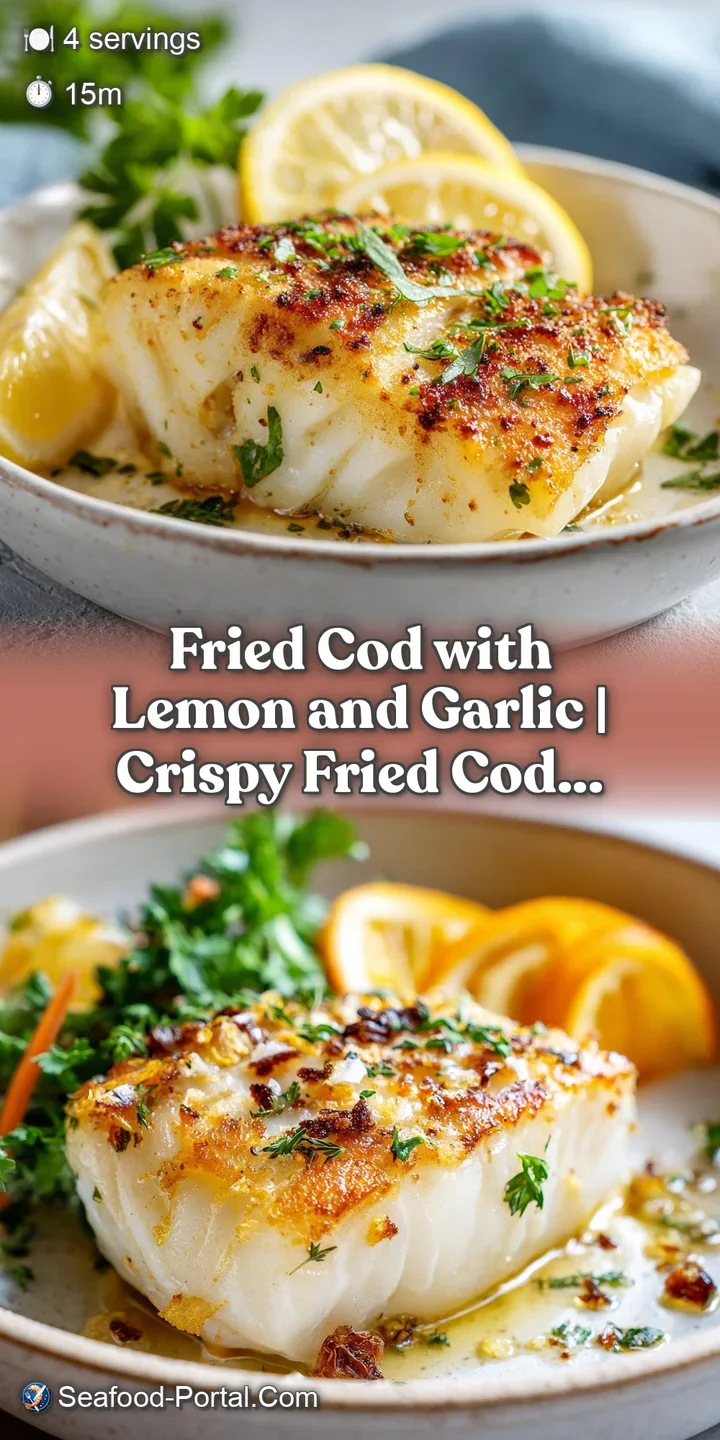
Fried Cod with Lemon and Garlic
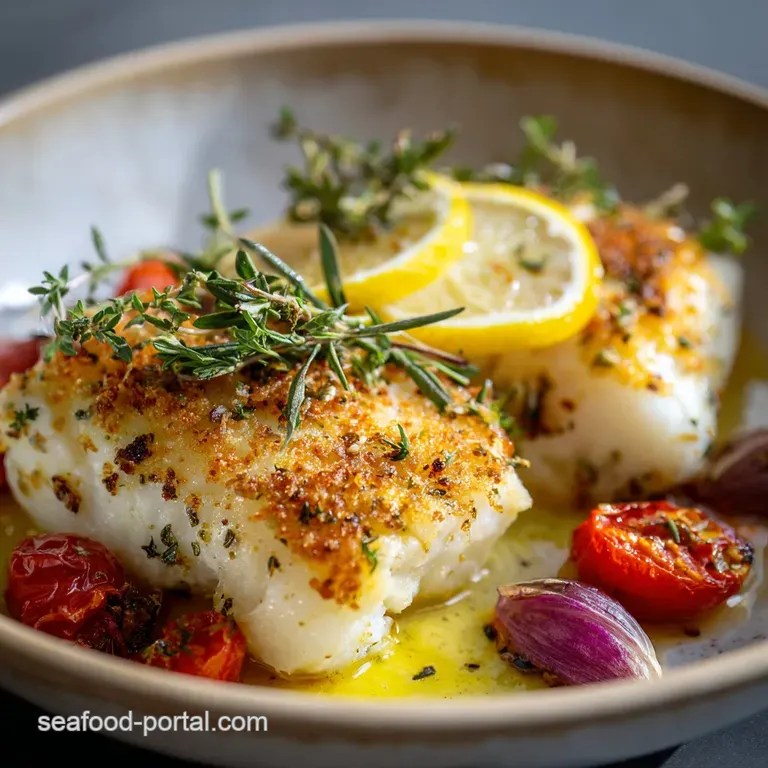
- Time: Active 5 minutes, Passive 10 minutes, Total 15 minutes
- Flavor/Texture Hook: Shatter crisp exterior with a velvety, lemon butter finish
- Perfect for: Quick weeknight dinners or impressive date night meals
- Unspoken Secrets of the Seafood Kitchen
- Precise Specifications for a Flawless Finish
- Selecting the Finest Elements for Searing
- Essential Kitchen Tools for Pan Searing
- Mastering the Art of the Pan Sear
- Common Pitfalls and Professional Solutions
- Adapting the Dish for Special Diets
- Smart Scaling for Any Occasion
- Debunking Common Seafood Myths
- Maximizing Freshness and Minimizing Waste
- Presenting Your Seafood Like a Pro
- Recipe FAQs
- 📝 Recipe Card
Forget everything you have been told about seafood being a delicate, high stress nightmare that belongs only in professional kitchens. The most common myth I hear is that fish needs to be coddled or hidden under a mountain of breadcrumbs to taste good.
In reality, the most vibrant, restaurant quality meals come from simple techniques that respect the ingredient. This article features our best Fried Cod Recipe with Lemon and Garlic.
I remember the first time I tried to sear a piece of cod; I was terrified it would stick and turn into a pile of gray mush. I sat there poking it, worrying about the heat, and eventually, I pulled it off the pan in pieces. The secret I eventually learned was patience and a very dry surface.
When you get that sizzle right, the fish releases itself from the metal like a dream.
We are going to move beyond the fear of the pan. We are looking for that specific contrast between the golden, firm crust and the translucent, flaky interior that melts the moment it hits your tongue. It is all about managing the heat and knowing exactly when to drop the butter to create that glossy, aromatic finish.
Unspoken Secrets of the Seafood Kitchen
Most people struggle with fish because they treat it like chicken or beef, but the cellular structure is entirely different. To get a result that isn't soggy, you have to master the interaction between moisture and metal.
It's a dance of temperatures that results in a crust that actually holds up against a liquid sauce.
- Surface Dehydration: Moisture is the ultimate enemy of a sear. Even a tiny bit of water on the skin or flesh will turn to steam, preventing the golden crust from forming.
- Thermal Stability: Using an oil with a high smoke point, like grapeseed, allows the pan to reach temperatures that trigger the browning process without burning the fat.
- The Cold Mount Technique: Adding cold butter to a warm sauce creates a stable emulsion. If the butter is room temperature, it melts too fast and simply turns into a pool of yellow oil.
- Residual Heat Carryover: Fish continues to cook for several minutes after leaving the pan. Pulling it at the exact right moment ensures it stays moist rather than becoming rubbery.
| Thickness | Internal Temp | Rest Time | Visual Cue |
|---|---|---|---|
| 2 cm (approx. 0.75 in) | 63°C (145°F) | 2 minutes | Flesh turns opaque white |
| 3 cm (approx. 1.2 in) | 63°C (145°F) | 3 minutes | Center flakes with a fork |
| 4 cm (approx. 1.5 in) | 63°C (145°F) | 4 minutes | Layers separate easily |
The "rest time" listed above is non negotiable because it allows the proteins to relax and the juices to redistribute. If you cut into the cod loins the second they leave the heat, all that lovely lemon garlic butter will just run off the plate instead of soaking into the flaky layers of the fish.
Precise Specifications for a Flawless Finish
To understand why this specific fried cod fillets approach works so well, we have to look at the individual components. Cod is a lean fish, meaning it has very little fat of its own. We are essentially building a flavor profile from the outside in, using the garlic and lemon to cut through the richness of the butter we add at the end.
| Component | Science Role | Pro Secret |
|---|---|---|
| Cod Loins | Structural Base | Use loins over fillets for even cooking and better flake definition. |
| Grapeseed Oil | Heat Conductor | High smoke point prevents acrid flavors during the initial over high heat sear. |
| Cold Butter | Emulsifying Agent | Whisking cold cubes into the lemon juice creates a thick, glossy pan sauce. |
| Garlic Cloves | Aromatic Depth | Slicing thinly instead of mincing prevents the garlic from burning and turning bitter. |
The interaction between the acidic lemon juice and the milk solids in the butter is what gives us that velvety mouthfeel. Without the acid, the sauce feels heavy; without the fat, the lemon feels too sharp. It's a classic culinary balance that works every single time you step up to the stove.
Selecting the Finest Elements for Searing
When you head to the market, look for cod that is firm and translucent, never milky or dull. While fresh is always a treat, high-quality frozen cod that has been properly thawed can be just as good. Just make sure you aren't buying "previously frozen" fish that has been sitting in the display case for too long.
- 4 cod loins (approx. 170g each)Why this? Loins are the thickest part of the fish, ensuring a juicy interior.
- Substitute: Haddock or Halibut. Both offer a similar firm, white flake.
- 2 tbsp grapeseed or avocado oilWhy this? These oils handle the 200°C (400°F) pan temp without smoking.
- Substitute: Light olive oil (not extra virgin).
- 0.5 tsp fine sea saltWhy this? Fine grains dissolve quickly into the surface of the fish.
- Substitute: Kosher salt (use double the amount by volume).
- 0.25 tsp fresh cracked black pepperWhy this? Freshly cracked provides a floral heat that pre ground pepper lacks.
- Substitute: White pepper for a cleaner aesthetic.
- 3 tbsp unsalted butter, cold and cubedWhy this? Cold cubes allow for a slow melt and better emulsion control.
- Substitute: Vegan butter sticks (high fat versions only).
- 4 cloves garlic, thinly slicedWhy this? Slices brown evenly and look beautiful on the finished plate.
- Substitute: 2 tsp garlic paste (add at the very end).
- 1 large lemon, zested and juiced (approx 2 tbsp juice)Why this? Provides both bright aromatics and essential acidity.
- Substitute: Lime zest and juice for a tropical variation.
- 0.25 cup fresh parsley, roughly choppedWhy this? Adds a grassy freshness that lightens the entire dish.
- Substitute: Fresh chives or tarragon.
Essential Kitchen Tools for Pan Searing
You don't need a kitchen full of gadgets, but a few specific items make this recipe significantly easier. A heavy bottomed skillet is your best friend here. Cast iron or stainless steel are the champions of heat retention, which is vital when you drop a cold piece of fish into a hot pan.
If the pan temperature drops too much, the fish will steam rather than fry.
I also highly recommend a fish spatula. These are thinner and more flexible than standard turners, allowing you to slide underneath the delicate crust without breaking the fillet. If you use a thick plastic spatula, you risk shattering the very crust you worked so hard to build.
A microplane for the lemon zest and a sharp knife for the garlic slices will round out your kit.
Mastering the Art of the Pan Sear
- Prep the fish. Remove 4 cod loins from the refrigerator 10 minutes prior to cooking. Note: This takes the chill off and ensures even cooking.
- Dry thoroughly. Use paper towels to press firmly on all sides of the fish to remove all surface moisture. Note: This is the most important step for a crispy crust.
- Season. Sprinkle with 0.5 tsp salt and 0.25 tsp pepper immediately before cooking.
- Heat the pan. Set a 12 inch skillet over medium high heat and add 2 tbsp grapeseed oil. Wait 2-3 minutes until the oil is shimmering and just beginning to smoke.
- Initial sear. Place the cod loins in the pan, laying them away from you. Cook 4-5 minutes until a golden brown crust forms and the fish releases naturally.
- The flip. Carefully flip the fish using a spatula. Reduce heat to medium low immediately.
- Sauté aromatics. Move the fish to one side. Add 4 sliced garlic cloves and cook for 1 minute until fragrant and pale gold.
- Deglaze. Pour in 2 tbsp lemon juice and the zest. The liquid will sizzle and pick up the browned bits from the pan.
- Emulsify sauce. Add 3 tbsp cold cubed butter one piece at a time, swirling the pan until the sauce is thick and glossy.
- Final touch. Baste the fish with the sauce for 1 minute, stir in 0.25 cup parsley, and serve.
Common Pitfalls and Professional Solutions
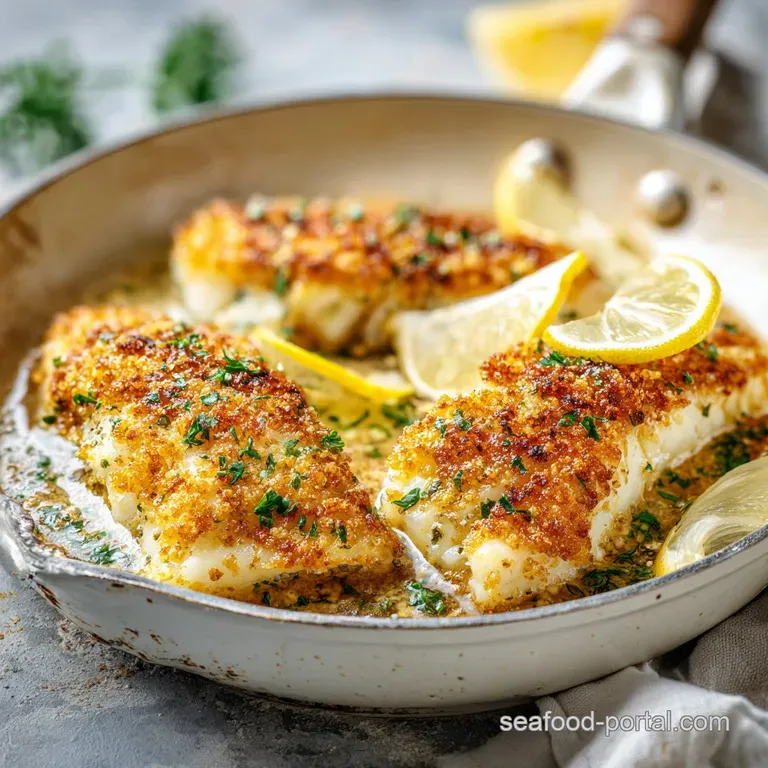
The biggest heartbreak in the kitchen is when a beautiful piece of fish sticks to the pan. If this happens, don't panic and don't force it. Usually, the fish is just telling you it isn't ready to be flipped yet. As the proteins brown and dehydrate, they naturally pull away from the metal.
Give it another 30 seconds and try again.
Resolving Issues with Pan Adhesion
If the fish is truly stuck, it usually means the pan wasn't hot enough when the fish went in, or you didn't use enough oil. Next time, ensure the oil is "shimmering" it should look like it has ripples in it.
You can also try a "parchment paper hack" where you place a small square of parchment in the pan under the fish, though a well seasoned cast iron skillet usually performs better on its own.
| Problem | Root Cause | Solution |
|---|---|---|
| Fish is rubbery | Overcooked | Use a thermometer; pull at 60°C (140°F) as it rises to 63°C (145°F). |
| Garlic is bitter | Burnt | Add garlic only after reducing heat to medium low. |
| Sauce is greasy | Butter melted too fast | Use ice cold butter and whisk constantly off the direct flame. |
Common Mistakes Checklist
- ✓ Never season the fish more than 2 minutes before it hits the pan; salt draws out moisture.
- ✓ Avoid overcrowding; if the loins are touching, they will steam instead of sear.
- ✓ Don't move the fish for the first 4 minutes; let the crust build undisturbed.
- ✓ Pat the fish dry even if it looks dry there is always hidden moisture.
- ✓ Use cold butter for the sauce; room temperature butter will split the emulsion.
Adapting the Dish for Special Diets
This recipe is naturally keto friendly and low carb, but there are ways to tweak it for other needs. If you're looking for something with a different texture, you might enjoy learning how to poach cod for a softer, more delicate finish. However, for this pan-fried version, the richness of the butter is key.
If you are cooking for a crowd and need to stretch the ingredients, consider the "Bistro Style." Serve the cod over a bed of sautéed spinach or braised white beans. The beans soak up the lemon garlic butter sauce beautifully, turning a light protein into a hearty, filling meal without adding much prep time.
Flavor Map for Customization
- The Mediterranean Twist: Add 1 tbsp of capers and 5 halved cherry tomatoes when you add the garlic.
- The Spicy Kick: Add a pinch of red pepper flakes to the oil before adding the fish.
- The Herb Garden: Swap parsley for a mix of fresh dill and tarragon for a more complex aroma.
| Premium Ingredient | Budget Alternative | Flavor Impact | Savings |
|---|---|---|---|
| Fresh Atlantic Cod | Frozen Pacific Cod | Slightly less firm but still delicious | Save $5-8 |
| Grapeseed Oil | Sunflower Oil | Same high smoke point, neutral flavor | Save $2-3 |
| Fresh Garlic | Jarred Minced Garlic | Less pungent, slightly sweeter | Save $1 |
Smart Scaling for Any Occasion
When you want to scale this recipe down for a solo dinner, it's incredibly easy. Just use one loin and a smaller 8 inch skillet. You can still use a full clove of garlic and half the lemon juice to keep the flavor profile bold. The cooking times remain the same since the thickness of the fish doesn't change.
Scaling up requires more care. If you are feeding six or eight people, do not try to cram all the fish into one pan. Work in batches. Sear the first four loins, move them to a warm plate, and then do the second batch.
Make the sauce at the very end in the pan with all the accumulated juices, then pour it over the whole platter. For the sauce, don't double the butter linearly; start with 5 tbsp for 8 pieces of fish and adjust as needed.
Debunking Common Seafood Myths
One of the most persistent lies is that "fresh is always better." In many landlocked areas, "fresh" fish has been sitting on ice for a week. Flash frozen fish is often processed within hours of being caught, locking in the cellular integrity.
If you buy frozen, just thaw it slowly in the fridge overnight for the best texture.
Another myth is that you must wash your fish before cooking. Please, don't do this. Washing fish spreads bacteria around your sink and, more importantly, adds the very moisture we are trying to eliminate. A simple pat down with a paper towel is all the cleaning a good piece of cod needs.
Maximizing Freshness and Minimizing Waste
Fried cod is best enjoyed the moment it leaves the pan while the crust is at its peak. However, if you find yourself with leftovers, don't just microwave them that's a one way ticket to rubber town.
Storage: Keep leftover cod in an airtight container in the fridge for up to 2 days. I don't recommend freezing cooked cod, as the texture becomes quite mushy upon thawing.
Reheating: To maintain the crust, reheat in a toaster oven at 150°C (300°F) for about 8 minutes. Alternatively, flake the cold fish into a salad or use it to make quick fish cakes by mixing it with a little mashed potato and an egg.
Zero Waste Tip: Don't throw away those lemon halves after juicing! Toss the spent rinds into your garbage disposal to freshen it up, or use them to scrub your wooden cutting board with a bit of coarse salt to sanitize it naturally.
If you have extra parsley stems, save them in a freezer bag for your next batch of homemade vegetable or fish stock.
Presenting Your Seafood Like a Pro
To truly enjoy this Lemon and Garlic masterpiece, serve it on warmed plates. Cold porcelain will zap the heat right out of your butter sauce. I love pairing this with some simple steamed asparagus or a pile of garlicky crushed potatoes. The potatoes are particularly good because they act as a sponge for any leftover sauce.
When you plate the fish, spoon a generous amount of the garlic butter emulsion right over the center, letting it cascade down the sides. Garnish with an extra sprinkle of fresh parsley and a final dusting of lemon zest. The bright green against the golden fish and white flakes makes the whole dish pop.
It's a simple, elegant meal that feels like a celebration of fresh ingredients and honest cooking. Trust me, once you master this sear, you'll never look at a piece of white fish the same way again.
Recipe FAQs
Is it true I must season the cod well in advance to let the flavors soak in?
No, this is a common misconception. You should only season the fish with salt and pepper immediately before cooking because salt draws out surface moisture that prevents a proper sear.
How to ensure the fish develops a deep golden brown crust?
Press the fish dry with paper towels and leave it undisturbed for 4 minutes. Using a hot skillet with oil and resisting the urge to nudge the fish allows the proteins to caramelize properly.
Why is my fish steaming instead of frying in the pan?
You are likely overcrowding the skillet. If the cod loins are touching, they release too much moisture at once, which lowers the pan temperature and creates steam instead of a crispy finish.
How to achieve a smooth, thick butter sauce?
Whisk in cold, cubed butter one piece at a time over medium low heat. If you enjoyed How To Cook Cod recipe here, you will find this same emulsification logic is essential for creating glossy, stable pan sauces in other fish preparations.
How to prevent the garlic from turning bitter in the sauce?
Add the sliced garlic only after reducing the heat to medium low. Cook it for exactly one minute until fragrant, ensuring it stays light in color before adding the lemon juice.
Should I use room temperature butter for the pan sauce?
No, always use cold butter. Cold butter melts slowly, which is the key to creating a stable emulsion rather than a broken, greasy sauce.
How to tell when the cod is perfectly cooked?
Look for the fish to flake easily when gently prodded with a fork. The exterior should be golden brown and opaque, while the center will transition from translucent to white when finished.
pan-fried Cod Recipe
Ingredients:
Instructions:
Nutrition Facts:
| Calories | 284 kcal |
|---|---|
| Protein | 30.8 g |
| Fat | 17.2 g |
| Carbs | 2.4 g |
| Fiber | 0.4 g |
| Sugar | 0.5 g |
| Sodium | 345 mg |
