Creamy Lobster Bisque: the Ultimate Luxury Soup
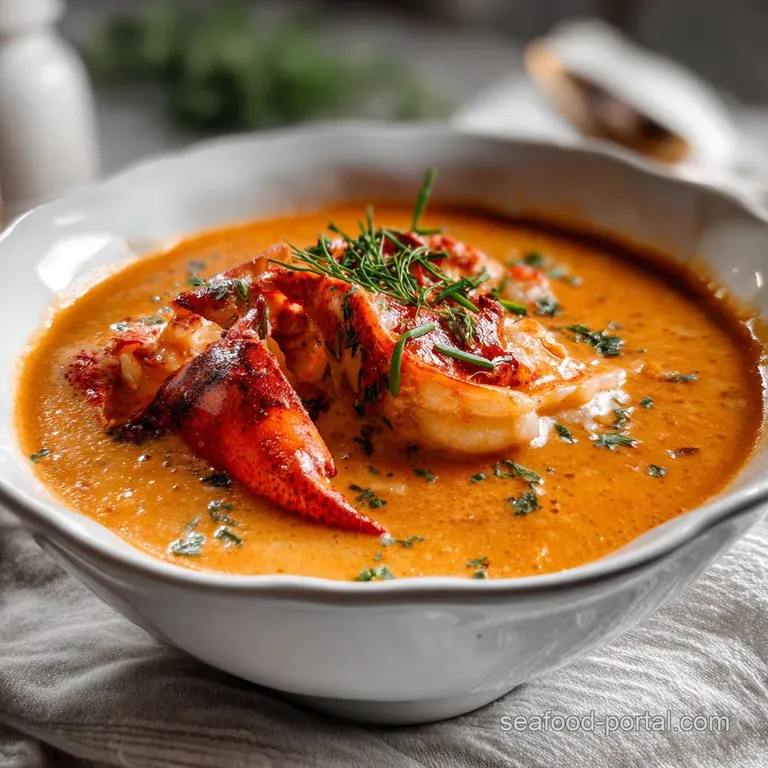
- Luxury Creamy Lobster Bisque with Cognac & Tarragon
- The Science Behind the Deepest Lobster Flavor
- Ingredients Breakdown and Smart Substitutions
- Step-by-Step Guide: Making Your Creamy Lobster Bisque
- Essential Tips for Success and Troubleshooting Common Issues
- How to Store, Reheat, and Freeze Lobster Bisque
- Perfect Pairings and Presentation Suggestions
- Recipe FAQs
- 📝 Recipe Card
Luxury Creamy Lobster Bisque with Cognac & Tarragon
You guys, stop everything. Forget that watery, orange stuff you’ve had at middling seafood restaurants. That stuff is insulting.
The real challenge with making classic, Creamy Lobster Bisque isn't the difficulty it's convincing the lobster shells to give up their maximum flavor. It needs to taste like the sea, velvet smooth, and intensely rich.
I’m talking about the pure scent of caramelized butter and simmering shellfish that fills your kitchen the moment you drop those shells into the hot pot.
This recipe takes a little time, but every single step is mandatory for achieving that fine dining quality creamy lobster bisque soup . We're using a few classic French techniques roasting, deglazing with Cognac, and an unusual but critical step involving rice to build a flavor foundation so deep you'll swear you smuggled this out of a Michelin star kitchen.
Get ready; this is the ultimate Creamy Lobster Bisque .
The Science Behind the Deepest Lobster Flavor
Why Roasting Lobster Shells is Non-Negotiable
This is the secret weapon. You can’t just boil the shells. When you sauté the cracked shells in butter over high heat, they don't just turn red they brown. That browning is the Maillard reaction, generating hundreds of new flavor compounds.
You are caramelizing the proteins stuck to the shell, fundamentally deepening the taste of the final product. Skipping this step results in a flat, one-dimensional seafood soup, not a true Creamy Lobster Bisque .
Achieving the Signature Silky Texture (No Graininess)
How do we get that incredibly luxurious, velvety smooth texture without using a ton of flour? Two words: Rice and Blending.
We throw in a tablespoon of uncooked rice with the shells. As the bisque simmers, the rice releases starch, slightly thickening the stock. But the real genius comes when we blend the entire contents shells, vegetables, and all.
The rice, now soft, acts like a binder, helping the blender pulverize the shell fragments into a fine paste. This paste is then strained, leaving behind a highly concentrated, naturally thickened liquid that yields a truly spectacular Creamy Lobster Bisque .
If you love deep seafood flavor like this, you should absolutely try my recipe for Creamy Lobster Sauce: Ultimate Restaurant Quality Crème de Homard — it uses a similar technique for maximum impact.
Ingredients Breakdown and Smart Substitutions
The quality of your ingredients directly determines whether this Creamy Lobster Bisque tastes like home cooking or a luxury meal. Don't skimp on the shells or the Cognac!
Ingredient Swaps and Alternatives
This table will save you a panic run to the grocery store.
| Component | Must Have Ingredient | Smart Substitution/Swap | Notes on Outcome |
|---|---|---|---|
| Shell Base | Lobster Shells (raw/cooked) | Shrimp shells or high-quality crab shells | Flavor will be different, but still rich. Use more if substituting shrimp. |
| Cognac/Brandy | Required for depth | Dry Sherry or good quality Port | Use half the amount of sherry as it can be overpowering. Avoid cheap cooking wine. |
| Thickener | Uncooked White Rice | 2 tsp Cornstarch Slurry (added at Step 5) | Cornstarch is good, but the rice helps extract flavor compounds from the shells better during blending. |
| Dairy | Heavy Cream (35% Fat) | Crème Fraîche or Half and Half | Crème Fraîche adds a pleasant tang and resists curdling better. Half and Half is less rich. |
| Aromatics | Leek | Shallots | Shallots will offer a sweeter, slightly sharper aromatic base. |
step-by-step Guide: Making Your Creamy Lobster Bisque

Phase 1: Creating the Rich, Concentrated Lobster Stock
- Searing the Shells & Deglazing: In your heavy bottomed stockpot, melt 4 tablespoons of butter over medium high heat. When the butter sizzles, add your cracked lobster shells. Sauté hard for 5– 7 minutes, stirring occasionally, until they turn bright red and start to take on slightly toasted brown spots. This is the most crucial step for a Creamy Lobster Bisque that tastes like fine dining.
- Add Tomato Paste: Stir in the 2 tablespoons of tomato paste. Cook for 1 minute until it darkens and smells intensely sweet this concentrates the acidity and color.
- The Cognac Burn (Carefully!): Remove the pot from the direct heat source. Pour in the 1/4 cup of Cognac or Brandy. Return to the heat and let it bubble fiercely, scraping up the glorious brown bits stuck to the bottom of the pot (the fond ). Allow the liquid to reduce until it’s nearly gone. That intense reduction is where the magic happens.
Phase 2: Building the Roux and Simmering the Bisque Base
- Sauté Aromatics: Add the chopped onion, carrot, celery, leek, thyme, and garlic to the pot. Sauté for 5 minutes until they soften slightly.
- Build the Stock: Add the 1 tablespoon of uncooked rice, then pour in the water or fish stock. Bring the liquid to a rolling boil, then immediately reduce the heat to the lowest setting. Cover and simmer gently for 40 minutes.
- Rest the Flavor: Remove from the heat. Carefully remove the thyme sprigs. Let it rest for 10 minutes to cool slightly before blending.
Phase 3: Pureeing and Straining for Velvety Smoothness
- Blending: Carefully transfer the entire contents (shells, vegetables, and liquid) to a robust standing blender. Blend on high speed for 30 60 seconds until everything is absolutely pulverized. The liquid should look thick and milky.
- Straining (The Velvety Step): Place a fine mesh sieve (ideally lined with cheesecloth for perfection) over a clean pot. Slowly pour the blended mixture through the sieve. You MUST press down aggressively on the solids (the shell and vegetable 'pulp') with a ladle to squeeze out every drop of flavorful liquid. Discard the dry, exhausted solids.
Phase 4: Finalizing the Flavor and Finishing with Cream
- Reduction: Bring the strained lobster stock to a simmer. Allow it to reduce by about a quarter (10– 15 minutes). This intensifies the lobster flavor tremendously, making your creamy lobster bisque recipe rich and powerful. Season now with salt and white pepper (the white pepper avoids dark specks).
- Finishing: Reduce the heat to low. Whisk in the heavy cream until fully incorporated and the bisque is steaming hot but not boiling . Remove from heat and stir in the 2 tablespoons of cold finishing butter for richness and a glossy sheen.
Serve immediately, ladled over the reserved diced lobster meat, and garnished with fresh tarragon. This Creamy Lobster Bisque is honestly better than any you can buy.
Essential Tips for Success and Troubleshooting Common Issues
When making a delicate soup like this, small mistakes can make the difference between rich velvet and grainy disappointment.
Troubleshooting: Common Bisque Mistakes
| Problem | Cause | The Fix |
|---|---|---|
| Bisque is Grainy/Sandy | Insufficient straining after blending; tiny shell particles remain. | Strain again through a cheesecloth lined sieve. Patience is key. |
| Soup Curdles When Adding Cream | The base liquid was boiling when the cream was added, or the cream was too cold. | Keep the heat extremely low (below a simmer) when adding cream. Temper the cream first by whisking in a ladle of hot soup before adding it to the pot. |
| Flavor Tastes Flat/Weak | Shells weren't seared long enough; stock wasn't reduced sufficiently. | If it's weak, simmer longer to reduce volume and concentrate flavor (Step 9). |
| Bisque is Too Thick | Too much rice/thickener, or excessive reduction. | Gently whisk in a small amount of warm water or fish stock until the desired pouring consistency is reached. |
Avoiding the Cardinal Mistake: Curdling the Cream
Dairy loves to break if shocked by high heat or acid. To ensure your creamy lobster bisque stays velvety, always add the cream at the very end, off the heat, or on the lowest setting possible.
If you want to be extra safe, measure out the heavy cream and let it sit on the counter for 10 minutes to take the chill off before adding it.
How to Store, Reheat, and Freeze Lobster Bisque
Safe Refrigeration Guidelines for Seafood Soups
You need to cool this down fast. Leftovers of this Creamy Lobster Bisque should be transferred to an airtight container and refrigerated within two hours of cooking. It keeps beautifully in the fridge for up to 3 days.
The Best Method for Freezing Cream Based Soups
This is tricky. Cream based soups often separate upon thawing because the fat and water emulsion breaks down when crystallized.
If you plan to freeze this, stop the recipe before adding the heavy cream. Freeze the concentrated lobster base (Steps 1 9) for up to 3 months. When ready to serve, thaw the base completely, bring it back to a gentle simmer, and then whisk in the fresh heavy cream.
This ensures your Creamy Lobster Bisque texture remains flawless.
Reheating Creamy Bisque Without Breaking the Emulsion
Never microwave or boil this. Reheat the bisque slowly over low heat on the stovetop. Stir constantly with a whisk (not a spoon) to help re-emulsify the cream. If it looks slightly separated, remove it from the heat and whisk in a teaspoon of cold butter or an extra splash of fresh heavy cream.
Perfect Pairings and Presentation Suggestions
What to Serve Alongside Lobster Bisque
Since this creamy lobster bisque is intensely rich, you want sides that are either light, crunchy, or acidic. This seafood soup pairs beautifully with a simple, slightly acidic side salad dressed with vinaigrette to cut through the richness, or, if you want something comforting, check out my recipe for Tuna Noodle Casserole: Ultimate Creamy Comfort Food .
Wine Pairings That Complement the Richness
Skip the reds. You need a wine with enough body to stand up to the heavy cream but enough acidity to balance the richness. A crisp, unoaked Chablis (Chardonnay) or a buttery Viognier are phenomenal choices.
This Creamy Lobster Bisque is truly a restaurant quality achievement, and I promise, once you master the roasting and straining, you’ll never buy the canned stuff again!

Recipe FAQs
Is the Cognac essential, or can I substitute it in the bisque?
While the Cognac adds depth, complexity, and subtle fruity notes that elevate this luxury dish, you can substitute it if necessary. high-quality brandy or dry sherry are excellent replacements that provide a similar alcohol base.
If avoiding alcohol entirely, increase the stock slightly, but be aware the flavor profile will be less complex.
Why is roasting the lobster shells so important for the final flavor?
Roasting the shells is crucial because the heat caramelizes the proteins and sugars, intensifying the savory ‘umami’ flavor of the lobster stock dramatically. This deep roasting prevents the stock (fumet) from tasting weak or overly watery and forms the essential aromatic foundation of the bisque.
What is the key difference between a classic bisque and a regular cream soup?
Historically, a true bisque was thickened using finely pounded and strained crustacean shells blended into the base, providing a unique texture and flavor. While modern recipes often rely on rice or cream for texture, a bisque is distinguished by its intensely concentrated stock and velvety smooth mouthfeel derived from the rich reduction process.
Can I use pre-cooked lobster meat for this recipe, or must it be raw?
You can certainly use pre-cooked lobster meat, but for the best flavor extraction, it is vital to use raw shells to create the stock base. Only add the pre-cooked meat in the final stages of cooking simmering it for too long will make the meat tough and rubbery.
How should I properly store and reheat leftover Lobster Bisque without separation?
Store the bisque in an airtight container in the refrigerator for up to three days. To reheat, warm it gently over very low heat, stirring constantly; avoid boiling the bisque at all costs. High heat causes the fat in the heavy cream to separate or 'break,' resulting in a grainy texture.
The recipe is listed as Medium difficulty; what is the most challenging step?
The most challenging stage is ensuring the deeply flavored stock base is properly reduced before adding the cream. Rushing the reduction leads to a weak, thin flavor, and improperly straining the stock can leave unwanted sediment, ruining the final velvety texture.
My bisque texture is grainy or looks slightly split. How can I fix this?
A grainy texture usually results from overheating the bisque, especially after the cream has been incorporated, or adding cold cream to a boiling base too quickly. To attempt a fix, remove the pot from the heat and whisk in either a small splash of cold cream or even one ice cube vigorously until the emulsion stabilizes again.
Luxury Creamy Lobster Bisque

Ingredients:
Instructions:
Nutrition Facts:
| Calories | 515kcal |
|---|---|
| Protein | 25g |
| Fat | 41.5g |
| Carbs | 14g |
| Fiber | 1.5g |
