Summer Seafood Soup: Light Saffron Tomato Broth

- The Ultimate Light Summer Seafood Soup: A Broth, Not a Chowder
- The Culinary Science Behind a Perfect Light Seafood Fumet
- Essential Ingredients for Your Great British Seafood Broth
- Mastering the Fumet: Step-by-Step Cooking Instructions
- Troubleshooting Your Broth: Expert Tips and Common Mistakes
- Preparation, Storage, and Freezing Guide
- Completing the Meal: What to Serve Alongside Your Summer Broth
- Recipe FAQs
- 📝 Recipe Card
The Ultimate Light Summer Seafood Soup: A Broth, Not a Chowder
When the humidity hits, the last thing anyone craves is a dense, creamy bowl of fish chowder that sits like a blanket in your stomach. But the craving for delicate, fresh seafood doesn’t vanish, right?
That’s where this brilliant, bright Summer Seafood Soup comes in, shimmering on the stove, smelling like the sea and sunshine thanks to saffron and a splash of wine.
It’s light, elegant, and perfectly clear a true fumet that lets the delicate flavors of the scallops, mussels, and fish shine through effortlessly.
This recipe is my summer lifesaver because it looks incredibly fancy but takes less than 45 minutes from start to finish. I’m talking about minimal chopping and maximal flavor payoff.
It proves that you don't need gallons of heavy cream or butter to create a decadent, deeply satisfying seafood meal for a relaxed dinner party.
We’re not making a heavy stew today; we are crafting a complex, golden broth. If you’ve ever wanted to master a light, flavour packed base for your favorite shellfish, buckle up. This Summer Seafood Soup recipe is about to become your new coastal obsession.
The Culinary Science Behind a Perfect Light Seafood Fumet
This technique focuses entirely on extracting pure flavor from aromatics and the quality of the stock, rejecting the thickeners and fats common in a traditional soup base. Think Mediterranean, not New England. It’s all about layering those coastal flavours.
Defining a True Fumet: Clarity, Depth, and Elegance
A proper fumet is essentially a concentrated essence. It's not supposed to mask the seafood; it should enhance it. We achieve that depth by reducing the white wine and slow cooking the fennel and onion until they are completely translucent and sweet. Clarity is non-negotiable here.
If your broth is murky, you’ve lost the elegance that defines this specific style of Summer Seafood Soup .
Why This is the Essential British Summer Supper
Honestly, after a long day when I just want something quick, delicious, and deeply nourishing, this hits the spot every single time. It feels celebratory without requiring three hours of kitchen time. Unlike those heavier fish dishes, this lighter broth doesn't weigh you down, making it ideal for those warmer evenings.
It truly is the essential Summer Seafood Soup supper.
Preparation Time and Difficulty Breakdown
While I rate this recipe as medium, that’s mostly because handling fresh mussels and ensuring the seafood cooks evenly takes a little focus. The broth itself is incredibly forgiving! Just follow the timing closely, and you’ll succeed.
| Stage | Focus Area | Chef's Tip |
|---|---|---|
| Prep Time (20 min) | Chopping Fennel & Cleaning Mussels | Prep everything before turning on the heat. |
| Cook Time (25 min) | Fumet & Poaching | Never boil the seafood keep it at a gentle simmer. |
Layering Flavour: The Crucial Role of Fennel and White Wine
Fennel is the secret weapon in great Summer Seafood Soup . Its mild, anise like sweetness pairs miraculously well with shellfish. When you sauté the fennel bulb slowly until it practically melts, you create a complex, earthy background note that balances the bright saffron and tomato.
Deglazing with the white wine concentrates the acidity, giving the broth the necessary lift and brightness.
Extracting Maximum Colour and Aroma from Saffron Threads
Saffron is pricy, so you must treat it right. Don't just toss the threads into the boiling stock. Always, always "bloom" the saffron first. Steep it in a tiny bit of hot liquid for five minutes.
This draws out the maximum vibrant gold colour and that distinct, honeyed, metallic aroma we crave in a high-quality Summer Seafood Soup base.
Achieving the Ideal Texture: Why We Avoid Cream or Butter
The texture of this broth should be silky and light, clinging just slightly to the seafood. Adding cream or butter completely changes the dish, turning it into a chowder, which is exactly what we are avoiding in this light Summer Seafood Soup .
We are relying solely on the natural gelatin and minerals from the fish stock to provide body. A final squeeze of lemon juice brightens the whole thing up beautifully.
Essential Ingredients for Your Great British Seafood Broth
Remember, if your ingredients are excellent, you don't need much manipulation to make them taste good. This rule especially applies when making a delicate broth like this.
Selecting the Freshest Catch: Recommended Seafood Combinations
The beauty of this recipe is its flexibility. I typically use a mix of prawns, mussels, and a firm white fish like cod or haddock, simply because they cook reliably and hold their shape.
Chef’s Note: Buy seafood the day you plan to use it if possible. If you can’t get fresh mussels, you can substitute with extra firm white fish or even some gorgeous Smoked Scallops with Garlic: Easy Hot-Smoked Seafood Appetizer added right at the end.
| Standard Ingredient | Viable Substitution | Why it works |
|---|---|---|
| Cod/Haddock | Snapper, Monkfish, Halibut | Firm texture holds up during poaching. |
| Mussels | Clams, or Extra Prawns | Clams take slightly longer; add 1 minute earlier. |
| Prawns (Shrimp) | Calamari rings | Add calamari in the last 2 minutes only. |
Building the Base: Substitutions for White Wine and Fennel
That dry white wine is critical for deglazing and adding crucial acidity, but I know sometimes you need an alternative. If you are avoiding alcohol, replace the wine with an equal amount of low-sodium fish stock mixed with two tablespoons of white wine vinegar or lemon juice.
If you hate fennel (some people do!), you can swap it out for celery. Just use half the amount of celery, and maybe toss in a pinch of crushed anise seeds to replicate that subtle licorice lift. This ensures your Summer Seafood Soup still has the necessary aromatic base.
Crucial Aromatics: Getting the Right Balance of Shallots and Garlic
I use yellow onion in the recipe outline, but if you have shallots on hand, they are even better. Shallots are sweeter and melt more beautifully into the broth. Either way, dice your aromatic base finely! We want these ingredients to disappear into the broth, lending flavour without leaving huge chunky pieces.
And garlic? Always high-quality and fresh; never jarred.
Mastering the Fumet: step-by-step Cooking Instructions
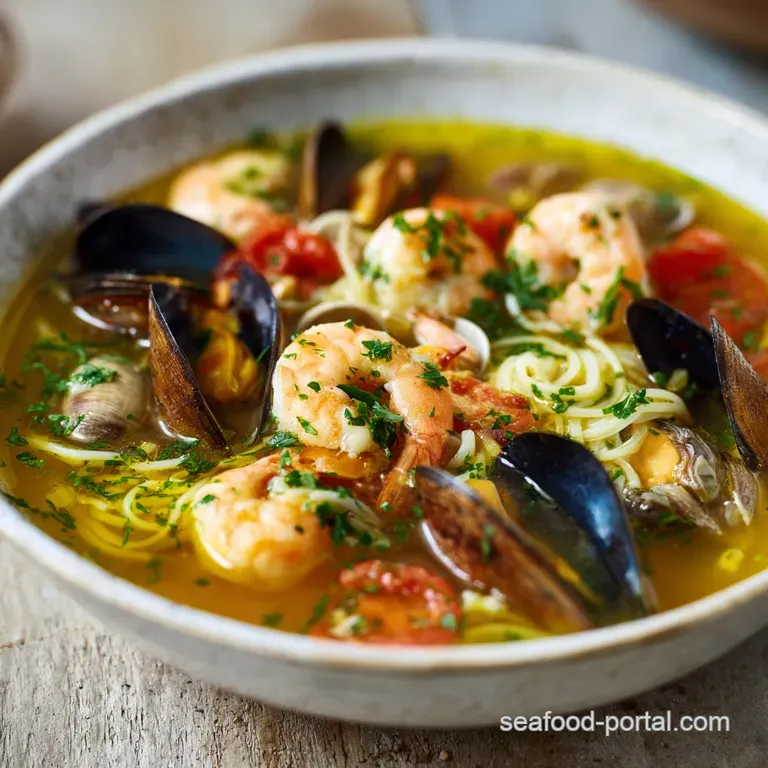
Follow these steps precisely to ensure maximum flavour extraction and perfectly cooked seafood for your Summer Seafood Soup .
Step 1: Preparing the Aromatics and Creating the Fumet Base
Start with a generous drizzle of olive oil in your heavy pot over medium heat. Add your diced onion and fennel and move them around constantly. You must coax the sweetness out, so be patient; 8 to 10 minutes is key until they are totally soft.
Then, stir in the garlic and tomato paste for just one minute this toasts the paste, giving it depth instead of a raw tang.
Step 2: Infusing the Broth with Tomato and Saffron
Pour in that white wine and aggressively scrape the bottom of the pot to release all those beautiful brown flavour bits (this is deglazing!). Let the wine bubble and reduce by half. Now, add your fish stock, the bloomed saffron, and the bay leaf.
Bring this base to a gentle simmer, cover it, and let it infuse for 10 minutes. This allows the saffron and aromatics to properly marry.
Step 3: Gentle Poaching: Cooking the Seafood Perfectly
This is where you need sharp focus. Increase the heat to maintain a solid, but not aggressive , simmer. First, add the scrubbed mussels, cover the pot, and cook for 3- 5 minutes until they pop open. Discard any stubborn ones that refuse to open their shells.
Next, introduce the cubed fish and prawns.
Step 4: Final Adjustments and Seasoning
Remove the bay leaf immediately. Cook the fish and prawns for only 3– 4 minutes until they are opaque. Once the prawns turn pink and curl slightly, the heat is off! You want the seafood to be delicate, not rubbery. Stir in the fresh lemon juice and taste the broth aggressively.
You’ll find you need less salt than you think because the mussels and clams add natural salinity. Serve your elegant Summer Seafood Soup immediately.
Troubleshooting Your Broth: Expert Tips and Common Mistakes
Making a broth based soup leaves little room for error when it comes to clarity and ingredient quality. These are the top spots where home cooks usually trip up.
Preventing a Cloudy Fumet: The Art of Skimming
If your broth starts looking murky or frothy after adding the stock, you are simmering too aggressively or you have impurities floating around. Use a large, shallow spoon to gently skim any foam or tiny particles that rise to the surface. Do this before you add the seafood.
Keeping the broth at a bare simmer, never a rolling boil, is the best preventative measure for a clear, pristine Summer Seafood Soup .
The Biggest Error: Avoiding Overcooked, Rubberised Seafood
I know you want to ensure the fish is done, but the cardinal sin of Summer Seafood Soup is overcooking the seafood. Fish continues to cook in the residual heat of the broth even after you take it off the stove. Once the fish is flaky and the prawns are pink, remove the pot from the heat.
If you cook them longer than 4 minutes, you end up with tough, chewy results. Trust the timing!
If Your Saffron Flavour Isn't Popping
If you find the saffron flavour is too subtle, chances are you skipped the blooming step. If you didn't bloom it, the flavour won’t disperse properly. A quick fix is to steep another small pinch in a tablespoon of hot liquid, let it sit for five minutes, and then stir it into the final broth.
This late addition will boost the aroma and colour dramatically.
Preparation, Storage, and Freezing Guide
Can you make this broth ahead of time? Absolutely. But the seafood itself requires careful handling.
Can I Make the Broth Base Ahead of Time?
Yes! This is the smart way to tackle entertaining. You can complete steps 1 and 2 up to the point where you add the stock and simmer. Prepare the Summer Seafood Soup base, let it cool completely, and store it in an airtight container in the fridge for up to 3 days.
When ready to serve, bring the broth back to a simmer and proceed with Step 3 (adding the seafood).
Safely Storing Leftover Seafood Soup
If you have already added the seafood, consume the leftovers within 2 days. The quality of the seafood deteriorates quickly once cooked and reheated. Store the soup in small, airtight containers, keeping the broth and seafood together.
Best Method for Reheating While Maintaining Seafood Texture
Do not microwave this if you can help it! The residual heat will instantly turn the fish rubbery. Reheat leftover Summer Seafood Soup gently on the stove over medium low heat until it is just steaming. As soon as it hits serving temperature, take it off the heat and serve immediately.
If you have any leftover plain broth without seafood, that freezes beautifully for up to 3 months.
Completing the Meal: What to Serve Alongside Your Summer Broth
Since this Summer Seafood Soup is so light and fragrant, you don't need heavy sides. Keep it simple and allow the broth to remain the star of the show.
We are definitely going to want something absorbent. Thick slices of crusty, toasted sourdough are absolutely necessary for dipping into that glorious saffron broth. If you want another light starter, you could serve a small portion of my Shrimp Bruschetta: Easy Lemon Garlic Seafood Appetizer Recipe while the broth is simmering.
For a fresh contrast, a small side salad of bitter greens like arugula or watercress, dressed simply with olive oil and a dash of lemon juice, works wonders. Or, if you need a little more substance, pair it with my quick Seafood Pasta Salad: Easy, Creamy Lemon Dill Recipe which echoes the lemon and dill notes. This final combination makes for the perfect, refreshing Summer Seafood Soup dinner.

Recipe FAQs
How do I ensure my seafood (especially prawns and fish) doesn't become tough or rubbery?
The key is gentle poaching and precise timing. Add the seafood at the very end of the cooking process and maintain only a gentle simmer (often called a tremble), avoiding a rolling boil which will toughen the proteins quickly.
Cook the seafood just until it is opaque, typically 3 to 5 minutes depending on the thickness of the fish chunks.
I don't have fresh cod or haddock. What other fish works well in this broth?
Choose firm, white, non-oily fish that holds its shape during gentle simmering, such as halibut, snapper, or monkfish. Avoid very delicate or flaky fish like sole, as it might disintegrate into the clear fumet. Ensure all fillets are cut into substantial, uniform chunks for even cooking.
Saffron is quite expensive. Can I leave it out or substitute it?
Saffron is vital for the distinct golden color and the subtle, earthy aroma that characterizes this traditional Mediterranean style fumet. While you can omit it, note that the soup will lose its signature hue and some complexity.
If you are only aiming for color, a tiny pinch of turmeric can be used, but be aware it carries a stronger, different flavor profile.
Can I make the tomato and fennel fumet base ahead of time?
Absolutely. The clear broth base actually improves overnight as the deep, complex flavors have time to fully marry together. Prepare the base up to the point of adding the seafood, then cool and refrigerate it for up to 3 days. Reheat the broth gently and add the fresh seafood just before serving.
My broth is cloudy, not clear like a fumet. How do I fix this?
Cloudiness often results from boiling the broth too vigorously or stirring it excessively, which causes fats and impurities to emulsify. To correct this, ensure you maintain only the slightest simmer and consistently skim off any foam or residue that rises to the surface during the initial cooking of the base.
If necessary, you can clarify the final broth using a traditional egg-white raft method.
Can I freeze leftover Summer Seafood Broth?
While you can freeze the concentrated broth base, freezing the complete soup with the cooked seafood is not recommended. Cooked fish and shellfish become dry, tough, and spongy when thawed and reheated. If you must freeze it, strain out and remove any remaining cooked seafood first, and freeze only the clear fumet.
Light Summer Seafood Broth Recipe
Ingredients:
Instructions:
Nutrition Facts:
| Calories | 320 calories |
|---|---|
| Fat | 9 g |
| Fiber | 3 g |
