Canned Crab Meat Recipe: Lemon and Herbs
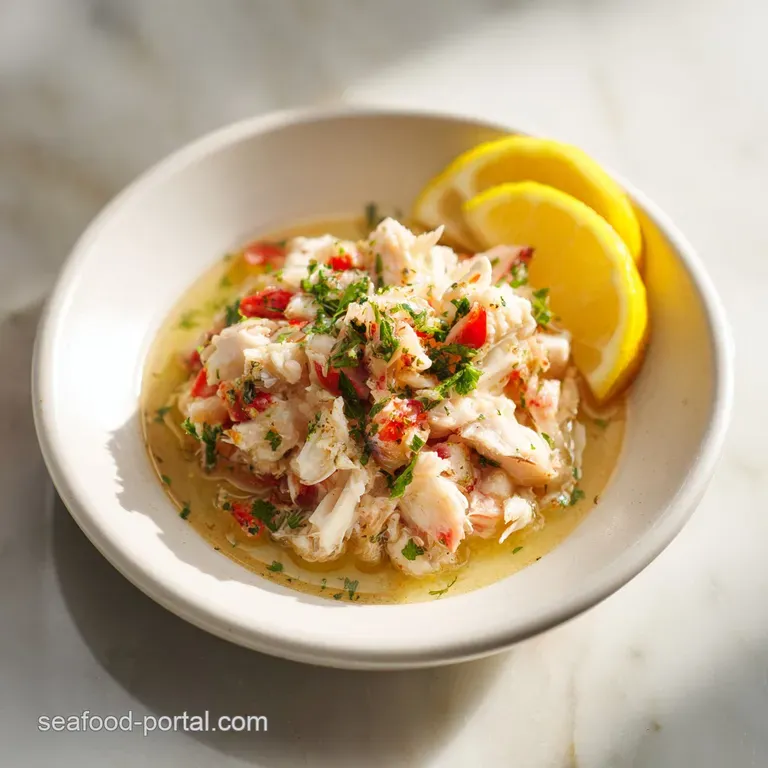
- Time: Active 15 minutes, Passive 0 minutes, Total 15 minutes
- Flavor/Texture Hook: Bright, citrusy zing with a creamy finish and crunchy celery contrast.
- Perfect for: A fast weeknight lunch, an elegant appetizer, or effortless meal prep.
- Refresh Your Pantry with this Canned Crab Meat Recipe with Lemon and Herbs
- The Secret Technique for Fresh Seafood Flavor
- Essential Details for Your Quick Seafood Fix
- Curating Your Elements for the Best Flavor
- Simple Kitchen Tools to Get the Job Done
- Crafting Your Zesty Seafood Salad in Eight Steps
- Solving Common Texture and Flavor Balance Issues
- Creative Ways to Personalize Your Crab Base
- Debunking Seafood Preparation Myths
- Managing Leftovers and Keeping Your Seafood Fresh
- Perfect Side Dishes to Round Out Your Meal
- Very High in Sodium
- Recipe FAQs
- 📝 Recipe Card
Refresh Your Pantry with this Canned Crab Meat Recipe with Lemon and Herbs
The sharp "click hiss" of a can opening is usually the start of something mundane, like tuna for a quick sandwich. But when you crack open a tin of high-quality lump crab, you're holding the potential for something much more sophisticated.
I remember the first time I tried making a cold crab salad; I just dumped the meat in with some mayo and called it a day. It was... fine. But it had that faint metallic tang that screams "I came from a shelf," and the delicate meat was totally lost in a gloopy white mess.
Discover a sensational Canned Crab Meat Recipe with Lemon and Herbs that's sure to impress. This isn't just a "toss it together" situation; it's about treating canned seafood with the same respect you'd give a fresh catch.
We're going to use a few little tricks, like a quick soak in milk, to strip away that "tinny" flavor and bring back the seaside sweetness we all love.
The payoff is a dish that feels incredibly light but tastes deeply satisfying. We are talking about a velvety dressing, pops of fresh green herbs, and that unmistakable lemon brightness that makes your mouth water before the fork even hits your lips.
It's fast, it's fresh, and it’s about to become your new favorite way to use those cans hiding in the back of your cupboard.
The Secret Technique for Fresh Seafood Flavor
Most people think the quality of canned crab is set in stone the moment it's sealed, but we have more control than you'd think. The reason this specific method works so well is that it addresses the two main enemies of canned seafood: residual brine and the metallic aftertaste from the canning process.
By treating the meat before it ever touches the dressing, we reset the flavor profile to zero.
Casein Neutralization: The proteins in milk bind to the metallic compounds often found in canned seafood, effectively "washing" away the tinny flavor without damaging the delicate meat.
Emulsion Stability: Whisking the lemon juice and olive oil into the mayonnaise creates a stable base that clings to the crab lumps rather than sliding off or becoming watery.
Hydration Balance: Patting the crab dry after its soak ensures the dressing doesn't get diluted, keeping the flavors sharp and the texture velvety.
| Budget Choice | Premium Choice | Flavor Impact | Savings |
|---|---|---|---|
| Canned Claw Meat | Canned Lump Meat | Claw is darker and "fishier"; Lump is sweet and white | Save $10-15 per can |
| Dried Herbs | Fresh Herbs | Dried herbs can taste dusty; Fresh provides a "shatter" of flavor | Save $3-5 |
| Bottled Lemon Juice | Fresh Lemon | Bottled lacks the floral oils found in the zest | Save $1 |
Choosing the right crab is the first step to success. While "Colossal" or "Jumbo Lump" is the gold standard for show stopping cakes, "Backfin" or standard "Lump" works beautifully here because the smaller pieces integrate perfectly with the minced celery and herbs. If you're looking for a more robust flavor to pair with a hearty soup, this salad goes beautifully alongside a bowl of Maryland Crab Soup recipe.
Essential Details for Your Quick Seafood Fix
To get the best results, you need to understand the constraints of the ingredients. Since we aren't cooking anything, the temperature of your components matters more than you might realize. Cold milk and cold crab are non negotiable for keeping the structure of the meat firm.
If the crab gets too warm while you're prepping, it can start to fragment into shreds rather than staying in those beautiful, bite sized chunks.
| Component | Science Role | Pro Secret |
|---|---|---|
| Canned Crab (1 lb) | Protein Base | Gently shake the strainer; don't press the meat or you'll lose the "lump" texture. |
| Whole Milk (1/2 cup) | Odor Neutralizer | Use full fat milk; the fat molecules are more efficient at trapping off flavors. |
| Lemon Zest | Aromatic Lift | Zest the lemon directly over the bowl to catch the volatile oils that spray out. |
When you are working with such a short ingredient list, the quality of your fats makes a massive difference. I always reach for a high-quality mayonnaise and a peppery extra virgin olive oil.
The oil adds a fruity depth that mayo alone can't provide, bridging the gap between the heavy dressing and the acidic lemon juice. This balance is what makes the salad feel "light" rather than "creamy."
Curating Your Elements for the Best Flavor
Shopping for canned crab can be a bit of a minefield because the labels aren't always consistent across brands. You want to look for cans that are refrigerated if possible, as pasteurized crab found in the seafood case usually has a much better texture than the shelf stable tins found in the tuna aisle.
However, this recipe is designed to make even the shelf stable stuff taste like a million bucks.
- 1 lb canned crab meat: Look for "Lump" or "Backfin." Why this? Provides the best balance of sweet flavor and chunky texture for salads.
- Substitute: 1 lb chopped imitation crab (note: will be much sweeter and firmer).
- 1/2 cup cold whole milk: Used for the neutralizing soak. Why this? Casein removes the metallic taste common in canned goods.
- Substitute: Heavy cream diluted with a little water.
- 2 stalks celery: Very finely minced. Why this? Provides a necessary structural crunch against the soft crab.
- Substitute: Minced fennel bulb for a slight licorice note.
- 1/4 cup high-quality mayonnaise: The binder. Why this? Creates a creamy mouthfeel without being overwhelming.
- Substitute: Plain Greek yogurt (adds more tang, less richness).
- 1 tbsp extra virgin olive oil: For flavor depth. Why this? Adds a silky finish and floral notes.
- Substitute: Avocado oil for a more neutral taste.
- 1 large lemon: Both zested and juiced. Why this? The juice provides acid, while the zest provides aroma.
- Substitute: Lime zest and juice for a tropical twist.
- 3 tbsp fresh parsley: Finely chopped. Why this? Adds a clean, grassy finish.
- Substitute: Fresh chervil for a more delicate flavor.
- 1 tbsp fresh chives: Minced. Why this? Offers a mild onion bite without the harshness of raw shallots.
- Substitute: The green parts of scallions.
- 1 tsp fresh dill: Minced. Why this? The classic partner for seafood; adds a sweet, herbal lift.
- Substitute: A pinch of dried dill weed (use half the amount).
- 1/2 tsp sea salt: To enhance all flavors.
- 1/4 tsp freshly cracked black pepper: For a subtle floral heat.
Simple Kitchen Tools to Get the Job Done
You don't need a pantry full of gadgets, but a couple of specific tools will make your life significantly easier. A fine mesh strainer is the most important one here. Canned crab is often packed in a lot of liquid, and you want that gone before the milk soak, and definitely gone before the dressing.
If you use a colander with big holes, you'll lose half your expensive crab down the drain.
I also highly recommend using a silicone spatula for the final step. Unlike a spoon, which can act like a knife and chop through the tender lumps of meat, a flexible spatula allows you to "fold" the ingredients.
It’s a gentle motion reaching to the bottom of the bowl, lifting the dressing up, and laying it over the crab. This preserves those big, beautiful bites that make a crab salad feel truly luxurious.
Crafting Your Zesty Seafood Salad in Eight Steps

- Drain the crab. Pour the 1 lb of canned crab meat into a fine mesh strainer. Let the canning liquid run out completely until no more drips appear.
- Neutralize the meat. Place the drained crab in a small bowl and pour 1/2 cup of cold whole milk over it. Let it sit for 5 minutes. Note: This is the secret step that removes the "can" taste.
- Perform a second drain. Pour the crab and milk back into the fine mesh strainer. Give it a gentle shake and then pat the top of the meat very lightly with a paper towel until the surface looks matte, not shiny.
- Emulsify the base. In your main mixing bowl, whisk together 1/4 cup mayonnaise, 1 tbsp olive oil, and the zest and juice of 1 lemon until the mixture is pale and completely smooth.
- Season the dressing. Add 1/2 tsp sea salt and 1/4 tsp black pepper to the bowl. Stir in 3 tbsp parsley, 1 tbsp chives, and 1 tsp dill.
- Add the crunch. Stir in the 2 stalks of finely minced celery. Note: Adding the celery to the dressing first ensures the "crunch" is evenly distributed before the delicate crab enters the mix.
- Fold the crab. Add the refreshed crab meat to the bowl. Use a silicone spatula to gently turn the meat into the dressing until every lump is glistening.
- Final Chill. Taste a small piece and add a pinch more salt if needed. Serve immediately or chill for 30 minutes to let the herb flavors deepen.
Solving Common Texture and Flavor Balance Issues
Sometimes, despite our best efforts, things don't go perfectly. Canned crab can be unpredictable; some brands are saltier than others, and some lemons are much more acidic. The biggest mistake people make is not tasting as they go. If your salad feels a bit flat, it usually needs more acid (lemon) or more salt.
If it feels too "wet," you likely didn't drain the crab well enough after the milk soak.
Why Your Crab Salad is Watery
If you notice a pool of liquid at the bottom of the bowl after 10 minutes, it's usually because the celery was cut too far in advance or the crab wasn't patted dry. Celery releases water once it hits salt.
To fix this, you can add a tiny bit more mayonnaise to re emulsify the liquid, or simply drain the excess before serving on crackers or bread.
| Problem | Root Cause | Solution |
|---|---|---|
| Metallic Aftertaste | Skipped or shortened the milk soak | Stir in an extra teaspoon of lemon juice and a pinch of sugar to mask it. |
| Shredded Texture | Over mixing the crab into the dressing | Stop stirring immediately; serve as a "spread" instead of a chunky salad. |
| Overpowering Lemon | Lemon was exceptionally large or juicy | Add a tablespoon more mayonnaise to mellow out the acidity. |
Common Mistakes Checklist
- ✓ Always use a fine mesh strainer (standard colanders let too much meat escape).
- ✓ Don't skip the milk soak even if the crab "smells fine" it's about the finish, not just the scent.
- ✓ Mince your celery as finely as possible; huge chunks will overpower the delicate crab.
- ✓ Avoid metal spoons when folding; silicone or wood is much gentler on the crab lumps.
- ✓ Let the salad sit for at least 15 minutes in the fridge if time allows; the herbs need a moment to "wake up" in the fat.
Creative Ways to Personalize Your Crab Base
Once you've mastered the basic Canned Crab Meat Recipe with Lemon and Herbs, you can start playing with the profile. This recipe is a "blank canvas" for the Chesapeake region’s flavors. If you find yourself craving something with a bit more of a kick, you can easily pivot this into a more traditional spread.
- Scaling Down (for one): Use a 6 oz can of crab. Reduce milk to 1/4 cup. For the dressing, use 1.5 tbsp mayo and just a squeeze of lemon. Beat half an egg if you're turning it into a single crab cake, otherwise, skip the egg.
- Scaling Up (for a crowd): If doubling to 2 lbs of crab, only use 1.5x the salt and pepper. Liquids like lemon juice should be added gradually you might find you only need 1.5 lemons instead of 2 to reach the right balance.
- Baking Note: If you decide to double this and bake it as a casserole, lower your oven temperature to 175°C (350°F) and extend the time slightly to ensure the center gets hot without the mayo "breaking" and becoming oily.
If you enjoy the zing of this lemon dressing but want something with a bit more bite to serve on the side, you might want to try making a batch of my best sauce for crab cakes. It uses a similar base but adds a "moulade" twist that pairs perfectly with these herbs.
| Method | Time | Texture | Best For |
|---|---|---|---|
| Classic Cold | 15 mins | Silky & Crisp | Sandwiches, Wraps, Crackers |
| Toasted Melt | 20 mins | Warm & Gooey | Adding cheese and broiling on sourdough |
| Lettuce Cups | 15 mins | Extra Crunchy | Low carb lunch or elegant appetizers |
Debunking Seafood Preparation Myths
There is a common myth that "canned crab is already cooked, so you can't over process it." This couldn't be further from the truth. While the meat is indeed pasteurized and safe to eat out of the tin, the cellular structure is quite fragile.
If you stir it vigorously, the "lumps" disintegrate into "mush." Always treat it as if it were a delicate soft boiled egg.
Another misconception is that you need expensive "Jumbo Lump" for every recipe. For a salad where the meat is broken down slightly and mixed with celery, "Backfin" or "Special" grade crab is actually more efficient.
It absorbs the dressing more evenly and provides a consistent flavor in every forkful, whereas jumbo lumps can sometimes remain "dry" in the center if not handled correctly.
Managing Leftovers and Keeping Your Seafood Fresh
Seafood is notorious for its short shelf life, but thanks to the acidity of the lemon and the stabilizers in the mayonnaise, this crab salad holds up surprisingly well. You can keep it in an airtight container in the fridge for up to 2 days.
I wouldn't go beyond that, as the celery will lose its crunch and the crab can start to take on a mushy texture.
Storage: Store in the coldest part of your fridge (usually the back of the bottom shelf). If a little liquid separates, just give it a very gentle fold before serving.
Zero Waste: If you have a small amount of leftover salad that isn't quite enough for a full serving, don't toss it! It makes an incredible "stuffing" for a hollowed out avocado or a topping for a baked potato.
You can also stir a few spoonfuls into a hot pasta dish at the very last second the residual heat will warm the crab without cooking it further, creating an instant creamy seafood pasta.
Perfect Side Dishes to Round Out Your Meal
Since this Canned Crab Meat Recipe with Lemon and Herbs is so bright and zesty, you want side dishes that either provide a hearty contrast or lean into that fresh garden feeling. A simple bed of butter lettuce is the classic choice, but don't overlook the power of a good piece of bread.
A toasted brioche bun or a crusty baguette slice provides the "shatter" of texture that makes each bite interesting.
If you're serving this as part of a larger seafood spread, it acts as a wonderful cooling element against warmer, spicier dishes. Imagine a platter with this cold crab salad, some hot peel and eat shrimp, and a stack of saltine crackers.
It’s the ultimate low effort, high impact summer dinner that proves you don't need a professional kitchen or even a stove to make something truly remarkable.

Very High in Sodium
1165 mg of sodium per serving (51% of daily value)
The American Heart Association recommends limiting sodium intake to about 2,300mg per day, with an ideal limit of less than 1,500mg for most adults.
Tips to Reduce Sodium
-
Choose Low-Sodium Canned Crab-20%
Select canned crab meat labeled 'low sodium' or 'no salt added'. This is the biggest contributor to sodium in this recipe. Look for options with significantly less sodium than regular canned crab.
-
Halve the Added Salt-12%
Reduce the added sea salt from 1/2 teaspoon to 1/4 teaspoon. You can also omit it entirely if your low-sodium crab meat is already seasoned.
-
Boost Lemon and Herbs-5%
Increase the amount of lemon zest, juice, fresh parsley, chives, and dill. These aromatics provide a bright, fresh flavor that can compensate for reduced salt.
-
Embrace Fresh Herbs
Generously use fresh herbs like parsley, chives, and dill to add layers of flavor without adding sodium.
Recipe FAQs
How to make canned crab meat taste good?
Drain thoroughly and soak in cold milk for 5 minutes. This process neutralizes lingering metallic notes and ensures the delicate flavor of the crab shines through in the final dish.
Should you rinse canned crab meat before using?
No, avoid running it directly under a tap. Instead, drain the meat in a fine mesh strainer and use the cold milk soak method to refresh the texture and flavor without waterlogging the delicate lumps.
How do you eat crab meat from a can?
Gently fold the meat into a creamy herb lemon emulsion. Use a silicone spatula to combine it with mayonnaise, olive oil, and fresh herbs to maintain the integrity of the lumps, similar to how we manage texture in our seaside crab cakes.
What herbs go best with crab meat?
Use a combination of parsley, chives, and dill. These specific fresh herbs provide a bright, aromatic contrast that complements the sweetness of the crab without masking it.
Is it true I should stir the crab vigorously to coat it?
No, this is a common misconception. You must use a silicone spatula and gentle folding motions to ensure the crab meat stays in large, appealing lumps rather than breaking into mush.
How to achieve the best consistency for this crab salad?
Mince your celery as finely as possible. Large chunks of celery will overpower the delicate crab lumps, so keeping the vegetable pieces small ensures a balanced texture in every bite.
Is it necessary to refrigerate the salad before serving?
Yes, let the mixture sit for at least 15 minutes. This short resting period allows the fresh herbs to properly wake up and infuse their flavor into the mayonnaise and olive oil base.
Lemon Herb Crab Salad

Ingredients:
Instructions:
Nutrition Facts:
| Calories | 227 kcal |
|---|---|
| Protein | 20.4 g |
| Fat | 16.1 g |
| Carbs | 1.8 g |
| Fiber | 0.4 g |
| Sugar | 0.7 g |
| Sodium | 1165 mg |
