Easy Greek Grilled Octopus Recipe
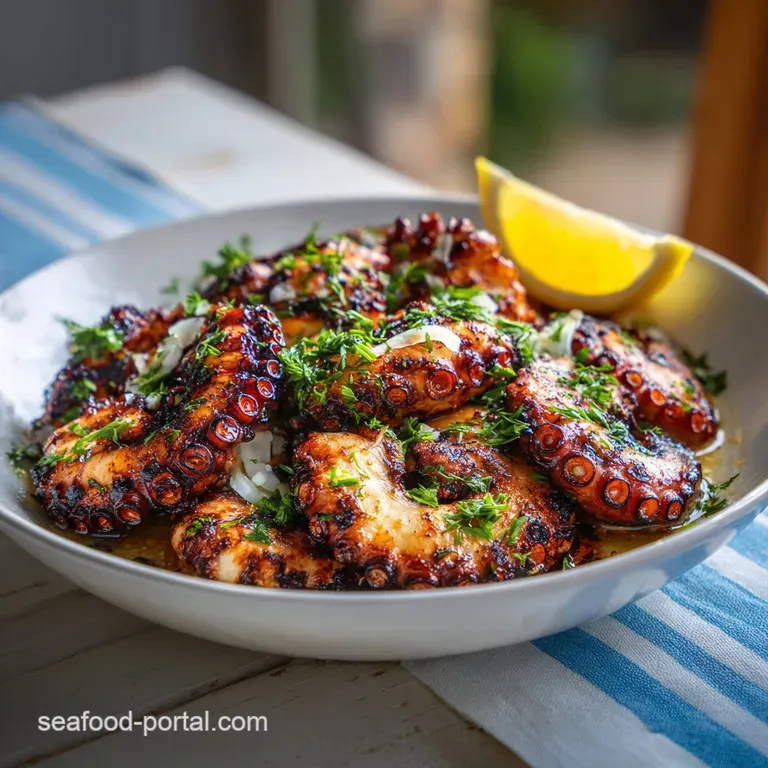
- Time: Active 15 minutes, Passive 60 minutes, Total 75 minutes
- Flavor/Texture Hook: Smoky, charred skin with a velvety, tender center
- Perfect for: Mediterranean themed summer gatherings or impressive date nights
- The Secret to Easy Greek Grilled Octopus Recipe
- Core Cooking Milestones and Specifications
- Selecting Your Mediterranean Pantry Staples
- Essential Tools for Taverna Results
- Executing the Triple Stage Method
- Avoiding Rubbery Texture and Common Pitfalls
- Creative Variations on the Classic Plate
- Managing Leftovers and Minimizing Waste
- Vibrant Sides for a Greek Feast
- Debunking Common Kitchen Myths
- Very High in Sodium
- Recipe FAQs
- 📝 Recipe Card
The Secret to Easy Greek Grilled Octopus Recipe
Have you ever wondered why the octopus at that little Greek spot on the corner is so silky while yours feels like chewing on a rubber band? Honestly, I used to think they had some secret Mediterranean magic involving sea water and ancient rituals.
It turns out the secret is actually just patience and a splash of vinegar. We've all been there, hovering over a grill, watching perfectly good seafood turn into pencil erasers because we rushed the process.
I once tried to throw a raw octopus straight onto the coals thinking the high heat would do the trick. Spoiler alert: it was a disaster. This Easy Greek Grilled Octopus Recipe is the result of those failures, teaching us that the grill is actually the final step, not the only step.
We are going to braise it until it’s supple, then use the fire just to add that signature smoky shatter to the skin.
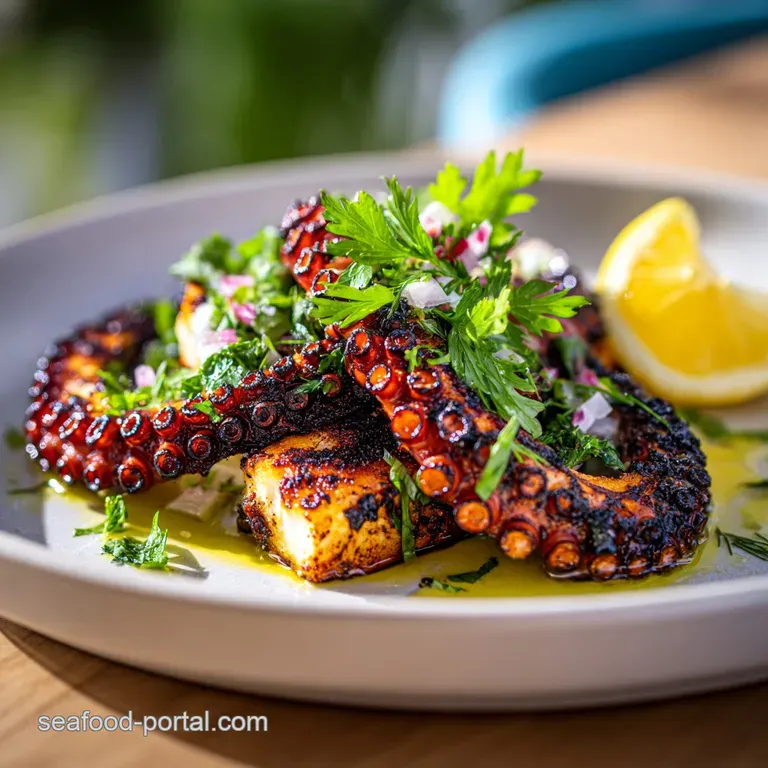
Trust me on this one, once you see those tentacles start to curl and the purple skin take on a deep, charred hue, you'll never go back to any other method. We're looking for that specific contrast between the crisp exterior and the melt in-your mouth interior.
It's vibrant, it’s fresh, and it’s surprisingly simple if you follow the rhythm of the braise.
Core Cooking Milestones and Specifications
The Science of Why it Works: The long, over low heat braise facilitates collagen denaturation, converting tough connective tissue into silky gelatin. Subsequent over high heat grilling triggers the Maillard reaction on the skin, providing a crisp texture without drying the interior.
| Octopus Type | Preparation Need | Texture Outcome | Culinary Effort |
|---|---|---|---|
| Fresh Whole | High (cleaning required) | Firm but very tender | High - needs skill |
| Frozen/Thawed | Low (pre cleaned) | Notably more tender | Low - beginner friendly |
| Pre braised | Minimal (just grill) | Soft, less smoky | Minimal - fast |
Choosing between fresh and frozen isn't just about convenience. Interestingly, freezing octopus actually helps break down the cellular structure, making it naturally more tender than a fresh one straight from the boat.
If you can't find a fresh 1.5 kg whole octopus, cleaned and ready to go, a frozen one is a stellar shortcut that actually yields a more velvety result.
Selecting Your Mediterranean Pantry Staples
| Ingredient | Science Role | Pro Secret |
|---|---|---|
| Red Wine Vinegar | Acetic acid tenderizer | Breaks down tough fibers during the braising stage. |
| Greek Olive Oil | Fat soluble flavor carrier | Use a high-quality EVOO for the Ladolemono finish. |
| Dried Greek Oregano | Aromatic pungency | Rub it between your palms to release oils. |
To get the best results from your Easy Greek Grilled Octopus Recipe, the ingredients need to be top tier. Use 1.5 kg whole octopus, cleaned and ready for the pot. You'll also need 2 tbsp red wine vinegar to help with that tenderization, 2 units bay leaves for a subtle herbal depth, and 1 tsp whole black peppercorns.
For the marinade and the final "Ladolemono" dressing, we use a total of 120 ml extra virgin Greek olive oil (split into two 60 ml portions), 1 tbsp dried Greek oregano, and 2 cloves garlic, smashed to release their juices.
Finally, 30 ml fresh lemon juice, 0.5 tsp sea salt, and 2 tbsp fresh parsley, finely chopped, provide that zesty, vibrant finish.
If you find yourself missing an ingredient, don't panic. You can swap red wine vinegar for white wine vinegar, though the flavor will be slightly sharper. If you're out of fresh parsley, cilantro can work in a pinch, but it will pull the dish away from its traditional Greek roots toward a more Latin profile.
Always stick to the 1.5 kg weight for the octopus to ensure the cooking times remain accurate.
Essential Tools for Taverna Results
Right then, let's talk gear. You don't need a professional kitchen, but a heavy bottomed pot (like a Dutch oven) is non negotiable for the braise. It holds heat steadily, which is exactly what we need for that hour long simmer.
For the grilling phase, a charcoal grill gives the best smoky depth, but a cast iron grill pan on your stovetop works brilliantly if you're stuck indoors.
You will also need a pair of sturdy tongs. Octopus skin is delicate once braised, and you don't want to tear those beautiful purple suction cups off by being too aggressive with a fork. A small glass jar is also handy for emulsifying the Ladolemono dressing just shake it until it’s opaque and thick.
Executing the Triple Stage Method
- Clean the octopus. Rinse the 1.5 kg whole octopus under cold water. Note: Most fishmongers do the heavy lifting, but check the head for any remaining bits.
- Begin the braise. Place the octopus in a dry, heavy pot over medium heat. It will release its own liquid. Cook until it turns bright purple and releases its juices.
- Add aromatics. Pour in 2 tbsp red wine vinegar, 2 units bay leaves, and 1 tsp whole black peppercorns.
- Simmer gently. Cover and reduce heat to low. Cook for 60 minutes until a knife slides into the thickest part of the tentacle like butter.
- Drain and cool. Remove the octopus and let it cool. Note: This prevents the skin from falling off during the grilling stage.
- Marinate briefly. Toss the octopus in 60 ml extra virgin Greek olive oil, 1 tbsp dried Greek oregano, and 2 cloves garlic, smashed.
- Preheat the grill. Get your grates screaming hot. Wait until you see faint wisps of smoke.
- Sear the tentacles. Place the octopus on the grill. Cook 3-4 minutes per side until charred and crackling.
- Prepare Ladolemono. Whisk 60 ml extra virgin olive oil with 30 ml fresh lemon juice and 0.5 tsp sea salt.
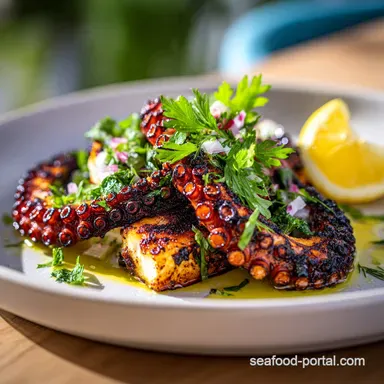
- Final dressing. Slice the tentacles and drizzle with the dressing and 2 tbsp fresh parsley. Garnish with lemon wedges for a vibrant pop of color.
This technique is quite similar to how we handle other seafood delicacies, like the preparation found in a Homemade Grilled Octopus recipe. The key is that initial gentle breakdown of the protein before the violent heat of the grill.
Avoiding Rubbery Texture and Common Pitfalls
The Necessity of Slow Braising
The most frequent mistake is skipping the braise. Without that hour of gentle heat, the octopus will be tough and chewy, regardless of how long it sits on the grill. The vinegar in the pot is your best friend here, as the acidity helps the connective tissues relax.
If you're worried about it being too soft, don't be the grill will bring back that necessary structural snap.
Texture Cues for Doneness
You'll know it's ready when the thickest part of the leg offers no resistance to a paring knife. If there's any "bounce" or tug, it needs another 10 minutes. This is similar to the patience required for a How to Grill Octopus recipe where the marinade does the heavy lifting.
| Problem | Root Cause | Solution |
|---|---|---|
| Skin is peeling off | Moved too early on grill | Let it sear until it naturally releases from the grates. |
| Meat is rubbery | Braising time too short | Simmer until a knife enters with zero resistance. |
| Flavor is bland | Dressing not emulsified | Shake the lemon and oil vigorously until thick and creamy. |
Common Mistakes Checklist
- ✓ Don't add water to the pot; the octopus releases plenty of its own briny liquid.
- ✓ Let the octopus cool completely before grilling to preserve the skin's integrity.
- ✓ Ensure the grill is very hot to get a quick char without overcooking the meat.
- ✓ Use a high-quality Greek oregano for that authentic, earthy aroma.
- ✓ Don't over salt the braising liquid, as octopus is naturally salty.
Creative Variations on the Classic Plate
If you're looking to scale this down for a solo dinner, just use a few tentacles instead of the whole 1.5 kg. Reduce the braising time by about 15% and use a smaller pot to keep the juices concentrated.
For a big party, you can braise 3 or 4 octopuses at once in a large stockpot, but keep the salt and spices at about 1.5x the original amount rather than doubling or tripling them to avoid over powering the seafood.
For a summer variation, try making a Greek octopus salad. After grilling, chop the tentacles into bite sized coins and toss them with cherry tomatoes, cucumbers, Kalamata olives, and feta cheese. The charred bits of the octopus add a smoky dimension to the fresh vegetables that is absolutely sublime. If you prefer fish over cephalopods, you might enjoy the delicate textures of an Almondine Fish recipe, which uses a different but equally rewarding butter basting technique.
Managing Leftovers and Minimizing Waste
Storage: You can keep the braised (but not yet grilled) octopus in the fridge for up to 3 days. Once grilled, it’s best eaten immediately, but leftovers will stay good for 2 days in an airtight container. To reheat, flash fry it in a hot pan for 1 minute to regain some of that crispness.
Zero Waste: Never throw away that purple braising liquid! It’s essentially a concentrated octopus stock. I like to strain it and use it as a base for a seafood risotto or to boil potatoes. The potatoes will soak up all that briny, Mediterranean flavor and turn a beautiful shade of pink.
Vibrant Sides for a Greek Feast
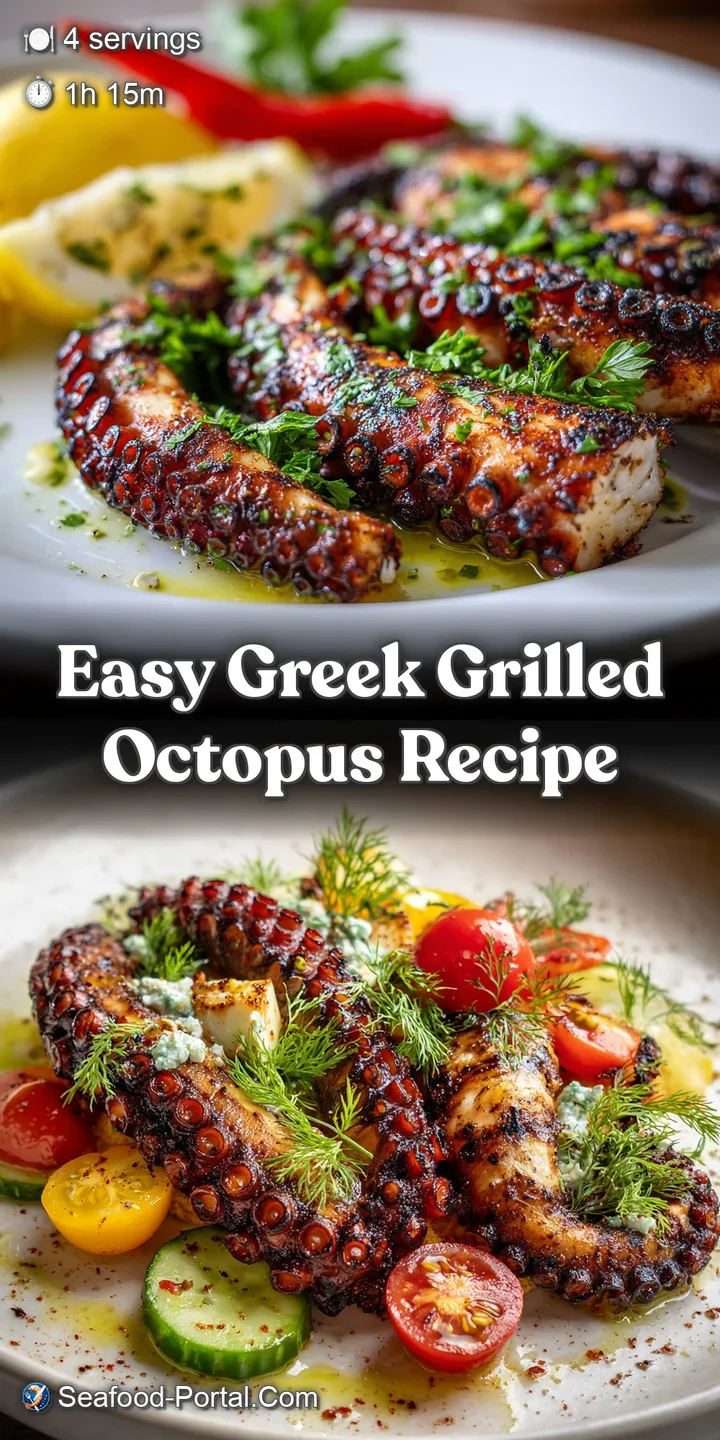
To truly make this a centerpiece, focus on the garnish. I always add three specific color accents: vibrant yellow lemon wedges arranged in a circle around the platter, deep green fresh parsley sprinkled liberally at the very last second, and a few pinches of bright red chili flakes if my guests like a bit of heat.
| Serving Count | Ingredient Adjustment | Pan/Grill Size | Cook Time (Braise) |
|---|---|---|---|
| 2 People | 0.75 kg octopus, half spices | 2 quart pot | 50 minutes |
| 4 People | 1.5 kg octopus, full recipe | 5 quart pot | 60 minutes |
| 8 People | 3 kg octopus, 1.5x spices | 8 quart pot | 70 minutes |
Serve this with a side of crusty sourdough bread to mop up the Ladolemono dressing. The acidity of the lemon and the richness of the olive oil are the perfect partners for the smoky, charred meat. A cold glass of Assyrtiko wine wouldn't hurt either.
Debunking Common Kitchen Myths
One of the oldest myths in the book is that you need to put a wine cork in the pot to make the octopus tender. Some chefs swear by the enzymes in the cork, but science tells us it's the heat and the acid that do the work, not the cork. Save the cork for the bottle of wine you'll be drinking later.
Another misconception is that you must pound the octopus against a rock 40 times like they do in Greek fishing villages. While that does help break down the fibers, a slow braise achieves the exact same result with much less physical labor.
We're looking for efficiency without sacrificing that traditional, sumptuous texture.
Very High in Sodium
1142 mg mg of sodium per serving (50% of daily value)
The American Heart Association recommends limiting sodium intake to about 2,300mg per day.
Tips to Reduce Sodium in Your Octopus Dish
-
Reduce Added Salt-25%
Eliminate or significantly reduce the 0.5 tsp of sea salt. Taste the dish before adding any salt, as other ingredients may provide enough flavor. Try reducing by half to start and adjust to your preference. This recipe contains 1142mg sodium before this reduction!
-
Enhance with Lemon-10%
Instead of relying on salt for flavor, increase the lemon juice in the Ladolemono dressing. Add an extra tablespoon (15ml) for a brighter taste, which can help reduce the need for salt.
-
Fresh Herb Power-5%
Increase the amount of fresh parsley used. Consider adding other fresh herbs like dill or mint, which will enhance the flavor and further reduce the need for salt.
-
Garlic Boost-5%
Gently increase the amount of smashed garlic in the recipe. Sautéing the garlic lightly before adding other ingredients will enhance its flavor.
-
Spice it Up!
Experiment with other spices and herbs! The dried oregano is great, but consider adding a pinch of red pepper flakes for a slight kick that enhances flavor without adding sodium.
Recipe FAQs
How to marinate octopus Greek style for grilling?
Toss with olive oil, oregano, and garlic before grilling. After braising the octopus until tender, coat it with 60 ml extra virgin Greek olive oil, 1 tbsp dried Greek oregano, and 2 smashed garlic cloves. This simple marinade infuses it with classic Mediterranean flavors before hitting the hot grill.
Should I marinate octopus before grilling?
Yes, a brief marinade enhances flavor and texture. While the primary tenderization comes from braising, a short marination with olive oil, herbs, and garlic before grilling adds crucial aromatic depth and ensures a beautiful char.
What sauce goes with grilled octopus?
A simple Ladolemono (lemon olive oil) dressing is traditional. Whisk together 60 ml extra virgin olive oil, 30 ml fresh lemon juice, and salt until emulsified, then drizzle over the grilled octopus. This bright dressing perfectly complements the smoky char.
How is octopus prepared in Greece?
Often braised until tender, then grilled or stewed. A common method involves simmering the octopus until it's fork tender, then grilling it for smoky char, or using it in stews and salads. This approach ensures a delicate texture, a contrast to the rubbery outcome of improper cooking. For similar techniques in seafood preparation, see our Classic Cantonese Ginger Scallion Lobster: Master Wok Hei at Home.
Can I use frozen octopus for grilling?
Yes, frozen octopus can yield a more tender result. Freezing helps break down the octopus's tough cellular structure, often making it more tender than fresh. Thaw it completely before proceeding with the braising and grilling steps.
How long should I braise octopus before grilling?
Braise for about 60 minutes until tender. The key is to simmer it gently in a heavy pot until a knife slides easily into the thickest part of a tentacle, indicating the connective tissues have broken down sufficiently. This patience prevents a rubbery texture, a principle also crucial when mastering texture in dishes like Shrimp Francese Recipe: Quick, Zesty Lemon Butter Sauce.
What's the secret to tender grilled octopus?
The secret is a slow braise followed by a hot sear. Don't skip the initial simmering step; this tenderizes the octopus. Then, a quick grill over high heat creates a delicious smoky char without overcooking it into toughness.
This dual stage cooking is fundamental for achieving that perfect, melt-in-your mouth texture.
Greek Grilled Octopus
Ingredients:
Instructions:
Nutrition Facts:
| Calories | 551 kcal |
|---|---|
| Protein | 56.1 g |
| Fat | 31 g |
| Carbs | 7.8 g |
| Fiber | 0.9 g |
| Sugar | 0.4 g |
| Sodium | 1142 mg |
