Easy Stuffed Flounder Baked to Perfection
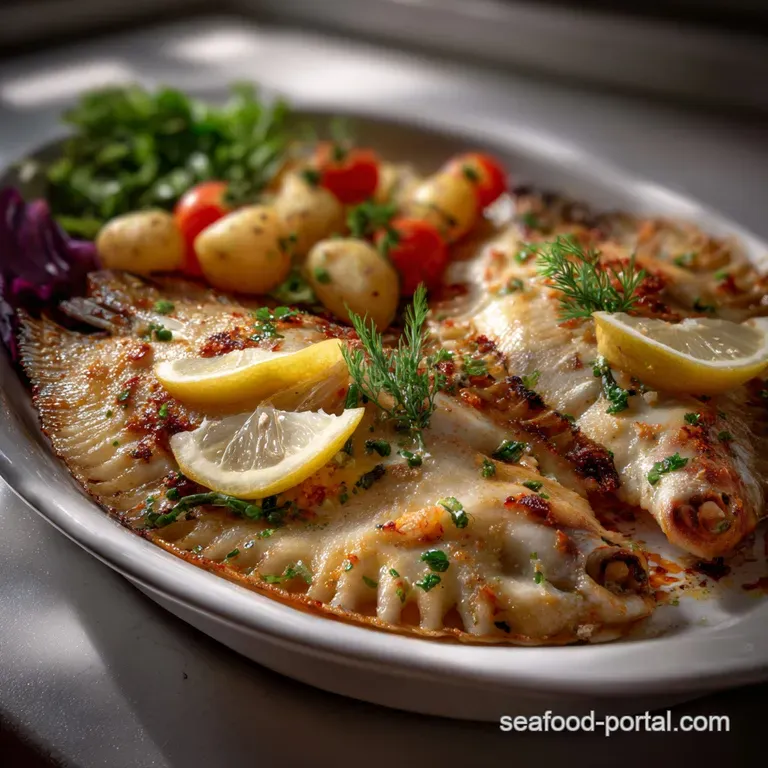
- Effort/Time: 40 minutes total (Low-effort, high-impact)
- Flavor Hook: Briny lump crab meets zesty lemon and smoked paprika
- Perfect for: Date-nights, festive-gatherings, or quick-impressive-dinners
- Master the Ultimate Easy Stuffed Flounder Baked to Perfection
- The Thermal Physics of Delicate White Fish and Savory Fillings
- Precision Metrics for a Seamless Kitchen Execution
- The Alchemy of Seafood: Selecting Your Essential Elements
- Professional Grade Tools for Optimal Heat Distribution
- The Sequence of Texture: Constructing the Perfect Seafood Roll
- Solving the Mechanics of Soggy Fillets and Dry Stuffing
- Flavor Architecture and Structural Substitutions for Every Palate
- Common Myths
- Preserving Structural Integrity and Moisture During Storage
- Culinary Pairings to Complement Delicate Fish Textures
- Recipe FAQs
- 📝 Recipe Card
Master the Ultimate Easy Stuffed Flounder Baked to Perfection
There is nothing quite as soul crushing as spending a premium on fresh seafood only to pull a tray of gray, rubbery flounder out of the oven. When fish is overcooked, the muscle fibers contract so violently they squeeze out all internal moisture, leaving you with a texture reminiscent of wet cardboard.
It is a financial and culinary disappointment that usually ends with a bowl of cereal and a vow to never cook fish again.
I spent years ruining perfectly good fillets by overstuffing them, thinking "more is better" when it came to the crab filling. I once served a dinner party where the stuffing was a lukewarm, soggy paste because I hadn't accounted for the moisture release from the fish itself.
It was a humbling lesson in the physics of seafood; I had to learn that the stuffing needs to be a structural element, not just a flavor one, to maintain the integrity of this Easy Stuffed Flounder Baked to Perfection.
The secret to this Easy Stuffed Flounder Baked to Perfection isn't a complex sauce; it's understanding protein denaturation. By keeping the bake time precise, we ensure the fish proteins don't tighten too far, while the Panko breadcrumbs undergo the Maillard reaction for a shattering, golden crust.
This contrast between the velvety, succulent fish and the crisp, savory topping creates a sensory experience that feels professional but remains entirely accessible in a home kitchen.
The Thermal Physics of Delicate White Fish and Savory Fillings
- Protein Denaturation Control: Flounder is a lean, flat fish with minimal connective tissue, meaning it transitions from raw to overcooked in a matter of seconds once it hits 140°F (60°C).
- The Insulation Effect: The seafood stuffing acts as a thermal buffer, slowing the heat transfer to the center of the fillet and preventing the thin edges from drying out before the middle is set.
- Capillary Action in Panko: Large crumb breadcrumbs create air pockets that trap steam, allowing the interior to stay moist while the exterior surfaces dehydrate enough to become crisp.
- Lipid Mediated Flavor: Using unsalted butter as the primary fat source provides a medium for the fat-soluble compounds in Old Bay and garlic to coat the tongue, extending the flavor finish.
Precision Metrics for a Seamless Kitchen Execution
| Metric | Target Value | Purpose |
|---|---|---|
| Internal Temperature | 145°F (63°C) | Ensures food safety while maintaining moisture |
| Total Fish Weight | 1.5 lbs (680g) | Calibrated for 4 uniform servings |
| Stuffing Ratio | 2:1 Fish to Stuffing | Prevents structural collapse during the bake |
The Alchemy of Seafood: Selecting Your Essential Elements
Ingredient Chemistry Breakdown
| Ingredient | Chemical/Physical Role (Science) | The Pro Secret (Why This Matters) |
|---|---|---|
| Flounder Fillets | Low-collagen protein structure | Cooks rapidly; requires gentle heat to avoid toughening |
| Lump Crab Meat | Myofibrillar protein density | Provides a "meatier" bite and structural core for the roll |
| Panko Breadcrumbs | High surface area-to-volume ratio | Absorbs excess fish liquor without becoming a heavy dough |
| Lemon Zest | Essential oil (limonene) extraction | Cuts through butter lipids without adding watery volume |
- 4 large flounder fillets (1.5 lbs / 680g)Why this? Thin, flexible fillets are ideal for rolling without snapping muscle fibers.
- 1/2 lb lump crab meatWhy this? Higher protein density than claw meat ensures the stuffing holds its shape.
- 1 cup Panko breadcrumbsWhy this? Larger crumbs create a "shattering" texture that standard breadcrumbs lack.
- 4 tbsp unsalted butter, meltedWhy this? Provides the fat necessary for the Maillard reaction on the Panko.
- 1 tbsp extra virgin olive oil
- 1/2 tsp smoked paprika
- 1 small shallot, finely minced
- 2 cloves garlic, minced
- 2 tbsp fresh parsley, chopped
- 1 tsp lemon zest
- 1 tbsp fresh lemon juice
- 1/2 tsp Old Bay seasoning
- Kosher salt and freshly cracked black pepper
Professional Grade Tools for Optimal Heat Distribution
To achieve the best results for your Easy Stuffed Flounder Baked to Perfection, I recommend using a Lodge Cast Iron Skillet or a heavy duty Nordic Ware Rimmed Baking Sheet. The thermal mass of a heavy pan prevents the bottom of the fish from steaming in its own juices.
You’ll also need a Microplane Zester for the lemon to ensure the citrus oils are finely dispersed rather than leaving bitter chunks of pith. For mixing the stuffing, a wide stainless steel bowl allows you to fold the crab gently without breaking the expensive lumps into a mushy paste.
The Sequence of Texture: Constructing the Perfect Seafood Roll
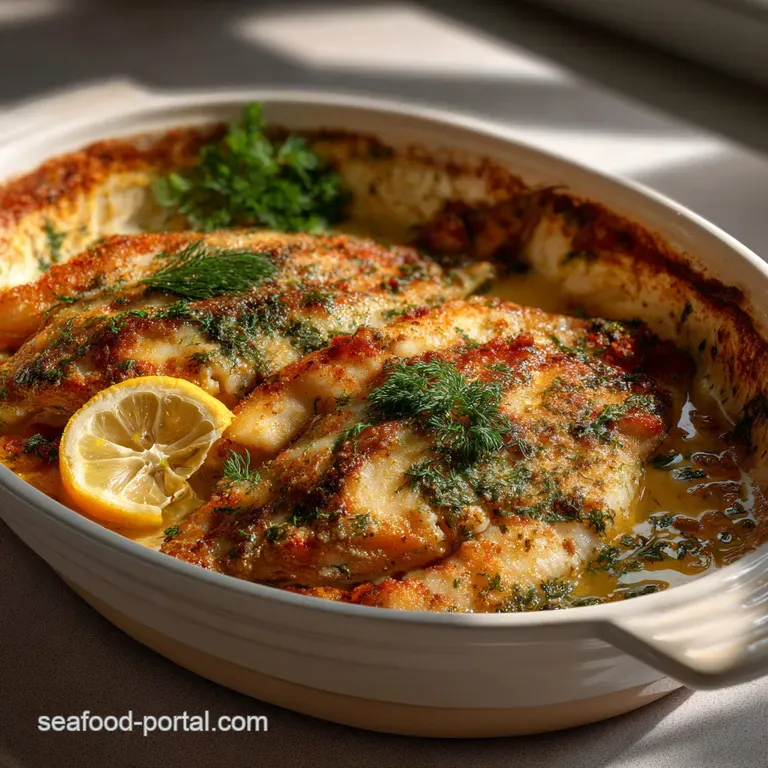
- Preheat oven to 400°F (200°C) until the internal air is stabilized.
- Sauté minced shallots in 1 tbsp butter for 3 minutes until translucent and the sharp sulfur aroma mellows.
- Combine the crab meat, Panko, sautéed shallots, garlic, parsley, lemon zest, lemon juice, and Old Bay in a large bowl.
- Fold in 2 tbsp of the melted butter until the Panko looks like damp sand.
- Pat the flounder fillets dry with paper towels until the surface is matte and non-reflective. Note: Surface moisture causes steaming rather than searing.
- Season both sides of the fish with salt, pepper, and smoked paprika.
- Place a generous mound of stuffing (approx. 1/4 cup) on the wider end of each fillet.
- Roll the fish carefully toward the tail end until the seam is tucked neatly underneath.
- Drizzle the remaining 1 tbsp butter and olive oil over the top of the rolls.
- Bake for 20 minutes until the fish is opaque, the stuffing sizzles, and the Panko is a deep mahogany gold. This 20 minute timing is crucial for the Easy Stuffed Flounder Baked to Perfection.
If you are looking for a complementary seafood starter, my Classic Maryland Crab recipe uses a similar flavor profile and is a fantastic way to use up any leftover Old Bay seasoning.
Solving the Mechanics of Soggy Fillets and Dry Stuffing
Why Your Fish Turns Out Mushy
Mushy fish is often the result of "drip loss," where the cells rupture and release water before the crust can set. This usually happens if the fish was previously frozen and thawed too quickly, or if the oven temperature was too low. The low heat causes the fish to simmer in its own liquid rather than roasting.
If you find your fish is sitting in a pool of water, your oven calibration might be off, or you didn't pat the fillets dry enough before stuffing. Achieving crispy results in this Easy Stuffed Flounder Baked to Perfection depends entirely on surface dryness.
| Problem | Root Cause | The Fix | Pro Protocol |
|---|---|---|---|
| Stuffing is dry/crumbly | Insufficient binding fat | Add 1 tsp of warm water or more butter | Grate frozen butter into the Panko for even distribution |
| Fish skin (if present) is slimy | Moisture trapped under fillet | Place rolls on a wire rack over the baking sheet | Use a high smoke point oil for the pan surface |
| Panko isn't browning | Lack of direct heat/fat | Move to top rack for final 2 minutes | Lightly toast Panko in a pan before stuffing |
Flavor Architecture and Structural Substitutions for Every Palate
⚗️ The Scaling Lab
When doubling this recipe for a party, the physics of your oven changes significantly. Doubling the fish means you are adding more "thermal mass," which can drop the oven temperature by up to 50°F the moment you slide the tray in.
- The Evaporation Paradox: If you crowd the pan, the moisture released from 8 fillets creates a humid micro climate, preventing the Panko from crisping. Mandatory instruction: Use two separate baking sheets or cook in batches to allow for airflow.
- Flavor Saturation: Scale the Old Bay and salt to 1.5x (not 2x). Seafood carries salt efficiently, and doubling the spice often overpowers the delicate flounder.
- The Square Cube Law: A larger tray of fish takes longer to reach the center temperature. Pull the fish at 138°F, as the carry over heat in a crowded pan is more intense than with a single serving. Serving a crowd the perfect Easy Stuffed Flounder Baked to Perfection requires managing oven dynamics.
| Original Ingredient | Substitute | Why It Works |
|---|---|---|
| Flounder | Sole or Tilapia | Similar lean, flat protein structure; Sole is more delicate, Tilapia is firmer. |
| Crab Meat | Chopped Shrimp | Same protein density. Note: Shrimp will have a "snappier" texture. |
| Panko | Crushed Ritz Crackers | Adds a buttery, saltier profile but is less "shattering" than Panko. |
For a different cooking method altogether, you might enjoy learning How to Grill recipe for a smokier take on this species.
Common Myths
Myth: You must flip the stuffed fish halfway through cooking. Truth: Flipping will destroy the structural integrity of the roll and cause the stuffing to fall out. The convection heat of the oven is enough to cook it through.
Myth: Fresh fish shouldn't smell like anything. Truth: Fresh fish has a clean, briny scent of the ocean. If it smells "fishy" (trimethylamine), the fats have begun to oxidize, and no amount of lemon will fix the flavor profile for your Easy Stuffed Flounder Baked to Perfection.
Preserving Structural Integrity and Moisture During Storage
- Fridge: Store in an airtight container for up to 2 days. The Panko will lose its crunch, but the flavor remains intact.
- Freeze: I do not recommend freezing the cooked dish. The delicate cell structure of the flounder will collapse upon thawing, resulting in a grainy, watery texture.
- Reheating: Avoid the microwave at all costs. Reheat in a 350°F oven for 10 minutes until the internal temperature reaches 145°F. This helps re-crisp the breadcrumbs.
💡 ZERO WASTE PHILOSOPHY Don't discard the parsley stems. Transform: Mince them finely and add to a compound butter. Science: Stems contain more concentrated aromatic oils than the leaves, providing a punchy flavor for topping steaks or other seafood.
Also, keep those lemon rinds. Transform: Simmer with water and vinegar for a natural kitchen cleaner. Science: The d-limonene in the peel is a powerful natural solvent for grease.
Culinary Pairings to Complement Delicate Fish Textures
This Easy Stuffed Flounder Baked to Perfection pairs beautifully with high acid sides that cut through the buttery crab stuffing. A simple arugula salad with a lemon shallot vinaigrette or steamed asparagus provides the necessary "snap" to contrast the soft fish. If you're looking for a different texture of white fish for your next meal, my Poached Cod with recipe offers a clean, buttery alternative that focuses on the purity of the fillet.
When serving, ensure you plate the fish immediately. Because flounder is so thin, it loses heat rapidly. A warmed plate can extend the "perfect temperature" window by several minutes, ensuring your guests experience the full spectrum of flavors from the very first bite.
This dish isn't just a meal; it's a testament to how simple techniques, like proper seasoning and temperature control, can transform basic ingredients into something truly extraordinary when executing the Easy Stuffed Flounder Baked to Perfection.
Recipe FAQs
What is the ideal internal temperature for cooked flounder?
145°F (63°C). This temperature ensures pathogens are destroyed while preventing the muscle proteins from tightening too severely and expelling moisture. Overcooked fish fibers contract violently, resulting in a dry, rubbery texture.
Can I use frozen flounder fillets instead of fresh?
Yes, with caution. Thaw slowly in the refrigerator overnight. Rapid thawing causes cellular damage, leading to excessive moisture release during baking, which results in a soggy bottom. Always pat thawed fillets completely dry before stuffing and baking.
Why does my stuffing come out dry and crumbly?
- Incorporate extra melted butter
- Ensure shallots are sautéed, not raw
- Grate butter frozen for better distribution
Should I use Panko or regular breadcrumbs for the topping?
Do I need to sear the stuffed rolls before baking?
Myth: Stuffing a whole fish tastes better than stuffing fillets.
What is the best alternative fish if flounder is unavailable?
Easy Stuffed Flounder Baked
Ingredients:
Instructions:
Nutrition Facts:
| Calories | 390 kcal |
|---|---|
| Protein | 43.7 g |
| Fat | 17.8 g |
| Carbs | 12.5 g |
| Fiber | 0.6 g |
| Sugar | 1.1 g |
| Sodium | 485 mg |
