Vietnamese Shrimp Roll Recipe with Ginger
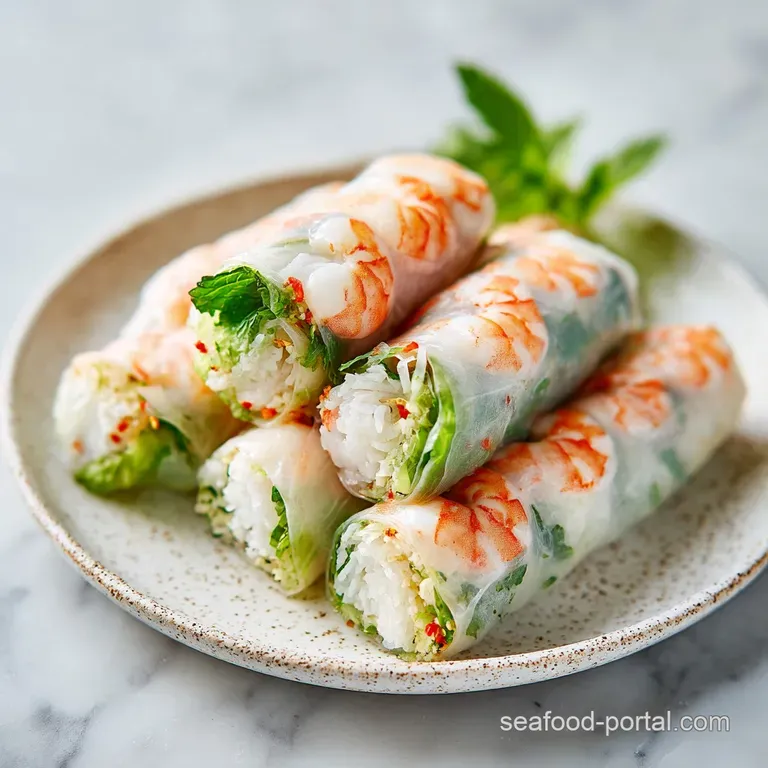
- Time: Active 20 minutes, Passive 5 minutes, Total 25 minutes
- Flavor/Texture Hook: Shatter crisp vegetables meet velvety rice vermicelli
- Perfect for: Healthy weeknight dinners or impressive appetizer platters
- Master the Ultimate Fresh Shrimp Roll Recipe
- Why This Fresh Roll Works
- Essential Specs for Recipe Success
- Building Blocks for Flavor Contrast
- Equipment Needed for Rolling Rolls
- Step by Step Rolling Guide
- Solving Your Common Rolling Problems
- Adjusting Batch Sizes Easily
- Debunking Cold Roll Myths
- Storing Your Fresh Rolls
- Serving the Perfect Platter Today
- High in Sodium
- Recipe FAQs
- 📝 Recipe Card
Master the Ultimate Fresh Shrimp Roll Recipe
There is a specific sound that defines a successful afternoon in my kitchen: the rhythmic clack clack clack of a sharp knife julienning carrots against a wooden board. It's a precursor to the main event, where the kitchen starts smelling like a spa because of the fresh ginger and mint.
I remember my first attempt at this dish years ago. I treated the rice paper like a heavy duty flour tortilla and ended up with a gummy, translucent blob that looked more like a discarded bandage than a meal. It was a mess, but it taught me everything about the delicate balance of hydration.
Now, I look for that specific moment when the shrimp turns from translucent grey to a vibrant, opaque pink in the poaching liquid. When you peel back the lid and that steam hits you bright ginger and a hint of rice vinegar you know the base of your shrimp roll recipe is going to be incredible.
We aren't just making food here; we're building a structural masterpiece of textures.
We’ve all been there, staring at a plate of soggy, falling apart rolls at a restaurant. This guide is about reclaiming that crunch. We’re going to talk about why cold water is your best friend, how to handle rice paper without it sticking to your soul, and the secret to a dipping sauce that doesn't rely on heavy fats.
Trust me on this: once you nail the tension of the roll, you’ll never go back to the store-bought versions.
Why This Fresh Roll Works
- Osmotic Balance: Poaching with sea salt and vinegar prevents the shrimp’s cellular walls from collapsing, ensuring a plump, snappy texture instead of a rubbery one.
- Starch Retrogradation: Cooling the vermicelli noodles quickly after boiling locks the starch in place, providing a "velvety" mouthfeel that doesn't turn into a sticky mass inside the roll.
- Surface Tension: Using 22cm rice paper provides enough surface area for a double wrap over the "seam," which prevents the rolls from tearing when you dip them.
- Emulsification Stability: The warm water in the peanut sauce thins the hoisin and peanut butter just enough to create a silky coating that clings to the shrimp roll recipe homemade without dripping off.
| Method | Time | Texture | Best For |
|---|---|---|---|
| Cold Poach | 8 mins | Ultra tender, soft | Meal prep (stays moist) |
| Simmer Poach | 5 mins | Firm, bouncy snap | Immediate serving |
| Steamed | 6 mins | Sweet, delicate | Low sodium diets |
Using a simmer poach is the gold standard for this quick shrimp roll recipe. It gives the shrimp that characteristic "snap" that contrasts so well against the soft noodles. If you find yourself craving a different kind of seafood wrap, you might enjoy the textures in my Shrimp Spring Rolls recipe. Both versions celebrate the freshness of the sea without the heavy frying.
Essential Specs for Recipe Success
| Ingredient | Science Role | Pro Secret |
|---|---|---|
| Large Shrimp (16/20) | Protein Structure | Slicing them lengthwise after poaching creates a flat surface for better rolling. |
| Rice Paper (22cm) | Edible Membrane | Dip in room temp water, not hot, to keep the "shatter" potential high. |
| Butter Lettuce | Moisture Barrier | Acts as a shield to keep the wet noodles from softening the rice paper skin. |
| Rice Vinegar | pH Balancer | A splash in the poaching water tightens the shrimp proteins for a cleaner bite. |
Finding the right balance of ingredients is key. For example, if you're looking for something with a bit more richness, you could compare the light profile here to the decadence of a Shrimp and Crab recipe. While one is light and airy, the other is rich and comforting, showing just how versatile these ingredients can be.
Building Blocks for Flavor Contrast
- 1 lb large shrimp (16/20 count): Peeled and deveined. Why this? Larger shrimp offer a better meat to roll ratio and visual appeal.
- Substitute: Firm tofu strips (pressed and seared) for a vegetarian twist.
- 1 tbsp sea salt: For the poaching liquid. Why this? Essential for seasoning the shrimp from the inside out.
- Substitute: Himalayan pink salt.
- 1 inch fresh ginger: Smashed. Why this? Infuses the shrimp with a bright, aromatic heat.
- Substitute: 1/2 tsp ground ginger (though fresh is far superior).
- 8 sheets rice paper (22cm): The classic wrapper. Why this? 22cm is the "Goldilocks" size for easy handling.
- Substitute: Large collard green leaves (stemmed) for a keto version.
- 2 oz thin rice vermicelli: Cooked and cooled. Why this? Provides a neutral, soft base that absorbs the dipping sauce.
- Substitute: Kelp noodles or glass noodles.
- 1 head butter lettuce: Ribs removed. Why this? The leaves are pliable and don't tear the delicate rice paper.
- Substitute: Romaine hearts (but shave down the thick center rib).
- Fresh Herbs (Mint & Cilantro): 1 cup each. Why this? This is a Vietnamese shrimp roll recipe staple for that cooling finish.
- Substitute: Thai basil or even a bit of fresh dill.
Equipment Needed for Rolling Rolls
For this shrimp roll recipe rice paper version, you don't need a fancy kitchen. Honestly, the most important "tool" is a clean, slightly damp workspace. A large, shallow bowl (big enough to fit the rice paper) is a must. Don't use a deep pot for dipping; it makes the paper fold in on itself.
A sharp chef's knife is non negotiable for those clean julienne cuts on the carrots and cucumbers.
You'll also need a medium saucepan for the shrimp and a small whisk for the peanut sauce. If you have a plastic "rolling mat" often used for sushi, it can help beginners, but I find my bare hands give me better "feel" for the tension.
step-by-step Rolling Guide
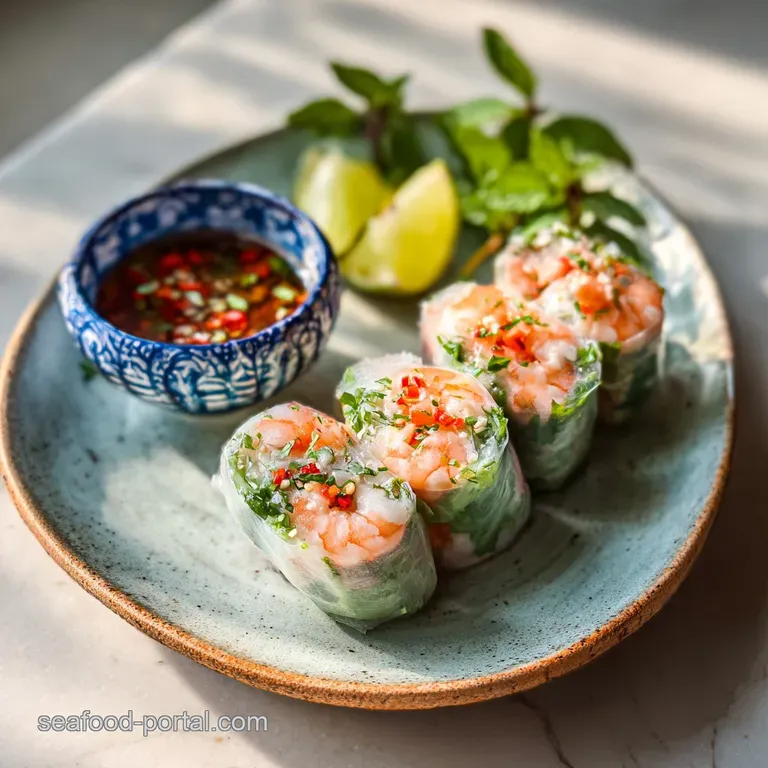
- Infuse the water. Combine 4 cups of water, sea salt, smashed ginger, and rice vinegar in a saucepan and bring to a simmer.
- Poach the shrimp. Add 1 lb shrimp and cook for 3-5 minutes until they are bright pink and opaque.
- Shock and slice. Immediately move shrimp to an ice bath, then slice each one in half lengthwise. Note: This creates a flat surface so the rolls aren't lumpy.
- Prep the noodles. Boil 2 oz vermicelli for 2 minutes, drain, and rinse with cold water until the water runs clear.
- Softening the paper. Dip one rice paper sheet into room temperature water for 5-10 seconds until it feels pliable but still slightly firm.
- Layer the base. Place a piece of butter lettuce on the bottom third of the paper, then top with a small bundle of vermicelli.
- Add the crunch. Place julienned carrots, cucumber, mint, and cilantro on top of the noodles.
- The "Display" layer. Place 3-4 shrimp halves (cut side up) in a row just above the lettuce bundle.
- The Tension Roll. Fold the bottom of the paper over the lettuce, tuck in the sides, and roll upward tightly until the seam is sealed and firm.
- Whisk the sauce. Combine 1/2 cup peanut butter, hoisin, soy sauce, chili garlic sauce, and 3 tbsp warm water until the mixture is velvety and smooth.
Solving Your Common Rolling Problems
1. Hydrating Rice Paper
If your paper is turning into a sticky mess before you even start, you're likely using hot water. Hot water causes the starches to gelatinize too quickly. Always use room temperature or even slightly cool water.
It takes a few seconds longer, but the paper will be much more forgiving and won't tear as you apply tension.
2. The Exploding Roll
This usually happens because of "over stuffing" or sharp edges. If your carrots are cut too thick, they’ll puncture the paper like little orange spears. Ensure your julienne is thin think matchsticks.
Also, using the butter lettuce as a "sleeping bag" for the small ingredients creates a smooth buffer against the rice paper.
| Problem | Root Cause | Solution |
|---|---|---|
| Paper is gummy | Water was too hot | Use room temperature water and dip for less time. |
| Roll falls apart | Not enough tension | Pull the paper taut against the filling during the first fold. |
| Shrimp feels dry | Overcooked | Remove from heat the second they turn opaque; use an ice bath. |
Common Mistakes Checklist
- ✓ Never let the rice paper soak until it's completely limp; it should still have a "ghost" of its original shape when you pull it out.
- ✓ Pat the shrimp dry before placing them on the paper to prevent excess moisture from trapped pockets.
- ✓ Don't skip the "ice bath" step; carryover cooking will turn your snappy shrimp into rubber.
- ✓ Work on a plastic or marble surface; wood boards tend to grab the rice paper and cause tears.
Adjusting Batch Sizes Easily
If you're cooking for a crowd, this shrimp roll recipe scales beautifully. For a party (doubling the recipe to 8 servings), don't double the salt in the poaching liquid use 1.5x instead to avoid over seasoning the shrimp.
You can poach the shrimp in batches to ensure the water temperature doesn't drop too significantly, which can lead to steaming rather than poaching.
When halving the recipe for a solo lunch, you can actually use the leftover peanut sauce as a dressing for a quick slaw. Since the rice paper comes in large packs, keep the unused sheets in a dry, cool place; they last nearly forever as long as they stay dry.
| Servings | Shrimp Amount | Noodles | Rice Paper Sheets |
|---|---|---|---|
| 2 People | 0.5 lb | 1 oz | 4 sheets |
| 4 People | 1 lb | 2 oz | 8 sheets |
| 8 People | 2 lbs | 4 oz | 16 sheets |
Debunking Cold Roll Myths
One of the biggest misconceptions is that you have to eat these immediately or they're ruined. While they are best fresh, a damp paper towel can work wonders. Another myth is that you need "special" rice paper for a Chinese shrimp roll recipe vs. a Vietnamese one.
In reality, the thickness might vary slightly by brand (like Three Ladies Brand), but the technique remains the same.
Also, many people think you must use mayo for a creamy sauce. This shrimp roll recipe without mayo relies on the natural fats in peanut butter and the fermentation of hoisin to provide that rich mouthfeel without the heaviness of eggs and oil.
Storing Your Fresh Rolls
Storage: These are best consumed within 2-4 hours. If you must store them, wrap each roll individually in plastic wrap to prevent them from sticking together and drying out. Keep them in the fridge for up to 24 hours.
If the paper gets a bit hard, a very quick wipe with a damp finger can sometimes revive it.
Zero Waste: Don't toss those shrimp shells! Throw them in a freezer bag. When you have enough, boil them with some onion scraps and peppercorns for a quick seafood stock. Also, if you have leftover herbs that are starting to wilt, blend them into the peanut sauce for an "extra green" herby dip.
Serving the Perfect Platter Today
Presentation is everything with a shrimp roll recipe. I love serving these on a dark slate board or a bright white ceramic platter to make the pink of the shrimp and the green of the mint pop. Slice them on a sharp diagonal if you want to show off the "architectural" layers inside.
- The Party Platter: Serve with two dipping sauces the peanut sauce provided and a light fish sauce based nuoc cham for variety.
- The "Crunch Factor" Pairing: These go incredibly well with a side of quick pickled radishes or a cold glass of jasmine lime tea.
If you find yourself with extra shrimp and want to try a different flavor profile, consider the spicy, bold notes of a Stir Fried Eggplant with recipe. It’s a completely different direction but uses similar protein prep techniques. For now, enjoy the "shatter" and snap of these fresh rolls!
High in Sodium
885 mg mg of sodium per serving (38% % of daily value)
The American Heart Association recommends limiting sodium intake to about 2,300mg per day for adults.
Tips to Reduce Sodium in Your Shrimp Spring Rolls:
-
Reduce Added Salt-25%
Eliminate or significantly reduce the 1 tbsp of sea salt when cooking the shrimp. You can use other aromatics like garlic, pepper, or herbs to boost flavor.
-
Low-Sodium Soy Sauce-20%
Replace regular soy sauce with a low-sodium soy sauce alternative in the peanut sauce. This can significantly cut down on the sodium content.
-
No-Salt Peanut Butter-15%
Use natural peanut butter with no added salt to eliminate a hidden source of sodium in the dipping sauce.
-
Control Chili Garlic Sauce-10%
Use a very small amount of chili garlic sauce or eliminate it altogether. It is typically high in sodium. You can add a pinch of red pepper flakes instead for a touch of heat.
-
Flavor with Herbs & Spices
Experiment with fresh herbs like basil, lemongrass, or additional mint and cilantro to enhance the flavor of the filling without adding sodium.
Recipe FAQs
What is a New England style shrimp roll?
No, this is typically a cold, mayonnaise based salad roll. A New England style shrimp roll is essentially a shrimp salad sandwich, served cold on a split top, buttered, and grilled bun, unlike the fresh, rice paper wrapped version.
What goes well with shrimp rolls?
Light, acidic sides are best to cut the richness. Try a side of quick pickled carrots and daikon, or a simple cucumber salad with rice vinegar. This pairs perfectly with my How to Cook recipe for zesty shrimp pasta if you want a heartier meal.
What goes in shrimp roll?
Poached shrimp, vermicelli noodles, butter lettuce, and fresh herbs are essential. You must also include a crunchy vegetable like julienned cucumber or carrot for texture contrast.
How to put ingredients in shrimp rolls for best rolling results?
Place the sturdiest ingredients first, followed by the softest, then the protein on top. Start with the lettuce leaf as a moisture barrier, then noodles, then herbs/vegetables, positioning the sliced shrimp on the outward facing side.
What to put in shrimp fresh rolls if I want a non-peanut dipping sauce?
Make a traditional Vietnamese nuoc cham dipping sauce for a lighter alternative. This sauce balances fish sauce, lime juice, sugar, water, and fresh chili, providing a necessary salty sour punch that complements the fresh vegetables beautifully.
Is it true I must use hot water to soften the rice paper wrappers?
No, this is a common misconception. Use room temperature water for only a few seconds; hot water over activates the starch, leading to gummy, tearing wrappers.
How to make the shrimp texture snappy for these rolls?
Poach the shrimp briefly in water seasoned with salt and a splash of vinegar. Removing them immediately and shocking them in an ice bath stops the cooking process, locking in that desirable, firm texture, similar to how we achieve precise protein doneness in other recipes.
Easy Shrimp Roll Recipe
Ingredients:
Instructions:
Nutrition Facts:
| Calories | 457 kcal |
|---|---|
| Protein | 31.4 g |
| Fat | 17.2 g |
| Carbs | 44.6 g |
| Fiber | 4.2 g |
| Sugar | 9.8 g |
| Sodium | 885 mg |
