Easy Chirashi Bowl with Salmon and Fresh Sushi Toppings
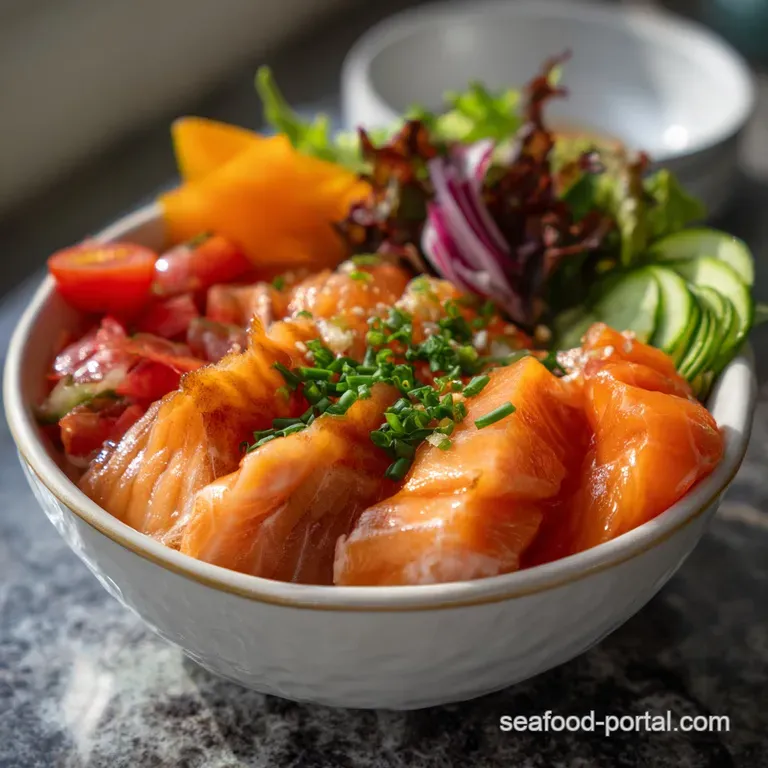
- Effort/Time: 35 minutes total (low-effort, high-reward)
- Flavor Hook: Tangy, vinegar-popped rice topped with buttery, melt-in-your-mouth salmon.
- Perfect for: Budget-conscious date nights or a protein-packed meal-prep solution.
- Engineering the Ultimate Easy Chirashi Bowl with Salmon and Fresh Sushi Toppings
- Vital Metrics for Your Sushi Rice Perfection
- The Essential Component Analysis: Selecting Your Seafood Arsenal
- Technical Tools for Precision Slicing and Steaming
- Building Your Arsenal: Ingredients and Subs
- The Sequential Assembly Protocol: Building Your Bowl
- Solving Structural Issues: Troubleshooting Your Sushi Night
- Proportional Adjustments: The Math of Multiplication
- Kitchen Folklore: Science vs Superstition in Japanese Cuisine
- Artful Plating: Aesthetic Strategies for Visual Impact
- Preservation Protocol and Zero Waste Philosophy
- Common Questions About This Recipe
- Common Questions
- 📝 Recipe Card
Engineering the Ultimate Easy Chirashi Bowl with Salmon and Fresh Sushi Toppings
Craving high end Japanese cuisine shouldn't require a massive financial investment or a trip to an expensive bistro. We often face the hurdle of sourcing "sashimi grade" fish or fearing the complex texture of vinegared rice.
Here's a delicious and simple recipe for an Easy Chirashi Bowl with Salmon and Fresh Sushi Toppings.
By focusing on the structural integrity of the rice and the temperature of the fish, we bridge the gap between home cooking and professional craft. This recipe prioritizes a budget smart approach, showing you how to select the right cuts and handle them with care.
You’ll save significantly by assembling these components yourself rather than paying for the "sushi" label overhead.
The secret lies in the balance of acidity, sweetness, and the velvety fat of the salmon. When you master the 20 minute timeline of steaming and seasoning, the rest is just artful assembly. Let’s get your kitchen smelling like a Tokyo rice shop without the premium price tag.
Vital Metrics for Your Sushi Rice Perfection
| Feature | Stovetop Method | Oven Method (Casserole) |
|---|---|---|
| Texture Outcome | Individual grains, slight chew | Soft, more uniform hydration |
| Control | High (visual cues available) | Set and forget (less monitoring) |
| Heat Distribution | Bottom-up (requires tight lid) | Ambient (prevents bottom scorching) |
Precision Checkpoints
- Rice Rinse: Agitate grains exactly 4 5 times until the water transition moves from "milky" to "semi translucent."
- Vinegar Temp: Heat the 45ml rice vinegar, 15g sugar, and 5g salt mixture to exactly 140°F (60°C) to dissolve solids without evaporating the acetic acid.
- Resting Period: Allow the rice to rest undisturbed for 10 minutes post cook to ensure the moisture redistributes evenly through the grain's core.
The Essential Component Analysis: Selecting Your Seafood Arsenal
This Chirashi Bowl Recipe relies on the synergy of high-quality starch and fatty acids. Understanding the "why" behind your ingredients ensures success even when swapping brands. Achieving a successful Easy Chirashi Bowl with Salmon and Fresh Sushi Toppings hinges on these components.
The Alchemy of Umami: Why This Works
- Starch Gelatinization: At exactly 158°F (70°C), the rice starches absorb water and swell, creating a soft but distinct grain structure.
- Acid Denaturation: The rice vinegar doesn't just flavor; it slightly firms the exterior of the grain, preventing the rice from becoming a mushy paste.
- Lipid Oxidation Prevention: Keeping the 340g salmon chilled at 38°F (3°C) prevents the healthy fats from oxidizing, which preserves that clean, buttery flavor.
Ingredient Chemistry Breakdown
| Ingredient | Chemical/Physical Role (Science) | The Pro Secret (Why This Matters) |
|---|---|---|
| Short grain Rice | High amylopectin content for "stick" | Provides the necessary structure to hold toppings without falling apart |
| Rice Vinegar | Acetic acid acts as a mild preservative and palate cleanser | Cuts through the heavy fat of the salmon to keep the dish refreshing |
| Salmon Roe | Salt cured protein with "burst" kinetics | Adds a textural "pop" and intense brine that seasons the entire bowl |
Technical Tools for Precision Slicing and Steaming
To execute this Easy Sushi Bowl, you don't need a $500 Yanagiba knife, but specific tools do improve the outcome.
- Heavy Bottomed Pot with Tight Lid: Essential for maintaining the steam pressure required for even hydration.
- Hangiri (or Wooden Bowl): Wood absorbs excess moisture from the vinegar dressing, preventing "wet" rice. A plastic bowl works if you toss frequently.
- Rice Paddle (Shamoji): The flat surface allows you to "cut" the vinegar into the rice rather than smashing the grains.
- Chef’s Knife (8 inch): Ensure it is honed. A dull knife will "tear" the 340g salmon fibers rather than slicing through them cleanly.
Building Your Arsenal: Ingredients and Subs
- 300g short grain Japanese rice: Why this? High starch content creates the signature "clump" required for sushi texture.
- Sub: Calrose rice. It is a medium grain that mimics the stickiness at a lower price point.
- 400ml filtered water: Why this? Tap water minerals can alter the subtle flavor of the grain.
- 45ml rice vinegar (unseasoned): Why this? Allows total control over the sugar-to-salt ratio.
- Sub: Apple Cider Vinegar (half strength). Adds fruitiness but lacks the sharp Japanese finish.
- 15g granulated sugar: Dissolves quickly to coat every grain.
- 5g sea salt: Provides the necessary electrolyte balance to the vinegar.
- 340g sashimi grade salmon: Why this? Higher fat-to-muscle ratio (marbling) results in a velvety mouthfeel.
- Sub: Steelhead trout. Often 30% cheaper and visually nearly identical with a similar omega-3 profile.
- 0.5 English cucumber: High water content adds the "crunch" factor.
- 1 ripe avocado: Provides a plant based fat that complements the fish.
- 10g salmon roe (Ikura): The salt bomb of the dish.
- 2 sheets nori: Adds the "ocean" aroma.
- 10g pickled ginger (Gari): Acts as a palate cleanser between bites.
- 5g wasabi paste: Provides the sinus clearing heat.
- 9g toasted sesame seeds: Adds a nutty finish and textural contrast.
Chef's Tip: To get that professional sheen on your rice, "fan" the rice with a piece of cardboard while mixing in the vinegar. This evaporates surface moisture rapidly, leaving a glossy coating on each grain.
The Sequential Assembly Protocol: Building Your Bowl
- Wash 300g short grain rice in a bowl until water runs clear. Note: Removes surface starch to prevent gummy results.
- Combine rice and 400ml filtered water in a pot for 20 minutes until grains look opaque and white.
- Boil rice on high, then reduce to low for 12 minutes until hissing subsides and steam vents stop.
- Dissolve 15g sugar and 5g salt into 45ml rice vinegar until liquid is crystal clear.
- Fold vinegar mixture into hot rice using a slicing motion until grains are glossy and distinct.
- Chill the seasoned rice to room temperature (not fridge!) until steam stops rising.
- Slice 340g salmon into 1/2 inch rectangles until edges are sharp and not jagged.
- Quarter 0.5 English cucumber into half moons until they are uniform in thickness.
- Fan 1 avocado into thin wedges until they are pliable but hold their shape.
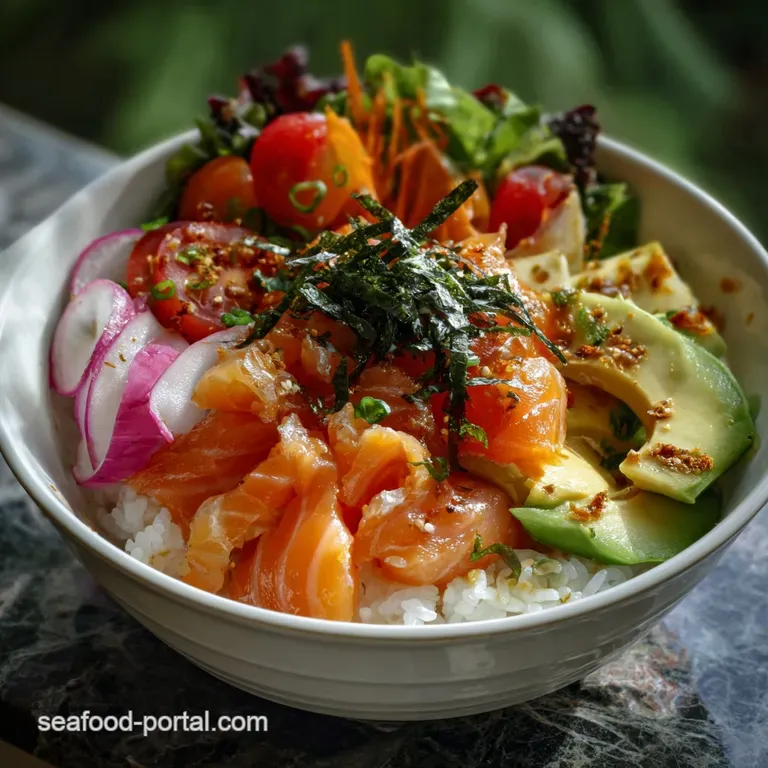
- Layer rice into bowls, then arrange salmon and toppings until no white rice is visible. This finishing step defines the presentation of your Easy Chirashi Bowl with Salmon and Fresh Sushi Toppings.
Solving Structural Issues: Troubleshooting Your Sushi Night
Why Your Rice is Mushy or Sticky
This usually happens when there is an excess of surface starch or too much agitation during the mixing phase. Starch gelatinization becomes a glue if the grains are broken. If this occurs, you might find similar rice handling tips in our Authentic Japanese Shrimp recipe. The beauty of the Easy Chirashi Bowl with Salmon and Fresh Sushi Toppings lies in its textural balance, which is easily ruined by mushy rice.
| Problem | Root Cause | The Fix | Pro Protocol |
|---|---|---|---|
| Grains Smashing | Stirring too hard | Use a "slicing" motion with a flat paddle | Hold paddle at 45° angle |
| Salmon Tearing | Dull knife or warm fish | Freeze salmon for 15 mins before slicing | Slice in one long "pull" motion |
| Dry/Hard Rice | Evaporation was too fast | Add 1 tsp of warm water and cover for 5 mins | Ensure pot lid is perfectly flush |
Proportional Adjustments: The Math of Multiplication
When expanding this Sushi Bowl Recipe for a crowd, physics dictates you can't just double everything.
- The Evaporation Paradox: If you use a larger pot for a double batch, you actually lose more water to steam because the surface area is greater. Reduce added water by 10% for a 4 person batch to prevent sogginess.
- Flavor Saturation: Scale spices and vinegar to 1.5x, not 2x. Concentrated acids like vinegar can quickly overwhelm a dish when scaled linearly.
- Thermal Mass: A larger volume of rice holds heat longer. You must fan it twice as much during the seasoning phase to prevent the bottom layers from overcooking in their own residual heat.
Decision Shortcut
- If you want a Spicy Kick: Mix 1 tbsp Kewpie mayo with 1 tsp Sriracha and drizzle over the salmon.
- If you want a Low-Carb Alternative: Swap the rice for riced cauliflower (sautéed briefly to remove the raw "cabbage" smell).
- If you want Extra Umami Depth: Add a teaspoon of white miso to the vinegar dressing before mixing it into the rice. Making this substitution can transform your standard Easy Chirashi Bowl with Salmon and Fresh Sushi Toppings.
Kitchen Folklore: Science vs Superstition in Japanese Cuisine
Myth: You must use a wooden bowl (Hangiri) or the rice will fail. Truth: Wood is preferred because it absorbs excess vinegar, preventing the rice from sitting in a puddle.
However, a wide plastic bowl works perfectly fine if you are diligent about fanning and tossing the rice to evaporate that moisture manually.
Myth: Salmon must be "Sushi Grade" to be safe. Truth: "Sushi grade" is a marketing term, not a legal FDA classification. Safety comes from the fish being flash frozen to -4°F (-20°C) for 7 days to kill parasites.
Most high-quality frozen salmon at reputable grocers meets this standard.
Artful Plating: Aesthetic Strategies for Visual Impact
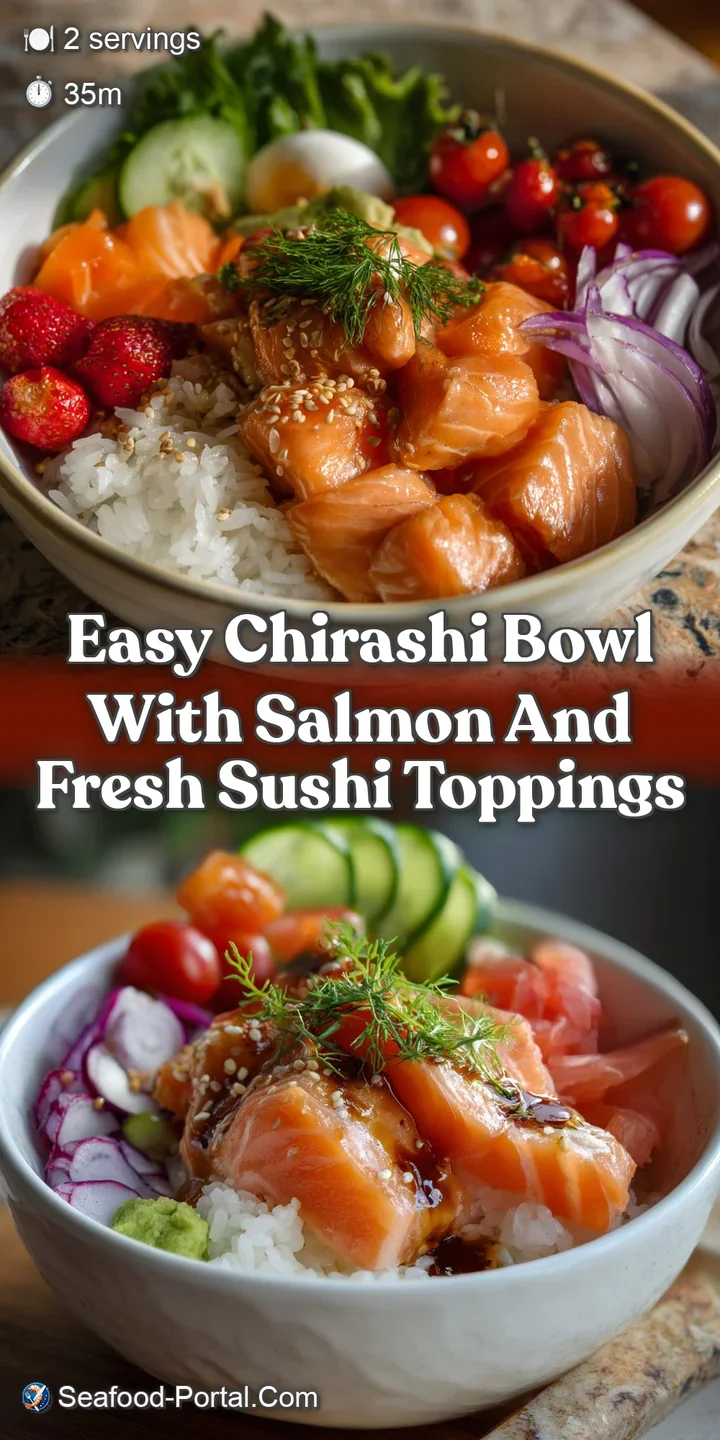
Plating an Easy Chirashi Bowl with Salmon and Fresh Sushi Toppings is about color contrast and negative space. Chirashi means "scattered," but that doesn't mean "random."
- The Clock Method: Place the salmon at 12, 4, and 8 o’clock. This creates a visual triangle that draws the eye across the bowl.
- Height and Volume: Mound the rice slightly in the center. Lean the avocado wedges against the salmon to create verticality.
- Color Pop: Place the orange salmon roe (Ikura) directly next to the green cucumber. These are complementary colors on the wheel, making both look more vibrant.
- The Garnish Rule: Never hide your fish. The nori ribbons should be a "nest" underneath or a delicate sprinkle on top, not a blanket.
Preservation Protocol and Zero Waste Philosophy
Fridge: This Sushi Night favorite is best eaten immediately. However, you can store it for 24 hours in an airtight container. Note: Rice will harden in the fridge due to starch retrogradation. Freeze: Do not freeze the assembled bowl.
You can freeze the raw salmon for up to 2 months if vacuum sealed.
Zero Waste Transformation
Don't discard the salmon skin or the leftover cucumber ends.
- Salmon Skin: Transform: Pat dry and fry in a pan until "shattering" crisp. Science: The collagen in the skin renders into a crunchy, umami rich snack.
- Cucumber Scraps: Transform: Muddle into a gin or vodka cocktail. Science: The high water content and subtle enzymes provide a refreshing, crisp flavor profile.
- Leftover Rice: Transform: Use it for fried rice the next morning. Cold, vinegared rice makes the world's best base for a breakfast stir fry because the grains are already seasoned and distinct.
For a completely different seafood experience that uses similar searing techniques, check out our PanSeared Tilapia with recipe. Much like this Fresh Sushi Toppings bowl, it relies on temperature control for a velvety finish.
Common Questions About This Recipe
How do I handle fish that feels too soft to slice?
Soft fish is often the result of it being too close to room temperature. The fats in salmon begin to soften at 45°F. To get those clean, sharp edges seen in restaurants, place the salmon in the freezer for exactly 15 minutes before slicing.
This firms the exterior without freezing the core, allowing the blade to glide through the muscle fibers without compressing them.
What if my rice is too sticky?
If the rice looks like a paste, you likely over washed it or used too much water. You can partially save this by spreading the rice out on a large baking sheet and fanning it vigorously. This draws out the surface moisture. For your next attempt, try the Crunchy and Classic recipe approach of focusing on the exterior texture first.
Can I use regular long grain rice?
Technically yes, but the experience will be entirely different. Long grain rice (like Basmati) contains more amylose, which means the grains stay separate and "fluffy." For a Chirashi Bowl Recipe, you need the "cling" of short grain rice to pick up the toppings with chopsticks.
If you only have long grain, increase the sugar in the dressing slightly to help create a "syrup" that bonds the grains.
Is rice vinegar necessary?
Yes. Unlike white vinegar or balsamic, rice vinegar has a lower acidity (around 4%) and a milder, sweeter profile. If you substitute with 6% acidity white vinegar, the "bite" will overpower the delicate Sushi Toppings.
If you must sub, dilute white vinegar with a splash of water and a pinch more sugar to mimic the rice vinegar profile. Making this delicious Easy Chirashi Bowl with Salmon and Fresh Sushi Toppings requires true rice vinegar.
Common Questions
What is the critical temperature for seasoning sushi rice?
Heat the vinegar mixture to 140°F (60°C). Heating ensures the sugar and salt fully dissolve, preventing granular texture in the final rice. This precise temperature prevents excessive acid evaporation.
Can I use long grain white rice instead of short grain?
No. Long grain rice lacks the necessary stickiness. Long grain rice contains more amylose, resulting in a fluffy, separate grain that won't adhere properly for Chirashi assembly. You need the high amylopectin content found in Japanese short grain varieties.
Why does my salmon slice tear instead of cutting cleanly?
The blade must be extremely sharp and the fish firm. Tearing occurs when the knife drags across soft muscle fibers rather than slicing cleanly between them, usually due to high ambient temperature.
- Freeze salmon for 15 minutes prior
- Use long, single pulling strokes
- Ensure your knife edge is polished/honed
Is using sashimi grade labeling mandatory for safety?
Myth: "Sushi grade" is a universal safety standard. This label is largely marketing; true safety relies on the fish being flash frozen to -4°F (-20°C) to destroy parasites, a process which certified suppliers follow.
Should I chill the seasoned rice in the refrigerator?
No. Chilling rice causes starch retrogradation. Placing the seasoned rice in the fridge causes the starches to rapidly crystallize, resulting in hard, dry grains rather than the desired glossy texture. If you master the quick cooling and fanning technique here, you’ll improve your work with delicate proteins like in our Shrimp with Garlic Sauce: Speedy Restaurant Style Succulent Prawns.
How do I adjust the recipe for four servings instead of two?
Scale the ingredients by 1.75x, not 2x. Because larger volumes of rice have greater surface area, evaporation increases significantly, requiring less added water to maintain proper texture.
The flavor compounds, like vinegar, should be scaled closer to 1.5x to prevent them from overwhelming the overall profile.
Is substituting the salmon with imitation crab acceptable?
Yes, use imitation crab for an affordable, textural change. Imitation crab (surimi) is pre-cooked pollock, which mimics the flake and mouthfeel of cooked seafood without the temperature concerns of raw fish. If you wanted to apply a rich sauce to this, you could adapt the technique from our Creamy Sauce for Salmon: Zesty Lemon Dill Velouté for a decadent twist.
Easy Salmon Chirashi Bowl

Ingredients:
Instructions:
Nutrition Facts:
| Calories | 1074 kcal |
|---|---|
| Protein | 46 g |
| Fat | 34 g |
| Carbs | 142 g |
| Fiber | 8 g |
| Sugar | 9 g |
| Sodium | 1185 mg |
