Ahi Tuna Ceviche: the Ultimate Easy Ceviche Recipe with Mango
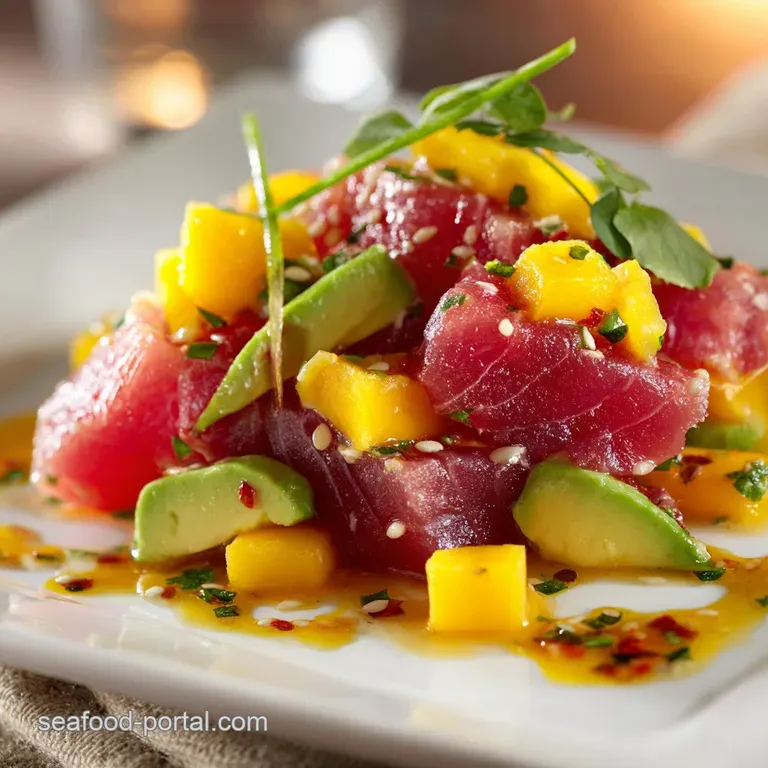
- The Magic of Leche de Tigre: Decoding Ahi Tuna Ceviche
- Why This Recipe Works: Nailing the Texture and Zest Balance
- Sourcing the Star: Essential Ingredients for Flawless Ahi Tuna Ceviche
- The Ceviche Method: Precision Cutting and Mastering the Cure Time
- Elevating Your Ahi Tuna Ceviche: Expert Tips and Troubleshooting
- Serving & Storage: Handling Fresh Ceviche Safely
- Recipe FAQs
- 📝 Recipe Card
The Magic of Leche de Tigre: Decoding Ahi Tuna Ceviche
Imagine biting into something brilliantly cool, fiercely zesty, and buttery soft all at the same time. That’s the feeling of truly fantastic ceviche, where the vibrant lime juice and spicy heat just sing on your tongue.
We are talking about the kind of appetizer that makes you forget every heavy, complicated dinner you ever ate.
This dish is my absolute favorite quick fix when the weather turns hot, or when I realize I forgot to thaw something for dinner (again). Since there is zero actual cooking time, you just chop, mix, and chill; it really saves the day.
It is definitely one of the easiest [Easy Tuna Recipes] out there, assuming you nailed the fish purchase.
Forget about those sad, over cured versions you might find sometimes; we are going for bright, fresh, and slightly sweet with a Pacific twist. Trust me, once you understand the simple science behind the leche de tigre , you will master this Ahi Tuna Ceviche and never look back.
Why This Recipe Works: Nailing the Texture and Zest Balance
The secret to incredible ceviche is achieving a perfect "medium rare" cure, and that means respecting the fish and respecting the clock. It’s a game changer. The acid balance in this citrus marinade, which we call leche de tigre (tiger's milk), is crucial for achieving that perfect, buttery texture without turning the fish chalky and dry.
Peruvian Roots Meet Pacific Flare: Our Recipe's Signature Twist
While Peru is the undisputed home of ceviche, this specific recipe borrows from Polynesian and Hawaiian traditions by incorporating the sweetness of mango and a little punch of fresh ginger. This balance of sweet, sour, and spicy is what makes the Ahi (Yellowfin) tuna really shine here.
It’s light, bright, and way more interesting than just straight lime and onion.
Ceviche vs. Crudo: Understanding the Citric Cure and Technique
You might see ceviche often confused with crudo or sashimi, but the preparation is radically different. Crudo is simply raw fish dressed with high-quality olive oil and salt, requiring no chemical change.
Ceviche uses highly acidic ingredients, specifically lime or bitter orange juice, to denature the proteins in the fish. This process gently firms and 'cooks' the outside layers of the fish, giving it that distinct, opaque appearance.
Is Ceviche Actually Cooked? The Chemical Science of Denaturation
No, technically, heat is not applied, but yes, the texture and color change significantly. The acid in the lime juice performs a chemical reaction called denaturation. This process rearranges the protein molecules in the fish, mimicking what heat does, but leaving the center of the tuna beautifully tender and moist.
The Essential Role of Quality: Why Sashimi Grade Ahi is Non-Negotiable
This is the non-negotiable step: you must use the highest quality Ahi tuna you can find. Since we aren't applying heat, the fish needs to be sushi- or sashimi grade, meaning it was handled and frozen specifically to eliminate pathogens.
If your fishmonger won't certify it as raw consumption safe, walk away and try making a [Classic Tuna Melt Sandwich: The Ultimate Crispy, Golden Grilled Recipe] instead.
Achieving Brightness: The Importance of Freshly Squeezed Citrus
Bottled lime juice has a weird, metallic, and usually stale taste that will ruin your delicate ceviche. You must use freshly squeezed juice. Seriously, plan on juicing 6 to 8 medium limes for the ¾ cup needed; you need that vibrant, fresh acid hit.
Sourcing the Star: Essential Ingredients for Flawless Ahi Tuna Ceviche
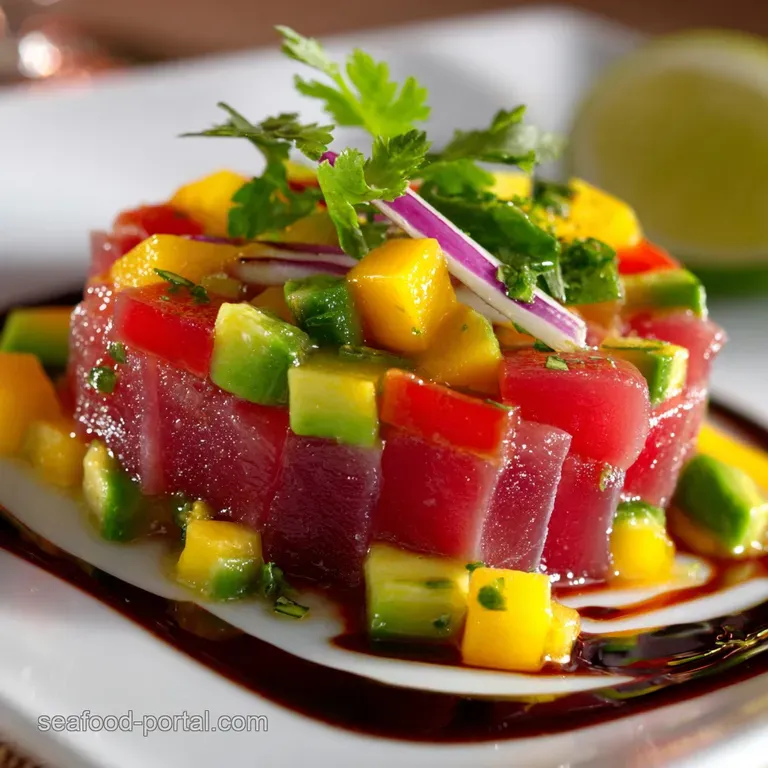
The Golden Rule: How to Identify and Purchase Top-Quality Ahi
Look for Ahi tuna that is a deep, rich red color, almost like beef, with no brown or dull spots whatsoever. The flesh should look moist, not dry, and should hold its shape firmly. Sometimes, the best place to source quality Ahi is actually where they sell fish for searing check out my tips on [Tuna Steak Recipes: The Perfect Pan Seared Sesame Ahi] for identification notes.
Fresh Mango and Ginger: Key Pacific Aromatics for Sweet Heat
Mango provides a necessary sweetness that cuts through the intense acidity of the lime juice, offering a fantastic tropical counterpoint. The tiny bit of fresh, grated ginger adds warmth and a complex aromatic layer you won't get from just chili alone.
Breaking Down the Cure: Choosing the Best Onions and Chilies
I always opt for red onion here because its sharp bite softens beautifully in the citrus, and it gives a gorgeous pop of color. For chili, Jalapeño is traditional and manageable, but if you love spice, go for the thinner, hotter Serrano pepper.
Remember to remove all the seeds and white membranes from the chili before mincing.
Necessary Substitutions for Citrus and Spice Level Adjustments
If you can’t get Ahi, bay scallops are your next best raw option (though they need a slightly longer cure). If you run short on limes, combine lemon juice with a splash of sweet orange juice; it helps balance the tartness.
| If you don’t have... | Use... | Why? |
|---|---|---|
| Ahi Tuna | high-quality Bay Scallops | They cure quickly and have a similar delicate texture. |
| Red Onion | Finely sliced Shallots | Shallots are milder but provide a necessary texture crunch. |
| Jalapeño | A pinch of cayenne pepper + Bell Pepper | To get the heat without sacrificing the fresh crunch. |
Why You Must Taste the Lime Juice Before Marinating
Did you know limes vary wildly? Some are intensely tart and some are watery and weak. Taste a tiny spoonful of your lime juice before you make the leche de tigre . If it tastes bland, add a tiny splash of white vinegar to boost the acid before curing the fish.
Preparing the Supporting Cast: Uniform Dice Cuts for Texture
You want everything to be roughly the same size, including the mango, avocado, and tuna cubes. This ensures that every bite has a consistent texture and that the acid cures the fish evenly. Sloppy cuts equal unevenly cured fish, and we are aiming for perfection.
The Ceviche Method: Precision Cutting and Mastering the Cure Time
Achieving Uniform Cubes: Prepping the Tuna Fillet for Optimal Curing
Start with your tuna filet very cold —this makes it much easier to cut cleanly. Slice the tuna into strips, and then cut those strips into neat, uniform 1 centimeter cubes (about ½ inch).
Immediately place the cubed tuna in a glass or ceramic bowl; we avoid metal bowls because the acid can react chemically with them.
Building the Leche de Tigre: Combining Liquids and Aromatics First
In a separate container, combine your fresh lime juice, salt, pepper, minced chili, and that little bit of fresh ginger. Whisk this mixture well until the salt is dissolved. This mixture, the leche de tigre , is ready when it looks slightly cloudy and tastes aggressively zesty.
Mastering the 30 Minute Rule: How Long Should Ahi Tuna Ceviche Marinate?
This is the most critical rule for Ahi. Pour the leche de tigre and the sliced red onion over the chilled tuna and gently fold it all together. Immediately place it back in the fridge. Set a timer for 30 minutes.
Unlike white fish, which can handle an hour or more, Ahi is best when its center is still vibrant pink, giving you that truly luxurious, buttery texture.
Chef’s Note: Never let ceviche sit at room temperature during the curing process. It must remain below 40°F (4°C) to inhibit bacterial growth and ensure safety.
The Final Drain and Toss: Serving Ceviche at Peak Freshness
After 30 minutes, the edges of the tuna will be slightly opaque (starting to turn pale pinkish white). This is perfect. Gently fold in your diced mango and fresh coriander. If you wait until now to add salt, you have more control over the final flavor profile.
Elevating Your Ahi Tuna Ceviche: Expert Tips and Troubleshooting
Common Error Checklist: Avoiding Soggy or Over Cured Tuna
- Too Long in the Lime Bath: If the tuna looks fully white and opaque, you cured it too long; it will be tough and dry. Stick to the 30 minute window for Ahi.
- Wrong Fish Grade: If you used standard supermarket tuna (not sashimi grade), you are risking safety and definitely sacrificing quality.
- Warming Up: If you prep the ingredients on a hot countertop, the process starts too quickly and unevenly. Always prep tuna cold and chill your mixing bowl beforehand.
Temperature Matters: Keeping Ceviche Perfectly Chilled Before Serving
Ceviche is a refreshing dish; it needs to be served cold. If I'm entertaining, I usually serve it immediately after the 30 minute cure, presenting it on individual dishes that I’ve kept in the freezer for ten minutes. The residual chill really enhances the firm, fresh texture.
Salt Application: When and How Much to Season the Cured Fish
I add a full teaspoon of salt to the leche de tigre initially, but I hold back the final seasoning until the mango is added. The salt pulls moisture out of the tuna, so waiting until the end ensures you don't over salt before the curing process is complete.
Ideal Pairings: What Sides and Drinks Complement Ahi Ceviche
This bright, acidic dish needs something starchy and slightly sweet to balance it. I love serving it with crispy, homemade plantain chips, or simple toasted corn kernels. For drinks, skip the heavy reds and grab a crisp, dry Sauvignon Blanc or a light, citrusy Mexican lager.
If you’re looking for other light seafood appetizers, maybe try my recipe for [Tuna Dip: The Classic British Pâté Ready in 10 Minutes Prep Time] next.
Serving & Storage: Handling Fresh Ceviche Safely
How Long Does Homemade Ceviche Last? Critical Safety Guidelines
Because the fish is only chemically cured and not fully cooked, safety is paramount. Ceviche is meant to be eaten immediately upon reaching the desired texture. It is highly recommended you consume this Ahi Tuna Ceviche within 1 to 2 hours of the initial cure.
After that, the fish continues to cure and deteriorate in quality, potentially becoming unsafe if left too long.
Can I Prepare the Ingredients Ahead of Time? (Partial Prep Guide)
Yes, you absolutely can prep most of the supporting cast! Juice your limes, chop your coriander and mango, and slice your red onion up to 4 hours in advance and keep them covered and chilled.
However, do not cut the tuna or combine it with the leche de tigre until 30 minutes before serving time. That cutting and curing step must be the very last thing you do.
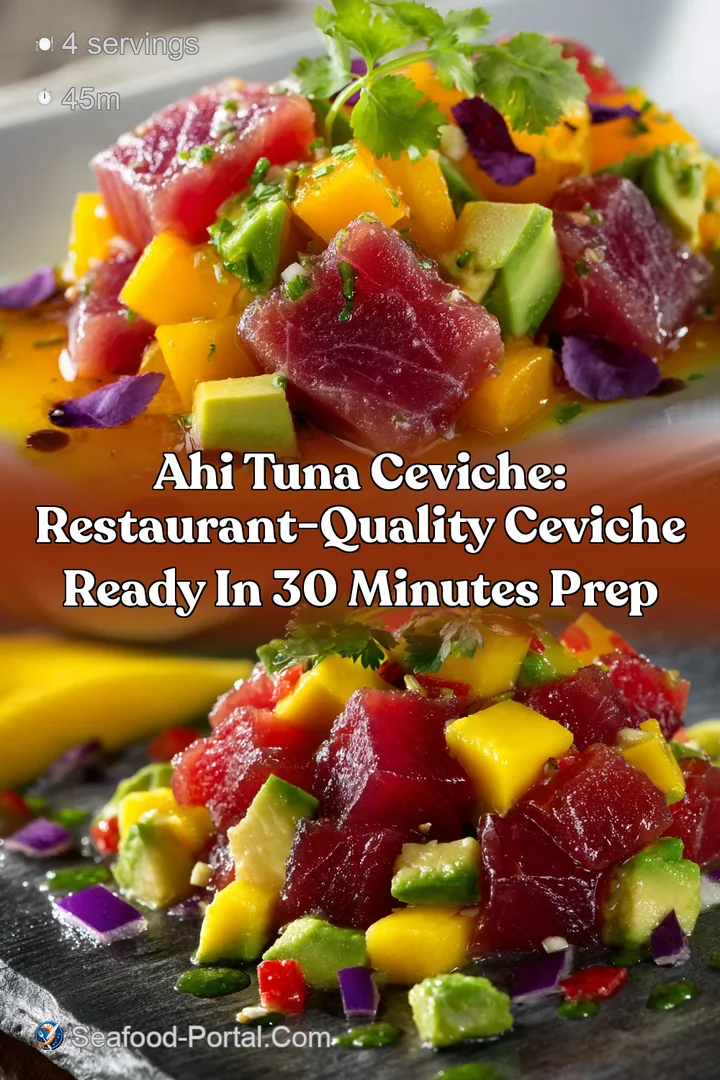
Recipe FAQs
How do I ensure the Ahi tuna is safe to eat raw?
Always source sushi grade or sashimi grade Ahi tuna from a reputable fishmonger you trust implicitly. This designation means the fish has been properly handled and flash frozen, which minimizes the risk of pathogens associated with raw consumption.
Never use previously frozen tuna intended only for cooking, as the texture and strict safety standards differ vastly.
How long should I cure the tuna in the leche de tigre?
Unlike traditional white fish ceviche, tuna only requires a brief cure time, usually 15 to 20 minutes maximum, depending on the thickness of your dice. Tuna has a very firm structure, and over curing will "cook" the edges too much, resulting in a chalky consistency instead of a vibrant, fresh, yielding bite.
Taste the ceviche midway through to ensure the tuna retains a deep pink interior.
Can I prepare Ahi Tuna Ceviche ahead of time or store leftovers?
Ceviche is a dish defined by timing and is always best enjoyed immediately upon reaching its optimal cure. If absolutely necessary, you can cure the fish for 10 minutes, drain the excess liquid, and chill for up to 30 minutes before serving, but never longer.
The acid continues to chemically cook the fish, meaning any leftovers will develop a rubbery, unpleasant texture the next day.
Why did my ceviche turn out mushy or chalky?
Mushiness is typically caused by either poor fish quality or significant over curing in the acid. If the fish was previously frozen and thawed poorly, its cellular structure breaks down quickly when exposed to the highly acidic leche de tigre.
Ensure you adhere strictly to the 15-20 minute curing window and serve it promptly while the tuna is still firm and vibrant.
I ran out of limes. Can I substitute lemons for the cure?
While both citrus fruits provide the necessary acidity, fresh lime is traditional and strongly preferred as its flavor is sharper, cleaner, and less sweet than lemon. If substituting, use slightly less lemon juice and be aware that the overall flavor profile will change noticeably.
Lemon juice can sometimes overpower the delicate oceanic and ginger notes intended in this Pacific variation.
What are the best accompaniments for Ahi Tuna Ceviche?
This light, zesty appetizer pairs beautifully with something crispy to provide textural contrast. Traditional options include plantain chips, crispy tortilla strips, or large kernels of toasted corn (cancha).
For a fresh element, serve it with thin slices of ripe avocado or jicama sticks to scoop up the flavorful curing liquid.
Can I use other types of fish or seafood instead of Ahi tuna?
Yes, but the curing time will need major adjustments depending on the protein chosen. high-quality halibut, snapper, or sea bass are fantastic choices for ceviche but require 30 minutes to an hour of curing time.
Shrimp and scallops can also be used, but must first be gently blanched before being cured in the leche de tigre.
Easy Pacific Ahi Tuna Ceviche
Ingredients:
Instructions:
Nutrition Facts:
| Calories | 334 kcal |
|---|---|
| Protein | 18.8 g |
| Fat | 22.9 g |
| Carbs | 16.9 g |
