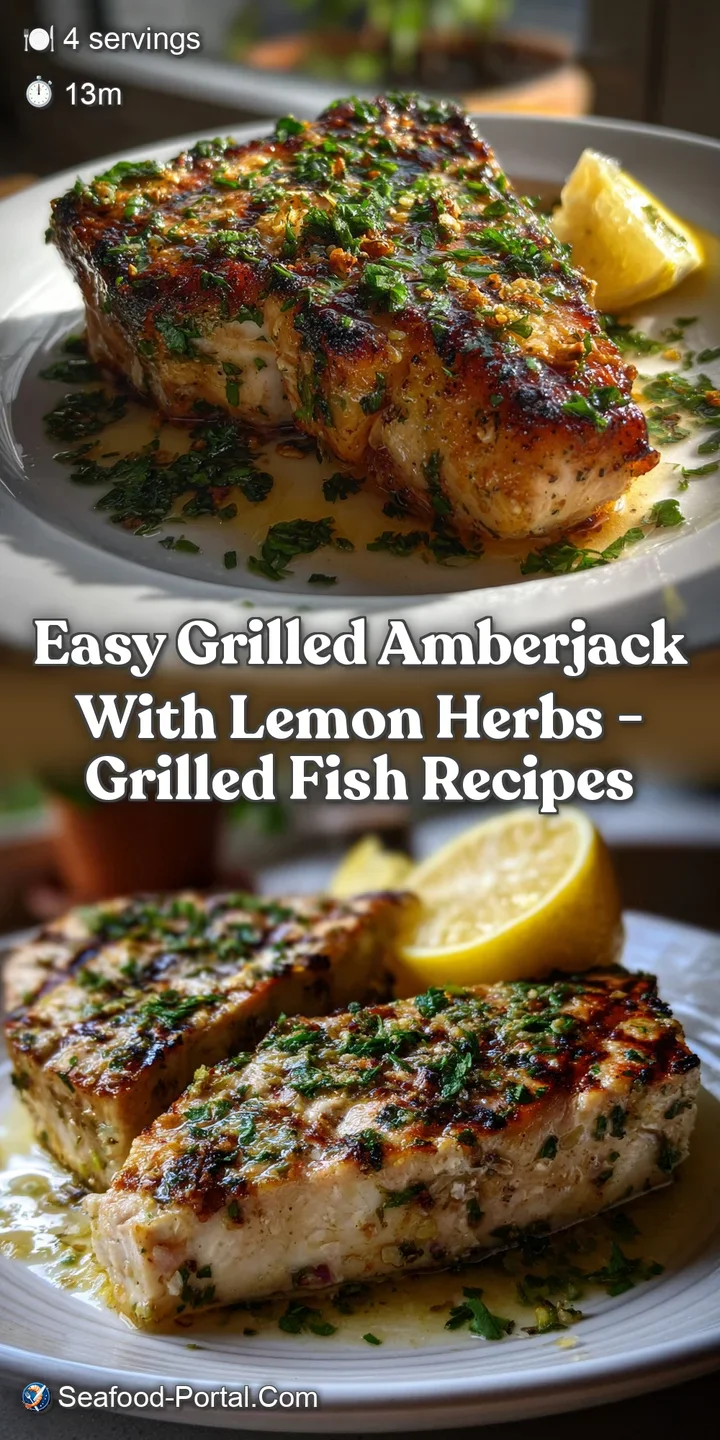
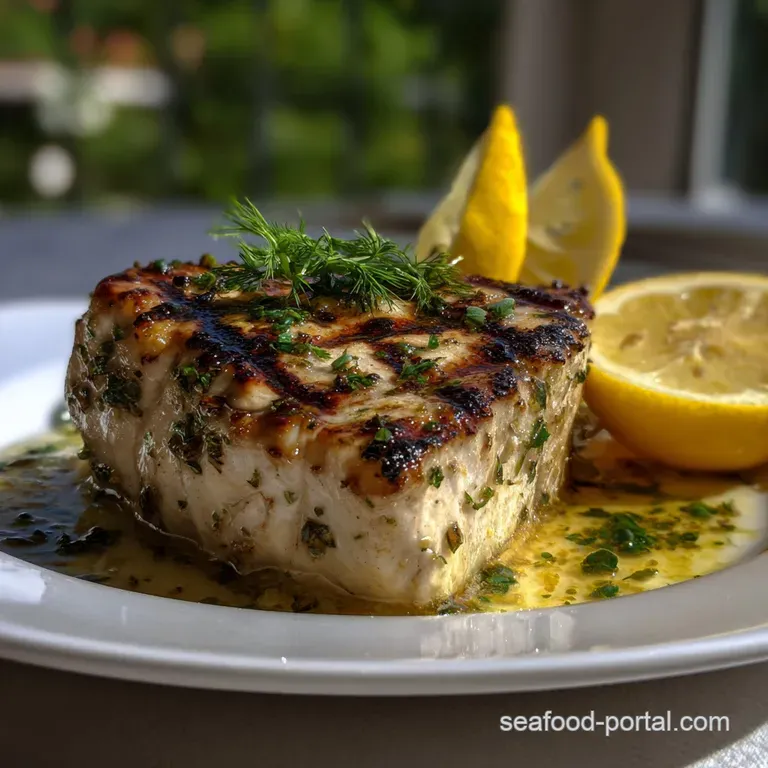
Easy Grilled Amberjack with Lemon Herbs
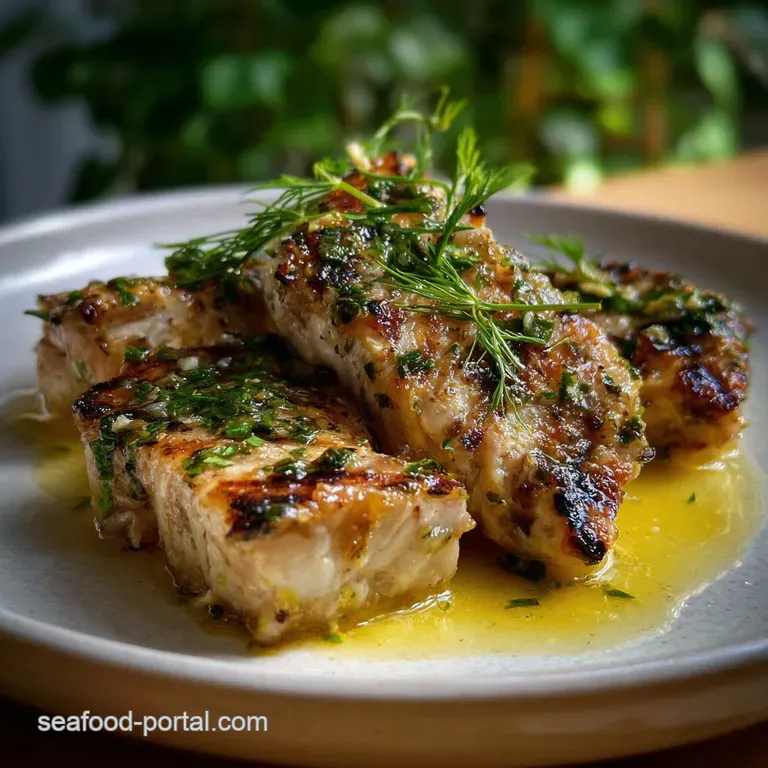
- Effort/Time: 13 minutes (Low-effort/High-reward)
- Flavor Hook: Bright citrus zest meets earthy thyme and grass-fed butter
- Perfect for: Quick weeknight-protein or impressive terrace-dining
The Science of Succulence in Easy Grilled Amberjack with Lemon Herbs
There is nothing more gut-wrenching than dropping $40 on fresh fillets only to have them turn into gray, chalky pucks that stick to the grill like industrial strength glue. I’ve spent years perfecting the art of the sear, and trust me, I’ve left enough fish skin on grill grates to pave a driveway.
The frustration of a dry, fibrous dinner is real, especially when you’re dealing with a premium catch like amberjack.
My biggest breakthrough came after a disastrous dinner party where I rushed the pre-heating process and didn't dry the fish. I realized that moisture is the enemy of the crust. If your fish is wet, it steams; it doesn't sear. Now, I approach Easy Grilled Amberjack with Lemon Herbs with a "dry-surface" obsession.
We aren't just cooking; we are managing the physics of surface tension and protein contraction to ensure a flaky, translucent center.
The magic happens through protein denaturation. When we hit the 1 inch thick fillets with high heat, the coiled proteins uncurl and then rebond, creating that firm yet-tender bite. By finishing with a lemon herb compound butter, we introduce a lipid barrier that stops the "bleeding" of natural juices.
This results in a velvety mouthfeel that contrasts beautifully with the charred, mahogany exterior of the Easy Grilled Amberjack with Lemon Herbs.
The Science of Why it Works
Maillard Reaction: High heat triggers a chemical reaction between amino acids and reducing sugars, creating hundreds of flavor compounds and a brown crust.
Thermal Carryover: Pulling the fish at 140°F (60°C) allows internal energy to continue cooking the center to a safe, moist 145°F (63°C) during the rest.
Precision Logistics for Your 13 Minute Seafood Masterpiece
- Protein Structure: Amberjack is a dense, oily fish similar to yellowtail or mahi mahi. It requires high heat to break down connective tissues without overcooking the delicate muscle fibers.
- The Sizzle Factor: We are aiming for a specific auditory cue a sharp, aggressive hiss the moment the fish hits the grate. This signifies immediate steam evaporation, which prevents sticking.
- Aromatic Diffusion: Garlic and herbs are fat-soluble. By microplaning the garlic into melted Kerrygold Unsalted Butter, we ensure the flavor molecules are evenly suspended and ready to penetrate the fish fibers.
| Original Ingredient | Substitute | Why It Works |
|---|---|---|
| Amberjack fillets | Mahi Mahi or Swordfish | Similar density and fat content. Note: Swordfish may require 1 2 mins extra per side. |
| Fresh Thyme | Dried Oregano | Earthy profile remains, though the flavor is more concentrated and less "floral." |
| Unsalted Butter | Ghee (Clarified Butter) | Higher smoke point and rich nuttiness; excellent for dairy sensitive diners. |
The Curated Pantry: Essential Elements for Amberjack Success
- 4 Amberjack fillets (approx. 6 oz / 170g each): Ensure they are 1 inch thick for even heat distribution. Why this? Thickness determines the ratio of crust to tender interior.
- 2 tbsp Bertolli Extra Virgin Olive Oil: Used for the initial coating. Why this? Provides the conductive medium for heat to reach the fish surface.
- 1 tsp Diamond Crystal Sea Salt: Large grains provide a better textural "crunch" on the sear.
- 0.5 tsp cracked black pepper: Freshly cracked offers volatile oils that pre-ground pepper lacks.
- 2 tbsp Kerrygold Unsalted Butter (melted): high-quality butter has lower water content. Why this? Better emulsification with the herbs and lemon juice.
- 1 tbsp fresh parsley (minced): Provides a bright, grassy finish.
- 1 tsp fresh thyme leaves: Adds a woody, citrusy undertone.
- 1 lemon (zest + halved): Use a microplane for the zest to avoid the bitter white pith.
- 1 clove garlic (microplaned): Creates a paste that dissolves into the butter.
The Heat Matrix: Strategic Tools for Superior Searing
3 Essential Tools: 1. Lodge Cast Iron Grill Pan or Weber Charcoal Grill: High thermal mass is non-negotiable for a consistent sear. 2. Oxo Good Grips Fish Turner: The thin, flexible offset blade slides under delicate skin without tearing the protein. 3.
ThermoPro Digital Meat Thermometer: Eliminates guesswork; 140°F is the "pull" temperature.
The Three Phase Execution Strategy for Easy Grilled Amberjack with Lemon Herbs
- Pat the 4 Amberjack fillets dry with paper towels until the surface feels matte and tacky, not slippery. Note: Surface moisture causes steaming instead of searing.
- Coat each fillet with 2 tbsp Bertolli Extra Virgin Olive Oil, ensuring all sides are glistening.
- Season aggressively with 1 tsp Diamond Crystal Sea Salt and 0.5 tsp cracked black pepper until the fillets are evenly speckled.
- Preheat your Lodge grill pan over medium high heat for 5 minutes until a drop of water flicked onto it dances and evaporates instantly.
- Place the fillets onto the hot surface for 4 minutes until the bottom edge turns opaque and a golden brown crust is visible.
- Flip carefully with your fish turner and cook for another 3 to 4 minutes until the internal temperature hits 140°F (60°C) and the fish feels firm to a light touch.
- Whisk 2 tbsp melted Kerrygold butter, 1 tbsp parsley, 1 tsp thyme, the lemon zest, and the microplaned garlic in a small bowl until the mixture is a vibrant, uniform green.
- Drizzle the herb butter over the hot fillets while still on the grill until the butter bubbles and foams slightly.
- Remove the fish from the heat and let it rest on a warm plate for 3 minutes until the juices redistribute and the "carryover" heat finishes the center.
- Squeeze the charred lemon halves over the top until the acidity brightens the rich butter sauce.
The Troubleshooting Protocol: Solving the Friction and Texture Paradox
Why Your Fish Stacks and Tears
When protein hits a hot surface, it initially forms a chemical bond with the metal. This is called "adsorption." If you try to flip the Easy Grilled Amberjack with Lemon Herbs too early, you break the protein fibers rather than the bond.
The fish will "release" naturally once the Maillard reaction has sufficiently dehydrated the contact point, creating a sturdy crust.
| Problem | Root Cause | The Fix | Pro Protocol |
|---|---|---|---|
| Fish sticks to grate | Surface was too cold or too wet | Pat dry; wait for the "natural release" before flipping | Freeze your grill grates? No wipe with a high smoke point oil soaked towel first. |
| Dry, chalky interior | Overcooking (past 150°F) | Use a thermometer; pull at 140°F | Always account for the +5°F carryover during the rest. |
| Burnt garlic flavor | Adding herb butter too early | Add butter in the last 60 seconds of cooking | Infuse the butter off-heat to keep the garlic sweet. |
Flexible Flavor Architectures for Inclusive Seafood Dining
If you want a lighter profile, swap the butter for an Easy Garlic Olive Oil Sauce which provides a Mediterranean flair without the heavy saturated fats. This is a great choice for those following a strict heart healthy diet while still maintaining that "Lemon Herbs" punch.
For those who enjoy a more robust crunch, you can adapt the coating technique from my Crunchy and Classic recipe by adding a dusting of cornmeal to the Amberjack before it hits the oil. Note that this will significantly change the texture from "silky" to "shattering."
- Mediterranean Twist: Add 1 tbsp capers and 5 chopped Kalamata olives to the butter.
- Keto/Paleo Swap: Use Ghee instead of butter and serve alongside a massive green salad.
- Spicy Kick: Whisk 0.5 tsp red pepper flakes into the oil before coating the fish.
⚗️ The Scaling Lab
- Flavor Saturation: If doubling the recipe to 8 fillets, scale the salt and herbs to 1.5x (not 2x). The concentrated oils in thyme can become soapy if doubled linearly.
- The Evaporation Paradox: If making the herb butter in a larger saucepan, reduce the heat. The larger surface area causes the lemon juice to evaporate too quickly, leaving the sauce broken and greasy.
- Pan Crowding: Do not cook more than 2 3 fillets in one Lodge skillet. Doubling the meat drops the pan temp below 300°F, leading to gray, steamed fish. Cook in batches.
- Thermodynamics: A larger batch of fillets on a platter retains more collective heat. Pull them at 138°F instead of 140°F to prevent the center fillets from overcooking via "thermal mass" insulation.
Cold Chain Integrity and Sustainable Zero Waste Seafood Logistics
- Fridge: Store leftovers in an airtight glass container for up to 2 days. The fats in Amberjack can oxidize quickly, so "the fresher, the better" is the rule here.
- Freezing: Not recommended for cooked amberjack, as the cellular structure collapses upon thawing, resulting in a "mushy" texture.
- Reheating: Avoid the microwave! It turns fish into rubber. Instead, place the Easy Grilled Amberjack with Lemon Herbs in a covered pan with 1 tbsp water over low heat for 4 minutes until warmed through.
💡 ZERO WASTE: Don't discard the lemon rinds. Transform: Toss them into a jar with salt to make preserved lemons. Science: The salt breaks down the pectin, turning the bitter rind into a floral, umami rich condiment for future seafood dishes.
Harmonizing Textures: The Side Dish Decision Framework
Amberjack has a significant "presence" on the plate, so you need sides that provide acidity or crunch to cut through the buttery finish.
- The Fresh Route: Serve with a shaved fennel and citrus salad.
- The Comfort Route: A side of PanSeared Tilapia with recipe style avocado mash works surprisingly well as a creamy base for the amberjack.
- The Global Route: For a fuller meal, follow the side dish logic found in the What to Serve recipe guide, specifically focusing on cooling cucumber salads or roasted chickpeas.
Direct Expert Insights for Easy Grilled Amberjack with Lemon Herbs
Can I use frozen amberjack? Yes, but thaw it completely in the fridge for 24 hours. Use a heavy weight (like a plate) to press out excess moisture during the thawing process to ensure a good sear.
Is amberjack the same as Yellowtail? They are cousins! Amberjack (Greater Amberjack) is typically larger and has a slightly firmer, more muscular texture than the Japanese Yellowtail (Hamachi) used in sushi, but they can be used interchangeably in this Easy Grilled Amberjack with Lemon Herbs recipe.
How do I know it’s done without a thermometer? Look for the "flake test." Insert a fork into the thickest part and twist gently. If the layers of muscle separate easily (the "shatter" point) and look opaque rather than translucent pink, it's ready.
What if I don't have a grill? A heavy stainless steel or cast iron pan on the stovetop is actually better for temperature control. Follow the exact same timing; just ensure your kitchen is well ventilated, as the high heat will create some smoke!
Chef's Tips:
Freeze the butter for 10 minutes before melting it with the herbs. This "shocks" the milk solids and helps them stay emulsified with the lemon juice for a thicker, glossier sauce. Add a pinch of sugar to the salt/pepper rub.
It accelerates the Maillard reaction, giving you a dark, professional crust in half the time.
- 1. Thickness
- Exactly 1 inch (2.5cm).
- 2. Pull Temp
- 140°F (60°C).
- 3. Rest Time
- 3 minutes minimum.
| Feature | Fast Method (This Recipe) | Classic Poaching/Baking |
|---|---|---|
| Texture | Crispy exterior, flaky core | Uniformly soft/velvety |
| Time | 13 minutes | 25 30 minutes |
| Flavor Profile | Charred, nutty, bold | Delicate, infused, subtle |
By following this thermal focused approach to Easy Grilled Amberjack with Lemon Herbs, you transform a simple piece of fish into a masterclass of texture and temperature. Enjoy the sizzle!
Recipe FAQs
What is the best internal temperature to pull the amberjack off the heat?
140°F (60°C). This accounts for carryover cooking, which raises the internal temperature to the safe serving point of 145°F. This thermal management prevents the muscle fibers from contracting too tightly, yielding a moist interior.
Why does my fish always stick to the grill grates?
The fish adheres until the Maillard reaction crust is fully formed. Protein initially bonds chemically to the metal surface upon contact with heat. The bond breaks naturally once sufficient surface dehydration occurs, signaling it's safe to flip.
- Ensure grill pan is fully preheated
- Pat fish surface perfectly dry
- Wait for the "natural release" cue
Can I substitute the herbs with dried versions?
No, dried herbs possess a different volatile oil profile. Dried thyme loses its floral brightness, becoming more woodsy and potentially overpowering when substituting for fresh in this delicate fish preparation.
Is it better to sear this fish in butter or oil?
Olive oil for searing, butter for finishing. Oil (like Bertolli EVOO) has a higher smoke point, allowing the pan to reach necessary searing temperatures without burning the milk solids. The butter should only be added off-heat to emulsify the herbs.
Myth: Grilling amberjack at high heat always results in dryness.
Myth: Grilling amberjack at high heat always results in dryness. Reality: High heat creates an immediate crust via the Maillard reaction, sealing juices inside; dryness only occurs if you overshoot the pull temperature past 145°F.
What protein pairs well if I want to serve both simultaneously?
Pair with something rich that balances the acid. If you enjoyed mastering the precise temperature control needed here, apply that same sensory doneness logic when preparing the firm texture of a steak, like in our guide on Roast Chicken Success.
What if I prefer a creamy sauce instead of the herb butter drizzle?
Use a stable, low-acid emulsion base. A smooth, rich finish can be achieved by substituting the herb butter with a sauce modeled after our Creamy Sauce for Salmon: Zesty Lemon Dill Velouté. This uses starch to stabilize the dairy instead of relying solely on high heat.
Easy Grilled Amberjack Lemon Herbs
Ingredients:
Instructions:
Nutrition Facts:
| Calories | 362 kcal |
|---|---|
| Protein | 39.1 g |
| Fat | 20.9 g |
| Carbs | 1.3 g |
| Fiber | 0.3 g |
| Sugar | 0.1 g |
| Sodium | 648 mg |
