Tuna Tartare: Restaurant-Quality Ahi with Zesty Ginger-Soy and Avocado Crème

- The Ultimate Ahi Tuna Tartare: A Gourmet Starter Made Simple
- Mastering the Art of Tuna Tartare Flavor and Texture
- Premium Ingredients for a World-Class Tuna Tartare
- Step-by-Step Guide to Preparing Your Tuna Tartare
- Expert Tips for Flawless Ahi Tartare Results
- Storage and Preparation Guidelines
- The Perfect Way to Serve Tuna Tartare
- Recipe FAQs
- 📝 Recipe Card
The Ultimate Ahi Tuna Tartare: A Gourmet Starter Made Simple
That first bite of perfect [Tuna Tartare] is absolutely transportive. It’s icy cold, silky smooth, yet has a clean, delightful snap thanks to the sharp, precise dice. Honestly, the aroma alone toasted sesame oil mingling with fresh lime and ginger is completely addictive.
This classic Asian style [Simple Tuna Tartare Recipe] is my ultimate dinner party trick. It looks incredibly sophisticated, like you spent hours prepping a complicated menu, but it’s ready in well under an hour with absolutely zero cooking required.
Trust me, pulling this off at home makes you feel like a Michelin starred chef, and it’s usually way cheaper than buying good raw fish steaks for searing.
We aren’t going to rely on heavy, complicated sauces or unnecessary filler ingredients here. We are leaning heavily into the amazing quality of the Ahi tuna itself, boosting it with a vibrant, zesty dressing and balancing everything out with a simple, creamy avocado layer.
Let's crack on and make a world class appetizer, ready before your guests even finish their first drink.
Mastering the Art of Tuna Tartare Flavor and Texture
The goal of brilliant tartare is clean, distinct texture and vibrant flavor that doesn't mask the fish. This recipe works because we follow a strict cold chain and control the acid. If the tuna is ultra cold, it cuts cleanly, it holds its shape, and it doesn't get bruised when mixing.
Why Ahi Tuna is the Only Choice for Tartare
For a quality tartare, you must use Ahi (Yellowfin) tuna, period. The flavour is clean, mild, and robust enough to stand up to the soy and ginger without being overwhelmed. It has a beautiful red colour, which is essential for visual appeal, but crucially, it has a wonderfully firm texture that holds up when diced.
Crucial Note: If you are using raw fish, it must be labelled sushi grade from a reputable source. If you can't find it, I highly suggest making something else, like my [Crispy AirFried Ahi Tuna: Perfect Sesame Crusted Steaks in 8 Mins] safety first, always!
Unpacking the Zesty Ginger Soy Dressing
This dressing is built on the classic Asian principle of balancing acid, fat, and umami. The soy sauce provides the savory depth (umami), while the toasted sesame oil introduces a warm, nutty aroma and essential fat. The fresh lime juice cuts through the richness, preventing the whole dish from feeling heavy.
The Role of Avocado Crème in Balancing the Dish
The avocado serves two vital functions. First, it offers a cool, velvety texture that contrasts beautifully with the firmness of the diced tuna. Second, the mild, earthy fat in the avocado neutralizes the intense acidity and saltiness of the dressing, creating a truly balanced mouthful.
Don't skip this layer; it’s an absolute game changer.
Achieving the Perfect Uniform Dice (Mise en Place)
Consistency is paramount when dicing Ahi tuna for tartare. If you have uneven pieces, you will end up with some small, mushy bits and some large, chewy chunks. You want a uniform dice, about 5mm (1/4 inch), that guarantees a clean, delicate texture in every single bite.
The Essential Acid Fat-Umami Ratio (Lime, Avocado, Soy)
We manage these components very carefully in this recipe. We keep the lime juice (acid) mostly separate from the tuna until the last minute, reserving most of it for the avocado layer.
Using low-sodium soy sauce handles the umami and salt, while the avocado brings the essential fat needed to marry the strong flavours together.
Preventing the Fish from 'Cooking' (The Marination Timing)
Lime juice, or any acid, starts a process called "denaturing," essentially cooking the fish without heat this is how we make dishes like [Ahi Tuna Ceviche: Easy, Zesty Recipe with Mango Avocado]. For tartare, we want to prevent this rubbery texture change.
We only marinate the tuna for 30 minutes in the fridge. This allows the flavour to penetrate slightly while keeping the texture wonderfully raw and firm.
Premium Ingredients for a World Class Tuna Tartare
I love a recipe that relies on just a handful of quality items. Good ingredients are essential here. When you’re dealing with raw fish, there is nowhere to hide poor quality.
Sourcing Sushi Grade Ahi (Yellowfin) Tuna Safely
Your fish must be pristine. Talk to your fishmonger and specifically ask for sashimi grade Ahi . Look for tuna that is deep, vibrant red, shiny, and has no visible bloodlines or silvery fascia.
If you can only find frozen, make sure it was flash frozen properly; it’s safer than buying questionable "fresh" fish that’s been sitting out.
| Ingredient | Substitution Tip |
|---|---|
| Ahi Tuna | Sushi Grade Salmon (Sake Tartare) |
| Avocado | Finely Diced Firm Mango or English Cucumber |
| Fresh Chives | Finely Sliced Green Onion (Scallion) |
Detailed Notes on Soy Sauce, Sesame Oil, and Fresh Ginger
Always use low-sodium soy sauce; regular soy sauce will absolutely overpower the delicate tuna. The sesame oil needs to be toasted sesame oil that’s where the deep, nutty flavour comes from. Do not use plain sesame oil.
Fresh ginger must be grated using a Microplane for a paste like consistency; no one wants to bite into a big chunk of ginger.
Ingredient Swaps for the Avocado Crème and Garnish
If you dislike avocado, you could use a fine dice of English cucumber instead, which provides the cooling contrast we need. Alternatively, some people opt for wasabi infused crème fraîche for an extra punch.
For the garnish, swap black sesame seeds for white sesame seeds or finely chopped cilantro.
step-by-step Guide to Preparing Your Tuna Tartare
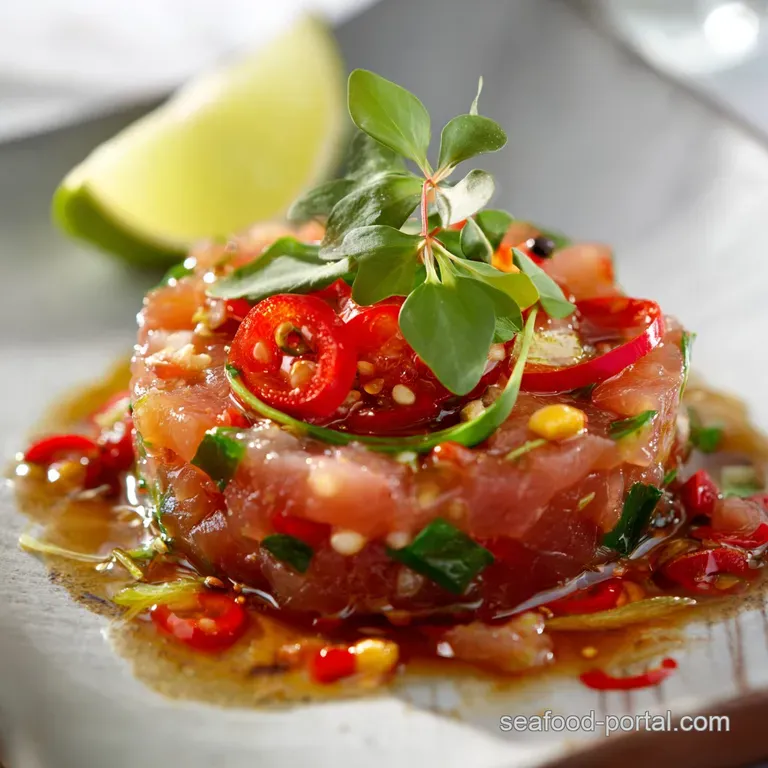
Remember, speed and cold temperatures are your friends in this entire process.
Preparing the Zesty Ginger Soy Dressing Base
Start by combining the low-sodium soy sauce, fresh lime juice, toasted sesame oil, grated fresh ginger, and your preferred chilli paste (Sambal Oelek or Sriracha) in a small bowl. Whisk it well until fully emulsified. Give it a tiny taste and adjust the sweetness or acidity now, before it hits the fish.
Creating the Smooth Avocado Crème Layer
In a separate bowl, mash your ripe avocados. I like mine rustic, so I leave some small chunks for texture. Season this layer simply with flaky sea salt and a squeeze of reserved lime juice. The lime juice is critical here to keep the avocado bright green and prevent browning.
Marinating the Diced Tuna Properly
Dice the ultra cold tuna precisely, then gently fold it with the minced shallots and snipped chives. Pour in about two-thirds of your dressing and gently, slowly fold everything together with a rubber spatula. Never stir this vigorously; you’ll bruise the fish and turn it into paste.
Now, pop it in the fridge for 30 minutes; this firming stage makes all the difference.
Finishing and Plating the Tartare Stack
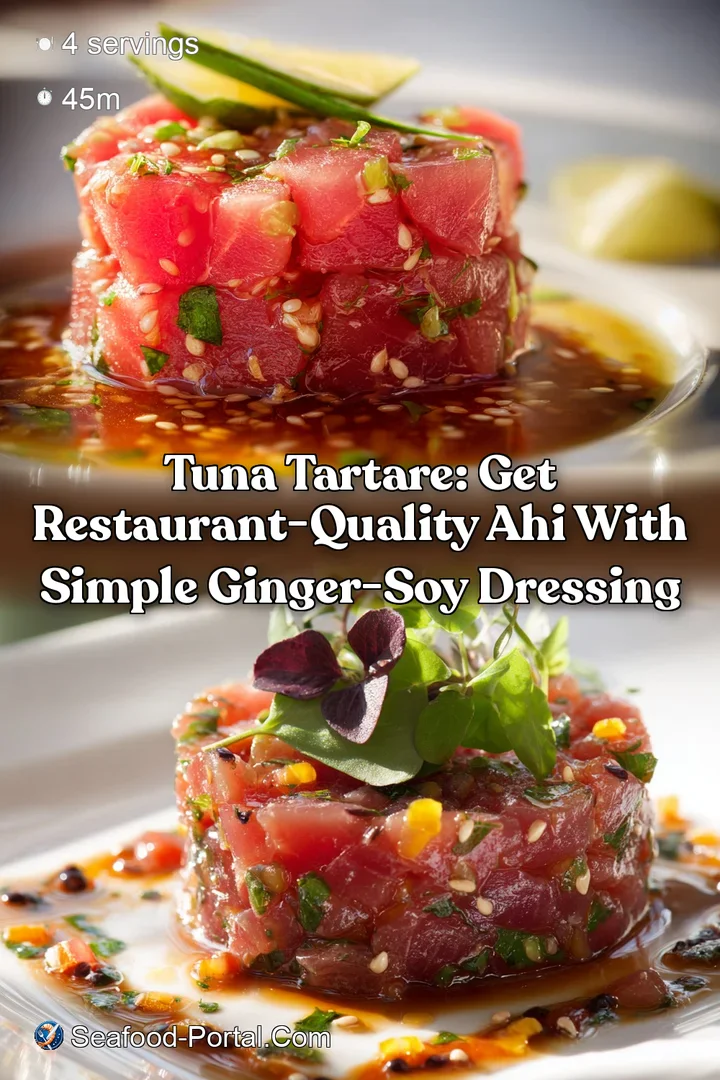
If you have a metal chef’s ring, use it! Place the ring on your serving plate and press the avocado crème into the base layer. Then spoon the chilled tuna tartare mixture gently on top of the avocado and lightly press it down.
Carefully lift the ring, drizzle the remaining dressing around the plate, and finish with flaky sea salt and black sesame seeds.
Expert Tips for Flawless Ahi Tartare Results
- Chilling the Gear: Before you even start cutting the tuna, place your cutting board and the mixing bowl in the freezer for 10 minutes. Cold implements keep the fish colder, ensuring a clean dice and firm final product.
- The Paper Towel Trick: After dicing the tuna, very lightly blot the fish with a paper towel before adding the dressing. Removing any excess moisture allows the sauce to coat the fish perfectly without diluting the flavor.
- When in Doubt, Make a Poke: If you realize your knife skills were poor and the mixture is looking too rough or mushy, all is not lost! Simply toss in some cooked rice, more avocado, and call it a homemade [Tuna Poke Bowl Recipe: Fresh, Fast, and Easy Ahi Poke at Home] instead.
Storage and Preparation Guidelines
The Cold Factor: Keeping the Tuna Temperature Down
This dish relies entirely on its cold temperature. Serve the plates chilled. If you are serving this outdoors or during a long event, place the serving dish over a bowl of ice to keep the tuna temperature truly down. This is crucial both for flavour and safety.
How to Correct Over Seasoned or Salty Tartare
Did you accidentally use too much soy sauce? It happens! If your tartare tastes too salty, dice up some extra plain avocado or cucumber and gently fold it in. The extra bland volume helps dilute the intensity and balances the sodium.
Avoiding a Soggy or Mushy Texture
The secret to preventing mush is keeping the dice clean and limiting the time the acid (lime juice) touches the fish. That 30 minute chill is essential, but if you leave it marinating for several hours, the tuna will eventually start to "cook" and break down, resulting in a soggy, pasty finish.
Can You Make Tuna Tartare Ahead of Time? (Component Prep)
You absolutely can prep the components ahead, but do not mix the tuna with the dressing. You can make the ginger soy dressing up to 24 hours in advance and keep it sealed in the fridge.
You can dice the tuna up to 4 hours in advance, keeping it tightly wrapped and very cold. Combine the mixture only 30 minutes before serving.
Safe Refrigeration and Shelf Life of Raw Tuna
Since this dish uses raw, high-quality fish, it is best eaten immediately after assembly and chilling. Leftovers should be consumed within 24 hours, kept tightly sealed on the coldest shelf in your refrigerator.
Why Freezing Tuna Tartare is Not Recommended
Freezing raw fish that has already been diced and dressed is a recipe for disaster. Freezing and thawing causes the cell structure to break down dramatically, resulting in a watery, mushy, and unpleasant texture. Never freeze Tuna Tartare.
The Perfect Way to Serve Tuna Tartare
Tuna tartare needs crunch. It requires something crisp, salty, and neutral to act as the vehicle for the rich fish.
My favorite options are thin, crispy taro chips, delicate sesame wonton crisps, or simple toasted crostini brushed with a tiny bit of garlic oil. For a lighter, healthier scoop, use chilled slices of firm cucumber or endive leaves.
If you love comfort food, perhaps finish your meal with my recipe for [Classic Tuna Casserole: Scratch Made Comfort, No Canned Soup].
Recipe FAQs
What type of tuna should I use, and is it safe to eat raw?
For any raw preparation like tartare, you must use high-quality, designated sushi grade or sashimi grade Ahi (Yellowfin) tuna. Standard supermarket tuna steaks are not guaranteed safe for raw consumption, so always purchase from a reputable fishmonger who can certify the fish was flash frozen correctly to destroy parasites.
Plan to prepare and consume the tartare the same day you purchase the fish for optimal safety and freshness.
Can I prepare Tuna Tartare ahead of time, or does it need to be served immediately?
While you can dice the tuna and prepare the dressing and avocado crème up to two hours in advance, they must be stored separately in the refrigerator. The tartare should only be combined with the dressing immediately before serving.
The acid in the lime juice will begin to "cook" the tuna (a process called denaturation) and spoil the delicate texture if mixed too far ahead.
Why is my tartare mixture watery after mixing?
Wateriness often results if the diced tuna was not properly patted dry before mixing, or if wet ingredients like cucumber or tomato are used without removing their seeds first. Excessive liquid will dilute the flavour and prevent the dressing from properly clinging to the fish cubes.
Ensure you use paper towels to dry the tuna cubes before adding the dressing.
I need a gluten-free option. Can I substitute the soy sauce?
Yes, the soy sauce can easily be substituted to make the dish gluten-free without sacrificing flavour complexity. Tamari is a traditional Japanese condiment that offers a very similar profile and is typically gluten-free.
Alternatively, coconut aminos provides a slightly milder, soy-free, and naturally gluten-free option.
How can I add extra spice or crunch to the recipe?
To increase the heat, try adding a finely minced Thai chili or a small dash of Sriracha or sambal to the dressing mixture. For a satisfying crunch, incorporate crispy fried shallots, finely diced jicama, or serve the tartare with crispy sesame rice crackers or toasted wonton strips.
What are the best serving suggestions for Tuna Tartare?
Tuna Tartare is best served chilled with something crunchy to scoop it up, such as thinly sliced cucumber rounds, toasted baguette slices, or plain tortilla chips. For an elegant restaurant presentation, use a ring mold to shape the tartare and layer it over the avocado crème, garnishing with black sesame seeds or microgreens.
Can I freeze any leftover Tuna Tartare?
No, you should never freeze leftover Tuna Tartare, especially once it has been mixed with the dressing. Freezing and thawing raw fish drastically degrades the texture, resulting in a mushy consistency when defrosted.
Furthermore, due to the nature of raw preparations, any tartare not consumed within a few hours of preparation should be safely discarded.
Easy Ahi Tuna Tartare Recipe
Ingredients:
Instructions:
Nutrition Facts:
| Calories | 359 kcal |
|---|---|
| Protein | 20.7 g |
| Fat | 20.1 g |
| Carbs | 7.2 g |
