Deep Fried Catfish: Crispy Buttermilk Fillets
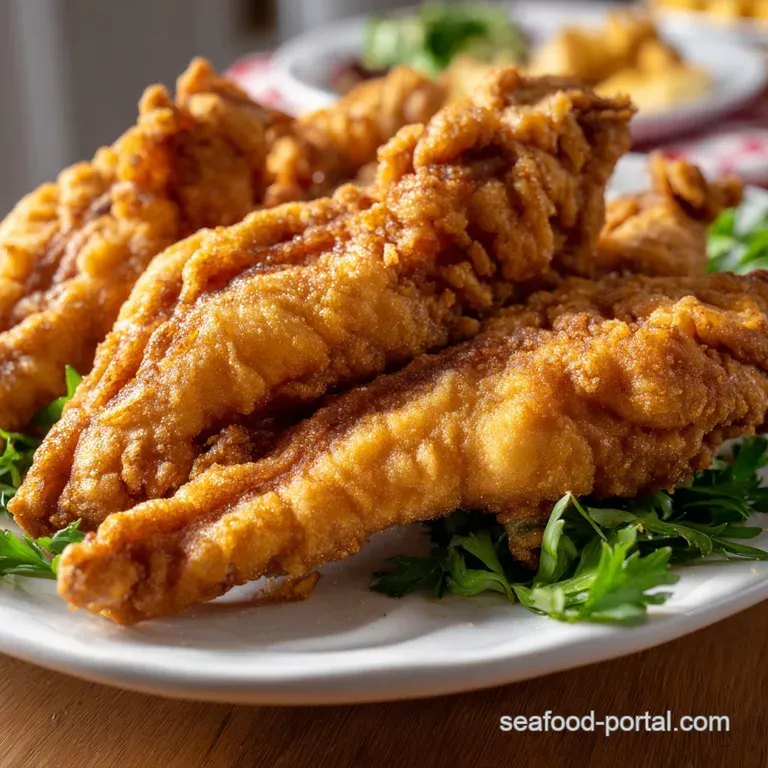
- The Soulful Secret to Perfectly Fried Catfish
- The Science Behind Crispy & Flaky Fried Fish
- Essential Ingredients for the Best Deep-Fried Catfish
- Step-by-Step: Frying Catfish to Golden Perfection
- Troubleshooting & Expert Tips for Frying Success
- Storage, Reheating, and Southern Pairings
- Recipe FAQs
- 📝 Recipe Card
The Soulful Secret to Perfectly Fried Catfish
You know that sound, right? That crisp, glorious shatter the minute you fork into a perfect piece of fish. That’s exactly what we are aiming for today. Forget everything you think you know about oily, heavy fish; we are achieving a perfect, non-greasy crust that seals in the flaky, tender meat inside.
This is the only way to make truly exceptional Deep Fried Catfish .
This whole process is surprisingly quick once you nail the oil temperature, making it a perfect Deep Fried Catfish Quick & Flavorful Weeknight Meal. When you compare the taste and texture of homemade versus what you get at a restaurant, there is simply no contest.
Plus, catfish is affordable, readily available, and incredibly forgiving for home cooks.
So, ditch the fancy gadgets and grab your buttermilk. We are going back to basics with a classic Southern technique that guarantees a golden, crunchy exterior every single time. This is my absolute favorite Deep Fried Catfish recipe, perfected over years of kitchen disasters.
The Science Behind Crispy & Flaky Fried Fish
I used to just slap some seasoned flour on my fish and hope for the best. It was fine, but it was never great . The secret to truly magnificent Deep Fried Catfish is understanding the chemistry of the dredge. It’s not just seasoning; it’s structure.
The Buttermilk Advantage: Tenderizing the Fillets
Buttermilk is non-negotiable for superior Deep Fried Catfish . Why? Because it’s mildly acidic. That low pH level breaks down some of the tougher muscle fibers in the fish, leading to a much more tender and flaky final product.
Also, and this is the vital part, its thickness acts like the world’s best glue. When you pull the catfish from the buttermilk, the creamy coating sticks perfectly, providing the moisture needed for the cornmeal and flour to cling.
Achieving the Ultimate Southern Style Crunch
Many people use straight flour. Don't do that. You need the texture of cornmeal for that quintessential Southern crunch. I use a ratio of 3 parts cornmeal to 1 part flour for this Deep Fried Catfish recipe.
The cornmeal provides the satisfying grit and texture, while the flour binds everything together and helps form a structural shell. We are building armor for the fish.
Chef’s Note: The grind of the cornmeal matters. Use a medium grind, not ultra fine (which dissolves easily) or rock hard coarse (which won't stick).
Overview of the Frying Method (Skillet vs. Deep Fryer)
If you are cooking for a crowd, a dedicated deep fryer is convenient for maintaining temperature, but honestly, I prefer a heavy bottomed Dutch oven. It holds heat beautifully and requires less oil than a giant fryer basket. The key difference is depth.
When making Deep Fried Catfish , the fish must be fully submerged or at least halfway submerged so you don't have to keep flipping it and risk knocking off the precious coating.
How Acidic Marinades Prevent a Dry Texture
While buttermilk tenderizes the outside, the brief marination ( 30 minutes is plenty) helps season the fish deeply. If you leave the fish in too long (over 2 hours), the acid can start to "cook" the fish, leading to a weird, mushy texture.
We want firm, beautifully seasoned Deep Fried Catfish Fillets , not ceviche. A quick soak ensures that the inner flesh stays moist even after the rapid, over high heat cooking process.
The Ideal Flour-to-Cornmeal Ratio for Maximum Crust
As mentioned, 3:1 is my go-to. But let’s talk about the seasoning in that dredge. This is where most people fail. They season the fish, but not the coating. When that crust puffs up and separates from the fish slightly, you need that flavor layer to be strong.
We are talking generous amounts of smoked paprika, garlic powder, and cayenne for the best Deep Fried Catfish Batter . If the dredge looks boring, it will taste boring.
Maintaining Consistent Oil Temperature for a Golden Finish
This is the single most important lesson I’ve learned about deep frying anything. Too low, and the oil soaks into the crust, giving you a limp, greasy disaster. Too high, and the outside burns while the inside is raw.
For phenomenal Deep Fried Catfish , 350°F (175°C) is the sweet spot. It cooks the fish through quickly while giving the crust time to crisp up and achieve that deep, golden color.
Essential Ingredients for the Best Deep Fried Catfish
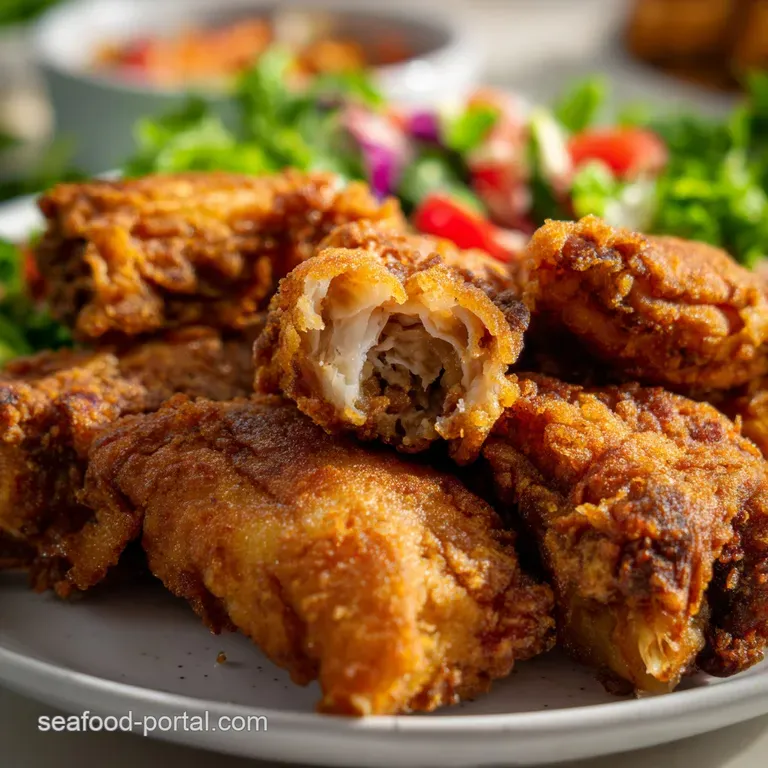
When making Deep Fried Catfish, quality ingredients make a difference, but you don't need to break the bank.
Selecting Your Catfish Fillets (Farm Raised vs. Wild)
Most catfish sold in North America is farm raised, and that’s perfectly fine! Farm raised catfish tend to have a milder flavor and a consistent, clean white color. Wild caught catfish can sometimes have a stronger, earthier flavor, which some people adore, but it’s less predictable.
Either way, aim for fillets that are around 1/2 to 3/4 inch thick. If they are too thick, you’ll struggle to cook the middle before the crust burns.
Mastering the Seasoned Coating Mix
The dredge is where the magic happens. Don't just rely on salt and pepper!
| Ingredient | Role in the Dredge | Viable Substitution |
|---|---|---|
| Yellow Cornmeal | The primary crisp factor. | Panko breadcrumbs (for crunch, but loses Southern flavor). |
| Smoked Paprika | Depth, color, and smoky aroma. | Regular sweet paprika + a pinch of liquid smoke. |
| Cayenne Pepper | Heat and complexity. | White pepper or a dash of finely ground red chili flakes. |
Choosing the Best Oil for Deep Frying (High Smoke Point Fats)
We need oil that can handle 350°F without breaking down and smoking your kitchen out. Canola, Vegetable, or Peanut oil are the best choices for Deep Fried Catfish because they are inexpensive and have high smoke points. Never use olive oil or butter for deep frying, please.
I learned that the hard way when I tried to make Deep Fried Catfish using some fancy artisan olive oil it smelled like a tire fire. Stick to the basics here.
Quick Substitutions for Buttermilk
Ran out of buttermilk after planning your perfect Deep Fried Catfish meal? Panic averted. You can easily make your own buttermilk substitute in seconds.
- Take 1 cup of regular milk (whole milk is best for consistency).
- Stir in 1 tablespoon of white vinegar or fresh lemon juice.
- Let it sit on the counter for five minutes. It will curdle slightly and thicken. This works brilliantly as a marinade substitute.
step-by-step: Frying Catfish to Golden Perfection
This is the process flow for the most succulent and satisfying Deep Fried Catfish you will ever taste. Follow these steps exactly!
Preparation: Trimming and Marinating the Fish
Rinse your catfish fillets lightly and then pat them absolutely dry with paper towels. Seriously, dry fish is crispy fish. Slice any large fillets into more manageable, roughly 4 inch portions. This ensures even cooking. Now, submerge the fish entirely in the buttermilk and hot sauce mixture.
Place it in the fridge for a minimum of 30 minutes.
Building the Perfect Crispy Crust (The Dredging Process)
In a wide, shallow dish, whisk together your cornmeal, flour, and all those glorious spices. Remove the fish from the buttermilk, allowing the excess to drip off we want it wet, but not soaked. Press the fillet firmly into the dredge, making sure every surface is covered.
The most crucial step in making Deep Fried Catfish: transfer the dredged fish to a wire rack and let it rest for 10 minutes. This resting time prevents the coating from immediately shedding into the oil.
Deep Frying Safety and Technique
Pour 3 to 4 inches of your high smoke point oil into your heavy pot. Attach that deep fry thermometer and heat the oil to a steady 350°F (175°C). Never leave the hot oil unattended. Use tongs to gently lower 2 3 fillets into the oil. You’ll hear that immediate, happy sizzle.
This confirms the temperature is right for truly golden Deep Fried Catfish .
Resting and Draining the Fried Fillets
Fry each batch for about 4 to 6 minutes, turning once halfway through. The color should be a deep, rich gold, not pale yellow. Once done, remove the fish using tongs or a spider strainer and place them directly onto a clean wire rack set over a baking sheet. Do not use paper towels!
Paper towels trap heat and steam the crust, making it instantly soggy. Immediately after the fish comes out of the oil and hits the rack, sprinkle it generously with flaky sea salt. That hot surface will absorb the seasoning perfectly.
Then, make the next batch of Deep Fried Catfish, ensuring the oil temperature has climbed back up to 350°F before proceeding.
Troubleshooting & Expert Tips for Frying Success
You're cooking at home, and things sometimes go sideways. Here are the most common pitfalls when making Deep Fried Catfish and how to avoid them.
Why Your Coating Is Falling Off (And How to Fix It)
This is the number one complaint, and it’s usually one of two issues. First, the fish wasn't dried enough before marinating, or second, you skipped the 10 minute rest after dredging. That rest is essential!
If the coating falls off mid-fry, your oil temp might also be too low, causing the coating to hydrate too much before setting. Remember that rest period for perfect Deep Fried Catfish every time.
Handling Crowding in the Fryer
You are hungry, I get it. But overcrowding the pot is the fastest way to ruin a batch of Deep Fried Catfish. When you drop too much cold fish into the hot oil, the temperature plunges instantly. This means the fish will cook slowly and absorb far too much oil, resulting in a soggy, greasy crust.
Fry in small batches and be patient. The process is much faster than cleaning up a greasy mess.
Testing Oil Temperature Without a Thermometer
Okay, if your thermometer is broken, you can try the wooden spoon trick. Stick the dry handle of a wooden spoon into the hot oil. If tiny, rapid bubbles stream gently up around the wood, you’re ready (350°F). If it’s bubbling violently and aggressively, it’s too hot (turn it down).
If it barely bubbles, it’s too cool (wait longer). However, I strongly recommend a cheap thermometer for the best Deep Fried Catfish .
The Importance of Post Frying Seasoning
I already mentioned this, but it bears repeating. Salt the fish immediately! The crust is at its hottest and driest right when it exits the oil, which allows the salt crystals to adhere and melt slightly.
If you wait five minutes, the steam and cooling crust prevent the salt from sticking properly, leaving you with bland Deep Fried Catfish .
Storage, Reheating, and Southern Pairings
You've made a magnificent batch of Deep Fried Catfish. Now what if you have leftovers? (A rare occurrence, admittedly.)
How to Store Leftover Fried Catfish (Maximizing Reheat Crispness)
Allow the fillets to cool completely don’t cover them while hot, or they’ll steam. Store them in an airtight container in the refrigerator, separating layers with parchment paper if necessary. They will keep well for 3 to 4 days. When reheating, forget the microwave.
Place the Deep Fried Catfish fillets on a wire rack set over a baking sheet. Pop them into a preheated oven at 375°F (190°C) for 10- 12 minutes until they crisp up and are heated through.
Freezing Catfish Before or After Frying
I personally prefer to freeze the fish before frying. Follow the dredging steps, place the coated fillets on a baking sheet, and freeze until solid. Then transfer them to a freezer bag.
When you’re ready to cook, fry the Deep Fried Catfish straight from frozen, increasing the Deep Fried Catfish Cook Time by 3 to 4 minutes. You will still get a beautifully crunchy crust.
If you happen to have a lot of leftover Deep Fried Catfish Nuggets Recipe pieces, you can freeze those too, but they won't reheat quite as well as unfried fish.
Serving Suggestions: Southern Pairings
Making Deep Fried Catfish calls for classic sides. You absolutely must have coleslaw; the acidity and crunch are necessary to balance the richness. Cornbread or hushpuppies are also mandatory. Don’t forget the sauce! A zesty homemade Tartar Sauce Recipe: Easy Homemade Sauce for Fried Fish cuts through the fat beautifully.
This recipe for Deep Fried Catfish is truly & Flavorful Weeknight Meal gold, perfect for any occasion that calls for comfort food. Give it a try, and let me know how loud that shatter is! Enjoy this incredible Deep Fried Catfish!
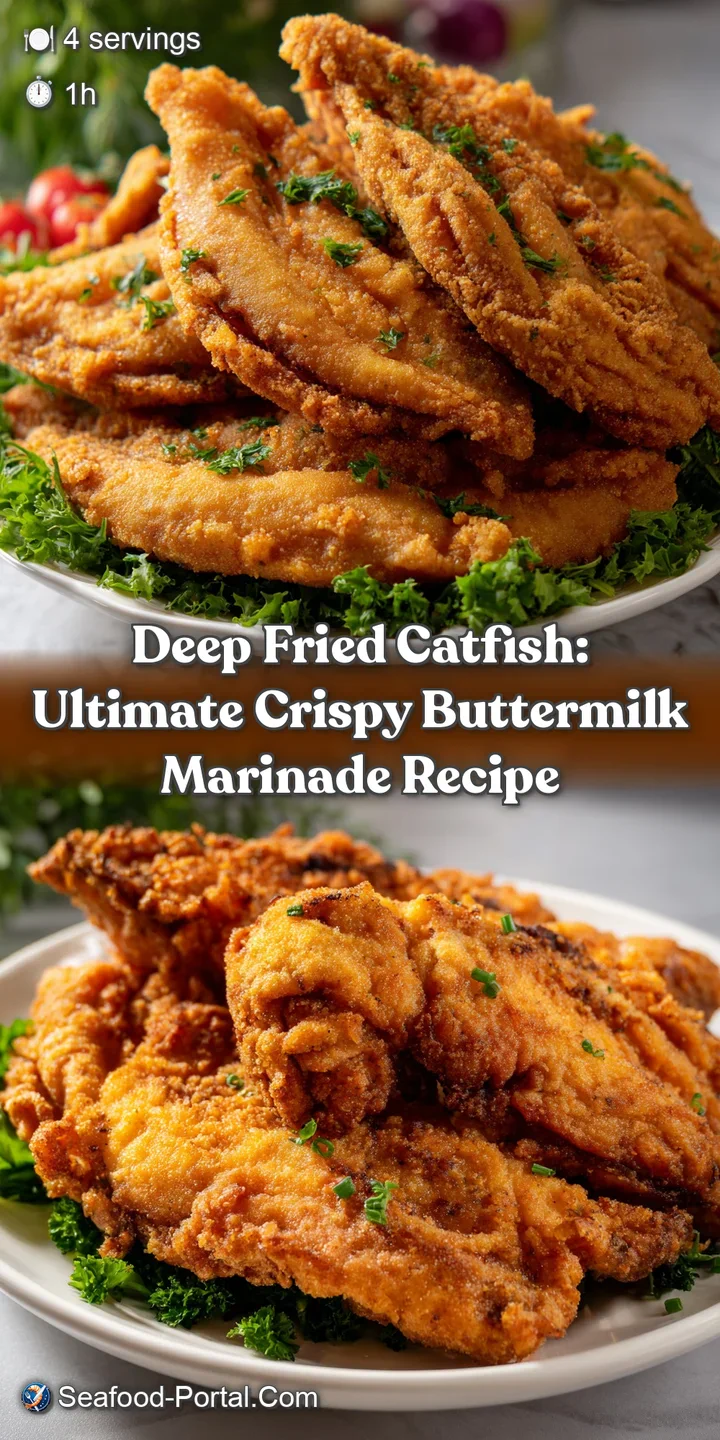
Recipe FAQs
Why is my fried catfish crust soggy or falling off?
Soggy crust often results from oil temperature being too low or overcrowding the fryer. Ensure the oil stays consistently between 350°F and 375°F, and always fry the fish in small batches to prevent the oil temperature from dropping drastically when the fish is added.
What is the ideal oil temperature for deep frying catfish?
The optimal temperature for deep frying catfish is 350°F (175°C). Maintaining this temperature ensures the coating sets instantly, preventing oil absorption, while allowing the inside to cook through without burning the exterior layer.
Can I skip the crucial buttermilk soak step?
While you can skip it, the buttermilk soak is highly recommended as it tenderizes the flesh and helps neutralize any residual "muddy" taste sometimes associated with catfish. It also provides the necessary acidic binder for the cornmeal coating to adhere firmly and evenly.
My fish turned out dry and rubbery inside. What went wrong?
Dry fish is almost always the result of overcooking. Catfish fillets cook extremely quickly, typically needing only 4 6 minutes depending on thickness, until the internal temperature reaches 145°F (63°C). Use a thermometer or remove the fish immediately once the flesh flakes easily with a fork.
How do I store leftover fried catfish, and what is the best way to reheat it?
Store cooled leftovers in an airtight container in the refrigerator for up to 3 days. To restore the beautiful crispness, reheat the fish in a 350°F oven or an air fryer for 8-10 minutes instead of using a microwave, which will make the coating soft.
Are there good substitutes for cornmeal in the coating mixture?
You can substitute the cornmeal mixture with panko breadcrumbs for a lighter, extra crunchy texture, or use gluten-free flour blend if necessary. For a richer, savory crust, many chefs also incorporate crushed pork rinds (chicharrones) into the coating mix.
Can this recipe be made in an air fryer instead of deep fried?
Yes, you can air fry, though the texture will be slightly drier and less intensely rich than deep fried. Preheat the air fryer to 400°F (200°C), lightly spray the coated fillets with oil, and cook for 12 15 minutes, flipping halfway, until golden brown and flaky.
Crispy Deep Fried Catfish Recipe
Ingredients:
Instructions:
Nutrition Facts:
| Calories | 2470 kcal |
|---|---|
| Protein | 45.3 g |
| Fat | 221.8 g |
| Carbs | 45.8 g |
