Creamy Crab Pasta Salad: Zesty and Velvety
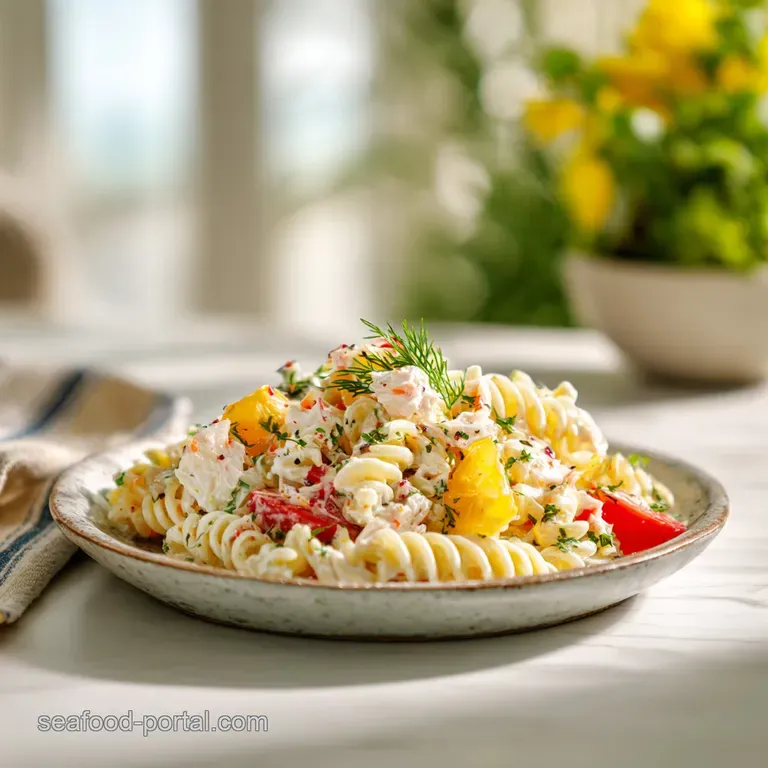
- Time: Active 20 minutes, Passive 1 hours 0 mins, Total 1 hours 30 mins
- Flavor/Texture Hook: Zesty, velvety, and snap crisp
- Perfect for: Summer potlucks, meal prep, and easy lunches
- Refreshing and Zesty Quick Crab Pasta Salad Recipe
- Why This Refreshing Salad Actually Works
- Strategic Choices for Every Ingredient
- Essential Tools for Great Results
- Detailed Steps for Culinary Success
- Solving Common Texture and Flavor Issues
- Creative Ways to Customize Flavors
- Debunking Common Pasta Salad Myths
- Proper Storage and Freezing Guidelines
- Ideal Side Dishes for Pairing
- Very High in Sodium
- FAQ
- Troubleshooting Common Issues
- Recipe FAQs
- 📝 Recipe Card
Refreshing and Zesty Quick Crab Pasta Salad Recipe
The first time I encountered a truly great crab pasta salad, I wasn't at a high end seafood shack or a coastal bistro. I was at a chaotic family reunion in a park, surrounded by the smell of charcoal smoke and cut grass.
Amidst the sea of heavy potato salads and wilted greens, there was this one bowl beaded with condensation that looked different. The moment the lid came off, the sharp, clean aroma of fresh dill and lemon hit me, cutting right through the humid afternoon air.
It wasn't just another mayo heavy side; it was bright, cooling, and had a "snap" to it that made everyone keep coming back for seconds.
That experience changed how I thought about "picnic food." For years, I struggled with pasta salads that turned into a gummy, flavorless block in the fridge. I realized that the secret isn't just about what you put in, but when you put it in.
This dish relies on the cultural tradition of the American "shore salad," a style that prizes accessibility and high contrast textures. We are using imitation crab, or surimi, which has a fascinating history rooted in Japanese culinary tradition as a way to make the ocean's bounty go further.
It’s consistent, holds its shape beautifully against the pasta, and provides that hit of savory seafood flavor that pairs so naturally with the bite of red onion and the sweetness of thawed peas.
Why This Refreshing Salad Actually Works
- Acid Anchoring: Adding apple cider vinegar to the pasta while it is still warm allows the acetic acid to penetrate the starch granules. This ensures the salad tastes seasoned from the inside out, rather than just being coated in sauce.
- Starch Stabilization: Chilling the pasta after cooking triggers retrogradation, which firms up the rotini. This prevents the pasta from turning mushy when it sits in the creamy dressing for several hours.
- Emulsion Buffer: The combination of mayonnaise and Greek yogurt creates a stable emulsion that is less likely to "break" or become oily than a mayo only dressing. The yogurt provides a lactic acid tang that lifts the heavier fats.
- Textural Contrast: Using finely diced celery and red bell pepper provides a "shatter" effect against the soft, velvety texture of the crab and the chewy pasta, keeping the palate engaged.
| Cooking Method | Total Time | Texture Result | Best Use Case |
|---|---|---|---|
| Traditional Stovetop | 10 minutes | Firm, "al dente" bite | Classic cold salads needing structure |
| Oven Baked (Casserole style) | 35 minutes | Soft, unified, and tender | Hot seafood bakes or gratins |
| One Pot Absorption | 15 minutes | Starchy, coated, and soft | Quick weeknight hot meals |
Choosing the stovetop method is non negotiable for this specific dish because we need to control the exact moment the pasta reaches "al dente" perfection. In an oven, the pasta continues to hydrate in the sauce, which would lead to a soggy mess once chilled.
On the stove, we can shock the pasta’s exterior and prepare it for that crucial vinegar soak that defines the flavor profile.
Strategic Choices for Every Ingredient
| Ingredient | Science Role | Pro Secret |
|---|---|---|
| Rotini Pasta | Surface Area Provider | The tight spirals act like "flavor traps" for the creamy dressing and herbs. |
| Imitation Crab | Protein Structure | Surimi is pre cooked and stable; it won't release excess water into the salad like thawed shrimp might. |
| Old Bay Seasoning | Aromatic Complexity | The celery salt and paprika notes bridge the gap between the sweet crab and the sharp onion. |
| Fresh Dill | Volatile Oil Source | Carvone and limonene in dill provide a cooling sensation that mimics the freshness of the sea. |
When selecting your pasta, I always reach for rotini or fusilli. The geometry of the spiral is actually functional here. While a smooth pasta like penne might let the dressing slide right off, the ridges of rotini grab onto the minced dill and tiny grains of Old Bay, ensuring you get a balanced bite every time. If you find yourself out of rotini, a sturdy bowtie (farfalle) is a great runner up. For a different flavor profile, you might enjoy this Crab Pasta Salad recipe which focuses on fresh vegetable integration.
Essential Tools for Great Results
You don't need a professional kitchen to pull this off, but a few specific tools make the process much smoother. A large stainless steel or glass mixing bowl is vital avoid reactive metals like aluminum, as we are working with lemon juice and vinegar which can pick up a metallic taste.
I also swear by a microplane for the lemon zest; you want those tiny, fragrant yellow curls to melt into the dressing, not large bitter chunks of peel.
A sharp chef's knife is your best friend for the celery and bell pepper. The goal is a uniform "small dice" (about 6mm). If the vegetable chunks are too large, they’ll fall to the bottom of the bowl; if they’re too small, they’ll lose their crunch.
Finally, a sturdy silicone spatula is better than a spoon for "folding" the crab. Surimi is delicate, and you want to keep those distinct flakey pieces intact rather than shredding them into a paste.
Detailed Steps for Culinary Success
- Bring 4 liters of water to a rolling boil in a large pot and add 2 tablespoons of salt. Add 450g (1 lb) of rotini pasta. Note: Salting the water is your only chance to season the pasta dough itself.
- Cook the pasta for 8-10 minutes until it is firm to the bite (al dente). Do not overcook, as it will soften further in the dressing.
- Drain the pasta immediately in a colander. While the steam is still rising, transfer the pasta to a large bowl and toss with 15ml (1 tbsp) of apple cider vinegar. Note: The heat helps the vinegar soak into the center of each noodle.
- Allow the pasta to sit for 5 minutes. You should smell a sharp, tangy aroma as the vinegar interacts with the warm starch.
- In a medium bowl, whisk together 120ml (1/2 cup) mayonnaise, 120ml (1/2 cup) Greek yogurt, 15ml (1 tbsp) Dijon mustard, 22g (1.5 tbsp) Old Bay, and the juice/zest of one lemon.
- Stir in 8g (2 tbsp) of minced fresh dill, 0.5 tsp salt, and 0.25 tsp black pepper until the dressing is velvety and pale orange.
- Add 450g (1 lb) chopped imitation crab, 120g (1 cup) diced celery, 75g (1/2 cup) red onion, one diced red bell pepper, and 150g (1 cup) thawed peas to the pasta.
- Pour the dressing over the top. Use a folding motion to combine until every spiral is glistening and coated.
- Taste the mixture. The flavors will be bright and sharp now, but they will mellow significantly after chilling.
- Cover tightly and refrigerate for at least 1 hour. Wait until the bowl is cold to the touch before serving.
Solving Common Texture and Flavor Issues
Why the Pasta Absorbs Too Much Dressing
It’s incredibly frustrating to pull your salad out of the fridge only to find it dry and clumpy. This usually happens because the pasta was either overcooked (making it more porous) or it wasn't allowed to cool sufficiently before the dressing was added.
When pasta is too hot, it drinks up the fats in the mayo and yogurt, leaving the solids behind. To fix this, simply fold in an extra tablespoon of Greek yogurt or a splash of milk just before serving to loosen the consistency and restore that velvety sheen.
Handling the Watery Salad Syndrome
On the flip side, sometimes you end up with a puddle at the bottom of the bowl. This is often caused by the vegetables. If you wash your celery, peppers, or peas and don't dry them thoroughly, that residual water migrates into the dressing.
Also, if you use frozen peas, ensure they are completely thawed and patted dry with a paper towel. The salt in the dressing can also draw moisture out of the vegetables over time, which is why a 1 hour chill is the "sweet spot" for flavor without losing structural integrity.
| Problem | Root Cause | Solution |
|---|---|---|
| Bland Taste | Undersalted pasta water | Add a pinch of Old Bay or a squeeze of fresh lemon just before serving. |
| Rubbery Crab | Over mixing | Fold the crab in last and very gently to maintain the flakey texture. |
| Crunchy Pasta | Under cooked starch | Ensure water is at a full rolling boil before adding pasta to the pot. |
Common Mistakes Checklist
- ✓ Never rinse your pasta with cold water; the starch on the surface helps the dressing stick.
- ✓ Use fresh dill only dried dill lacks the bright, grassy notes needed to balance the seafood.
- ✓ Dice your red onion very small to avoid overwhelming bites of raw sulfur flavor.
- ✓ Don't skip the apple cider vinegar soak; it's the difference between a flat salad and a multi dimensional one.
- ✓ Check the expiration date on your Old Bay; stale spices will make the salad taste dusty rather than zesty.
Creative Ways to Customize Flavors
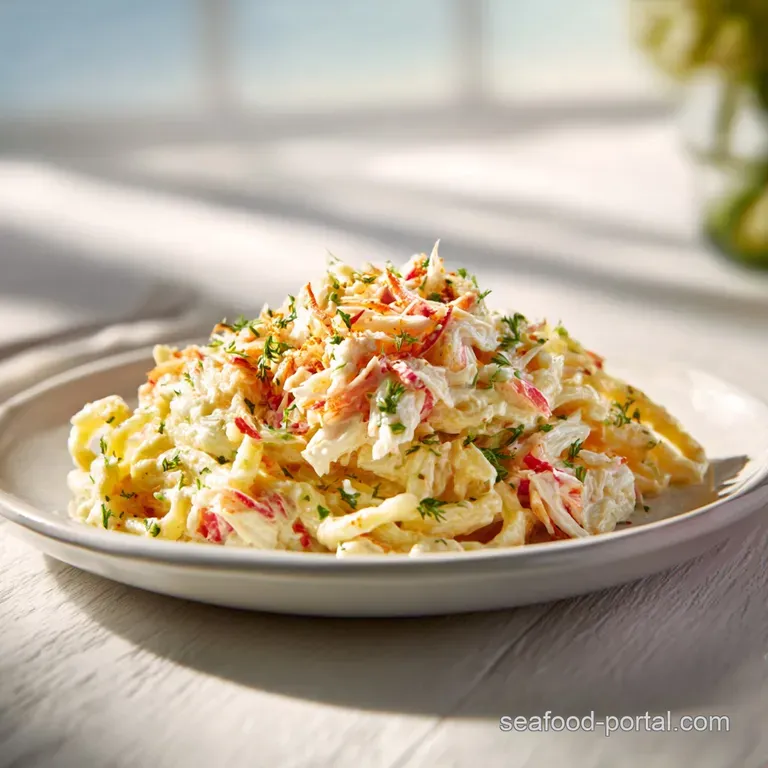
If you want to take this in a different direction, the "Decision Shortcut" below can help you pivot quickly. I often find that adding a bit of heat transforms the dish from a picnic side to a bold main course. You can also swap the protein if you have leftovers from a different meal. For instance, if you have extra shrimp, this silky Shrimp Alfredo technique can actually teach you a lot about how to handle seafood textures before adding them to a cold base.
- If you want a spicy kick: Add 1 teaspoon of sriracha or a pinch of cayenne pepper to the dressing.
- If you want a luxury version: Swap half the imitation crab for 225g of lump real crab meat (just be sure to pick through for shells).
- If you want it heartier: Add two hard boiled eggs, chopped into small cubes, to the final mix.
When scaling this recipe up for a large crowd, remember that spices don't always double linearly. If you are making 16 servings (2 lbs of pasta), start with 2 tablespoons of Old Bay and taste before adding the full 3 tablespoons. The saltiness can become concentrated quite quickly.
For the liquids, you can usually keep the 1:1 ratio of mayo to yogurt, but keep an extra half cup of yogurt on standby in case the larger volume of pasta dries out faster. If you're cutting the recipe in half, use a small lemon to ensure the acidity doesn't overwhelm the smaller amount of cream.
Debunking Common Pasta Salad Myths
One major misconception is that imitation crab is "fake" or "plastic." In reality, surimi is a high protein product made from sustainable white fish (usually pollock) that has been minced and flavored.
It's a staple in many cultures because it provides a consistent texture that real crab which can be finicky and watery sometimes lacks in a cold salad environment.
Another myth is that you must "seal" the pasta with oil after cooking to prevent sticking. Please, don't do this! Oil creates a waterproof barrier that prevents the vinegar and the dressing from actually adhering to the pasta. The spirals will just slide around in a greasy mess.
The best way to prevent sticking is the apple cider vinegar toss; the acidity breaks down just enough surface starch to keep the noodles separate while preparing them to bond with the creamy dressing.
Proper Storage and Freezing Guidelines
Storage: This salad is best enjoyed within 24 to 48 hours of making it. Keep it in an airtight container in the coldest part of your fridge. After three days, the vegetables will begin to lose their "snap" and the pasta may become overly soft.
Always give it a good stir before serving to redistribute the dressing that may have settled at the bottom.
Zero Waste Tip: Don't toss those celery leaves! Finely mince them and mix them in with the dill. They have a concentrated celery flavor that adds a sophisticated "herbal" note. Also, if you have leftover dressing, it makes a fantastic dip for raw carrots or a spread for a white fish sandwich.
Freezing: I strongly advise against freezing this dish. Mayonnaise based dressings undergo a process called syneresis when frozen and thawed, meaning they will separate into a grainy, oily mess. Plus,, the pasta will lose its structural integrity and become mushy.
This is a "fresh is-best" recipe that is so quick to assemble, it's better to make a smaller batch than to try and save it in the freezer.
Ideal Side Dishes for Pairing
This salad is a powerhouse on its own, but it truly shines when paired with contrasting flavors. Since it is creamy and cool, it loves the company of something hot and charred. Think grilled corn on the cob with a bit of lime and chili powder, or a simple platter of grilled zucchini spears.
The smokiness from the grill acts as a perfect foil to the bright dill and lemon in the pasta.
If you’re serving this as part of a larger seafood spread, it works beautifully alongside a hot protein. The contrast between a warm, seared piece of salmon and this cold, zesty salad is a sensory delight.
I’ve even served it as a side for a crisp white fish fry the acidity in the salad acts almost like a deconstructed tartar sauce, cutting through the richness of the fried coating. Just remember to keep the salad chilled until the very last moment to maintain that refreshing temperature gap.
Precision Checkpoints for Success
- Pasta Temperature: Ensure the pasta is between 50°C and 60°C when you add the apple cider vinegar.
- Dressing Consistency: The dressing should be thick enough to coat the back of a spoon without immediately running off.
- Chilling Duration: A minimum of 60 minutes in the refrigerator is required for the starch to set and the flavors to unify.
By following these specific sensory cues and scientific principles, you'll transform a simple bowl of pasta into a dish that people will actually ask for by name. It's about respecting the ingredients even the humble surimi and giving the starch the time and acid it needs to become truly flavorful.
Right then, let's get the water boiling!
Very High in Sodium
895 mg of sodium per serving (39% of daily value)
The American Heart Association recommends limiting sodium intake to less than 2,300mg per day, with an ideal limit of under 1,500mg for most adults.
Tips to Reduce Sodium
-
Choose Low-Sodium Imitation Crab-25%
Select imitation crab (surimi) labeled as 'low sodium' or 'no salt added'. This can significantly reduce the sodium from the processed seafood component.
-
Rethink the Seasoning Blend-20%
Old Bay Seasoning is a major source of sodium. Try using a homemade blend of herbs and spices like paprika, celery seed, mustard powder, and black pepper instead, or find a 'no salt added' version.
-
Reduce Added Salt-15%
The recipe calls for 0.5 tsp of salt. Try reducing this to 1/4 tsp or omitting it entirely, especially if you're using a low-sodium seasoning blend.
-
Boost Fresh Herbs and Spices
Amplify the flavor with generous amounts of fresh dill, lemon zest, and black pepper. You can also explore other fresh herbs like parsley or chives to add complexity without sodium.
-
Opt for Low-Sodium Mustard-5%
Dijon mustard can contain sodium. Look for a Dijon mustard variety that is specifically labeled as 'low sodium' or 'reduced sodium' to lower its contribution.
FAQ
Troubleshooting Common Issues
| Issue | Solution |
|---|---|
| Substitute the Greek yogurt for something else | Yes, you can use sour cream for a similar tang and thickness. If you prefer a much richer, traditional flavor, you can replace the yogurt with more mayonnaise, though you may want to add an extra teas |
| Possible to use real crab meat instead | Absolutely. Lump crab meat or backfin meat works beautifully. Just be sure to drain any excess liquid from the container and fold it in very gently at the very end to avoid breaking up the expensive l |
| Why do I need to add vinegar to the pasta while it is warm | Warm pasta is more porous because the starch granules are expanded. Adding the vinegar at this stage allows the flavor to be absorbed into the noodle itself, rather than just sitting on the surface, w |
| Use a different pasta shape | You can, but stick to "short cut" shapes with textures or holes. Penne, farfalle (bowties), or shells (conchiglie) are all excellent choices. Avoid long strands like spaghetti, as they are difficult t |
| How long can this salad sit out at a potluck | Because it contains mayonnaise and yogurt, you should not leave it at room temperature for more than 2 hours. If the temperature is above 30°C (90°F), that time drops to 1 hour. It’s best to keep the |
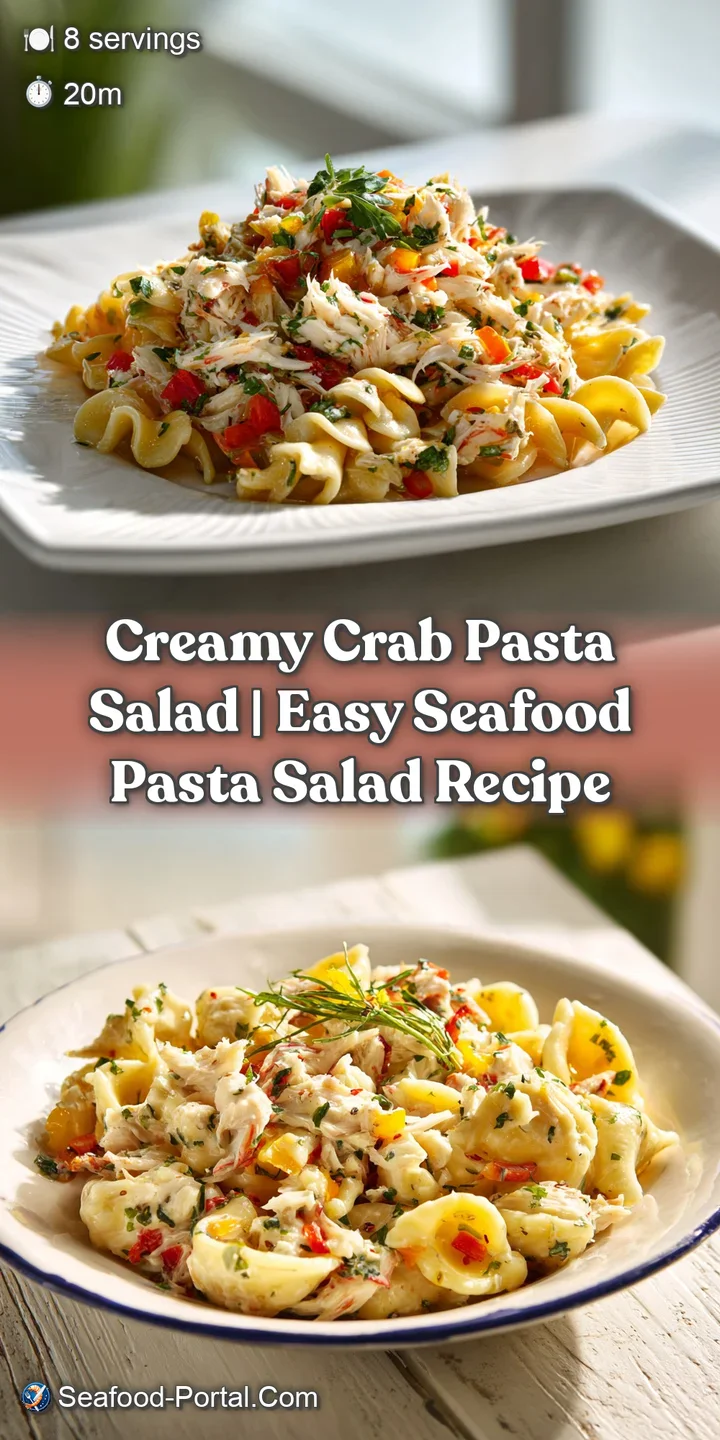
Recipe FAQs
What are the five mistakes to avoid pasta salad?
Avoid overcooking the pasta, skipping the warm vinegar toss, using too much dressing, under seasoning, and failing to chill. Cooking until soft leads to mushy texture; always aim for al dente, approximately 8-10 minutes.
Tossing with apple cider vinegar while warm is essential for deep flavor absorption.
What kind of pasta goes well with crab?
Rotini or bowtie pasta are the best choices. Their intricate shapes hold the creamy dressing, crab, and diced vegetables much better than flat or smooth noodles.
Are pasta salads good for diabetics?
Use moderation and focus on portion control. Because the salad contains carbohydrates from the pasta, pairing it with the high protein Greek yogurt and fiber rich vegetables helps moderate the impact on blood sugar compared to a plain pasta dish.
What should I put in my crab salad?
Combine your crab with celery, red onion, red bell pepper, and thawed peas for the best texture. These specific additions provide a necessary crunch that balances the tender imitation crab and creamy dressing.
Is it possible to use real crab meat instead?
Yes, absolutely. Lump or backfin crab meat works beautifully, but you must drain excess liquid first and fold it in very gently at the final stage to prevent the meat from breaking apart.
How to achieve the perfect creamy dressing consistency?
Whisk the mayonnaise, Greek yogurt, Dijon mustard, Old Bay, and lemon juice until completely smooth before adding the vegetables. If you enjoyed mastering the creamy sauce in our other recipes, you will find that a thorough whisking is the secret to a stable, uniform emulsion that coats every piece of rotini.
Should I serve this immediately after mixing?
No, refrigerate for at least one hour before serving. Allowing the salad to chill is vital because it gives the pasta enough time to absorb the dressing and for the Old Bay and fresh dill flavors to meld properly.
Creamy Crab Pasta Salad
Ingredients:
Instructions:
Nutrition Facts:
| Calories | 392 kcal |
|---|---|
| Protein | 14.2 g |
| Fat | 11.8 g |
| Carbs | 57.5 g |
| Fiber | 3.4 g |
| Sugar | 5.2 g |
| Sodium | 895 mg |
