Cozy Coconut Lime Fish Soup Recipe
- Time: Active 10 minutes, Passive 15 minutes, Total 25 minutes
- Flavor/Texture Hook: Silky coconut broth with zingy lime
- Perfect for: Stressful weeknights or a light weekend lunch
- Making Our Cozy Coconut Lime Fish Soup Recipe
- The Science Behind Silky Broth
- Component Analysis for Better Flavor
- The Alchemy of Fresh Elements
- Essential Kitchen Tools Needed
- Step-by-Step Cooking Guide
- Solving Your Soup Problems
- Scaling for Different Crowds
- Debunking Common Kitchen Myths
- Proper Storage and Waste
- Beautiful Presentation Ideas
- Creative Variations to Try
- Very High in Sodium
- Recipe FAQs
- 📝 Recipe Card
Making Our Cozy Coconut Lime Fish Soup Recipe
The very first time I attempted a version of this dish, it was a total disaster I boiled the fish so hard it turned into rubbery pencil erasers, and the coconut milk curdled into something that looked like cottage cheese. But the smell? Oh, the aroma of that ginger and garlic hitting the pan stayed with me.
I spent months tweaking the heat levels and the timing because I was obsessed with capturing that specific sensory magic. Now, when the red curry paste starts to sizzle in the coconut oil, my kitchen transforms into a sanctuary that smells like a tropical getaway.
You’re going to love how the sharp, citrusy zing of the lime cuts right through the velvety richness of the full fat coconut milk. It’s a soup that feels incredibly sophisticated but honestly comes together faster than most pasta dishes.
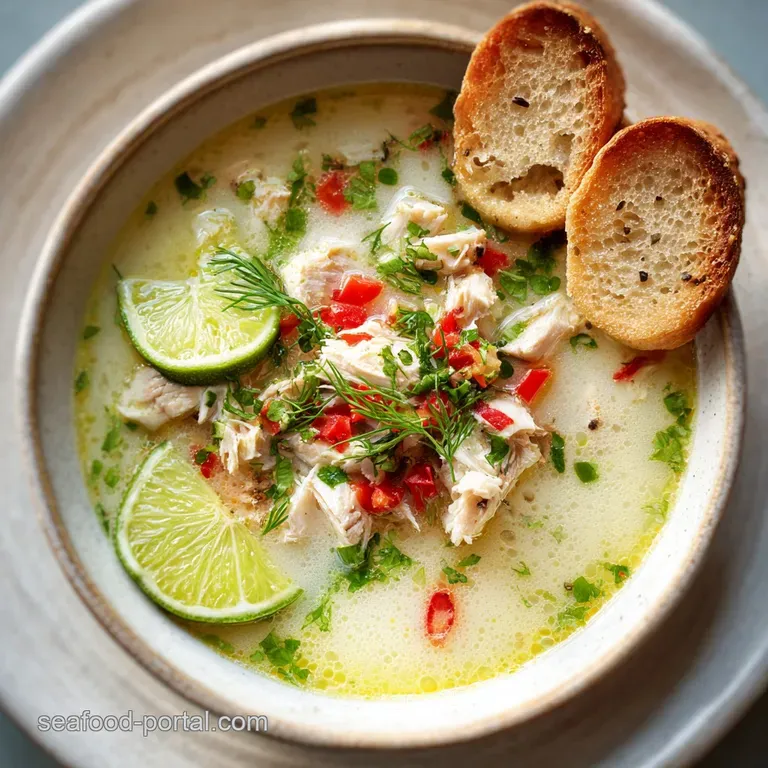
We’re going to use a gentle simmer rather than a rolling boil, which is the secret to keeping the fish tender enough to flake with just a spoon. Trust me, once you see those vibrant red peppers swimming in that ivory broth, you'll be hooked on this cozy coconut lime fish soup recipe for life.
We aren't just making a meal here; we're building layers of flavor that hit every part of your palate sweet, salty, sour, and a tiny bit of heat. This isn't one of those complicated recipes where you need a million tools; it's a straightforward, one pot wonder that relies on fresh ingredients and smart timing.
Let's get into why this method actually works so well every single time.
The Science Behind Silky Broth
Aromatic Blooming: Frying ginger and garlic in coconut oil releases fat soluble flavor compounds that simply won't dissolve in water alone.
Gentle Denaturation: Keeping the broth at a low simmer prevents the fish proteins from over tightening, ensuring a buttery and tender texture.
Emulsion Stability: The honey and fats in the coconut milk act as stabilizers, helping the acidic lime juice blend without curdling the broth.
Starch Softening: Slicing the bell peppers thinly allows their cell walls to soften just enough to release sweetness while retaining a slight crunch.
| Method | Time | Texture | Best For |
|---|---|---|---|
| Stovetop | 25 minutes | Delicate & Fresh | Most home cooks |
| Slow Cooker | 4 hours | Deeply Infused | Very tough fish |
| Instant Pot | 15 minutes | Soft & Tender | When in a rush |
This comparison highlights that while you can use different tools, the stovetop method remains king for maintaining that specific "shatter on-the tongue" texture of the fish. If you are a fan of these quick techniques, you might also enjoy exploring other Fish Recipes that use high heat for maximum flavor.
Component Analysis for Better Flavor
| Ingredient | Science Role | Pro Secret |
|---|---|---|
| Full fat Coconut Milk | Provides the lipid base for a velvety mouthfeel. | Avoid "lite" versions as they lack the necessary emulsifiers. |
| Fresh Ginger | Contains zingibain enzymes that help tenderize the fish. | Grate it while frozen to avoid those woody, fibrous strings. |
| Red Curry Paste | Delivers concentrated aromatics and a hit of capsaicin. | Bloom it in the oil for 60 seconds to wake up the spices. |
| Fish Sauce | Adds deep umami through fermented glutamates. | It smells strong but disappears into a savory background note. |
The interaction between the fish sauce and the lime juice is what creates that "addictive" quality in the broth. The saltiness from the sauce balances the high acidity of the citrus, preventing the soup from tasting too sharp or one dimensional.
The Alchemy of Fresh Elements
To make this cozy coconut lime fish soup recipe, you'll need to gather these specific items. Quality matters here, especially with the fish.
- 1 tbsp Coconut oil: This provides a thematic fat base that echoes the milk later on. Why this? It has a higher smoke point than butter. (Sub: Avocado oil)
- 3 cloves Garlic, minced: For that essential pungent base. (Sub: 1 tsp garlic powder in a pinch)
- 2 inch piece Fresh ginger, grated: Approx. 1.5 tbsp. Why this? Adds a spicy, floral heat you can't get from powder. (Sub: Galangal)
- 1 small Red bell pepper, thinly sliced: Adds sweetness and a pop of color. (Sub: Snap peas)
- 1 bunch Green onions: Separate the whites (for cooking) and greens (for garnish). (Sub: Shallots)
- 14 oz Full fat coconut milk: Must be unsweetened for this savory profile. (Sub: Heavy cream with a drop of coconut extract)
- 2 cups Seafood or vegetable broth: This forms the liquid volume. (Sub: Chicken bone broth)
- 1 tbsp Fish sauce: The secret to deep, savory flavor. (Sub: Soy sauce or Tamari)
- 1 tsp Honey: Just enough to balance the lime's acidity. (Sub: Brown sugar)
- 1 tbsp Red curry paste: For a mild, complex spice. (Sub: Yellow curry powder)
- 1.25 lbs Firm white fish: Such as Cod, Halibut, or Tilapia, cut into 1 inch cubes. Why this? Firm fish holds its shape without disintegrating. (Sub: Shrimp or Scallops)
- 2 large Limes: 1 zested and juiced, 1 cut into wedges for serving. (Sub: Lemon)
- 0.5 cup Fresh cilantro: For a bright, herbaceous finish. (Sub: Fresh Thai basil)
- 1 tsp Sea salt: To sharpen all the other flavors. (Sub: Table salt)
- 0.5 tsp White pepper: For a subtle, earthy heat that doesn't speckle the white broth. (Sub: Black pepper)
If you love the way the coconut and lime interact here, you'll find a similar flavor profile though with a nuttier crunch in our Almondine Fish recipe.
Essential Kitchen Tools Needed
Having the right gear makes the process seamless and prevents you from overcooking the fish while searching for a spoon.
- Heavy bottomed pot: A Dutch oven or a large saucepan works best to distribute heat evenly.
- Microplane or fine grater: Crucial for getting the ginger and garlic into a paste like consistency.
- Sharp Chef’s knife: To get those bell peppers into uniform, thin slivers.
- Silicone spatula: Perfect for scraping the bottom of the pot to ensure the curry paste doesn't scorch.
Chef's Tip: Always zest your limes before juicing them. It is nearly impossible to zest a deflated, squeezed lime half, and you don't want to miss out on those aromatic oils in the skin!
step-by-step Cooking Guide
1. Bloom the Aromatics
In your pot, heat 1 tbsp Coconut oil over medium heat. Add the minced garlic, 1.5 tbsp grated ginger, and the whites of the green onions. Sauté for about 2 minutes until the kitchen smells fragrant and the onions are translucent.
2. Sizzle the Peppers
Toss in the sliced red bell pepper. Cook for another 3 minutes. You want them to soften slightly but still have a bit of a snap when you bite into them.
3. Activate the Curry
Add 1 tbsp Red curry paste to the center of the pot. Stir it into the oil and aromatics for 1 minute. Note: This "blooming" step is vital to release the essential oils in the spices.
4. Build the Broth
Pour in 2 cups Seafood broth and 14 oz Full fat coconut milk. Whisk in 1 tbsp Fish sauce, 1 tsp Honey, 1 tsp Sea salt, and 0.5 tsp White pepper.
5. Simmer and Infuse
Bring the liquid to a very gentle simmer. Do not let it reach a rolling boil. Let the flavors meld for about 5 minutes. Smell Check: You should notice the sharp ginger scent starting to mellow into a creamy, sweet aroma.
6. The Gentle Poach
Carefully drop in the 1.25 lbs of cubed white fish. Submerge them completely in the liquid. Note: Moving the fish too much will cause it to break apart.
7. Monitor for Doneness
Cook the fish for 5 to 7 minutes until the flesh is opaque and flakes easily with a fork. The internal temperature of the fish should reach 145°F.
8. The Zesty Finish
Remove the pot from the heat. Stir in the lime juice, lime zest, and the chopped cilantro. This preserves the brightness of the herbs and citrus.
9. Final Adjustments
Taste the broth. If it needs more salt, add a splash more fish sauce. If it's too tart, a tiny pinch more honey will fix it.
10. Serve with Style
Ladle the soup into bowls, ensuring everyone gets plenty of fish and peppers. Garnish with the reserved green onion tops and a fresh lime wedge on the side.
Solving Your Soup Problems
Why Your Fish Disintegrated
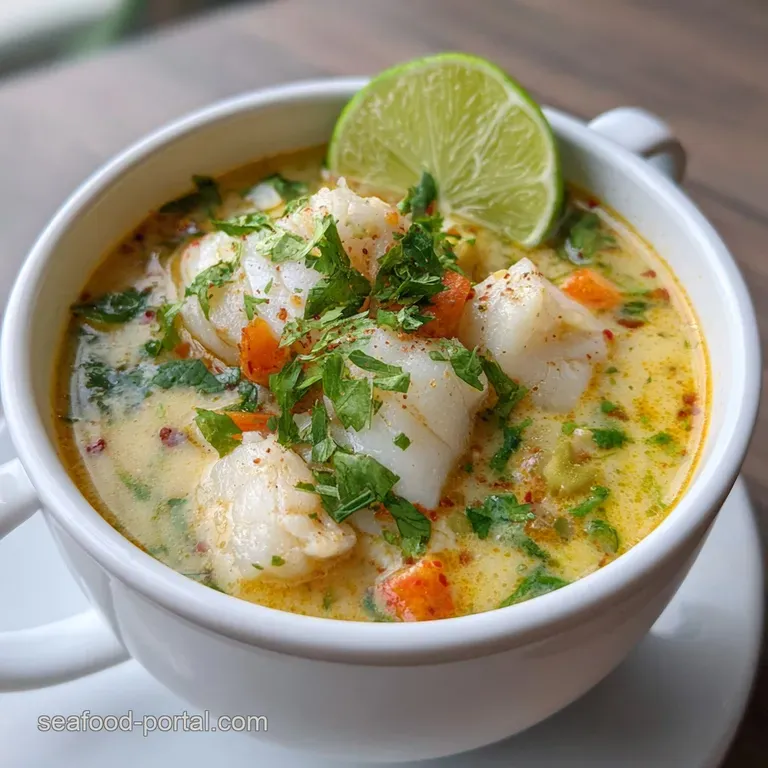
If your fish turned into mush, it's usually because the broth was boiling too hard or you stirred it too aggressively. The bubbling action of a hard boil physically tears the delicate protein fibers apart.
Next time, keep the liquid at a "lazy bubble" and use a spoon to gently push the fish under the surface once, then leave it alone.
Why the Broth Separated
Coconut milk can "split" if it gets too hot or if the lime juice is added while the soup is still boiling. The acid in the lime reacts with the proteins in the coconut milk, causing them to clump. Always add your citrus after you have turned off the flame to keep the texture velvety and smooth.
| Problem | Root Cause | Solution |
|---|---|---|
| Rubbery Fish | Overcooked or boiled too hard | Reduce heat; check doneness at 5 minutes |
| Flat Flavor | Not enough salt or acid | Add an extra tsp of fish sauce or lime juice |
| Too Much Heat | Too much curry paste | Stir in an extra splash of coconut milk to mellow |
Common Mistakes Checklist
- ✓ Pat the fish dry before cubing to ensure the broth clings to the surface.
- ✓ Don't skip the "blooming" of the curry paste; it tastes raw otherwise.
- ✓ Use full fat coconut milk; low-fat will result in a watery, thin soup.
- ✓ Add the lime juice at the very end to keep the flavor vibrant.
- ✓ Ensure the ginger is finely grated so you don't bite into a woody chunk.
Scaling for Different Crowds
Downsizing (1-2 People): You can easily halve this recipe. Use a smaller pot so the fish remains submerged in the liquid. If you only have one lime, use all the zest and juice, as the acid balance is crucial even in smaller batches.
Feeding a Group (8+ People): When doubling the recipe, don't double the salt or fish sauce immediately. Start with 1.5x the amount and taste as you go, as saltiness can concentrate. You will likely need a large Dutch oven to ensure the fish isn't crowded, which helps it cook evenly.
| Servings | Fish Quantity | Broth Volume | Cook Time |
|---|---|---|---|
| 2 people | 0.6 lbs | 1 cup | 15 minutes |
| 4 people | 1.25 lbs | 2 cups | 25 minutes |
| 8 people | 2.5 lbs | 4 cups | 35 minutes |
If you find yourself with extra fish but don't want to make more soup, you could use the leftovers for a quick PanSeared Tilapia recipe the following night.
Debunking Common Kitchen Myths
"You must use fresh coconut milk for it to be authentic." While fresh is lovely, high-quality canned full fat coconut milk is actually preferred by many chefs because it is consistently emulsified and has a predictable fat content. It's not a shortcut; it's a reliable staple.
"Boiling the lime juice longer makes it more flavorful." Actually, the opposite is true. Boiling lime juice destroys the volatile oils that give it that fresh, "zingy" punch, leaving behind only the harsh citric acid. This is why we always add it at the very end of the cooking process.
Proper Storage and Waste
Fridge Life: This soup stays fresh in the fridge for up to 3 days. Store it in an airtight glass container to prevent the aromatics from flavoring everything else in your refrigerator.
Freezing: I don't recommend freezing this specific recipe. Coconut milk often undergoes a texture change when frozen and thawed, becoming grainy or separated. The fish can also become quite mushy upon reheating.
Reheating: The best way to reheat is on the stove over low heat. Avoid the microwave, as it often creates "hot spots" that will overcook the fish while the broth is still cold. Heat just until steaming.
Zero Waste Tip: Don't toss those cilantro stems! Finely chop them and add them to the pot along with the garlic and ginger. They hold an incredible amount of flavor that often gets wasted. Also, save your squeezed lime halves to scrub your cutting board it cleans and deodorizes naturally.
Beautiful Presentation Ideas
To give this dish that restaurant quality look, focus on the contrast of colors. The ivory broth is a perfect canvas for the bright red peppers and the deep green of the cilantro. Use wide, shallow bowls rather than deep ones so the ingredients don't all sink to the bottom.
Drizzle a tiny bit of chili oil over the top right before serving to create beautiful red droplets on the surface. If you have extra limes, charred lime halves (placed face down in a hot pan for 2 minutes) make for a stunning and smoky garnish that guests can squeeze over their own portions.
Creative Variations to Try
For a Low Carb Twist
If you're watching your carbs, this recipe is already quite friendly. To make it even lighter, swap the red bell peppers for sliced zucchini or bok choy. Both vegetables absorb the coconut lime flavors beautifully without adding significant sugars.
For Extra Heartiness
If you want a more substantial meal, serve this soup over a scoop of fluffy jasmine rice or rice noodles. The starch will soak up that incredible broth, making it feel like a much heavier entree. You can also add a handful of shiitake mushrooms during the sauté step for an earthy, meaty texture.
A Spicy Seafood Medley
Don't feel limited to just one type of fish. A mix of 0.5 lbs of cod and 0.5 lbs of large shrimp makes for a fantastic texture contrast. Just remember that shrimp cook faster than fish, so add them in the last 3 minutes of simmering to keep them "snap tender" rather than rubbery.

Very High in Sodium
1375 mg mg of sodium per serving (60% % of daily value)
The American Heart Association recommends limiting sodium intake to about 2,300mg per day. This recipe significantly exceeds that limit.
Sodium Reduction Tips for Your Fish Curry
-
Low-Sodium Broth-30%
Replace regular seafood or vegetable broth with a low-sodium or no-salt added variety. This single change can drastically reduce the sodium content of the dish.
-
Omit Added Salt-25%
Eliminate the 1 tsp of sea salt from the recipe entirely. With other flavorful ingredients, you likely won't miss it. Taste and adjust other spices after cooking.
-
Reduce Fish Sauce-20%
Fish sauce is a significant source of sodium. Reduce the amount from 1 tbsp to 0.5 tbsp, or substitute with a low-sodium soy sauce alternative (use sparingly!).
-
Low-Sodium Curry Paste-15%
Red curry paste can be high in sodium. Look for a low-sodium version or make your own from scratch using fresh spices. Start with a smaller amount (e.g., 0.5 tbsp) and adjust to taste.
-
Flavor Boost
Enhance flavor with fresh herbs and spices! Use generous amounts of ingredients already in the recipe (garlic, ginger, cilantro, lime zest) and consider adding others (lemongrass, galangal, makrut lime leaves) to compensate for the reduced salt.
Recipe FAQs
Can I use frozen fish for this soup?
No, fresh is best. Frozen fish releases excess water, which dilutes the broth and can make the fish texture mushy when cooked.
Why did my coconut milk curdle?
It likely boiled too vigorously or the lime was added too soon. High heat and the acidity of lime juice can cause coconut milk to split. Try adding lime juice only after removing the soup from the heat.
What kind of fish is best for this soup?
Firm white fish like cod, halibut, or tilapia work perfectly. These varieties hold their shape well during the gentle poaching process, preventing them from disintegrating.
How can I make this soup spicier?
Increase the red curry paste or add fresh chili. You can add another teaspoon of red curry paste, or a finely minced fresh red chili or serrano pepper along with the garlic and ginger.
Can I substitute the fish for shrimp or scallops?
Yes, and adjust cooking time accordingly. Shrimp and scallops cook much faster than firm fish, so add them in the last 3-5 minutes of simmering to avoid overcooking.
How do I store leftovers?
Refrigerate in an airtight container for up to 3 days. While it's best fresh, it can be reheated gently on the stovetop. Freezing is not recommended as the texture of the coconut milk and fish can change.
What's the secret to a silky broth?
Gentle simmering and avoiding hard boils are key. This prevents the fish proteins from tightening too much and helps the coconut milk maintain its smooth emulsion, much like the stabilized dressing in our Easy Sautéed Prawns in Creamy Coconut Sauce: A Tropical Delight!.
Cozy Coconut Lime Fish Soup
Ingredients:
Instructions:
Nutrition Facts:
| Calories | 391 kcal |
|---|---|
| Protein | 30.8 g |
| Fat | 26.1 g |
| Carbs | 11.8 g |
| Fiber | 1.3 g |
| Sugar | 4.2 g |
| Sodium | 1375 mg |
