Seafood Bisque: the Chefs Classic Prawn and Cognac Indulgence
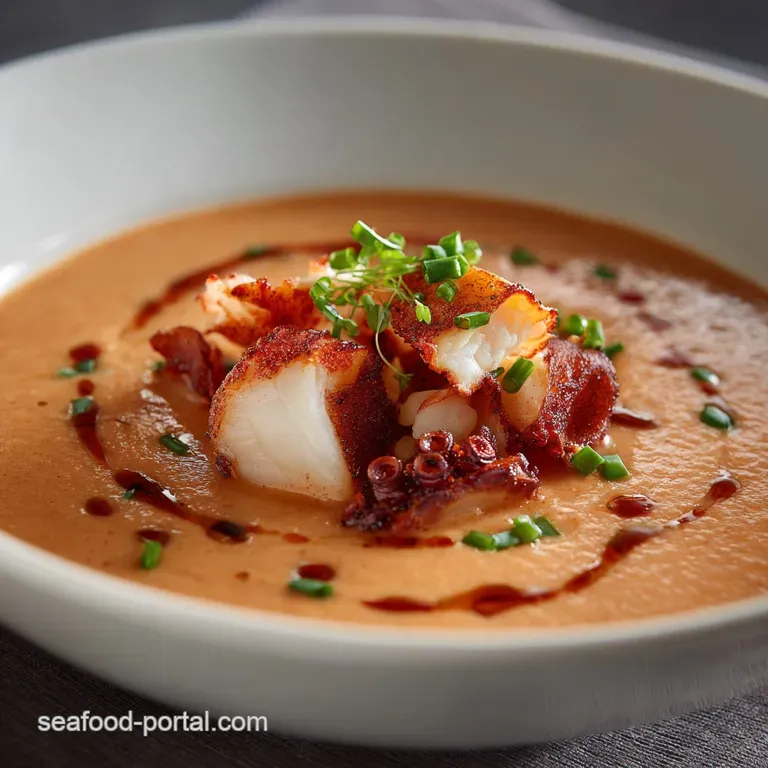
- Introducing the Chef's Classic Seafood Bisque: Complexity in Every Spoonful
- Achieving the Perfect Bisque: The Science of Silkiness and Depth
- Essential Components for Your Luxury Seafood Bisque
- The Method: Creating the Intense Prawn Stock and Finishing the Bisque
- Mastering the Technique: Chef's Pro Tips and Troubleshooting Guide
- Preparing Ahead: Storage, Shelf Life, and Reheating Your Bisque
- Elevating the Meal: What to Serve Alongside Seafood Bisque
- Recipe FAQs
- 📝 Recipe Card
Introducing the Chef's Classic Seafood Bisque: Complexity in Every Spoonful
You know that silence that falls over a table when someone takes a truly perfect, first bite of soup? This, my friends, is that soup. It’s got this incredible, deep red-orange color, and when you bring the bowl close, the aroma of roasted prawn shells, subtle white wine, and creamy decadence just hits you.
Forget watery imitations; this Seafood Bisque is velvety, smooth, and utterly restaurant worthy.
I know what you're thinking: Bisque sounds fancy, complicated, maybe something you only order out. But I promise you, while it requires patience especially with the straining it's surprisingly hands off once you get the stock simmering.
This recipe saves you money and delivers flavor depth that cheap canned versions can only dream about. If you can boil water and own a blender, you can tackle this.
We are going to move away from old-school, flour heavy methods and focus on extracting maximum, pure flavor. We’ll be roasting our shells, building layers of umami, and achieving that signature silkiness without the stress of a traditional roux.
Let’s crack on and make some soup that will truly impress everyone, including yourself.
Achieving the Perfect Bisque: The Science of Silkiness and Depth
This isn't just about throwing things into a pot and hoping for the best; the magic of a great bisque lies in technique. We are strategically layering flavors, focusing first and foremost on the stock. That stock is the spine of the entire dish.
The Difference Between Bisque and Chowder (It’s All About Texture)
If you’re wondering why this isn’t called "Seafood Chowder," the answer is simple: texture. Chowder is rustic, hearty, and often chunky, usually thickened with potatoes and flour, and served in a big bowl. A Creamy Shrimp Bisque must be elegant and entirely smooth.
It's supposed to be sipped, not chewed. That smooth, silken finish is non-negotiable for a truly classic bisque.
Why Roasted Shell Stock is the Secret to Umami and Intensity
You need to think of prawn shells not as garbage, but as concentrated flavor packets. When you melt butter and toss those shells in, roasting them until they turn vibrant pink, you activate the Maillard reaction. This is the simple science of browning that creates hundreds of new, complex flavor compounds.
This step is non-negotiable if you want deep, reddish color and rich, savory intensity.
The Maillard Reaction: Roasting Shells for Maximum Flavor
Sautéing the shells and mirepoix (onion, carrot, celery) in butter is where we lock in the umami. Cooking the tomato paste briefly with the aromatics before adding liquid allows the sugars to caramelize slightly, deepening the color and removing any raw, metallic taste.
We are building the foundation of this bisque from the bottom up.
The Role of Rice: Natural Thickening vs. Traditional Roux
Traditional French cooking often calls for a slow cooked roux (flour and fat), but honestly, who has time for that? We use a small amount of short grain rice. As the rice simmers in the stock, it releases starch, thickening the liquid naturally.
When we blend the stock later, the rice completely dissolves, giving you that beautiful, velvety mouthfeel without any cloying, floury residue.
Balancing Acidity and Richness with a Splash of Cognac
The richness of the cream and butter needs something sharp to cut through it. The Cognac (or brandy) provides this amazing layer of complexity and aroma. We deglaze the pan with it, evaporating the harsh alcohol while leaving behind a beautiful, complex fruity note.
Then the dry white wine finishes the job, providing essential acidity that prevents the bisque from tasting flat.
Chef's Note: Don't skip the Cognac! It's not just for flavor; the alcohol helps dissolve the roasted bits stuck to the pan (the fond), which is pure, concentrated flavor gold. Use whatever decent bottle you have on hand; no need for a fifty year-old vintage.
Essential Components for Your Luxury Seafood Bisque
Making great bisque starts with demanding the best ingredients, especially since we are relying on those shells for flavor.
Selecting the Freshest Prawns (Heads and Shells are Non-Negotiable)
This recipe is built entirely around the flavor locked in the shells, so you need the freshest, whole raw prawns you can find. If you see prawns with the heads still on, grab those immediately! The heads contain fat and flavor that create an unparalleled richness in the stock.
| Ingredient | Why We Use It | Substitution Suggestion |
|---|---|---|
| Prawn Shells/Heads | Source of deep, red color and Umami | Use lobster shells or crab shells. |
| Cognac/Brandy | Deglazing, aromatic depth, acidity | Dry Sherry, or high-quality reduced fish stock. |
| Heavy Cream | Essential richness and velvety texture | Full fat coconut milk (the cream part only) for dairy-free richness. |
| White Rice | Natural starch thickener | 2 Tbsp all-purpose flour added as a light roux before the stock liquid. |
The Aromatic Foundation: Mirepoix and Herbs
A classic mirepoix (onion, carrot, celery) is mandatory. It adds sweetness, earthiness, and structure to the stock. We cook it slowly, encouraging it to sweat without browning heavily. This releases the sugars slowly, ensuring the stock isn’t bitter.
Why Tomato Paste Is Crucial for Color and Flavor Base
Tomato paste is not just for color, although it certainly helps achieve that gorgeous sunset hue. By cooking it until it darkens slightly, you transform its flavor profile from acidic and bright to deep, savory, and caramelized. It’s what gives the bisque its necessary backbone.
Choosing the Right Dairy and Spirit (Heavy Cream vs. Crème Fraîche)
I prefer high fat heavy cream (35%) because it’s harder to split than thinner creams. Its high fat content ensures that silky, indulgent finish we crave in a Seafood Bisque Soup Recipe .
While Crème Fraîche would add a lovely tang, it’s best saved for garnishing, not for blending into the hot soup itself.
The Method: Creating the Intense Prawn Stock and Finishing the Bisque
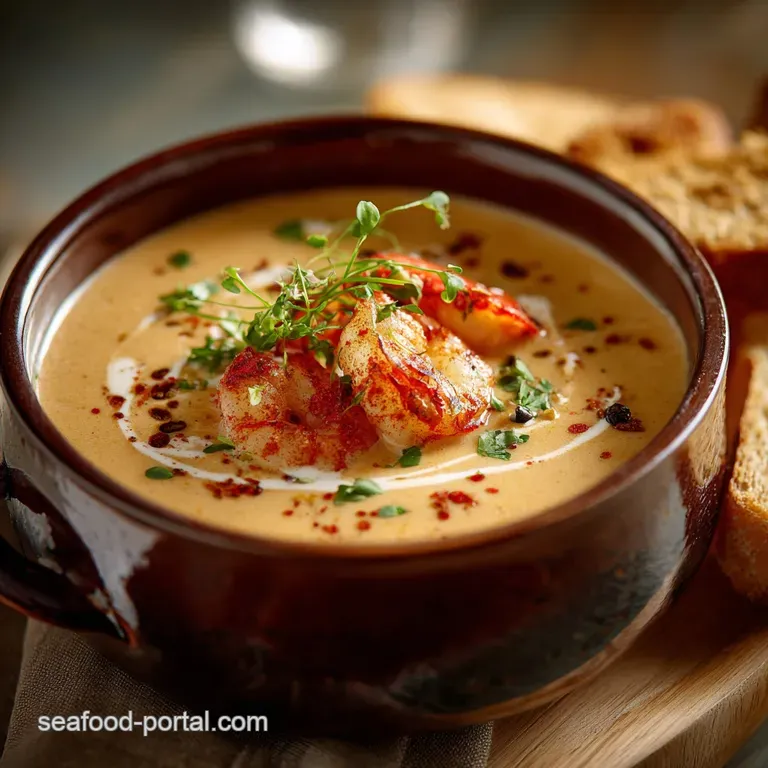
This process is broken down into four manageable phases. Read all the steps before you start chopping!
Phase 1: Roasting and Simmering the Flavor Base
The minute you start roasting those shells, your kitchen will smell like the best seafood restaurant ever. Melt the butter, throw the shells in, and sauté vigorously for 7 minutes, pressing them down with a spoon. Next, add your chopped mirepoix and tomato paste, cooking until fragrant.
Pour in the Cognac (stand back!) and let it reduce for 30 seconds before adding the wine and reducing that by half. Finally, add your water or fish stock, the rice, and the herbs. Bring it to a simmer, cover it, and leave it to cook gently for one hour. Patience is vital here.
Phase 2: Sautéing Aromatics and Building the Cream Base
Wait, didn't we sauté the aromatics already? Yes, but now we strain! The job of the first batch is done. Take the pot off the heat and strain the liquid through a coarse sieve, pressing down hard on the solids to extract every last drop. Seriously, press hard. Discard the shells and vegetables.
Return the liquid to the clean pot.
Phase 3: Blending, Double Straining, and Achieving Velvety Smoothness
Bring the stock back to a gentle simmer. This is when the rice does its thickening magic. If you are aiming for a really concentrated flavor, reduce the liquid until you lose about a cup’s worth. Now, use your immersion blender to blend the simmering liquid until the rice is completely pulverized.
Then, and this is the most important step for a silky texture, pour the liquid through a fine mesh sieve a second time . This catches any small fragments or grit. You want zero texture other than velvet.
Phase 4: The Final Touch: Reducing the Cognac and Garnishing
Return the silken liquid to the pot over low heat. Stir in the heavy cream and a tiny pinch of cayenne for warmth. Never let it boil now. Add your diced raw prawn meat and simmer for 2– 3 minutes until the prawns are opaque and perfectly cooked. Taste and adjust the seasoning. If you want a truly decadent weeknight treat, serving this alongside a slice of my Seafood Casserole Recipe: Ultimate Creamy Bake with Cheesy Crumb is truly luxurious.
Mastering the Technique: Chef's Pro Tips and Troubleshooting Guide
Why You Should Never Allow Bisque to Reach a Rolling Boil
Once you introduce the cream, the whole game changes. High heat will cause the emulsion to break, meaning the fat separates from the liquid, resulting in a grainy or curdled mess. Always keep it at the barest whisper of a simmer when the cream is in the pot. It should be steaming gently, never churning.
Avoiding a Grainy Finish (Tips for High Powered Blending)
Graininess happens when straining is rushed. Even if you use a high powered blender, those little bits of rice starch, shell fragments, or pulverized herb stems can remain. The double strain rule ensures a smooth finish.
If you don't have a fine mesh sieve, use a coffee filter or a couple of layers of cheesecloth lining your regular strainer. Don't worry if it strains slowly that's a sign it's doing its job!
The Double Strain Rule for a Truly Silken Texture
If you only remember one tip from this whole post, let it be this one. A truly great bisque is all about that smooth texture. Once through the coarse sieve to get rid of the big bits, and once through the fine sieve to catch the microscopic bits.
Trust me, it makes all the difference in the final mouthfeel of this Shrimp Bisque Recipe .
Preparing Ahead: Storage, Shelf Life, and Reheating Your Bisque
Optimal Refrigeration Practices for Best Flavor
This bisque is fantastic made ahead! Cool it completely before storing it. Pour it into an airtight container and refrigerate for up to 3 days. The flavor actually deepens overnight as all the spices and seafood notes mingle.
Can I Freeze Seafood Bisque? (Guidelines for Cream Based Soups)
This is tricky, but doable. Cream based soups generally don't freeze and thaw beautifully, as the high fat content can separate and become grainy. To successfully freeze it: freeze the stock before you add the cream.
Thaw the base, bring it to a simmer, and then whisk in the heavy cream right before serving. Frozen bisque base is good for up to 3 months.
Reheating Without Breaking the Emulsion
Never, ever use the microwave to reheat a large batch of bisque; it causes hot spots that can split the cream. Reheat the bisque gently on the stovetop over low heat, stirring occasionally. If it has thickened too much in the fridge, add a splash of warm water or fish stock as you reheat it.
This ensures it stays creamy and gorgeous.
Elevating the Meal: What to Serve Alongside Seafood Bisque
This bisque is rich, so you need sides that offer contrast and lightness.
I often serve this Seafood Bisque as a decadent first course before a heavier main like my Seafood Mac N Cheese: Indulgent King Prawn and Crab Bake Recipe . The depth of the soup really primes the palate.
A crisp, buttered baguette or some rustic crusty bread is mandatory for soaking up the last smears. Otherwise, a very simple side salad dressed with a sharp lemon vinaigrette will cut through the richness beautifully. No heavy side dishes are required here, as the bisque is the star of the show!

Recipe FAQs
Why is roasting the prawn shells such a critical step?
Roasting the shells is vital because it initiates the Maillard reaction, caramelizing the proteins and sugars within the shells. This process creates a much deeper, more complex, and intensely savory "umami" flavor that simple boiling cannot achieve.
My bisque is slightly grainy and not perfectly smooth. What went wrong?
A grainy texture usually occurs if the soup base was not blended thoroughly enough, or if it wasn't strained properly after blending the solids. For the smoothest result, blend the mixture for at least two full minutes in a powerful blender and then push the final product through a fine mesh sieve or a chinois.
Can I substitute the prawns for another type of seafood?
Yes, you can easily substitute prawns with lobster, crab, or crawfish, as these shells also yield a rich stock base. Remember that for a true bisque, you must use the shells of the chosen seafood to create the initial, deeply flavored stock.
Is the Cognac optional, or is it necessary for the flavor?
While the Cognac can technically be omitted, it plays a key role by providing a crucial aromatic depth and balancing the heavy richness of the cream and seafood. If you prefer to avoid alcohol, substitute the Cognac with a tablespoon of dry sherry or a dash of white wine vinegar for a similar acidic lift.
How can I thin the bisque if it becomes too thick after simmering?
If the bisque has reduced too much, simply thin it gradually by whisking in small increments of warm fish stock, water, or whole milk. Avoid using cold liquid, as this can shock the emulsion and cool the entire soup unevenly.
Does this Seafood Bisque freeze well for future use?
Because this recipe contains a high quantity of heavy cream, freezing the finished bisque is not recommended, as dairy tends to separate and become grainy upon thawing. If you need to prepare ahead, freeze the strained bisque base (before adding the heavy cream), and stir in the cream only after the base has been reheated.
Why does this recipe use rice for thickening instead of a traditional roux?
The rice is blended directly into the stock, providing a silken, natural thickening agent that is common in classic French preparation and eliminates the need for flour. This technique imparts a smooth, velvety mouthfeel without adding any competing flour flavor, making the bisque incredibly light and luxurious.
Classic Seafood Bisque With Cognac

Ingredients:
Instructions:
Nutrition Facts:
| Calories | 520 kcal |
|---|---|
| Protein | 38.6 g |
| Fat | 23.7 g |
| Carbs | 30.6 g |
