Maine Lobster Roll: the Proper Chilled Coastal Classic

- The Quintessential Maine Lobster Roll: A Chilled Coastal Classic
- Mastering Texture and Temperature: The Science of the Perfect Roll
- Essential Components for Your Maine Lobster Roll
- Step-by-Step Guide: Assembling the Ultimate Seafood Roll
- Achieving Excellence: Chef's Tips for the Best Maine Lobster Roll
- Practical Guide: Storing Components and Leftover Lobster Salad
- What to Serve Alongside Your Classic Lobster Roll
- Recipe FAQs
- 📝 Recipe Card
The Quintessential Maine Lobster Roll: A Chilled Coastal Classic
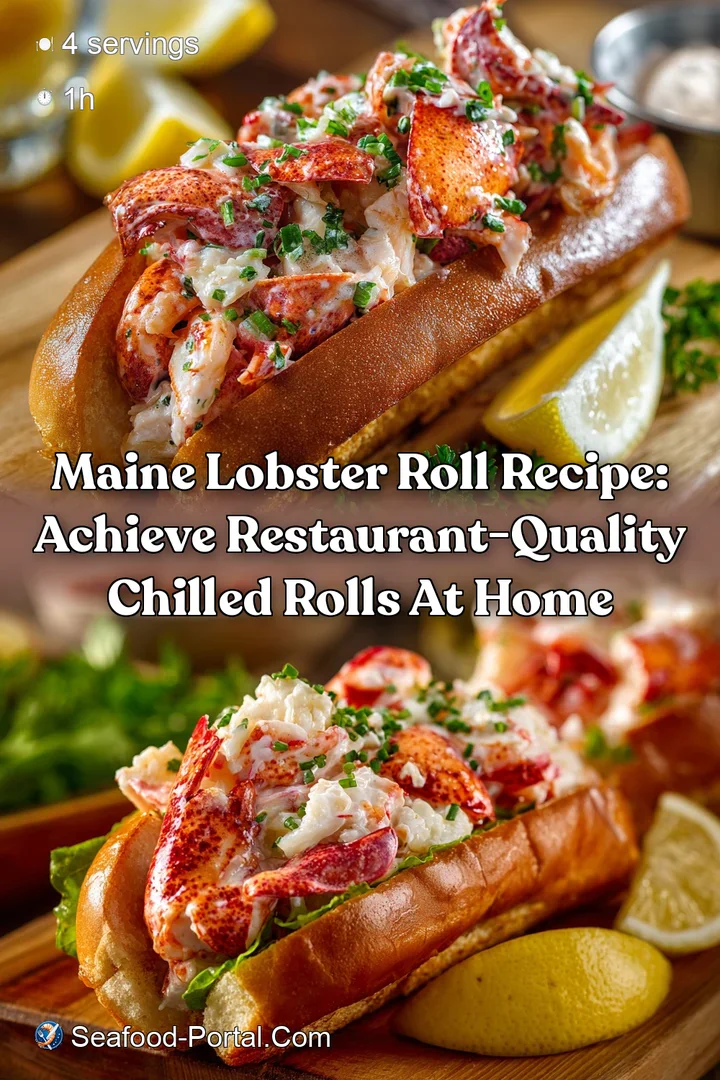
Imagine sinking your teeth into a perfectly toasted bun, the exterior giving way with a buttery crunch before you hit the cool, sweet pile of seafood within. That’s the Maine lobster roll experience, full stop. The aroma is pure coastal comfort: fresh sea brine mixed with a nutty hint of brown butter.
It is truly brilliant.
I know what you're thinking lobster is expensive but making this iconic roll at home is actually far cheaper than flying up to Portland, trust me. When you skip the restaurant markup, this stunning dish becomes a weeknight lifesaver that feels completely decadent.
It requires minimal active cooking time, especially if you start with pre-cooked meat.
We are diving deep into the true classic today: the Maine style. This version is chilled, lightly dressed, and utterly perfect for showcasing high-quality, succulent lobster meat. Get your split top buns ready, because we’re making seafood magic.
Mastering Texture and Temperature: The Science of the Perfect Roll
This isn't just about putting ingredients on bread. Achieving the platonic ideal of the Maine Lobster Roll relies on two opposing textures and two opposing temperatures working in harmony. We want crisp, hot buttered bread housing cool, tender, and slightly crunchy salad.
The Difference: Maine vs. Connecticut Style Explained
This is where the debate gets heated, literally. When people talk about Maine Lobster Roll (our focus), they mean the cold, mayonnaise based version. It’s light, brightened by citrus, and usually contains celery or chives for texture. On the other hand, the Connecticut style is hot.
The meat is warmed gently in copious amounts of clarified butter and served immediately. Both are fantastic, but today, cold rules the coast.
Simplicity Triumphs: Why Minimal Ingredients Matter
A proper Maine Lobster Roll is an ode to the star ingredient. If your mixture tastes primarily of heavy mayonnaise, you’ve missed the point entirely. The dressing should serve only as a subtle binder and a vehicle for brightness (lemon), not as a smothering blanket.
The secret is using just enough high-quality mayonnaise to coat, but not drown, the beautiful lobster chunks.
The Anatomy of Perfection: Defining the Proper Roll
The split top hot dog bun isn't a suggestion; it's a rule. The flat, perpendicular sides of this specific bun allow for maximum surface area contact with the butter and the griddle, ensuring every bite has that critical golden crunch.
If you use a regular bun, you lose the foundational integrity of the Maine experience.
The Role of Cellar Temperature Chilling
I once served the lobster salad immediately after mixing and it tasted fine, but not great . The flavors were disjointed. Chilling the dressed lobster for at least 30 minutes is essential because it allows the fat from the mayo and the acid from the lemon to penetrate the meat slightly, resulting in a cleaner, more cohesive flavor profile.
It also ensures the perfect temperature contrast against the hot bun.
Buttering Technique: Achieving the Golden Crunch on the Bun
Don't use cold butter or oil here. You need fully melted, hot clarified or whole butter, applied generously to those flat bun sides. If you want next level flavor (and trust me, you do), melt the butter until it turns pale brown and smells nutty that’s brown butter, or beurre noisette .
That subtle, complex flavor takes the toasted bun from good to unforgettable.
Acid Balance: Lemon Zest vs. Lemon Juice in the Dressing
Many recipes call for both, but I rely primarily on fresh lemon juice. Juice adds necessary moisture and acid to cut through the richness of the mayo and butter. A little lemon zest can add volatile oils for aroma , but too much zest can taste overwhelmingly sharp and distract from the sweet lobster.
Keep it simple: fresh juice does the heavy lifting.
Essential Components for Your Maine Lobster Roll
Sourcing the Star: Fresh vs. Frozen Lobster Meat Selection
Freshly steamed or boiled lobster that you crack yourself is always the gold standard, especially if you're using beautiful tails (Here’s my guide on [Boiled Lobster Tail: Simple, Succulent, and Ready in Under 10 Minutes] if you want to cook it yourself!).
However, pre-cooked frozen meat specifically claw and knuckle meat works wonderfully for rolls. It’s naturally sweeter and more tender.
| Ingredient | My Top Choice | Viable Substitute |
|---|---|---|
| Lobster Meat | Freshly cooked Claw & Knuckle | high-quality lump Crab Meat or Langoustine |
| Split Top Buns | Pepperidge Farm or similar New England style | Sliced Brioche Hot Dog Rolls |
| Mayonnaise | Duke's or Hellmann's (Full Fat) | Plain Full Fat Greek Yogurt (for tangier result) |
| Celery | Hearts of Celery (Finely Diced) | Finely minced Fennel bulb (for a subtle anise note) |
| Butter | Unsalted Butter (for browning) | Clarified Butter (Ghee) |
The Bread Choice: Why the Split Top Bun is Non-Negotiable
We talked about geometry earlier, but let’s be serious about flavor. The soft, slightly spongy texture of the split top bun is the perfect foil for the sturdy lobster chunks.
Because the sides are flat, the entire surface can be evenly coated in fat and toasted until it achieves a perfect, uniform golden crust . Any other bread risks becoming soggy or just structurally unsound.
The Binding Agent: Mayonnaise Quality and Quantity Control
The quality of your mayonnaise matters immensely here. Since there are so few ingredients, a cheap, thin, or overly sweet mayo will ruin the whole experience. I always use a rich, full fat American mayo like Duke's or Hellmann's. Crucially, we are aiming for 8 parts lobster to 1 part mayonnaise.
We are binding, not creating tuna salad.
Adding Crunch: The Necessity of Finely Diced Celery
Do not skip the celery, even if you think you hate it. We need texture contrast against the soft meat and creamy dressing. Fine dicing is key; you don't want massive chunks, just tiny, crisp bits that provide a refreshing bite and a subtle vegetal note.
I’ll sometimes add a few minced chives too, just for a fresh, oniony lift.
step-by-step Guide: Assembling the Ultimate Seafood Roll

Prepping the Lobster: Optimal Size and Draining Techniques
First, make sure the lobster meat is completely drained and patted dry. Excess moisture equals watery, bland dressing. Cut the meat into large, 1 inch chunks. We want satisfying, meaty bites, not shredded filler.
Chef's Note: If you are using frozen lobster, thaw it slowly overnight in the fridge and pat it aggressively dry with paper towels. Water is the enemy of creamy seafood salad.
The Dressing Phase: Lightly Coating the Seafood
In a small bowl, whisk together your high-quality mayo, fresh lemon juice, celery, a pinch of salt, and pepper. Add about three quarters of this dressing to your lobster chunks. Use a rubber spatula to gently fold the mixture.
You should see streaks of white dressing and bright pink white lobster. If it looks uniform, you’ve used too much. If it still looks dry, add the remaining dressing. Now cover the bowl and chill.
Building the Roll: Toasting and Stuffing Methodology
While the lobster chills, prepare the rolls. Melt your butter until foaming or, better yet, slightly browned. Brush both flat sides of the bun generously. Toast them on a medium hot griddle for 2- 3 minutes per side until they are deeply golden and crunchy .
As soon as they are done, fill them immediately. The hot bread against the cold filling creates that signature sensory explosion.
Achieving Excellence: Chef's Tips for the Best Maine Lobster Roll
I learned the hard way that impatience ruins these simple recipes. Don't rush the chill time, and definitely don't rush the buttering process.
- Pre-Season the Meat: Even before dressing, toss the lobster chunks with a tiny bit of salt. This draws out any remaining moisture and helps flavor the meat from the inside out.
- Use the Right Knife: When dicing the celery and chives, make sure your knife is sharp. You want clean cuts, not bruised herbs, which taste bitter.
- Consider a Side of Bisque: If you have any leftover lobster bodies or shells, make a rich, warming companion dish. Nothing pairs better with the cold roll than a hot cup of [Lobster Bisque: The Proper French Classic Soup Recipe]. It is the ultimate pairing.
Practical Guide: Storing Components and Leftover Lobster Salad
Food Safety: How Long Does Lobster Salad Last?
Because this recipe contains cooked seafood and mayonnaise, food safety is paramount. When properly stored in an airtight container in the coldest part of your refrigerator (usually the back of the middle shelf), lobster salad is safe for 2 3 days .
Always smell and visually inspect it before consuming.
Can You Freeze Lobster Salad? (Spoiler: The Mayo Problem)
No, please don't freeze the assembled salad. Mayonnaise is an emulsion of egg and oil, and when frozen and thawed, the water separates from the oil. This results in a weeping, oily, and grainy mess that is completely unappetizing.
If you must freeze the lobster , freeze the plain, cooked meat only. Then thaw and mix the dressing fresh when you are ready to assemble.
Reconstituting the Roll: Tips for Day-Old Bread
If you stored leftover lobster salad separately, you can easily reconstitute the experience. Always toast a fresh bun for a day-old filling never use a bun that has already been filled, as it will be hopelessly soggy.
If you have leftover toasted buns, briefly re-toast them in a toaster oven or air fryer to regain that essential crunch.
What to Serve Alongside Your Classic Lobster Roll
The side dish should complement the richness of the butter and mayo, offering a refreshing contrast. Keep it light and sharp.
- Vinegar Based Slaw: Skip the heavy, creamy coleslaws. A bright, crunchy cabbage slaw dressed with apple cider vinegar is the perfect palate cleanser.
- Kettle Cooked Crisps: Salt and pepper or, ideally, Sea Salt and Vinegar chips are required. The extra crunch and sharp acid are essential.
Avoiding a Soggy Roll: The Importance of Dry Lobster Meat
This is mistake number one. A wet roll is a tragedy. Even if you cook your own lobster flawlessly (perhaps using my tips for [Garlic Butter Lobster Tails: Restaurant Quality Broiled in 10 Mins]), make sure you chill it, then pat it dry before mixing.
Any residual moisture will thin the mayo and make the toasted bun fall apart faster than a cheap suit.
Over Dressing Pitfalls: Keeping the Lobster the Priority
Remember, we are making a lobster roll, not a mayo sandwich with lobster accents. Use the dressing sparingly. If the mixture is dripping, you have used too much. It should be barely bound, allowing those stunning, large chunks of meat to take center stage.
The Perfect Poach: Preparing Live Lobster for the Roll
If you’re tackling live lobster, cooking is straightforward. Bring salted water to a rolling boil, drop the lobster in, and cook until bright red (usually 8- 10 minutes for 1.25 lb lobster).
Immediately plunge the cooked lobster into an ice bath to stop the cooking and chill the meat completely. This rapid chilling ensures the meat is firm, sweet, and doesn't continue steaming inside its shell.
Food Safety: How Long Does Lobster Salad Last?
(See previous section for detail 2 3 days in the fridge.)
Can You Freeze Lobster Salad? (Spoiler: The Mayo Problem)
(See previous section No, do not freeze the dressed salad!)
Reconstituting the Roll: Tips for Day-Old Bread
(See previous section Always use fresh, hot bread for filling.)
Recipe FAQs
Can I use pre-cooked or frozen lobster meat for the best result?
While freshly steamed and chilled lobster is always superior, high-quality frozen knuckle and claw meat can work well if thawed properly. Ensure you thaw the meat slowly overnight in the refrigerator, and critically, pat it completely dry with paper towels before mixing the salad.
Any residual moisture will make your roll soggy and dilute the flavour.
Why is my lobster roll filling watery or soggy?
Sogginess is usually due to excess moisture trapped in the cooked lobster meat or too much acidity added too early. Ensure the lobster meat is fully chilled and thoroughly drained and dried before combining it with the mayonnaise and celery. If adding lemon juice, do so sparingly and just before serving.
What is the secret to getting a perfectly golden, crispy bun?
The secret lies in using a New England style split top bun and using a generous amount of fat. Brush the outsides of the bun generously with clarified butter or unsalted melted butter before toasting on low to medium heat.
Toasting slowly until deeply golden ensures the bun is structurally sound and creates a delicious protective barrier against the cold filling.
How far in advance can I prepare the lobster salad filling?
While the lobster meat should be cooked and chilled, the salad filling itself should ideally be assembled close to serving time for maximum freshness. You can safely mix the filling up to 4 hours in advance, keeping it tightly covered and refrigerated.
If stored longer, the celery tends to lose its crunch and the mayonnaise may separate slightly.
Can I turn this Maine (chilled) recipe into a Connecticut (warm) style roll?
Yes, but you must omit the mayonnaise and celery entirely. For the Connecticut style, gently heat the lobster chunks in a saucepan with a generous amount of melted unsalted butter (do not brown the butter). Serve the warm, butter drenched meat immediately in the toasted split top bun.
What is the recommended size for the lobster chunks?
The meat should be cut into large, substantial chunks, often around 1 inch, allowing the diner to clearly taste the quality of the lobster. Avoid shredding the meat, as this sacrifices texture and can result in a mushy filling. We want to celebrate the meat, not disguise it.
What kind of mayonnaise works best for this classic recipe?
Use a high-quality, full fat mayonnaise that is rich and creamy, rather than a low-fat or overly sweet version. Regional favorites like Hellman’s/Best Foods or Duke’s provide the necessary binding consistency and balance the richness of the buttered bun perfectly.
Avoid strongly flavoured aiolis, which would overpower the delicate lobster.
Classic Maine Chilled Lobster Rolls

Ingredients:
Instructions:
Nutrition Facts:
| Calories | 500 kcal |
|---|---|
| Fat | 30 g |
| Fiber | 1 g |
