Classic Lobster Thermidor: a Velvety Seafood Classic
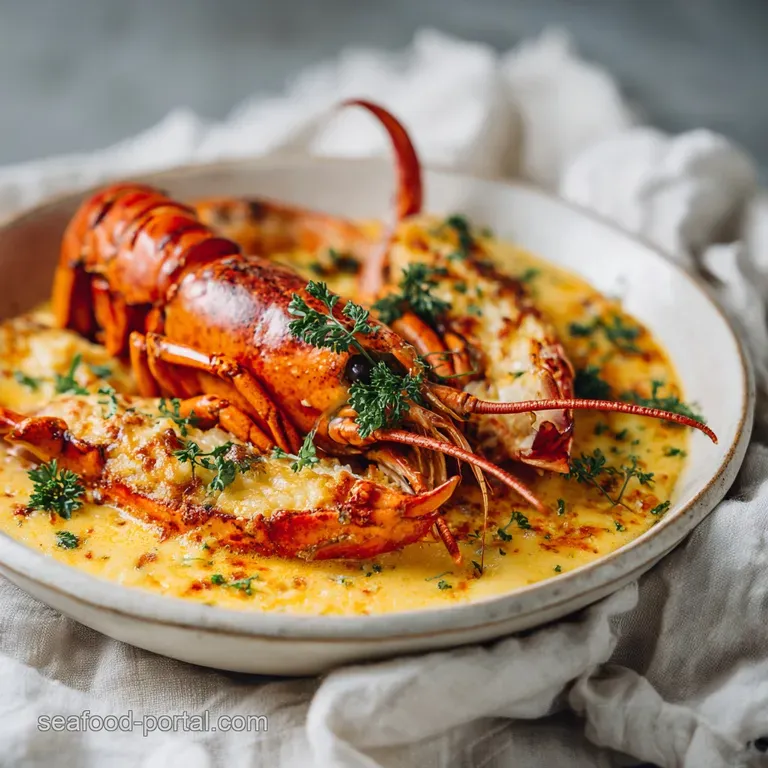
- Time: Active 20 minutes, Passive 25 minutes, Total 45 minutes
- Flavor/Texture Hook: A velvety, cognac infused sauce topped with a golden parmesan crust that offers a satisfying shatter.
- Perfect for: A high end dinner party or a romantic date night that feels restaurant quality.
- Making a Classic Lobster Thermidor Recipe
- Essential Stats for This Recipe
- Components of the Best Thermidor Sauce
- Tools for This Seafood Masterpiece
- Detailed Steps for a Flawless Finish
- Essential Components for Rich Flavor
- Solving Common Texture and Flavor Issues
- Adjusting Servings for Any Occasion
- Creative Ways to Personalize Flavor
- Exposing Common Lobster Cooking Myths
- Freshness Tips and Zero Waste
- Best Sides for This French Classic
- Very High in Sodium
- Recipe FAQs
- 📝 Recipe Card
Making a Classic Lobster Thermidor Recipe
The first time I really understood the magic of a lobster thermidor recipe, I was standing in a cramped kitchen in a seaside town. The air was thick with the scent of salt spray and the sharp, nose tingling aroma of cognac hitting a hot pan.
That specific "whoosh" of steam, followed by the deep, earthy smell of shallots softening in grass fed butter, is something you never forget. It's a dish that carries a reputation for being fussy, but once you hear that first sizzle of the lobster meat hitting the pan, you realize it's just about layering flavors with a bit of confidence.
There is a common myth that you need gallons of heavy cream and a professional chef’s license to make this work. Honestly, forget everything you’ve heard about this being an impossible French mountain to climb.
The beauty of this version is that it focuses on the contrast between the sweet, plump lobster chunks and the bright, herbaceous notes of tarragon. We aren't burying the seafood; we're giving it a stage.
Most people think the sauce needs to be thick enough to stand a spoon in, but a truly great Thermidor is about a silky, flowing consistency that coats the lobster like a warm blanket.
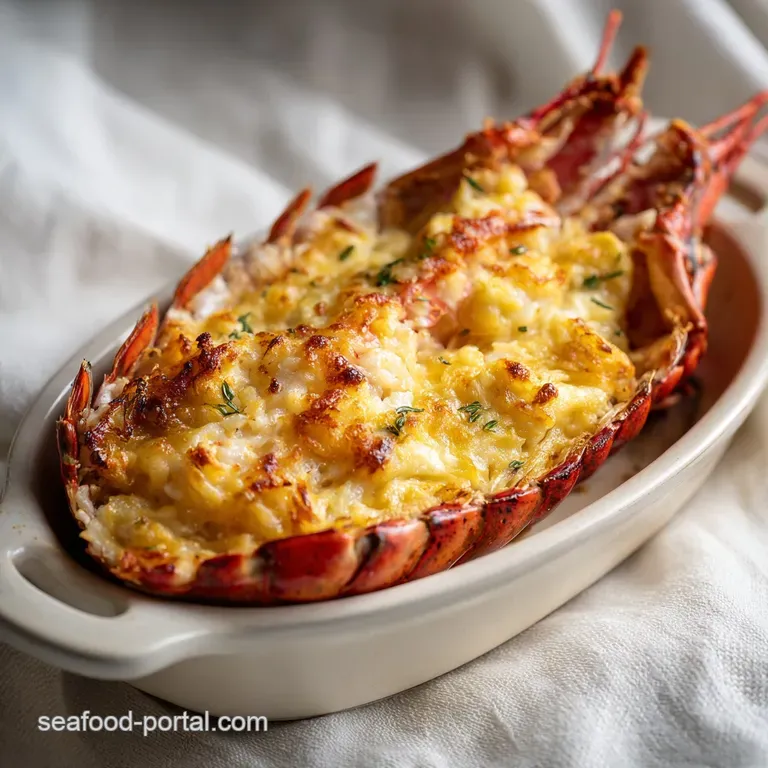
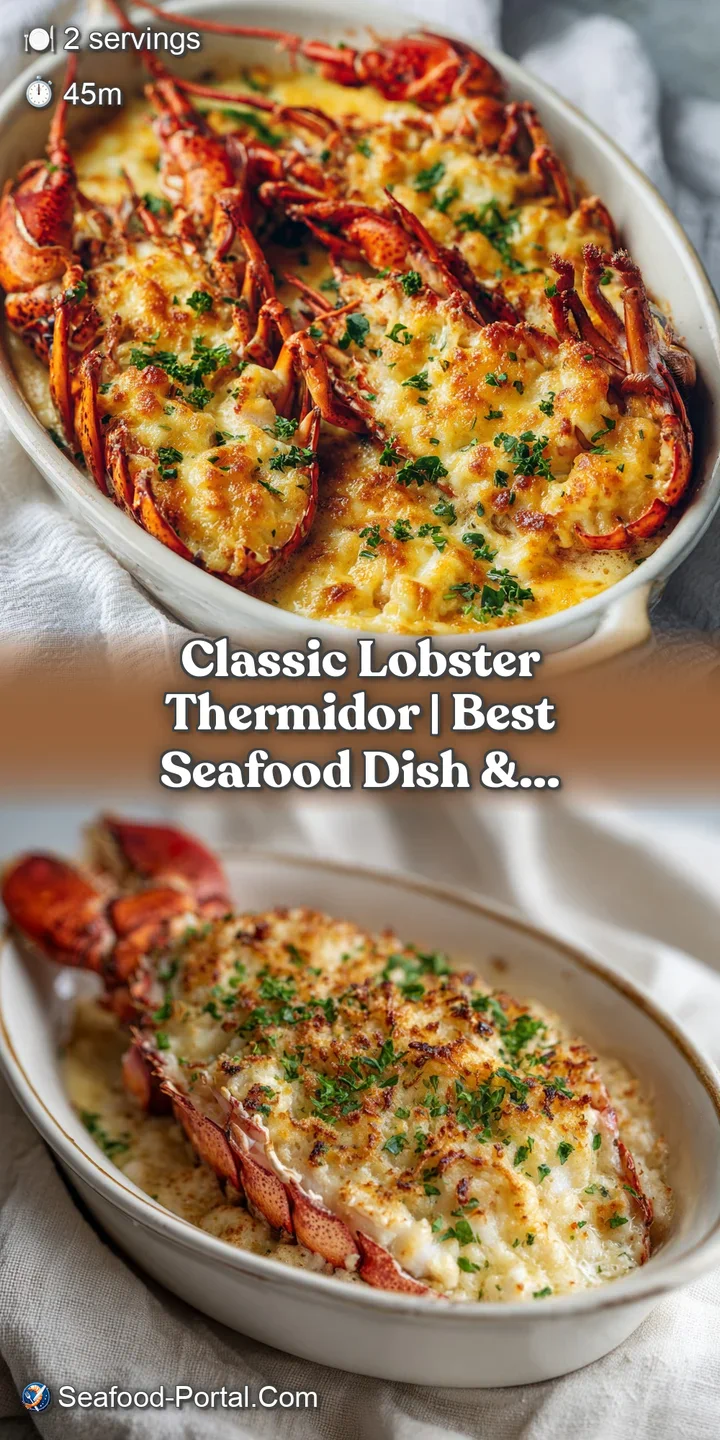
When you slide those shells under the broiler and the parmesan starts to bubble and brown, the kitchen fills with a scent that is purely celebratory. It's that mix of nutty cheese, sweet seafood, and a tiny hint of smoked paprika.
You're looking for that moment when the topping achieves a delicate golden hue that will eventually shatter under your fork. It's a texture driven experience: the firm bite of the lobster, the velvety sauce, and the crispy crust.
Trust me, once you see how accessible this is, you'll never look at a restaurant menu price for this dish the same way again.
Essential Stats for This Recipe
Par cooking Precision: Steaming the lobsters for exactly 8 minutes ensures the meat stays tender. If you go too long here, the final broil will turn your lobster into rubber bands, which is a tragedy we want to avoid.
Consistency Control: The roux only needs 1 minute of cooking to lose that raw flour taste. If you let it go until it turns brown, you'll lose the delicate dairy notes that make the sauce so characteristic of a French classic.
Thermal Peak: The final broil is where the magic happens, but it only takes 3 to 5 minutes. This is the stage where you cannot walk away from the oven; the line between a golden crust and a burnt shell is thinner than you think.
| Method | Time | Texture | Best For |
|---|---|---|---|
| Traditional Steamed | 45 minutes | Tender, juicy chunks | Classic presentation |
| Tail Only Quick Version | 30 minutes | Slightly firmer meat | Weeknight luxury |
| oven-roasted Shells | 50 minutes | Deep, roasted intensity | Extra savory depth |
This comparison shows that while tails are faster, using the whole lobster provides a much better "vessel" for the sauce and a more impressive look for a dinner party. The traditional steaming method we use here is the gold standard for maintaining that signature sweetness.
Components of the Best Thermidor Sauce
Mustard Activation: The dry English mustard provides a sharp, vinegar like punch that cuts through the richness of the butter and milk. It acts as a bridge between the sweet lobster and the salty cheese.
Cognac Deglazing: When cognac hits the pan, the alcohol evaporates but leaves behind a complex, oaky sweetness. This depth is what separates a basic white sauce from a true Thermidor masterpiece.
Yogurt Stabilization: Using Greek yogurt instead of heavy cream adds a subtle tang. The proteins in the yogurt help keep the sauce thick and stable even when subjected to the high heat of the broiler.
| Component | Science Role | Pro Secret |
|---|---|---|
| Grass fed Butter | Fat base for roux | Use cold butter for a glossier finish |
| Dry Mustard | Emulsification aid | Whisk into the roux for even distribution |
| Cognac | Flavor solvent | Flambé it if you're feeling brave for extra smoky notes |
The interaction between the acidic yogurt and the alkaline parmesan creates a sauce that feels balanced on the palate. Without that acidity, the dish can often feel one dimensional and overly heavy after just a few bites.
Tools for This Seafood Masterpiece
You don't need a kitchen full of gadgets, but a pair of sturdy kitchen shears is non negotiable. Trying to crack a lobster shell with a knife is a recipe for a trip to the emergency room, and we want to keep all our fingers for eating.
The shears allow you to zip right down the back of the shell, keeping the meat intact and the "boat" shape perfect for stuffing. A heavy bottomed saucepan is also your best friend here; it prevents the milk from scorching as you build that velvety sauce.
I always recommend having a small whisk on hand rather than a fork. You want to incorporate the milk into the roux gradually to ensure there are zero lumps. If you’ve ever had a grainy sauce, it’s usually because the liquid was added too fast or the whisking wasn’t vigorous enough.
Finally, a rimmed baking sheet is essential for the broiling phase. Lobsters aren't exactly known for their stability, and the rim will catch any stray sauce or butter that might bubble over, keeping your oven floor clean.
Chef's Tip: If your lobster shells keep rolling over on the baking sheet, scrunch up some aluminum foil into "nests" to hold them steady while they broil.
Detailed Steps for a Flawless Finish
- Steam 2 whole lobsters (approx. 1.5 lbs each) for 8 minutes. Note: The meat should be just opaque, not fully firm, as it will finish cooking under the broiler.
- Use kitchen shears to split the shells lengthwise. until you can easily lift the meat out.
- Chop the lobster meat into bite sized chunks. Note: Keep the chunks large enough to have a "meaty" presence.
- Melt 2 tbsp grass fed butter in a saucepan over medium heat. until it starts to foam.
- Sauté 1 tbsp minced shallots in the butter for 2 minutes. until they are translucent and fragrant.
- Whisk in 2 tbsp all purpose flour and cook for 1 minute. Note: This removes the raw flour taste without browning the roux.
- Gradually add 1 cup 2% milk and 2 tbsp cognac, whisking constantly. until the sauce is smooth and thick.
- Remove from heat and fold in 1 tsp dry mustard, 0.25 tsp salt, 0.25 tsp white pepper, 1 tbsp tarragon, and 2 tbsp Greek yogurt.
- Combine the lobster chunks with the sauce and spoon back into the shells. until the shells are generously filled.
- Sprinkle with 3 tbsp Parmesan and 0.5 tsp smoked paprika, then broil on high for 3-5 minutes. until the cheese is golden and bubbling.
Essential Components for Rich Flavor
To get the best results, every ingredient should be at the right temperature and quality. Here is what you'll need:
- 2 whole lobsters (1.5 lbs each): The star of the show. Why this? Fresh lobster provides a sweetness that frozen simply cannot match.
- Substitute: 4 large lobster tails if whole lobsters aren't available.
- 1 tbsp olive oil: For prepping the shells.
- Substitute: Avocado oil for a neutral flavor.
- 2 tbsp grass fed butter: The base of your flavor. Why this? Grass fed butter has a higher fat content and better yellow hue.
- Substitute: Ghee for a nuttier, lactose free option.
- 2 tbsp all purpose flour: The thickener.
- Substitute: Cornstarch (use half the amount) for a gluten-free version.
- 1 cup 2% milk: The liquid base. Why this? 2% provides enough fat for creaminess without the weight of heavy cream.
- Substitute: Whole milk for an even richer mouthfeel.
- 2 tbsp cognac: The secret depth. Why this? Adds a complex, fruity, and woody aroma.
- Substitute: Dry Sherry or Brandy.
- 1 tsp dry English mustard: For a sharp kick.
- Substitute: Dijon mustard (use 2 tsp).
- 1 tbsp fresh tarragon: The classic herb pairing. Why this? Tarragon has a subtle anise flavor that complements seafood perfectly.
- Substitute: Fresh chives or parsley.
- 1 tbsp shallot: For a delicate onion flavor.
- Substitute: The white part of a green onion.
- 2 tbsp plain Greek yogurt: For tang and texture. Why this? Keeps the sauce light but exceptionally creamy.
- Substitute: Sour cream or crème fraîche.
- 3 tbsp Parmesan cheese: For the salty crust.
- Substitute: Gruyère for a more traditional, meltier finish.
- 0.5 tsp smoked paprika: For color and a hint of fire.
- Substitute: Cayenne pepper if you want actual heat.
- 0.25 tsp salt & white pepper: To season.
For another variation on this flavor profile, you might want to try a shrimp version which uses similar techniques but with a different protein.
Solving Common Texture and Flavor Issues
Sauce Consistency Problems
Sometimes the sauce can end up either too thin or unpleasantly thick. If it's too thin, it's usually because the roux didn't cook long enough or the milk was added too quickly. If it's too thick, it might have sat on the heat for too long after the flour was added. The Greek yogurt is a late addition for a reason; adding it while the sauce is boiling can cause it to curdle, ruining that velvety butter sauce texture we are aiming for.
Preventing Rubbery Lobster
The biggest mistake people make is overcooking the lobster during the steaming phase. Remember, the lobster goes back into the oven under a 500°F broiler. If it's fully cooked when you chop it, it will certainly be overdone by the time the cheese melts. It should be just barely opaque.
If you find your lobster is tough, it almost always stems from those first 8 minutes.
| Problem | Root Cause | Solution |
|---|---|---|
| Grainy Sauce | Roux didn't incorporate | Whisk milk in 2 tbsp at a time initially |
| Bland Flavor | Lack of acidity | Add a tiny squeeze of lemon juice at the end |
| Watery Filling | Lobster wasn't patted dry | Use paper towels to remove all excess moisture from meat |
Common Mistakes Checklist
- ✓ Pat the lobster meat completely dry before mixing with sauce (prevents a watery mess).
- ✓ Use room temperature milk to prevent the roux from clumping into balls.
- ✓ Don't skip the cognac; it provides the "backbone" of the sauce's flavor.
- ✓ Always use fresh tarragon; dried tarragon tastes like dust and loses its anise charm.
- ✓ Watch the broiler constantly parmesan can go from perfect to burnt in 30 seconds.
Adjusting Servings for Any Occasion
When you're scaling a lobster thermidor recipe down for a solo treat, it's pretty straightforward. You can use a single lobster and simply halve all the ingredients. However, if you're using half an egg (though this recipe doesn't call for one), you'd beat it and measure out half.
For the sauce, just ensure you're using a smaller pan so the liquids don't evaporate too quickly. Reducing the cooking time by about 20% for the shallots can also help since there’s less thermal mass in the pan.
If you’re scaling up for a big dinner party, say 4 or 6 people, things get a bit more interesting. You don't want to just quadruple the salt and spices. I usually recommend starting with 1.5x the salt and mustard and then tasting as you go.
Liquids like cognac and milk should be reduced by about 10% because larger volumes of sauce retain moisture more effectively. Also, work in batches for the steaming; overcrowding the pot will lead to unevenly cooked lobster, which is exactly what we want to avoid.
For a larger crowd, you can also consider different presentation styles. Instead of individual shells, you could bake the entire mixture in a large gratin dish. This saves you the time of stuffing each individual shell and makes serving much faster.
Just make sure the lobster meat is evenly distributed so everyone gets a fair share of the "gold."
| Servings | Lobster Count | Pan Size | Milk Volume |
|---|---|---|---|
| 1 Person | 1 whole | 6 inch skillet | 0.5 cup |
| 2 People | 2 whole | 8 inch saucepan | 1.0 cup |
| 4 People | 4 whole | 10 inch saucepan | 1.8 cups |
Creative Ways to Personalize Flavor
The classic version is brilliant, but sometimes you want to mix it up. If you're looking for a bit more "funk," try swapping the Parmesan for a high-quality Gruyère or even a Comté. These cheeses have a lower melting point and will give you a stretchier, more traditional French bistro vibe.
If you want to lean into the sweetness of the lobster, a splash of dry sherry can be used in place of the cognac for a lighter, floral note.
For those who want a bit of heat, adding a finely diced red chili with the shallots can transform the dish. It’s not traditional, but the spice plays incredibly well with the creamy yogurt. You can also experiment with the herbs.
While tarragon is the standard, a mix of chervil and chives can provide a "fines herbes" profile that is equally sophisticated.
- If you want a richer sauce, use heavy cream instead of 2% milk and skip the yogurt.
- If you want a crunchier topping, mix the parmesan with a tablespoon of Panko breadcrumbs.
- If you want a coastal twist, add a few cooked bay scallops into the mixture for varied texture.
Exposing Common Lobster Cooking Myths
One of the most persistent myths is that lobsters "scream" when they hit the water. Scientifically, they don't have vocal cords; that sound is actually air escaping from the shell. Another common misconception is that the "tomalley" (the green stuff inside) is toxic.
While it can accumulate environmental toxins and some people find it unappealing, in small amounts, it’s considered a delicacy by many and can actually be stirred into the sauce for a massive umami boost.
There's also the idea that you must cook lobster alive for it to be safe. While you definitely want fresh lobster, you can humanely dispatch it right before cooking. The key is that the enzymes in a lobster's gut start to break down its meat very quickly after death, which is why they are kept alive in tanks.
As long as the lobster is processed immediately, the meat will be firm and delicious.
Finally, don't believe the lie that "bigger is always better." Smaller lobsters (1.25 to 1.5 lbs) often have sweeter, more tender meat than the giant 5 pounders, which can be tough and fibrous. For a Thermidor, the medium sized ones we use here are absolutely the sweet spot for flavor and texture.
Freshness Tips and Zero Waste
Storage Guidelines
If you happen to have leftovers, which is rare, you can store the mixture in an airtight container in the fridge for up to 2 days. However, do not reheat it in the microwave; it will turn the lobster into rubber.
Instead, place it back in the shells or a small oven safe dish, cover with foil, and warm it in a 350°F oven for about 10-12 minutes until just heated through.
Freezing lobster thermidor is not something I generally recommend. The dairy in the sauce can separate and become grainy upon thawing, and the lobster meat will lose that "pop" of freshness.
If you absolutely must, freeze only the cooked lobster meat separately from the sauce, but honestly, it’s best enjoyed the day it’s made.
Zero Waste Kitchen
Don't you dare throw away those lobster bodies and legs! Even if you aren't using them for the shells, they are packed with flavor. You can simmer the discarded shells with some celery, carrots, and onions to make a world class lobster stock.
This stock can be frozen in ice cube trays and used later to add a punch of seafood flavor to risottos or soups. Even the small amount of meat in the tiny legs can be rolled out with a rolling pin and added to a seafood salad the next day.
Best Sides for This French Classic
Since this lobster thermidor recipe is quite rich, you want side dishes that offer some acidity or a crisp texture to balance the meal. A simple arugula salad with a lemon shallot vinaigrette is my go to. The peppery bite of the greens cuts through the creamy sauce perfectly.
You could also serve it with some lightly steamed asparagus or haricots verts finished with a squeeze of fresh lemon.
If you want a more substantial meal, a small portion of wild rice or a crusty piece of sourdough baguette is essential for soaking up every last drop of that cognac sauce. I’ve even seen it served alongside a very simple, buttery pasta, though you have to be careful not to overload the plate with too many heavy elements.
Keep the sides bright, green, and simple to let the lobster remain the undisputed star of the evening.
Very High in Sodium
845 mg 845 mg (37% 37%)
The American Heart Association recommends limiting sodium intake to no more than 2,300 mg per day, with an ideal limit of less than 1,500 mg per day for most adults.
Tips to Reduce Sodium
-
Go Lighter on Parmesan-15%
Parmesan cheese contributes a significant amount of sodium. Reducing the amount by half will help lower the overall sodium content without drastically changing the flavor profile.
-
Omit Added Salt-10%
The recipe currently calls for 0.25 tsp of salt. Eliminating this entirely will be a good first step as lobster and Parmesan already contain natural sodium. You can always add salt at the table if needed.
-
Boost with Fresh Herbs and Spices
Enhance flavor with generous amounts of fresh tarragon and smoked paprika. Using a variety of herbs and spices like garlic powder, onion powder (ensure they are salt free), and black pepper can add complexity without sodium.
-
Use Low-Sodium Milk-5%
While milk is not a major sodium contributor, choosing low-sodium or no-salt added milk alternatives can offer a small reduction and is a good general practice.
-
Be Mindful of Butter-5%
While grass fed butter is a good choice, consider using unsalted butter to have more control over the sodium in your dish.
Recipe FAQs
What ingredients are in lobster thermidor?
The essential components are lobster, aromatics, and a rich binder. You will need 2 whole lobsters, butter, shallots, flour, milk, cognac, dry English mustard, fresh tarragon, Greek yogurt, Parmesan cheese, smoked paprika, salt, and white pepper.
What is the difference between lobster newburg and lobster thermidor?
The primary difference lies in the finishing method and the binders used. Thermidor is spooned back into the shell and broiled with cheese, whereas Newburg is typically served over toast points and enriched with heavy cream and egg yolks.
What is special about lobster thermidor?
It is the gold standard for luxury presentation. The combination of cognac infused cream sauce and the broiled, golden Parmesan crust creates a depth of flavor that is remarkably indulgent, similar to the elegant creamy shrimp thermidor, which utilizes a similar classic French sauce technique.
Is lobster ok for heart patients?
Generally, yes, but moderation is key. Lobster is a lean source of protein, but because this recipe includes butter and full fat dairy, it should be consumed sparingly as part of a balanced diet.
How to avoid a watery lobster thermidor sauce?
Pat the lobster meat completely dry with paper towels after chopping. Removing excess moisture prevents the liquid from leaking into your roux thickened sauce and diluting the flavor.
How to prevent the sauce from clumping?
Use room temperature milk when whisking into your butter and flour roux. Cold milk causes the fat in the roux to seize, which leads to lumps; using room temperature liquid ensures a silky, smooth consistency.
How to reheat leftovers without ruining the texture?
Warm the lobster in a 350°F oven for 10-12 minutes inside an oven safe dish or the original shells. Never use a microwave for leftovers, as it will rapidly overcook the lobster meat and turn it into a rubbery, tough texture.
Classic Lobster Thermidor
Ingredients:
Instructions:
Nutrition Facts:
| Calories | 478 kcal |
|---|---|
| Protein | 39.5 g |
| Fat | 24.2 g |
| Carbs | 13.4 g |
| Fiber | 0.6 g |
| Sugar | 6.2 g |
| Sodium | 845 mg |
