Shrimp Etouffe: the Ultimate Classic Louisiana Smother Recipe

- The Ultimate Classic Shrimp Étouffée: A Louisiana Smother
- The Science of Smothering: Why This Shrimp Étouffée Recipe Works
- Essential Ingredients and Flavor Notes
- Step-by-Step: Mastering the Authentic Shrimp Étouffée Method
- Chef's Secrets for Perfect Shrimp Étouffée and Troubleshooting
- Storage, Reheating, and Freezing the Louisiana Classic
- What to Serve with Shrimp Étouffée
- Recipe FAQs
- 📝 Recipe Card
The Ultimate Classic Shrimp Étouffée: A Louisiana Smother
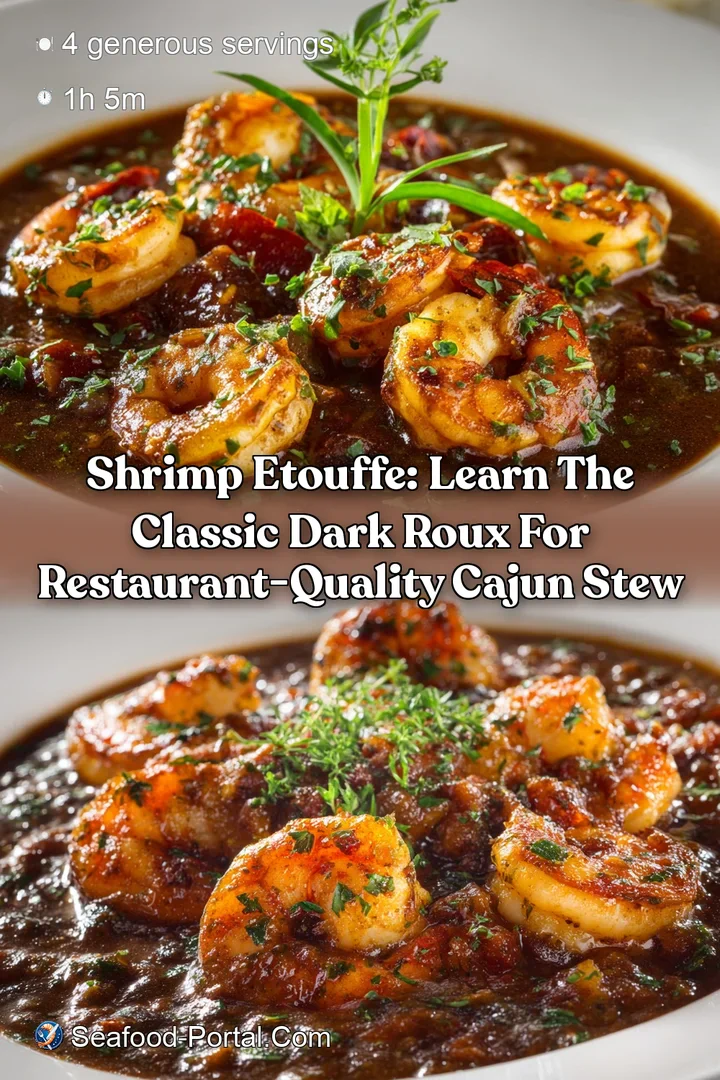
Can we talk about the smell of real, honest-to-goodness Shrimp Étouffée simmering on the stove? It’s not just the aroma of spices; it’s the deep, nutty scent of a perfectly cooked dark roux mixing with sweet bell peppers and garlic.
The rich, thick gravy practically begs you to grab a giant spoon and dive right in. This dish is pure comfort, wrapped up in a slightly spicy, velvety hug.
Lots of people think authentic Cajun food is fussy or takes all day, but trust me, this specific Shrimp Étouffée recipe is a complete lifesaver once you master the simple roux technique. It requires focused stirring for 20 minutes, then the rest is a breezy 30 minute simmer.
This is how you deliver incredible, complex flavor on a weeknight that feels like a weekend indulgence.
We’re going deep into the science of flavour layering here, avoiding watery sauces and rubbery shrimp. Get ready to stop making weak sauce versions and start turning out the real, deep smothered Louisiana magic.
What "Étouffée" Really Means (The Smothering Technique)
Étouffée literally translates from French as "to smother," and that term tells you exactly what the dish should feel like. We are creating a very thick, luxurious gravy that completely envelops the shrimp and the rice.
This dish is defined by its consistency; it needs body, density, and saturation. Achieving that perfect, thick texture is entirely dependent on building a robust, dark roux base.
Tracing the Roots: Étouffée vs. Gumbo
The biggest question I get is always, "What’s the difference between this and gumbo?" It’s a fair question, as they share the same famous "Holy Trinity" foundation. The fundamental difference lies in the thickeners used.
Gumbo is typically thinner, more soup like, and traditionally uses okra or filé powder (ground sassafras leaves) to achieve its final viscosity. Étouffée, on the other hand, relies entirely on the roux for its thickness.
It’s denser, less brothy, and much closer to a savory gravy or stew.
Is Shrimp Étouffée Difficult to Master?
Look, if you can stir without stopping for 20 minutes, you can master this. The only challenging part of this entire process is the roux, which is just a time commitment, not a technical marvel.
I burned my very first attempt because I thought medium high heat would speed things up; it didn't it just tasted like sadness and charcoal. Patience is your secret ingredient here. Don't try to multitask while cooking the roux; give it your full, undivided attention.
Flavor Profile: Richness from the Dark Roux
The flavor of an authentic Shrimp Étouffée should be nutty, deeply savory, and have a complex, slow burn from the Cajun spices. It should not taste overwhelmingly acidic or too sweet.
The deep copper color of the roux adds a necessary bitterness that balances the sweetness of the bell peppers and the shrimp. When it’s done right, the sauce should taste spicy, deep, and perfectly savory.
The Science of Smothering: Why This Shrimp Étouffée Recipe Works
The key to superior Étouffée is cooking in distinct stages, maximizing flavor at every turn. We don't just dump everything in a pot.
This recipe uses a butter based roux and cooks the Holy Trinity until it almost melts. This process draws out the liquid in the vegetables, intensifying their flavor before we ever introduce the stock. We are essentially concentrating those aromatic flavors so they integrate fully into the thick sauce.
That flavor layering prevents the final dish from tasting flat or muddy.
Essential Ingredients and Flavor Notes
| Ingredient | Amount | Essential Substitute |
|---|---|---|
| Butter | 1/2 cup | Neutral Vegetable or Canola Oil |
| Shrimp Stock | 3 cups | Clam Juice mixed with equal parts water |
| Yellow Onion | 1 large | White Onion (use slightly less) |
| Green Bell Pepper | 1 medium | Half red and half orange bell pepper (if you hate green pepper's bitterness) |
| Cajun Seasoning | 1 Tbsp | Creole Seasoning (watch the salt content!) |
The Maillard Reaction: Building the Roux Base
The roux is simply the combination of cooked fat and flour, but the cooking transforms the starch and sugar. We are seeking the Maillard reaction, which is the browning process that creates intense new flavor compounds.
A dark roux should look like peanut butter or milk chocolate, offering depth and nuttiness. Anything lighter, and your sauce will taste raw and bland.
Balancing the Holy Trinity Aromatics
You cannot make good Étouffée without the Holy Trinity: onion, celery, and green bell pepper. I know some folks hate celery, but it adds an undeniable necessary earthiness here.
The key is ensuring they are diced small and uniformly. We need these aromatics to completely surrender to the sauce, not stand out in crunchy chunks.
The Role of Quality Seafood Stock
This is non-negotiable for the best flavour. Using water or just vegetable broth means you are missing the essential savory, briny backbone that makes this dish sing.
If you don't have store-bought shrimp stock, save your shrimp shells! Boil those shells gently in water for 15 minutes, strain the liquid, and you’ve made your own perfect stock.
Selecting the Best Shrimp for Étouffée
I always recommend using large shrimp (21/25 count or even larger) for Étouffée. They hold up better in the thick, simmering sauce and don't disappear into the gravy like smaller sizes do.
Ensure they are fully peeled and deveined before starting. If you’re looking for other ways to use great seafood, you should check out the easy Shrimp Scampi: The Classic 25 Minute Recipe for Easy Weeknights .
Roux Ratio: Clarified Butter vs. Oil
We are sticking to butter here because it provides superior flavor, even if oil allows you to reach a darker color faster. The classic ratio is equal parts fat to flour by volume (1/2 cup each in this recipe).
If you must use oil, opt for a neutral flavor like canola. Olive oil will burn and taste bitter long before your roux reaches the proper dark color.
Preparing the Holy Trinity (Sizing & Timing)
Uniformity is king. Dice your onion, celery, and bell pepper into pieces no larger than 1/4 inch. They need to dissolve into the roux seamlessly.
Crucial timing tip: Add the Trinity immediately after the roux is done. The moisture from the vegetables will cool the roux, stopping the cooking process and preventing it from burning.
step-by-step: Mastering the Authentic Shrimp Étouffée Method

Stage 1: The Roux (The Foundation)
- Mise en Place First: Have all your vegetables chopped and measured before you even turn on the burner. The roux requires constant attention.
- Melt the Butter: In a heavy bottomed Dutch oven, melt the butter over medium heat. When the foaming subsides, sprinkle in the flour. Whisk constantly until smooth.
- Cook the Roux: Reduce the heat to medium low. Stir the mixture patiently and continuously with a wooden spoon. This stage takes 15– 20 minutes. It will move from pale yellow to tan, then to peanut butter, and finally to a deep, coppery milk chocolate color. Do not rush it!
Stage 2: Building the Flavour Base
- Sauté Aromatics: As soon as the roux reaches the perfect color, immediately dump in the diced onion, celery, and bell pepper. Stir well. Sauté this mixture for 8– 10 minutes, stirring frequently until the vegetables are completely soft and translucent.
- Add Garlic and Paste: Stir in the minced garlic and cook for just 1 minute until fragrant. Add the optional drained tomatoes now.
- Add Liquid and Seasoning: Slowly pour in the shrimp stock while whisking vigorously. This ensures the roux dissolves without clumping. Stir in the Cajun seasoning, thyme, bay leaf, Worcestershire, and cayenne.
- Simmer: Bring the mixture to a gentle boil, then immediately reduce the heat to low. Simmer, uncovered, for 15 minutes, allowing the sauce to thicken properly.
Stage 3: Finishing the Dish
- Final Seasoning and Prep: Remove the bay leaf. Taste the sauce now and adjust salt, pepper, and seasoning. It should be perfect before the shrimp go in.
- Add Shrimp: Increase the heat slightly to maintain a gentle simmer. Add the raw, peeled shrimp.
- Cook Quickly: Cook the shrimp for only 3– 5 minutes, stirring gently. They are done the moment they turn opaque and pink and curl into a C shape.
- Garnish and Serve: Stir in the fresh parsley and most of the spring onions. Serve immediately spooned over hot, steamed rice.
Chef's Secrets for Perfect Shrimp Étouffée and Troubleshooting
The 15 Minute Dark Roux Technique
You must use medium low heat and a heavy bottomed pot. Thin pots create hot spots and burn the flour on the bottom, which ruins the flavor profile instantly.
Chef's Note: If you notice small black specks appearing while stirring the roux, you have burned it. Stop stirring, scoop out the unburnt part from the top if you can, but honestly, it’s safer to start over. A burned roux will make the entire dish bitter.
Sweating the Trinity Until Tender
I cannot stress this enough: The vegetables must be soft. You’re not just warming them up for five minutes; you are sweating them until they are completely tender and their moisture has evaporated.
This usually takes closer to 10 minutes and prevents the peppers from retaining any unwelcome crunch in the final dish.
Building Depth: Stock Incorporation and Simmering
Always add the liquid slowly while continuously whisking. If you dump the stock in all at once, the temperature drops too quickly, and the roux seizes up, creating frustrating lumps. The final 15 minute simmer allows the starches to fully hydrate and thickens the sauce beautifully.
The Final Touch: Adding Shrimp and Finishers
Shrimp cook fast, period. If you add them too early, you end up with rubbery, tough seafood, which completely defeats the purpose of the luxurious sauce.
Don't worry if the sauce is still slightly thinner when the shrimp go in. The shrimp release a bit of liquid that quickly incorporates, and they finish cooking quickly right at the serving temperature.
Preventing a Scorched or Lumpy Roux
Use a flat edged wooden spoon or a spatula for stirring the roux, not just a whisk. This allows you to scrape the bottom edges of the pot effectively, ensuring no flour gets stuck and scorched on the bottom.
If lumps appear when adding the stock, quickly switch to a wire whisk and beat hard until they dissipate.
Fixing an Étouffée That's Too Thin
If you've followed the roux steps correctly but your sauce is still too watery after the 15 minute simmer, do not panic! You can quickly fix it by creating a small slurry.
Mix 1 tablespoon of cornstarch with 2 tablespoons of cold water until smooth. Pour this mixture into the simmering Étouffée and stir gently for 2 minutes. The sauce will thicken rapidly.
Storage, Reheating, and Freezing the Louisiana Classic
Refrigerator Lifespan and Food Safety
Cooked Shrimp Étouffée stores very well, usually lasting 3 to 4 days in an airtight container in the refrigerator. Make sure you cool it down quickly before storage; don't leave it on the counter for hours!
Best Practices for Reheating Étouffée
Reheat Étouffée gently over low heat on the stovetop. It will thicken considerably in the fridge, so you will likely need to add a splash (1/4 to 1/2 cup) of water or stock to bring it back to the right consistency. Stir often to prevent scorching the roux on the bottom of the pot.
Freezing Shrimp Étouffée Successfully
Yes, it freezes well! The flour and fat base stabilize the sauce. Crucially, freeze the Étouffée without the rice. Transfer the cooled sauce to a freezer safe container, leaving about an inch of headspace. It can be frozen for up to 3 months.
Thaw overnight in the fridge and reheat slowly, adding extra liquid as needed.
What to Serve with Shrimp Étouffée
Essential Accompaniment: Steamed White Rice
This is non-negotiable, truly. Étouffée is designed to be ladled over mounds of hot, fluffy, steamed white rice. The rice soaks up the glorious, spicy gravy, carrying all that fantastic flavor into every bite.
Selecting the Right Bread (French Bread vs. Cornbread)
You need something sturdy for soaking up the remaining sauce. A warm slice of French bread or a square of Southern style cornbread is ideal. If you are feeling extra culinary, a slightly sweet cornbread cuts through the spicy richness of the sauce perfectly.
Beverage Pairings: Beer and Wine Recommendations
Because this dish is rich and spicy, you need a drink that cuts through the fat and heat. A crisp, cold American lager or a light pilsner is perfect. If you prefer wine, look for something dry and unoaked, like a Sauvignon Blanc, or even a very lightly chilled Beaujolais (a young, fruity red) works beautifully. If you love deep flavour profiles like this, you should try my recipe for Cajun Shrimp Pasta: The Best Creamy One-Pan Dinner in 35 Mins , which has a similar intense spice level!
Recipe FAQs
My Étouffée came out oily and separated. What went wrong with my roux?
This separation, often called 'breaking the roux,' usually happens if the roux was not hot enough when the cold liquid (stock) was added, or if it was not stirred vigorously enough.
Ensure your roux is sizzling when you begin adding the Holy Trinity vegetables, and then whisk continuously while introducing the stock to create a smooth emulsion.
My sauce is too thin; how can I achieve that classic, rich consistency?
If the sauce lacks thickness after the initial simmer, you can either continue simmering it uncovered to allow reduction, which concentrates the flavour. Alternatively, mix one tablespoon of cornstarch with two tablespoons of cold water to create a slurry and whisk this into the simmering sauce until it thickens to your desired consistency.
Can I use frozen shrimp, and do I need to prepare them differently?
Absolutely, frozen shrimp work perfectly well, but they must be fully thawed before use; never add them directly from the freezer. After thawing, pat the shrimp thoroughly dry with paper towels, as excess moisture will water down the rich Étouffée sauce.
I don't have seafood stock. Can I use chicken or vegetable stock instead?
While seafood stock provides the most authentic and deep flavour profile, you can substitute it with chicken or quality vegetable stock in a pinch. If substituting, you will need to boost the seasoning heavily with a pinch of Old Bay or additional Cajun spice to compensate for the lost oceanic depth.
How do I prevent the shrimp from becoming tough or rubbery?
Timing is critical when cooking shrimp; they should only be added during the final 5 7 minutes of the process. Once the shrimp curl into a gentle 'C' shape and turn fully opaque pink, remove the pot from the heat immediately to stop the cooking and maintain their delicate tenderness.
Can I make Étouffée ahead of time, and how should I store leftovers?
Étouffée is an excellent make-ahead meal, as the flavours deepen overnight; store leftovers in an airtight container in the refrigerator for 3 to 4 days. If freezing, cool the dish completely before transferring it to a freezer safe container, where it will keep well for up to 3 months.
How do I control the heat level of the dish?
The primary source of heat in this recipe is usually Cayenne pepper, along with any Creole seasoning blend or hot sauce used. Start by adding half the recommended amount of Cayenne, then taste and adjust frequently before service; you can always add heat, but you can’t easily take it away.
Classic Cajun Shrimp Etouffe Recipe

Ingredients:
Instructions:
Nutrition Facts:
| Calories | 500 kcal |
|---|---|
| Fat | 28 g |
| Fiber | 3 g |
