Chimichurri Salmon Recipe: Skillet Seared
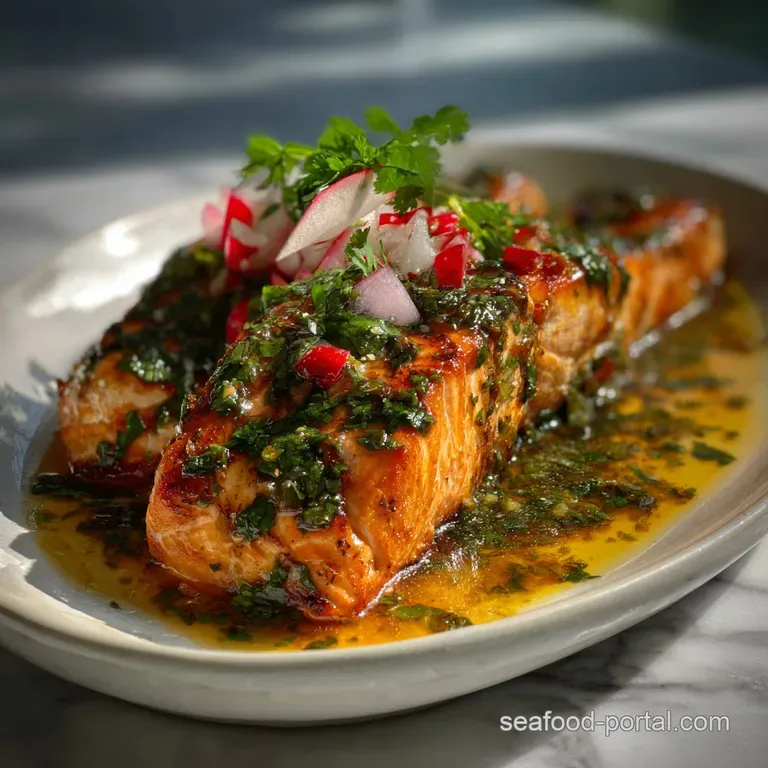
- Effort/Time: Minimal tools, 23 minutes total.
- Flavor Hook: Zesty acidity meets rich, omega-3 fat.
- Perfect for: High-protein weeknight dinners or vibrant, make-ahead meal prep using this Chimichurri Salmon Recipe.
- Mastering the Vibrant Balance of a Chimichurri Salmon Recipe
- The Essential 23 Minute Logistics and Nutrition
- Selecting Fresh Elements for a Flavor-Forward Salmon Recipe
- The Minimalist Tool Kit for Seamless Cooking
- Executing the Perfect Sear: A Step-by-Step Guide
- Precision Temperature Protocols and Troubleshooting
- Fresh and Tangy Recipe Customizations for Every Palate
- ⚗️ The Scaling Lab: The Physics of Quantity
- Preservation Secrets and Zero-Waste Philosophy
- Perfect Culinary Pairings for This Recipe
- Direct Answers for Flawless Fish Results
- Debunking Kitchen Folklore
- Recipe FAQs
- 📝 Recipe Card
Busy weeknights often result in dry, uninspired fish that lacks character. We have all stared at a plain fillet, wishing for that restaurant grade mahogany crust and a sauce that actually wakes up the palate.
This Chimichurri Salmon Recipe: Fresh and Tangy is the answer to the "boring fish" dilemma, relying on sharp acidity and over high heat physics rather than heavy creams or complex techniques. Mastering this Chimichurri Salmon Recipe is easier than you think.
By focusing on over high heat thermodynamics, we achieve a shattering exterior while keeping the center velvety and moist. This Salmon Recipe: Fresh and Tangy bridges the gap between a quick 10 minute sear and a sophisticated meal that feels like a weekend luxury.
It is a reliable blueprint for anyone who wants a massive flavor payoff with zero complicated equipment or long winded prep lists when making this Chimichurri Salmon Recipe.
Whether you are a novice or a seasoned cook, this Chimichurri Salmon Recipe delivers punchy, vibrant flavors that pair with almost any side dish. We prioritize the freshest herbs and precise internal temperatures to ensure your seafood never reaches that chalky, overcooked stage.
Let’s look at how a simple herb sauce and a hot skillet transform a basic protein into a culinary centerpiece in our Chimichurri Salmon Recipe.
Mastering the Vibrant Balance of a Chimichurri Salmon Recipe
Yes, this dish works because it utilizes a high acid, high fat sauce to cut through the heavy omega-3 richness of the fish. This Salmon Recipe: Fresh and Tangy relies on two primary scientific principles to ensure a perfect result every time you cook it in your home kitchen.
Following the steps for this Chimichurri Salmon Recipe guarantees success.
- Maillard Reaction Synergy: The avocado oil has a high smoke point (520°F), allowing the salmon skin to reach the 285°F threshold where sugars and amino acids rearrange into a savory, mahogany crust.
- Protein Denaturation Control: By stopping the heat at an internal temperature of 125°F, we prevent the muscle fibers from contracting too tightly, which would otherwise squeeze out the moisture and the unsightly white albumin.
The Fresh and Tangy finish of the sauce acts as a chemical tenderizer. The red wine vinegar's low pH balances the heavy lipids in the olive oil and the salmon, creating a balanced "mouthfeel" that isn't overly greasy. For more classic seafood techniques, you might also enjoy the texture of this Crunchy and Classic recipe, but nothing beats this Chimichurri Salmon Recipe.
The Essential 23 Minute Logistics and Nutrition
You can prepare this entire meal in less time than it takes to order delivery. The prep and cook cycles are designed for maximum efficiency, ensuring your kitchen remains organized and clean when tackling the Chimichurri Salmon Recipe.
| Specification | Detail |
|---|---|
| Total Prep Time | 15 minutes |
| Total Cook Time | 8 minutes |
| Difficulty Level | Easy / Beginner |
| Servings | 4 (6 oz) Fillets |
| Key Texture | Shattering Skin / Velvety Center |
The nutritional profile is dominated by healthy fats and high-quality protein. Each serving provides 34.7 g of protein and 53.8 g of fat, making it an ideal choice for those following low-carb or Mediterranean style diets.
This Chimichurri Salmon Recipe is naturally gluten-free and dairy-free, focusing on the integrity of the whole food ingredients.
Precision Checkpoints
- Time: 4 minutes on the skin side without moving the fish.
- Temperature: 125°F internal pull temp for medium rare/medium in this Chimichurri Salmon Recipe.
- Weight: Exactly 6 oz fillets for consistent heat penetration.
Selecting Fresh Elements for a Flavor Forward Salmon Recipe
The success of a Recipe: Fresh and Tangy hinges on the quality of your fats and the vibrancy of your greens. Using high-quality ingredients isn't just about taste; it’s about how they behave under heat and acidity when preparing your Chimichurri Salmon Recipe.
Ingredient Chemistry Breakdown
| Ingredient | Chemical/Physical Role (Science) | The Pro Secret (Why This Matters) |
|---|---|---|
| 4 (6 oz) Salmon | Protein denaturation / Lipid source | Center cut fillets offer uniform thickness for even heat distribution. |
| Avocado Oil | over High heat carrier (520°F smoke point) | Unlike butter, it won't burn before the skin becomes crispy. |
| Red Wine Vinegar | pH balancer / Acetic acid source | Cuts through fish oil to "cleanse" the palate between bites. |
| Fresh Parsley | Volatile aromatic source | Provides the herbaceous backbone without overpowering the fish. |
Ingredients & Substitutions
- 4 (6 oz) Salmon fillets: Use center cut for even cooking. Why this? Thinner tail pieces overcook before the skin crisps.
- Sub: Arctic Char. Same fat content but slightly milder flavor.
- 1 tbsp Avocado oil: Chosen for its high smoke point. Why this? Prevents acrid smoke and bitter flavors during the sear.
- Sub: Grapeseed oil or Rice bran oil.
- 1 cup Fresh flat leaf parsley: Finely chopped for the base. Why this? Contains more essential oils than curly parsley.
- Sub: Fresh cilantro or a mix of both.
- 3 tbsp Red wine vinegar: The acid component. Why this? Red wine vinegar has a rounder, fruitier acidity than white vinegar.
- Sub: Fresh lemon juice (adds citrus notes, less shelf stable).
- 1/2 cup Extra virgin olive oil: Use a high-quality, cold pressed oil. Why this? The flavor is not cooked, so the oil's quality is front and center.
- Sub: Walnut oil for an earthy, nutty variation.
- 1 tsp Red pepper flakes: Adjust based on heat tolerance.
- Sub: 1/2 tsp Aleppo pepper for a milder, smokier heat.
- 1/2 tsp Smoked paprika: Adds a depth of "grill" flavor without a BBQ.
- Sub: Liquid smoke (use only 1 drop) or skipped entirely.
The Minimalist Tool Kit for Seamless Cooking
You do not need a professional kitchen to execute this Chimichurri Salmon Recipe. In fact, fewer tools often lead to better results because you spend less time cleaning and more time monitoring the fish.
- 12 inch Lodge Cast Iron Skillet: The thermal mass of cast iron ensures the temperature doesn't drop when the cold fish hits the pan.
- Fish Spatula: A flexible, slotted metal spatula allows you to get under the delicate skin without tearing it.
- Small Glass Mixing Bowl: Avoid plastic bowls that can absorb the pungent garlic and onion aromas of the chimichurri.
- Microplane Grater: For turning the 3 garlic cloves into a fine paste that emulsifies into the oil.
- Instant Read Digital Thermometer: The only way to guarantee a velvety interior without cutting into the meat.
Comparison: Fresh vs. Shortcut Sauce
| Feature | Fresh Herb Chimichurri | Dried Herb Shortcut |
|---|---|---|
| Aroma | Pungent, bright, grassy | Muted, dusty, hay-like |
| Texture | Coarse and vibrant | Sandy and concentrated |
| Visual Appeal | Emerald green | Dark brownish green |
Executing the Perfect Sear: A step-by-step Guide
Precision in the first four minutes determines the final texture. Follow these steps to ensure the skin becomes a "cracker like" shell for the succulent fish when making this Chimichurri Salmon Recipe.
- Pat the salmon bone dry with paper towels until the skin feels like parchment. Note: Surface moisture turns to steam, preventing the Maillard reaction.
- Season the flesh side only with 1 tsp Kosher salt and 1/2 tsp black pepper. Note: Salt draws out moisture, so season immediately before hitting the pan.
- Heat the 12 inch skillet over medium high until the avocado oil shimmers and barely wisps smoke. Note: A cold pan leads to the fish sticking to the metal.
- Place salmon skin side down into the oil, pressing firmly with a spatula for 10 seconds. Note: This prevents the natural muscle contraction from curling the fish.
- Sear for 4 5 minutes undisturbed until the skin is dark mahogany and releases easily from the pan. Note: If it sticks, it is not finished searing; the crust must form fully to release.
- Whisk the 1 cup parsley, 1/4 cup cilantro, minced garlic, olive oil, vinegar, red pepper flakes, and smoked paprika in a bowl. Note: Do not use a blender; a hand chopped texture provides a better mouthfeel.
- Flip the fillets carefully using the fish spatula once the skin side is fully crisped. Note: The second side requires much less time as heat has already migrated upward.
- Cook for 2 3 minutes until the internal temperature reaches 125°F and the sides look opaque. Note: The center should still look slightly translucent to the eye.
- Remove from the skillet immediately to a warm plate. Note: Residual heat will continue to cook the fish during the resting phase.
- Spoon the fresh chimichurri over the warm fillets and serve. Note: The heat from the fish will bloom the aromatics in the sauce, completing the Chimichurri Salmon Recipe experience.
Precision Temperature Protocols and Troubleshooting
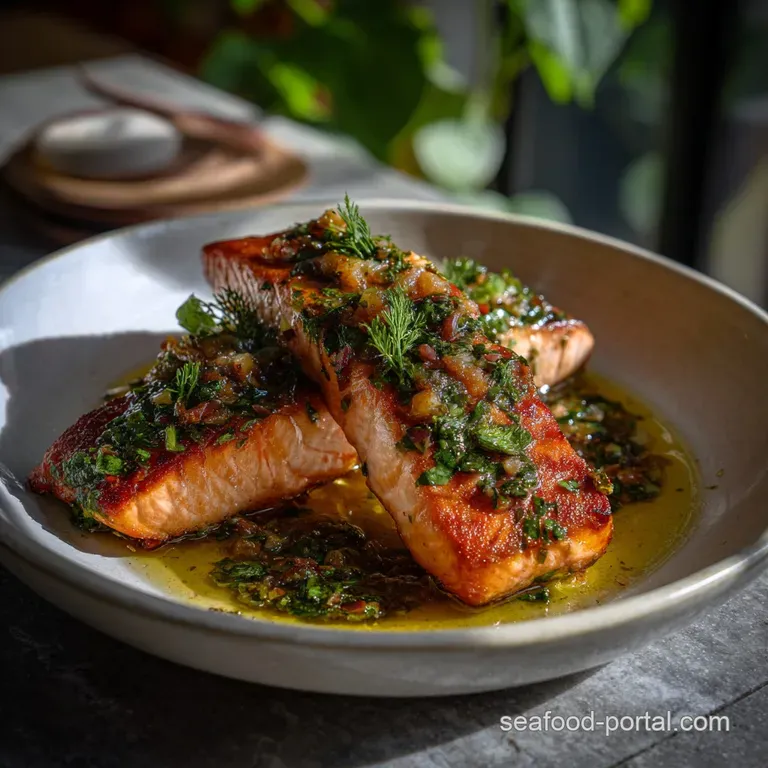
The most common failure in any Salmon Recipe: Fresh and Tangy is overcooking. Salmon has a narrow window of perfection. For another perfectly cooked seafood option, consider the texture profile in this Authentic Japanese Shrimp recipe. Successful execution of this Chimichurri Salmon Recipe hinges on temperature control.
Why Your Salmon Is Dry or Sticking
When salmon is dry, the protein fibers have tightened so much they’ve squeezed out all the moisture. If it’s sticking, the proteins haven't yet undergone the structural change required to release from the pan surface.
| Problem | Root Cause | The Fix | Pro Protocol |
|---|---|---|---|
| White "Goo" (Albumin) | Rapid protein contraction | Lower the heat slightly; pull fish at 125°F. | Start with room temp fish to reduce thermal shock. |
| Soggy Skin | Trapped steam / moisture | Pat dry and don't crowd the pan. | Use a cast iron skillet for superior heat retention. |
| Broken Sauce | Too much vinegar or poor whisking | Add olive oil 1 tbsp at a time while whisking. | Use a garlic paste to act as a natural emulsifier. |
Decision Shortcut
- If you want maximum crispness, sear 90% of the time on the skin side for this Chimichurri Salmon Recipe.
- If you want a "raw" sushi style center, pull the fish at 115°F.
- If you want a smoky profile, double the smoked paprika in the sauce.
Fresh and Tangy Recipe Customizations for Every Palate
While the classic Chimichurri Salmon Recipe is hard to beat, you can easily adapt the flavor profile to suit your pantry or dietary needs.
Swapping the Heat Source
If you prefer the chimichurri grilled salmon recipe method, preheat your grill to 450°F. Ensure the grates are scrubbed and heavily oiled. Grill skin side down for 5 minutes, then flip for 2 minutes.
The smoked paprika in our recipe mimics this charcoal flavor beautifully if you choose to stay indoors while making the Chimichurri Salmon Recipe.
Adjusting for Dietary Needs
For those looking for a chimichurri salmon air fryer version, set the machine to 400°F. Place the seasoned fillets in the basket (skin-up for 6 mins, then flip for 2 mins).
This uses even less oil but might result in slightly less "shatter" on the skin compared to the skillet method inherent in this Chimichurri Salmon Recipe.
The Salad Transformation
To turn this into a chimichurri salmon salad recipe, flake the cooked (and cooled) salmon over a bed of arugula and sliced radishes. Use the remaining chimichurri as the dressing. The acidity in the vinegar perfectly wilts the greens just enough to release their flavor.
⚗️ The Scaling Lab: The Physics of Quantity
When doubling this Recipe: Fresh and Tangy, you cannot simply multiply every factor by two. Thermodynamics and chemical reactions change as volume increases. Scaling this Chimichurri Salmon Recipe requires attention to detail.
- Flavor Saturation: When doubling the chimichurri, scale the salt and red pepper flakes to 1.5x, not 2x. Capscacin and sodium can become overwhelming when the volume of oil and vinegar is increased.
- Pan Crowding (The Maillard Killer): If you try to fit 8 fillets in one skillet, the temperature will drop instantly. This leads to the fish steaming in its own juices rather than searing. Mandatory instruction: Cook in two batches or use two separate skillets.
- The Square Cube Law: A larger mass of salmon (like a whole side of fish) has less surface area relative to its volume. It will take significantly longer for the center to reach 125°F, and the edges may dry out before the middle is done.
- Carry Over Cooking: Larger batches or thicker fillets retain more thermal energy. Pull the fish 5 7°F earlier than your target, as the internal temp will continue to climb for up to 5 minutes after leaving the pan.
Preservation Secrets and Zero Waste Philosophy
Yes, you can store and reheat this Chimichurri Salmon Recipe, but you must follow specific protocols to prevent the fish from becoming "fishy" or rubbery.
Storage Protocols
- Fridge: Store the salmon and the sauce in separate airtight containers for up to 2 days. Keeping them separate prevents the acid in the vinegar from "cooking" the fish further (denaturation).
- Freeze: We do not recommend freezing cooked salmon, as the texture becomes grainy. However, the chimichurri sauce can be frozen in ice cube trays for up to 3 months.
- Reheat: Never use a microwave. Reheat the salmon in a 300°F oven for 8 10 minutes, or eat it cold (which is often better for preserving the texture).
Zero Waste Philosophy
- Herb Stems: Don't discard the parsley or cilantro stems. Transform: Finely mince them into a base for a Garlic Butter Sauce recipe. Science: Stems contain higher concentrations of aromatic nitrites than leaves.
- Salmon Skin: If you don't like eating the skin, don't throw it away. Transform: Fry it alone until it becomes a "chicharrón" or "salmon crackling." Science: The collagen in the skin renders into a crisp, savory snack rich in collagen.
- Leftover Oil: The oil from the chimichurri is infused with garlic and herbs. Transform: Use it to sauté your morning eggs or drizzle over roasted potatoes.
Perfect Culinary Pairings for This Recipe
The bright, acidic nature of this Chimichurri Salmon Recipe pairs best with earthy, neutral bases that can soak up the extra oil and vinegar.
- Starchy Bases: Serve over a bed of lemon infused quinoa or jasmine rice. The grains act as a sponge for the garlic heavy sauce.
- Vegetable Sides: Charred asparagus or roasted broccolini provide a bitter contrast to the buttery fish.
- Wine Pairing: A crisp Sauvignon Blanc or a dry Rosé. The high acidity in the wine mimics the red wine vinegar in the sauce, creating a cohesive dining experience.
If you are looking for a more indulgent topping for your fish or even a side of bread, you might consider the richness of a Garlic Butter Sauce recipe. It offers a different fat profile that still complements the salmon's natural oils.
Direct Answers for Flawless Fish Results
Yes, this Salmon Recipe: Fresh and Tangy is foolproof if you respect the thermometer and the pan temperature. Here are the most common questions answered through the lens of kitchen science regarding your Chimichurri Salmon Recipe.
Is chimichurri good on salmon?
Absolutely. The high fat content of salmon (omega-3s) requires a high acid counterpoint like the vinegar and fresh herbs in chimichurri to balance the palate. Without the acid, the dish can feel "heavy" or overly oily, which is why this Chimichurri Salmon Recipe is so popular.
How do I prevent the fish from smelling "fishy"?
The "fishy" smell comes from Trimethylamine N-oxide (TMAO) breaking down into TMA. Using fresh fillets and adding the acidic chimichurri immediately helps neutralize these compounds, ensuring a clean, oceanic scent rather than a pungent one.
Can I make the sauce in advance?
Yes, you can make the chimichurri up to 24 hours in advance. In fact, the flavors of the garlic and red pepper flakes will meld and deepen. However, the parsley may lose some of its vibrant emerald green color due to the acid in the vinegar.
To prevent this, add the vinegar only 30 minutes before serving the Chimichurri Salmon Recipe.
Why is my salmon skin not crispy?
The most likely culprit is moisture. If the skin is even slightly damp, it will steam. Another cause is "pan peeking" moving the fish before the crust has formed. Trust the 4 minute timer; the fish will tell you when it is ready to move by releasing itself from the skillet.
What is the best internal temperature for salmon?
For a buttery, restaurant quality texture, pull the salmon at 125°F for medium rare. For a firmer, fully opaque flake, go to 135°F. Anything above 145°F (the USDA recommendation) will generally result in a dry, chalky texture that requires significantly more sauce to be palatable than our Chimichurri Salmon Recipe suggests.
Debunking Kitchen Folklore
- Myth: "You must wash your fish before cooking." → Truth: Washing spreads bacteria around your sink and adds surface moisture that ruins the sear. Simply pat it dry with paper towels.
- Myth: "Salmon must be flipped multiple times." → Truth: Flipping more than once increases the chance of the delicate flesh breaking apart. One flip is all you need for a perfect crust and an even cook.
- Myth: "Chimichurri should be a smooth purée." → Truth: Traditional chimichurri is hand chopped. A blender emulsifies the oil and aerates the herbs, changing the flavor from bright and sharp to muted and grassy.
This Chimichurri Salmon Recipe: Fresh and Tangy represents the best of home cooking: minimal effort, high-quality ingredients, and a scientific approach to heat. By focusing on the 23 minute timeline and the specific thermodynamics of the sear, you can produce a meal that rivals any high end seafood house.
Trust your thermometer, keep your pan hot, and enjoy the vibrant results of this incredible Chimichurri Salmon Recipe.
Recipe FAQs
how to make chimichurri salmon?
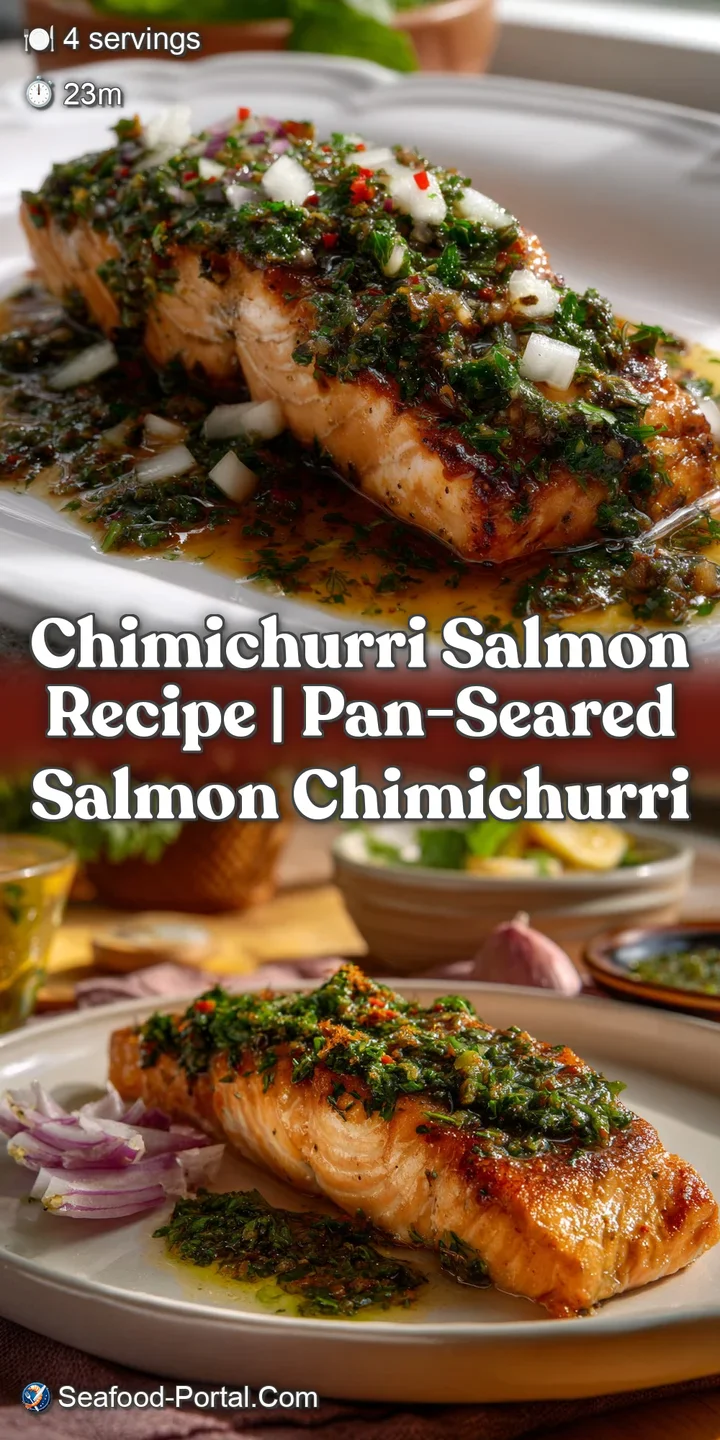
Blitz sauce, sear skin side down for four minutes, then flip and finish to 125°F internal. This balances the intense sear with the fresh herb sauce. For a more luxurious sauce base, see how the emulsification principles apply when making our Shrimp Dip Recipe: The Classic Seaside Chilled Appetizer.
how to make chimichurri sauce for salmon?
Pulse parsley, cilantro, garlic, red pepper flakes, vinegar, and olive oil finely. Do not over blend; texture is key to absorbing the salmon’s rich oils after cooking.
can you use chimichurri on salmon?
Yes, the acidity cuts richness perfectly. The vinegar's low pH balances the heavy omega-3 lipids of the fish, preventing the dish from tasting overly heavy on the palate. This acidic contrast is vital for bright seafood flavors.
how.to.cook chimichurri salmon?
Sear skin down in a hot cast iron skillet until crisp. High heat creates the Maillard reaction on the skin, forming a structural barrier that holds moisture inside the fillet. Ensure the pan is shimmering hot before adding the fish.
how to cook salmon with chimichurri sauce?
Sear the salmon first, then spoon the fresh sauce over the warm fillet immediately after plating. Cooking the fish in the sauce will cause the fresh herbs to brown and lose their vibrant flavor profile. If you prefer a richer sauce, try the technique for thickening dairy in our Lobster Bisque: Rich, Silky, and Decadent Homemade Recipe, though not recommended for chimichurri.
Myth: Does searing salmon in butter make it taste better than oil?
Myth: Searing in butter adds superior flavor. Butter solids burn before the ideal skin crisping temperature is reached, resulting in a bitter crust. Avocado oil, with its higher smoke point, allows the fish skin to crisp completely before burning.
Troubleshooting: Why is white albumin oozing from my salmon fillet?
Rapid protein contraction forces moisture out as white goo. When muscle fibers seize too quickly due to excessive heat, they expel moisture containing coagulated proteins (albumin).
- Lower the stovetop heat by one level
- Pull the fish at 125°F internal temperature
- Allow the fish to rest for three minutes post cook
Chimichurri Salmon Recipe
Ingredients:
Instructions:
Nutrition Facts:
| Calories | 628 kcal |
|---|---|
| Protein | 34.7 g |
| Fat | 53.8 g |
| Carbs | 2.4 g |
| Fiber | 0.8 g |
| Sugar | 0.4 g |
| Sodium | 610 mg |
