Easy Garlic Butter Lobster Tails Recipe
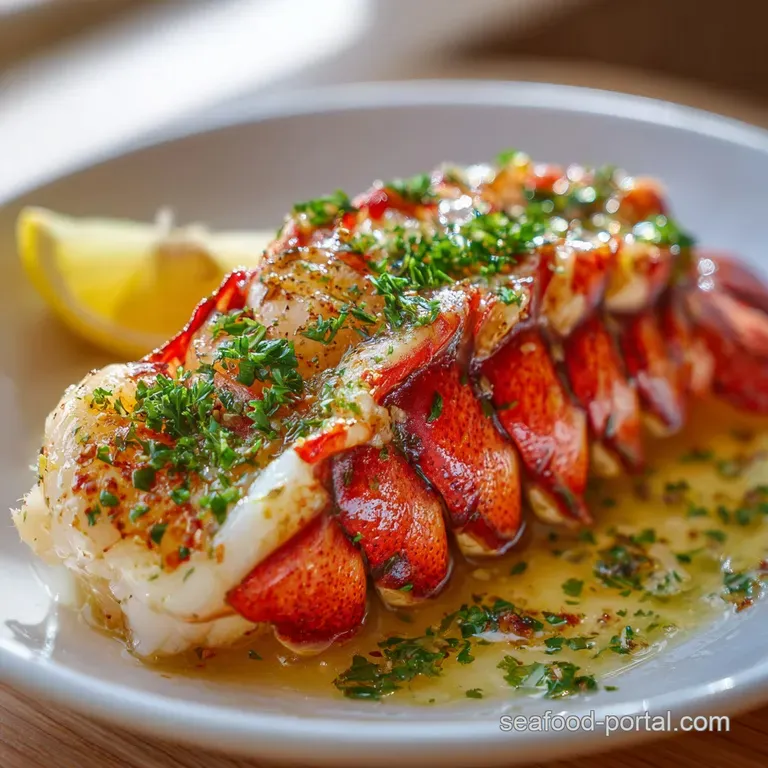
- Time: Active 15 minutes, Passive 8 minutes, Total 23 minutes
- Flavor/Texture Hook: Velvety meat with a smoky, charred garlic crust
- Perfect for: High end date nights or celebrating personal wins
- Discovering the Magic of Perfect Lobster Tails
- Why This Flavor Layering Strategy Works
- The Component Analysis for Maximum Impact
- The Pure Elements Behind the Flavor
- Tools Required for Professional Results
- Executing the Flawless Butterfly Technique
- Navigating Common Preparation Obstacles
- Personalizing Your Butter Infusion Profiles
- Breaking Down Kitchen Misconceptions
- Proper Cooling and Reheating Protocols
- Presenting Your Seafood Like a Pro
- Recipe FAQs
- 📝 Recipe Card
Discovering the Magic of Perfect Lobster Tails
The first time I tried to prepare this at home, I was terrified of ruining such an expensive ingredient. I remember the kitchen shears trembling in my hand as I lined up that first cut down the center of the shell.
But then, the sizzle hit the oven rack, and that unmistakable aroma of garlic and toasted lobster shells filled the room. It was a revelation - getting that lobster house quality wasn't about complex gadgets, but about a few brave cuts and very high heat.
When you pull these out of the oven, the meat should have a slight snap that gives way to a buttery, melt on-your tongue interior. We aren't just boiling them into oblivion here. We are building layers, from the citrusy zest in the butter to the deep, woodsy notes of smoked paprika.
If you've ever felt intimidated by seafood, trust me, this is the dish that will change your mind forever. It's fast, focused, and honestly, a bit of a thrill to serve.
We are going to skip the water bath and go straight for the broiler. This method allows the natural sugars in the meat to caramelize slightly, creating a much deeper flavor than steaming ever could. You'll get those beautiful charred edges and a velvety finish that makes every bite feel like a celebration.
Let's crack on and get these shells ready.
Why This Flavor Layering Strategy Works
- Thermal Protection: The hard chitin shell acts as a heat shield, allowing the meat to steam in its own juices while the top is exposed to direct flame.
- Maillard Enhancement: Ghee has a higher smoke point than butter, permitting the milk solids to brown without burning during the intense broiling phase.
- Acidic Brightness: Lemon juice and zest break through the heavy fats, ensuring the rich lobster flavor doesn't become cloying.
- Aromatic Infusion: Finely minced garlic suspended in fat penetrates the crevices of the meat as it expands under heat.
| Thickness | Internal Temp | Rest Time | Visual Cue |
|---|---|---|---|
| 1 inch | 140°F (60°C) | 2 mins | Meat is opaque and white |
| 1.5 inches | 142°F (61°C) | 3 mins | Center loses translucency |
| 2 inches | 145°F (63°C) | 4 mins | Shell is bright, vivid red |
Finding the right balance of heat and timing is the secret to ensuring your meat doesn't turn into a rubber ball. Most people overcook their seafood because they wait for it to look "done" in the oven, forgetting that carryover cooking will finish the job on the plate. If you are starting with a Broiled Frozen Lobster recipe, make sure they are completely thawed in the fridge first to ensure the heat penetrates evenly.
The Component Analysis for Maximum Impact
| Ingredient | Science Role | Pro Secret |
|---|---|---|
| Grass fed Ghee | over High heat Fat | Use ghee instead of butter to prevent the black "sooty" bits that ruin the look of the white meat. |
| Smoked Paprika | Color & Depth | This provides a "grilled" flavor profile even when you are only using an indoor oven. |
| Fresh Italian Parsley | Enzyme Balance | Adding this at the very end preserves the bright green color and keeps the finish clean. |
The Pure Elements Behind the Flavor
For this recipe, we are using 4 cold water lobster tails (5 6 oz each). Cold water tails are non negotiable for me because the meat is noticeably firmer and sweeter than their warm water cousins.
You'll also need 3 tbsp grass fed ghee, which provides that rich, nutty base without the risk of burning under the broiler.
To build the seasoning, grab 1 tsp smoked paprika, 0.5 tsp sea salt, and 0.25 tsp cracked black pepper. The aromatics are simple but powerful: 3 cloves garlic, finely minced, 1 tbsp fresh lemon juice, and 0.5 tsp lemon zest. Finally, 1 tbsp fresh Italian parsley will give us that vibrant finish.
- Cold water lobster tails: Why this? They grow slower in cold water, leading to much sweeter and firmer meat. (Sub: Warm water tails, but expect a softer texture.)
- Grass fed ghee: Why this? High smoke point ensures a clean, buttery flavor without acrid burnt milk solids. (Sub: Clarified butter or avocado oil.)
- Smoked paprika: Why this? Mimics the depth of an outdoor wood fired grill. (Sub: Sweet paprika for less smoke.)
- Fresh lemon juice: Why this? The acid tightens the protein structure slightly and balances the fat. (Sub: Lime juice or white wine.)
Tools Required for Professional Results
You don't need a professional kitchen to handle Lobster Tails, but a few specific tools make the "butterfly" process much safer. A pair of heavy duty kitchen shears is the most important item here; trying to cut through a shell with a knife is a recipe for a slip up.
You'll also want a sturdy baking sheet lined with parchment or foil for easy cleanup. A small saucepan or microwave safe bowl for melting the ghee is essential, along with a pastry brush.
The brush helps you get that garlic lemon mixture into every single nook and cranny of the meat, which is how we ensure flavor in every bite.
Executing the Flawless Butterfly Technique
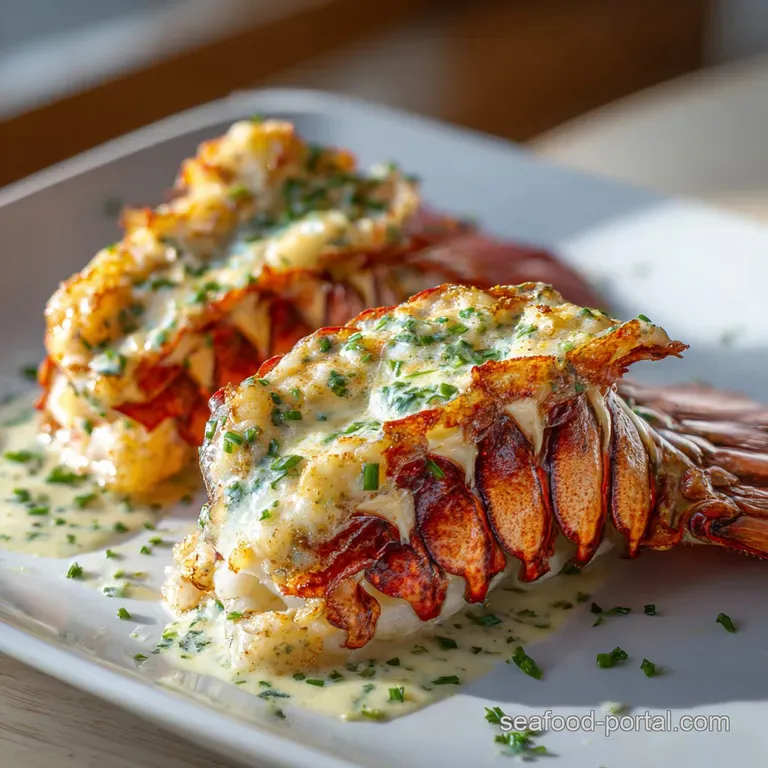
- Prepare the shell. Cut down the center of the top shell toward the tail using kitchen shears, stopping just before the tail fin. Note: Don't cut the meat yet, just the shell.
- Separate the meat. Gently pry the shell open with your thumbs and loosen the meat from the bottom, keeping it attached at the base.
- Lift and set. Pull the meat upward and rest it on top of the closed shell flaps. Check that the meat sits securely like a pedestal.
- Create the infusion. Combine 3 tbsp melted ghee, 3 cloves minced garlic, 1 tbsp lemon juice, and 0.5 tsp zest in a small bowl.
- Apply the first layer. Brush the garlic ghee mixture generously over the exposed lobster meat.
- Add the dry seasoning. Sprinkle the meat evenly with 1 tsp smoked paprika, 0.5 tsp sea salt, and 0.25 tsp black pepper. Look for a vibrant red coating.
- Set the heat. Position your oven rack about 6 inches from the broiler element and preheat to high.
- Execute the broil. Cook for 8 minutes until the meat is opaque and the shell is a glowing red.
- Finish with freshness. Remove from the oven and immediately garnish with 1 tbsp fresh Italian parsley.
Chef's Tip: If the meat is stubborn and won't lift out of the shell, use the handle of a spoon to gently slide between the meat and the bottom shell to release the suction.
For a deeper dive into the mechanics of this, my How to Cook recipe covers the various heat methods in more detail.
Navigating Common Preparation Obstacles
Why Your Meat Turned Rubbery
This is almost always a result of overstaying in the heat. Lobster meat is very lean, and once it hits 150°F, the proteins tighten up and squeeze out all the moisture, leaving you with a texture like a tire.
Managing Shell Splinters
If you use dull scissors, the shell can shatter into small, sharp shards that get stuck in the meat. Always use a sharp pair of shears and cut in one smooth, continuous motion.
| Problem | Root Cause | Solution |
|---|---|---|
| Dry Meat | Broiler too close | Move rack down one notch or reduce cook time by 1 minute |
| Bland Flavor | Not seasoned under shell | Ensure butter mixture drips between the meat and the shell |
| Curling Tails | Shell wasn't cut deep enough | Cut through the top shell completely until you reach the tail fin |
Common Mistakes Checklist
- ✓ Pat the shells bone dry before broiling to encourage browning instead of steaming.
- ✓ Don't skip the "rest" period; 3 minutes allows the juices to redistribute through the meat.
- ✓ Avoid using "cold" butter; the ghee must be warm and liquid to coat the meat effectively.
- ✓ Check for the "vein" along the back of the meat and remove it with a toothpick before seasoning.
Personalizing Your Butter Infusion Profiles
If you want to scale this recipe down for a solo treat, it's incredibly easy. Just use half an egg's worth of liquid (if using a binder) or simply halve the butter and spices. When scaling up for a party, don't just double the salt scale it to 1.5x to avoid over seasoning, as salt behaves differently in large volumes.
The Spicy Cajun Twist
Replace the smoked paprika and sea salt with a pre mixed Cajun seasoning. The cayenne and oregano notes play beautifully with the natural sweetness of the lobster. Just be sure to reduce the added salt, as most Cajun blends are quite salty on their own.
The Butter Poached Alternative
If you find broiling too intense, you can use these same ingredients in a skillet. Melt the ghee over low heat and gently simmer the lobster meat (removed from the shell) for about 5 minutes. It results in a much softer, more delicate texture that feels truly decadent.
| Method | Time | Texture | Best For |
|---|---|---|---|
| Broiling | 8 mins | Charred & Firm | High impact presentation |
| Poaching | 5 mins | Silky & Soft | Pasta toppings or rolls |
| Grilling | 6 mins | Smoky & Robust | Summer cookouts |
Breaking Down Kitchen Misconceptions
There is a long standing myth that you must boil lobster in seawater for it to be "authentic." In reality, seawater often contains impurities that can mask the delicate flavor of the meat. high-quality sea salt and fresh water (or the dry heat of an oven) provide a much cleaner canvas for the seafood to shine.
Another common belief is that the "tomalley" (the green stuff) is a delicacy you must include. While some love it, it's actually the liver and pancreas, which can accumulate toxins. For a clean, modern lobster tail, I always recommend rinsing any dark bits away before you butterfly the shell.
Proper Cooling and Reheating Protocols
Storage: Keep any leftover lobster in an airtight container in the fridge for up to 2 days. I don't recommend freezing cooked lobster tails, as the texture becomes incredibly mushy upon thawing.
Reheating: To avoid the rubbery texture we worked so hard to prevent, reheat gently. Place the tails in a baking dish with a splash of water or extra butter, cover tightly with foil, and warm at 300°F (150°C) for about 10 minutes.
Zero Waste: Don't you dare throw those shells away! The shells hold a massive amount of flavor. Toss them into a pot with some celery, onions, and water to simmer for an hour. You'll have a concentrated lobster stock that is perfect for risotto or a quick seafood chowder the next day.
Presenting Your Seafood Like a Pro
To make these look like they came from a five star steakhouse, the presentation is all about the "lift." When you butterfly the meat, make sure it is pushed all the way to the top so it doesn't sink back into the shell during cooking. This creates that iconic "mountain" of meat that looks so impressive on the plate.
I love serving these alongside a small ramekin of extra Lobster Butter Sauce recipe for dipping. A simple side of roasted asparagus or a light arugula salad with lemon vinaigrette provides the perfect contrast to the richness of the ghee. The goal is to keep the sides simple so the lobster remains the undisputed star of the show. Enjoy the sizzle, the aroma, and most importantly, that first buttery bite!
Recipe FAQs
What is the best way to cook lobster tails?
Broiling at high heat is often best for flavor and texture. This technique allows the shell to protect the meat while the top browns, creating a caramelized crust.
Is it better to boil or bake lobster tails?
Neither is strictly better; they prioritize different textures. Boiling yields very tender, moist meat, but baking or broiling concentrates the flavor and adds exterior browning.
How do you cook a lobster tail for beginners?
Butterfly the shell, brush with seasoned butter, and broil for 8-10 minutes. This visual method is forgiving and quickly shows you when the opaque white color is achieved.
Is lobster high in cholesterol?
Yes, lobster contains dietary cholesterol, but it is low in saturated fat. Most modern dietary guidelines suggest focusing more on saturated fat intake than dietary cholesterol.
How do I ensure the lobster meat isn't tough or rubbery?
Pull the tails from the heat when the internal temperature reaches 140°F (60°C). The carryover cooking will bring it up to the safe 145°F finish without drying it out.
Can I cook frozen lobster tails using this broiling method?
No, fully thaw them first for the best results. Cooking from frozen causes the exterior to overcook before the center reaches a safe temperature.
What is the secret to getting a restaurant quality flavor infusion?
Use high fat clarified butter or ghee mixed with minced garlic and baste generously before cooking. If you enjoyed mastering the high heat infusion technique here, see how the same principle works in our Classic Cantonese Ginger recipe for deep flavor penetration.
Broiled Garlic Butter Lobster Tails
Ingredients:
Instructions:
Nutrition Facts:
| Calories | 359 kcal |
|---|---|
| Protein | 34.8 g |
| Fat | 22.1 g |
| Carbs | 3.2 g |
| Fiber | 0.6 g |
| Sugar | 0.4 g |
| Sodium | 785 mg |
