Blackened Mahi Mahi Recipe with Spicy and Juicy Seasoning
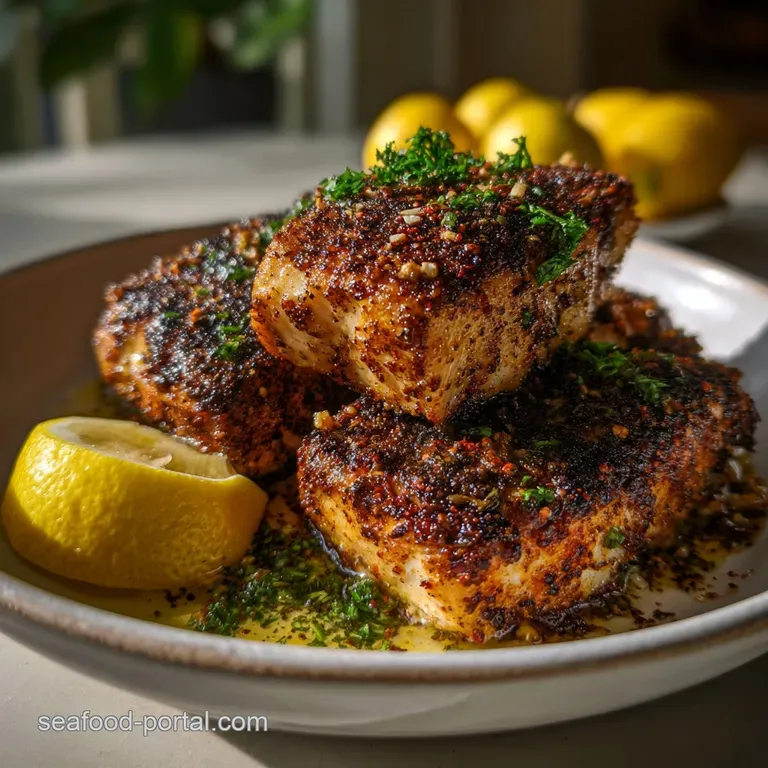
- Effort/Time: 18 minutes total, minimal-prep
- Flavor Hook: Smoky-charred crust with a zesty, capsaicin-driven finish
- Perfect for: High-protein weeknights or grain-bowl topping
- Master the Ultimate Blackened Mahi Mahi Recipe with Spicy and Juicy Seasoning
- The Thermal Physics of Spice Carbonization and Moisture Retention
- Precision Timing and Heat Metrics for Flaky Success
- The Spice Matrix: Essential Elements for Robust Flavor
- Heavy Metal Cooking: Essential Tools for over High heat Searing
- The Sequential Guide to Achieving a Shattering Spice Crust
- Solving the Mystery of Bitter Spices and Rubbery Fillets
- ⚗️ The Scaling Lab: Physics of Quantity
- Common Myths Debunked
- Preservation Strategies for Maintaining Texture and Flavor
- Final Flourishes and Pairings for a Restaurant-Quality Meal
- Recipe FAQs
- 📝 Recipe Card
Master the Ultimate Blackened Mahi Mahi Recipe with Spicy and Juicy Seasoning
There is nothing more frustrating than spending $30 on fresh fish only to have it stick to the pan, leaving the flavor in the skillet while the fillet turns into a gray, rubbery mess.
I remember my first attempt at blackening; I didn't get the pan hot enough, used too much oil, and ended up "graying" the fish instead of searing it. The result was a soggy, flavorless disaster that went straight into the bin. It was a costly lesson in thermal mass and surface moisture.
I spent months destroying fillets until I realized that blackening isn't about "burning" food; it's about the controlled carbonization of spices. I used to think more heat always meant more flavor, but I was just incinerating the delicate oils in the paprika.
The breakthrough came when I balanced the smoke point of the fats with the moisture levels of the Mahi Mahi. This Blackened Mahi Mahi Recipe with Spicy and Juicy Seasoning is the result of those failed batches and technical pivots.
The secret to this Blackened Mahi Mahi Recipe with Spicy and Juicy Seasoning lies in the Maillard reaction the chemical dance between amino acids and reducing sugars. By drying the fish surface completely, we bypass the "steam phase" and move directly to protein denaturation and spice caramelization.
This creates a shattering crust that seals in the internal juices, ensuring the fish remains velvety even under intense heat. Today, I'm sharing a delicious Blackened Mahi Mahi Recipe with Spicy and Juicy Seasoning.
The Thermal Physics of Spice Carbonization and Moisture Retention
Understanding why this Blackened Mahi Mahi Recipe with Spicy and Juicy Seasoning works requires a look at thermodynamics and molecular chemistry.
- Maillard Reaction Synergy: The combination of high heat and the 15 g smoked paprika creates a complex flavor profile where the sugars in the spices caramelize before the fish proteins overcook.
- Protein Denaturation Control: Mahi Mahi is a lean protein; by applying the 45 g melted butter as a barrier, we slow down the heat transfer to the center, preventing the muscle fibers from tightening too quickly and squeezing out moisture.
- Hygroscopic Barrier: The 6 g kosher salt draws out microscopic surface moisture which, when hit with the 15 ml high smoke point oil, creates an instant steam seal, protecting the interior flakes.
Precision Timing and Heat Metrics for Flaky Success
This Blackened Mahi Mahi Recipe with Spicy and Juicy Seasoning relies on specific thermal thresholds. Using the right method for your kitchen setup is critical for the "Juicy Seasoning" effect.
| Method | Heat Level | Duration | Outcome |
|---|---|---|---|
| Lodge Cast Iron Skillet | Medium High (400°F) | 3 4 mins per side | Maximum crust development; authentic "blackened" char. |
| Stainless Steel Pan | Medium High | 4 5 mins per side | Good sear, but higher risk of sticking if not properly deglazed. |
| Oven (Broil) | 500°F (Top Rack) | 6 8 mins total | More even cooking, but lacks the "shatter" of the stovetop crust. |
Ingredient Chemistry Breakdown
| Ingredient | Chemical/Physical Role (Science) | The Pro Secret (Why This Matters) |
|---|---|---|
| Mahi Mahi Fillets | Myofibrillar protein structure | Firm texture holds up to over high heat flipping without breaking. |
| Smoked Paprika | Carotenoid based pigment | Provides the deep mahogany color without needing to actually burn the meat. |
| Kosher Salt | Osmotic pressure regulator | Denatures surface proteins to create a "glue" for the spice crust. |
| Unsalted Butter | Milk solid carbonization | The milk solids brown (beurre noisette) providing a nutty, rich base. |
The Spice Matrix: Essential Elements for Robust Flavor
For this Blackened Mahi Mahi Recipe with Spicy and Juicy Seasoning, we use specific weights to ensure the "Spicy Mahi Mahi" profile is balanced, not overwhelming.
- 170g Mahi Mahi Fillets (4 count): Why this? 1 inch thickness is the "Goldilocks" zone for a perfect crust-to-interior ratio.
- 15 g Smoked Paprika: Why this? Adds earthy depth and the signature "blackened" visual without charcoal bitterness.
- 5 g Onion Powder & 5 g Garlic Powder: These aromatics provide the umami backbone that makes the "Juicy Blackened Fish" craveable.
- 3 g Cayenne Pepper: This delivers the "Spicy" element of the Blackened Mahi Mahi Recipe with Spicy and Juicy Seasoning.
- 2 g Dried Thyme & 2 g Dried Oregano: Essential oils in these herbs release under heat, adding a floral counter note to the spice.
- 6 g Kosher Salt & 3 g Coarse Black Pepper: Salt is the primary driver of the Maillard reaction here.
- 45 g Unsalted Butter (Melted): Use a high-quality brand like Kerrygold Unsalted Butter.
- 15 ml High smoke point oil: I recommend Chosen Foods Avocado Oil for its 500°F stability.
- 1 Fresh Lime: The citric acid cleaves through the fat, brightening the entire Blackened Mahi Mahi Recipe with Spicy and Juicy Seasoning.
Ingredient Substitution Guide
| Original Ingredient | Substitute | Why It Works |
|---|---|---|
| Mahi Mahi | Grouper or Snapper | Similar density and flake size. Note: Snapper is thinner; reduce cook time. |
| Smoked Paprika | Ancho Chili Powder | Provides similar dark color but adds a fruitier, raisin like sweetness. |
| Unsalted Butter | Ghee (Clarified Butter) | Higher smoke point (485°F). Note: Lacks the milk solid "brown butter" flavor. |
| Cayenne Pepper | Red Chili Flakes (Ground) | Provides heat, though less evenly distributed through the crust. |
Heavy Metal Cooking: Essential Tools for over High heat Searing
Minimal tools are key for this Blackened Mahi Mahi Recipe with Spicy and Juicy Seasoning. You don't need a professional kitchen, just the right physics.
- Lodge Cast Iron Skillet (12 inch): This provides the thermal mass needed to prevent temperature drops when the cold fish hits the pan.
- Mercer Culinary Fish Spatula: The thin, flexible edge is vital for getting under the spice crust without tearing it.
- Small Mixing Bowl: For creating the spice slurry.
- Paper Towels: The most underrated tool. Surface moisture is the enemy of the Blackened Mahi Mahi Recipe with Spicy and Juicy Seasoning.
The Sequential Guide to Achieving a Shattering Spice Crust
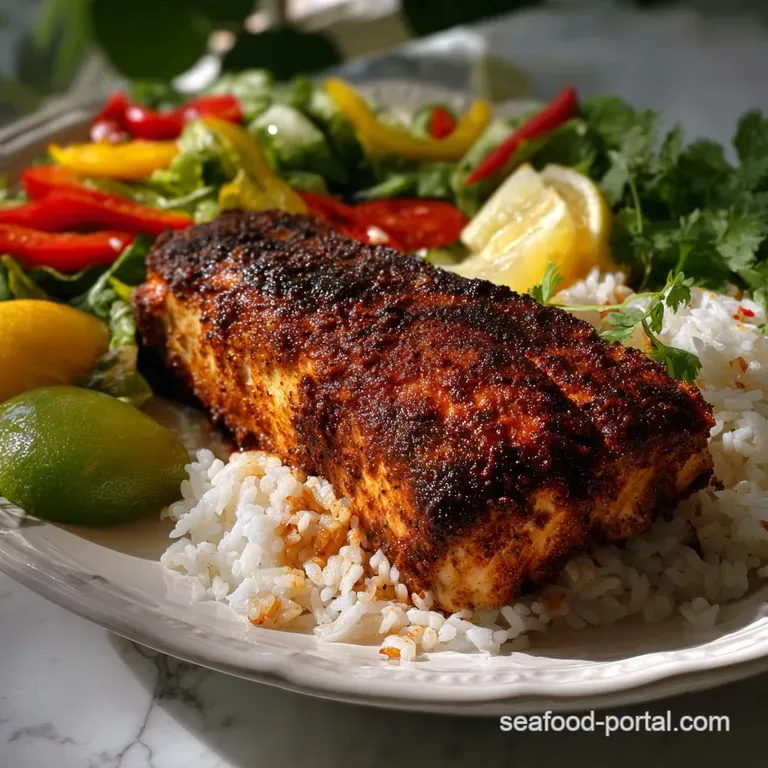
Follow these steps exactly to ensure your Blackened Mahi Mahi Recipe with Spicy and Juicy Seasoning results in "Juicy Seasoning" rather than dry protein.
- Dry the fillets. Use paper towels to press firmly on all sides of the 170g Mahi Mahi fillets until the surface is matte and no longer reflects light.
- Combine the spices. In a small bowl, whisk 15g smoked paprika, 5g onion powder, 5g garlic powder, 3g cayenne, 2g thyme, 2g oregano, 6g salt, and 3g pepper until the color is a uniform deep rust.
- Apply the fat. Brush each side of the fish with the 45g melted butter until a thin, glistening coat forms.
- Dredge the fish. Press the buttery fillets into the spice mix until a thick, 1mm layer of seasoning adheres to every surface.
- Preheat the skillet. Place your Lodge Cast Iron Skillet over medium high heat with 15ml avocado oil until a faint wisp of blue smoke appears.
- Lay the fish. Place the fillets away from you in the pan. Sauté for 3 4 minutes until the edges turn opaque and the bottom crust looks dark mahogany.
- Flip carefully. Use the fish spatula to turn the fillets until you hear a sharp sizzle and see no spice loss on the flipped side.
- Finish searing. Cook for another 3 4 minutes until the internal temperature hits 140°F and the fish feels firm but slightly springy to the touch.
- Deglaze with lime. Squeeze half the lime wedges over the pan until the juice bubbles vigorously and creates a light steam.
- Rest the protein. Move to a warm plate for 2 minutes until the internal juices redistribute, ensuring a "Juicy Blackened Fish" result.
Chef's Note: If you want a more "Low-Carb Power Bowl" vibe, this fish pairs perfectly with the textures found in our What to Serve recipe guide.
Solving the Mystery of Bitter Spices and Rubbery Fillets
Even the best cooks can run into trouble with a Blackened Mahi Mahi Recipe with Spicy and Juicy Seasoning. Usually, it's a matter of heat management.
Why Your Fish is Dry and Chewy
If the fish is dry, you've likely overshot the "carryover cooking" window. Mahi Mahi's protein strands contract violently once they pass 145°F, squeezing out all the cellular moisture. This turns "Juicy Seasoning" into a parched meal.
| Problem | Root Cause | The Fix | Pro Protocol |
|---|---|---|---|
| Bitter Aftertaste | Spices burnt at too high a heat | Reduce heat slightly; use more butter as a buffer | Use "Sweet" Paprika if Smoked is too intense |
| Crust Won't Stick | Fish was too wet/cold | Pat dry and let sit at room temp for 10 mins | Dust with a tiny pinch of cornstarch for "glue" |
| Fish Breaks Apart | Flipped too early | Wait for the Maillard reaction to release the fish | If it sticks, it's not done searing. Wait 30 seconds. |
⚗️ The Scaling Lab: Physics of Quantity
Doubling this Blackened Mahi Mahi Recipe with Spicy and Juicy Seasoning isn't as simple as 2 + 2.
- Pan Crowding (Maillard Killer): If you put 8 fillets in one pan, the temperature will drop by 100°F instantly. The fish will boil in its own juices rather than searing. Protocol: Work in batches of two.
- Flavor Saturation: When doubling spices, scale the cayenne to 1.5x (not 2x). Capsaicin's perceived heat increases exponentially in large batches.
- Carry Over Cooking: Eight fillets in a warm oven waiting to be served will continue to cook. Pull them at 135°F instead of 140°F to account for the collective thermal mass.
Common Myths Debunked
Myth: "Blackened" means "burnt." Truth: True blackening is the carbonization of spices and milk solids in butter. If the meat itself is charred to black, it’s just burnt.
Myth: You must use a cast iron skillet. Truth: While a Lodge Cast Iron is best for heat retention, a heavy bottomed stainless steel pan works if you use enough oil to prevent the "Paleo Fish Recipe" from sticking.
Preservation Strategies for Maintaining Texture and Flavor
If you have leftovers from this Blackened Mahi Mahi Recipe with Spicy and Juicy Seasoning, treat them with care. Fish is sensitive to oxidation.
- Storage: Place in an airtight container for up to 2 days. The "gluten-free Mahi Mahi" seasoning will soften slightly in the fridge.
- Freezing: Not recommended after cooking. The cell walls of the fish break during freezing, leading to a mushy texture upon thawing.
- Reheating: Avoid the microwave. It turns the fish into rubber. Instead, use a 300°F oven for 8 minutes or a quick sear in a pan with a splash of water and a lid.
💡 ZERO WASTE TIP: Don't discard the lime rinds! Transform: Zest them into a small jar of salt. Science: The citrus oils are highly aromatic and preserve the "Spicy Mahi Mahi" vibe for your next "Healthy Mahi Mahi Dinner."
Final Flourishes and Pairings for a Restaurant Quality Meal
To round out your Blackened Mahi Mahi Recipe with Spicy and Juicy Seasoning, consider the "Decision Shortcut":
- If you want maximum crunch, serve immediately on a pre-heated plate.
- If you want Easy Fish Tacos, flake the fish and fold into warm tortillas with cabbage slaw.
- If you want a refined dinner, pair with the techniques found in our PanSeared Tilapia with recipe for a comparative seafood feast.
This Blackened Mahi Mahi Recipe with Spicy and Juicy Seasoning is a masterclass in texture. By focusing on surface dryness and heat control, you've moved past simple frying and into the realm of professional technique. Let's crack on your perfect "Juicy Blackened Fish" is only 18 minutes away!
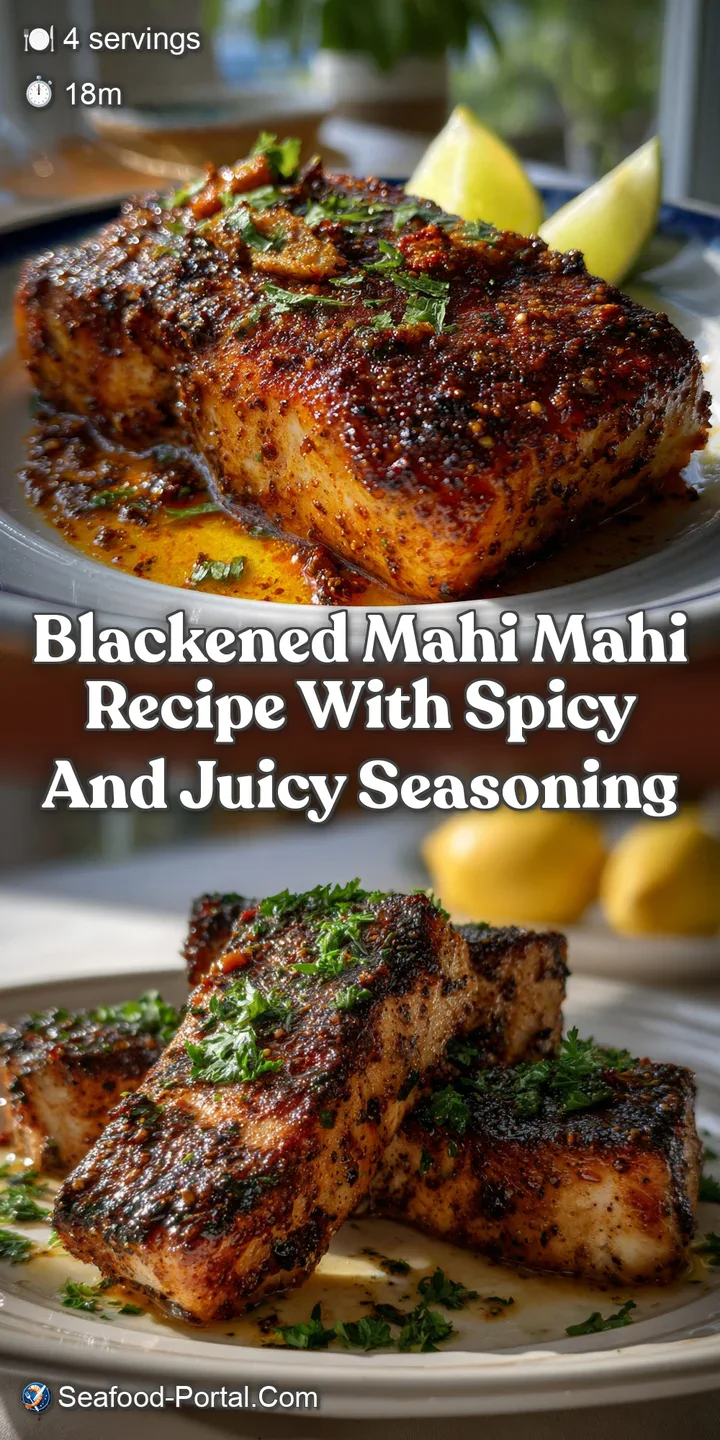
Recipe FAQs
What is the minimum internal temperature for safe consumption?
140°F for optimal texture. The USDA recommends 145°F for fish safety, but pulling at 140°F accounts for carryover cooking, ensuring a flaky, not dry, interior.
Can I use frozen Mahi Mahi fillets instead of fresh?
No. Thawing releases surface moisture which prevents a proper sear. Excess water immediately drops the pan temperature below the Maillard reaction threshold, causing the fish to steam.
Why did my spices burn and taste bitter immediately?
Pan heat was too high before fat addition. Incomplete spice carbonization occurs when the fat smoke point is exceeded before the spices make contact, incinerating volatile compounds instantly.
- Ensure oil/butter begins to smoke slightly
- Reduce heat right before adding the dredged fish
- Use a high smoke point oil like avocado
Should I use smoked paprika or sweet paprika?
Smoked paprika for authentic char color. Sweet paprika lacks the deep, wood smoked flavor compounds that define the "blackened" crust profile, yielding a blander result.
Is it better to use butter or oil for the coating?
Melted butter is essential for the nutty flavor base. The milk solids in butter brown at a lower temperature than the fats alone, generating complex, desirable nutty compounds that oil cannot replicate.
Myth: I need to press down on the fish while searing to get it to stick.
Myth: Pressing down forces out the steam barrier needed for the crust to form. Reality: Firmly pressing the dry, seasoned fish before it hits the pan ensures initial contact, but pressing during searing damages the developing Maillard layer.
Can I substitute the cayenne pepper for a milder chili powder?
Yes, but you lose the intended sharp heat. If you prefer less heat, using ancho chili powder will give you a darker color similar to our Ancho Chili Powder substitution note, but you must manually increase the overall salt ratio to compensate for the flavor drop.
Blackened Mahi Mahi Spice
Ingredients:
Instructions:
Nutrition Facts:
| Calories | 281 kcal |
|---|---|
| Protein | 32 g |
| Fat | 14 g |
| Carbs | 6 g |
| Fiber | 2 g |
| Sugar | 1 g |
| Sodium | 610 mg |
