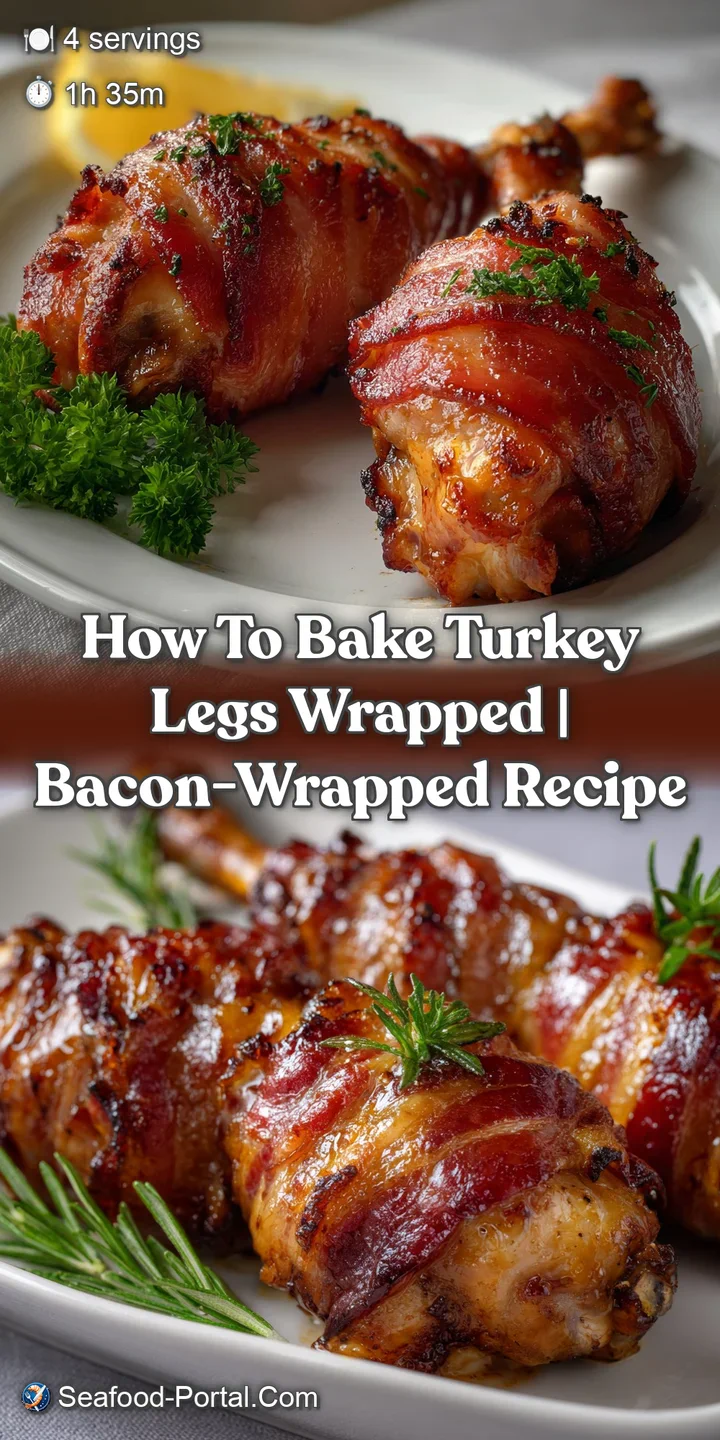
How to Bake Turkey Legs Wrapped: Self-Basting Perfection
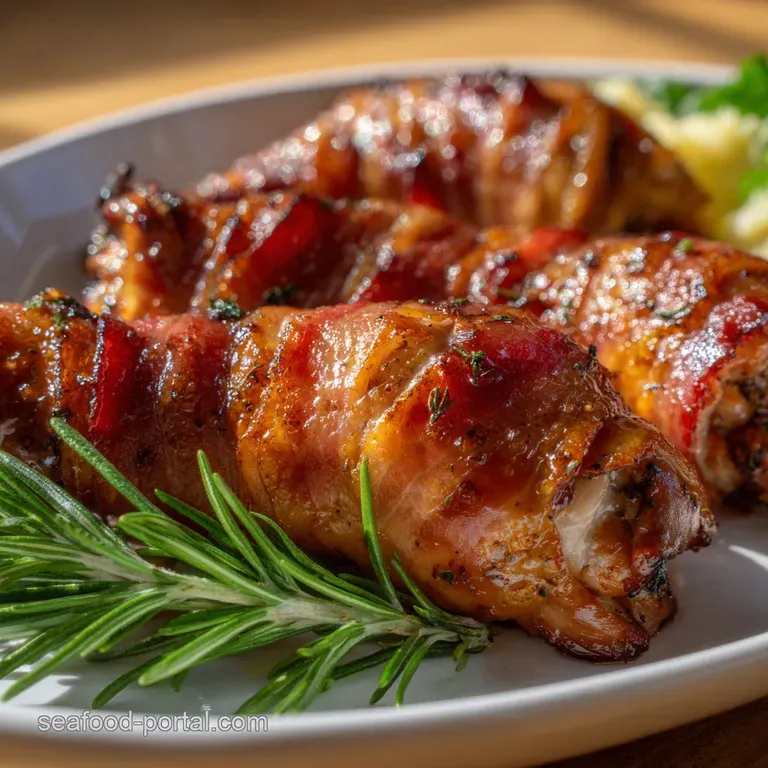
- Effort/Time: Moderate effort; 1 hour 35 mins total time.
- Flavor Hook: Smoked-paprika-infused fat renders directly into the meat for a deep, wood-fired profile.
- Perfect for: Game-day feasts or a protein-heavy, make-ahead weeknight dinner.
- Master the Ultimate How to Bake Turkey Legs Wrapped
- The Thermodynamic Advantage: Why This Recipe Works
- Essential Metrics: Prep and Performance Specs
- The Alchemy of Umami: Selecting Your Elements
- Thermal Conductors and Tools: Essential Equipment
- Precision Execution: Key Steps for Maximum Flavor
- Preventing Thermal Failure: Common Mistakes & Troubleshooting
- ⚗️ The Scaling Lab: The Physics of Quantity
- Flavor Architectures: Creative Variations & Substitutions
- Texture Preservation: Expert Storage & Reheating
- Plating Mastery: Professional Serving Suggestions
- Recipe FAQs
- 📝 Recipe Card
Master the Ultimate How to Bake Turkey Legs Wrapped
There is nothing more frustrating than investing ninety minutes into a roast only to have the exterior resemble parched parchment while the interior remains dangerously close to underdone.
I remember my first attempt at this specific dish; I didn't dry the skin properly and ended up with a pool of lukewarm liquid that steamed the meat instead of roasting it. It was a textureless, gray disaster that cost me four beautiful drumsticks and a whole lot of pride.
I spent months iterating on the moisture-to-heat ratio before realizing that the physics of poultry require a protective barrier. When you learn How to Bake Turkey Legs Wrapped, you aren't just adding flavor; you are creating a localized humidity chamber.
That layer of fat acts as a thermal insulator, preventing the lean turkey fibers from seizing and expelling their juices before the collagen has a chance to break down. Mastering How to Bake Turkey Legs Wrapped is about understanding this protective physics.
The scientific revelation here is the Maillard synergy between the brown sugar in the rub and the nitrogenous compounds in the bacon. By the time you pull these out of the oven, the "shatter" of the crisp bacon provides a sensory contrast to the velvety, fall off-the-bone meat underneath.
This isn't just cooking; it’s a lesson in fat-controlled thermodynamics that guarantees a mahogany hued, moisture locked result every single time you execute How to Bake Turkey Legs Wrapped.
The Thermodynamic Advantage: Why This Recipe Works
- Adipose Basting: As thick cut bacon heats, the solid fat transforms into a liquid state, trickling down the drumstick and preventing the skin from drying out.
- Collagen Hydrolysis: The extended 1 hour 15 mins cook time at a controlled temperature allows tough connective tissues to convert into silky gelatin.
- Hygroscopic Barrier: Brown sugar in the dry rub attracts moisture to the surface, facilitating a faster Maillard reaction for a deeper crust.
- Thermal Shielding: The bacon wrap acts as a sacrificial layer, absorbing the most intense radiant heat of the oven while the turkey cooks via gentler conduction.
Essential Metrics: Prep and Performance Specs
Success in the kitchen relies on precise metrics and environmental control. For this recipe, we are targeting a specific internal temperature and a visual cue of fat rendering.
| Metric | Value |
|---|---|
| Yield | 4 Servings |
| Prep Time | 20 minutes |
| Cook Time | 1 hour 15 mins |
| Total Time | 1 hour 35 mins |
| Oven Temp | 375°F (190°C) |
| Target Internal Temp | 175°F (80°C) |
The Alchemy of Umami: Selecting Your Elements
Selecting your ingredients is the first step in successful flavor architecture. When you understand How to Bake Turkey Legs Wrapped, you realize that every spice serves a chemical purpose.
For example, using Diamond Crystal Kosher Salt is critical because its hollow flake structure adheres better to the curved surface of the drumstick compared to dense table salt.
Ingredient Chemistry Breakdown
| Ingredient | Chemical/Physical Role (Science) | The Pro Secret (Why This Matters) |
|---|---|---|
| 4 Large Turkey Drumsticks | Collagen rich protein structure | High connective tissue requires long, slow heat for gelatinization. |
| 14 Slices Thick cut Bacon | Lipid based basting agent | Thick cut prevents the wrap from disintegrating before the turkey reaches temp. |
| Avocado Oil | High smoke point (520°F) | Ensures the rub spices don't scorch or turn bitter during the long roast. |
| Smoked Paprika | Phenolic flavor compounds | Mimics a 12 hour smoke session in a fraction of the time. |
Ingredients & Substitutions
- 4 Large Turkey Drumsticks (Approx. 1 lb / 450g each): Why this? Provides the structural integrity needed for the heavy bacon wrapping.
- Substitute: Large turkey thighs (adjust cook time down by 10 mins).
- 2 tbsp avocado oil: Why this? Neutral flavor with high heat stability to prevent oxidation.
- Substitute: Grapeseed oil.
- 1 tsp Kosher salt: Why this? Coarse grains allow for even distribution without over salting.
- Substitute: Sea salt (use 25% less by volume).
- 1 tbsp smoked paprika: Why this? Adds color and deep, earthy complexity.
- Substitute: Sweet paprika with a drop of liquid smoke.
- 1 tbsp brown sugar: Why this? Accelerates caramelization and balances the saltiness of the bacon.
- Substitute: Coconut sugar.
- 14 slices thick cut bacon: Why this? High fat-to-meat ratio for maximum self basting.
- Substitute: Pancetta slices (note: adds more salt, reduce rub salt by half).
- 1/2 tsp dried thyme: Why this? High oil content maintains flavor under sustained heat.
- Substitute: Dried rosemary (crushed).
Thermal Conductors and Tools: Essential Equipment
You need tools that can handle sustained heat and manage the significant fat runoff produced by 14 slices of bacon. A flimsy pan will warp, and a shallow one will cause a grease fire. Achieving success in How to Bake Turkey Legs Wrapped hinges on using the right gear.
- Lodge Cast Iron Baking Pan or Heavy Rimmed Sheet Pan: Provides the thermal mass necessary to maintain a constant temperature when the cold turkey enters the oven.
- Stainless Steel Wire Cooling Rack: Vital for airflow. Lifting the legs allows heat to circulate 360 degrees, preventing a soggy bottom.
- Chef’s Knife: To trim any excess skin or protruding tendons before seasoning.
- Digital Instant Read Thermometer: This is non-negotiable for poultry safety and texture.
- Kitchen Twine or Toothpicks: To secure the bacon ends if the wrap feels unstable.
- Reynolds Wrap Aluminum Foil: For the initial steaming phase and tenting during the rest.
Precision Execution: Key Steps for Maximum Flavor
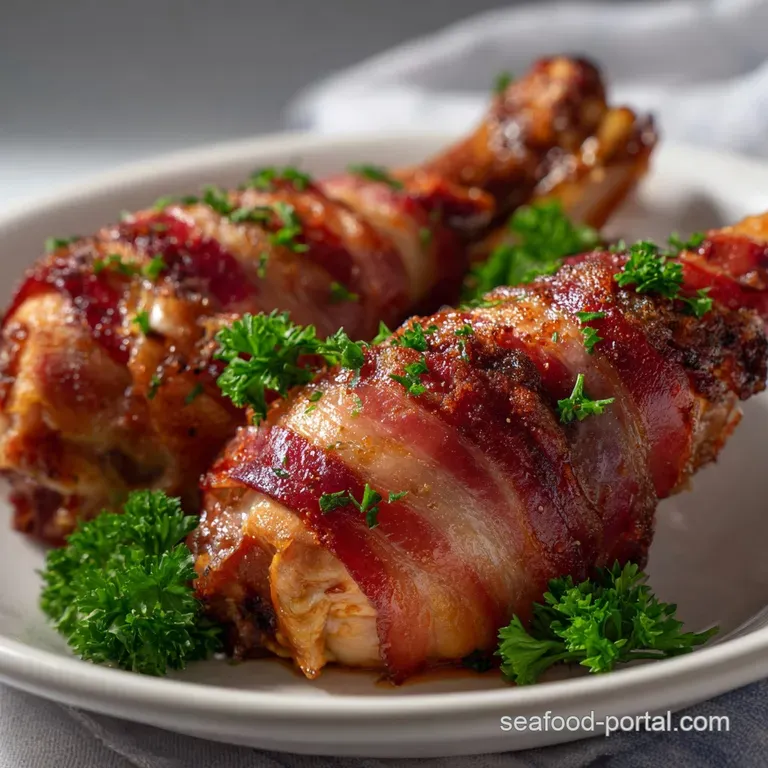
- Pat the turkey drumsticks dry with paper towels until the skin feels tacky. Note: Removing surface moisture is essential for oil adhesion and preventing steam leaching.
- Coat each leg with 2 tbsp avocado oil, ensuring every crevice is covered. Note: This creates the "glue" for your dry rub.
- Combine salt, pepper, paprika, sugar, garlic powder, onion powder, and thyme in a small bowl.
- Dredge the oiled turkey in the spice mixture until a thick, orange red crust forms.
- Spiral wrap 3 to 4 slices of thick cut bacon around each leg, overlapping by 1/4 inch. Note: Overlapping ensures the turkey skin is never directly exposed to dry air.
- Secure the bacon ends by tucking them under the previous layer or using a toothpick.
- Place legs on the wire rack over your baking sheet and roast at 375°F for 45 minutes until the bacon starts to translucent and the fat begins to drip.
- Baste the legs with the accumulated pan drippings using a spoon or brush.
- Continue roasting for 30 minutes until the bacon is mahogany brown and the internal temperature hits 175°F.
- Rest for 10 minutes under a loose foil tent until the juices redistribute and the sizzle subsides.
Chef's Note: If the bacon isn't as crisp as you like by the time the internal temp hits 170°F, kick the oven to "Broil" for the last 3 5 minutes. Watch it like a hawk; the sugar in the rub can go from caramelized to carbonized in seconds.
Preventing Thermal Failure: Common Mistakes & Troubleshooting
Why Your Bacon Is Rubbery
If the bacon wrap hasn't reached a crisp state, it's usually due to poor airflow or overcrowding the pan. When too many legs are packed together, the moisture escaping the turkey creates a localized steam cloud, preventing the bacon fat from reaching the 300°F required for the Maillard reaction.
Understanding this failure mode is key to perfecting How to Bake Turkey Legs Wrapped.
| Problem | Root Cause | The Fix | Pro Protocol |
|---|---|---|---|
| Soggy Bacon Bottom | Lack of convection | Use a wire rack | Elevate the meat at least 1 inch above the pan surface. |
| Dry Meat | Overcooking | Pull at 170°F | Trust the carryover cooking; the temp will rise 5 degrees while resting. |
| Bacon Unraveling | Shrinkage | Tuck ends tightly | Bacon shrinks as it loses water; use toothpicks to anchor the start and end. |
⚗️ The Scaling Lab: The Physics of Quantity
When you double this recipe to eight legs, you cannot simply double the time. Adding four additional pounds of cold meat to your oven significantly increases the "thermal load."
- Thermal Mass Recovery: The oven air temperature will drop by up to 50°F when you load 8 legs. Do not start your timer until the oven returns to 375°F.
- The Evaporation Paradox: With more meat in the oven, there is more ambient humidity. This is great for the turkey's moisture but terrible for the bacon's crispiness. You may need to extend the final roasting phase by 10 15 minutes to overcome the extra moisture.
- Pan Crowding: Ensure there is at least 2 inches of space between each leg. If they touch, the bacon will stay pale and soft at the contact points.
- Carryover Heat: A tray of eight legs holds more thermal energy than a tray of four. They will retain heat longer, so the resting period can be extended to 15 minutes without the meat getting cold.
Flavor Architectures: Creative Variations & Substitutions
Once you master the base technique of How to Bake Turkey Legs Wrapped, you can experiment with the flavor profile. If you find the smoky profile too heavy, you can pivot toward a brighter, citrus forward version.
- The Maple Bourbon Glaze: Brush the legs with a mixture of maple syrup and bourbon during the last 15 minutes. This creates a sticky, lacquer like finish similar to the glaze used in our Lemon Cream Sauce recipe.
- The Spicy Jalapeño Kick: Tuck thin slices of fresh jalapeño under the bacon wrap before roasting. The bacon traps the capsaicin oils, infusing the turkey with a slow, creeping heat.
- Keto/Paleo Modification: Omit the brown sugar and use a monk fruit sweetener or simply increase the garlic and onion powder for a savory only crust.
Texture Preservation: Expert Storage & Reheating
Storage
Store leftover turkey legs in an airtight container in the refrigerator for up to 4 days. Because of the high fat content in the bacon, the meat will remain surprisingly moist even after refrigeration.
Freezing
Wrap individual legs tightly in plastic wrap, then a layer of aluminum foil. They will maintain peak quality for 2 3 months. To serve, thaw completely in the fridge before reheating.
Reheating
Never use a microwave; it will turn the bacon into rubber and the turkey into a sponge. Instead, place the legs back on a wire rack in a 350°F oven for 15 20 minutes. This restores the "shatter" to the bacon while gently warming the protein. If you find the meat a bit dry during reheating, a quick drizzle of a bright sauce much like the one found in our Breaded Fish recipe — can provide a much needed acid lift.
💡 ZERO WASTE PHILOSOPHY
Don't discard the Turkey Bones/Tendons. Transform: Simmer the stripped bones with onion scraps for 4 hours. Science: The high collagen content in drumsticks creates a stock that is incredibly rich in gelatin, providing a silky mouthfeel for future soups or gravies.
Plating Mastery: Professional Serving Suggestions
To balance the heavy, savory profile of How to Bake Turkey Legs Wrapped, you need acidity and crunch on the plate.
- The Vinegar Balance: Serve alongside a sharp apple slaw or pickled red onions. The acetic acid cuts through the heavy bacon lipids, cleansing the palate between bites.
- The Starch Base: Garlic mashed potatoes are a classic, but a wild rice pilaf provides a nutty texture that complements the smoked paprika.
- The Presentation: Keep the legs whole. There is a primal, "feast like" satisfaction in serving a bacon wrapped drumstick that carving it into slices simply can't match.
Whether you are hosting a festive dinner or just want a high protein meal that defies the "dry turkey" stereotype, knowing How to Bake Turkey Legs Wrapped is a technical skill that pays off in every bite.
The combination of salt, smoke, and perfectly rendered fat makes this a recipe that will have your friends texting you for the secret. Trust the process, watch your temps, and enjoy that mahogany colored perfection from your How to Bake Turkey Legs Wrapped creation.
Recipe FAQs
how to cook turkey legs wrapped in foil?
Cook uncovered for crispness, tent only for resting. Wrapping completely in foil steams the meat, leading to a soft, pale exterior. The initial cook must be uncovered at 375°F until the internal temperature hits 175°F.
how to bake turkey legs in the oven?
Bake at 375°F until 175°F internal temperature is reached. This typically requires 75 to 90 minutes depending on leg size. Ensure they rest for 10 minutes after pulling them out of the oven.
how to cook turkey legs in the oven wrapped in foil?
Use foil loosely tented only after the bacon browns significantly. Extended foil contact traps steam, inhibiting the Maillard reaction required for browning. If you're looking for low-and-slow moist cooking methods, mastering fat application is key, similar to how we manage moisture control when preparing Baked Lobster Tail with Garlic Lemon Butter Sauce.
can you bake turkey legs?
Yes, baking is the optimal low-mess method. Baking at 375°F allows the bacon fat to render slowly, self basting the lean turkey meat. This conduction heat transfer prevents scorching while the wrapping maintains moisture.
how long do i bake turkey legs for?
Bake for 75 to 90 minutes total roasting time. The final doneness is dictated by internal temperature, not time; pull them when the thickest part registers 175°F.
Why does the bacon stick to the turkey leg?
Insufficient surface oil causes the proteins to adhere aggressively. The oil acts as a temporary barrier preventing immediate moisture exchange at the interface, which facilitates protein coagulation and sticking.
- Use a full coat of high smoke-point oil
- Tuck bacon ends tightly under the wrap
- Ensure leg is patted completely dry beforehand
Should I use foil or parchment paper under the wire rack?
Use heavy duty aluminum foil for superior heat retention. Parchment paper has a lower maximum temperature tolerance and is more prone to scorching when exposed to the high volume of rendered bacon grease.
Baking Turkey Legs Wrapped
Ingredients:
Instructions:
Nutrition Facts:
| Calories | 982 kcal |
|---|---|
| Protein | 82 g |
| Fat | 68 g |
| Carbs | 5 g |
| Fiber | 1 g |
| Sugar | 3 g |
| Sodium | 1340 mg |
