Baked Mahi Mahi Recipe: Ultra Flaky Finish
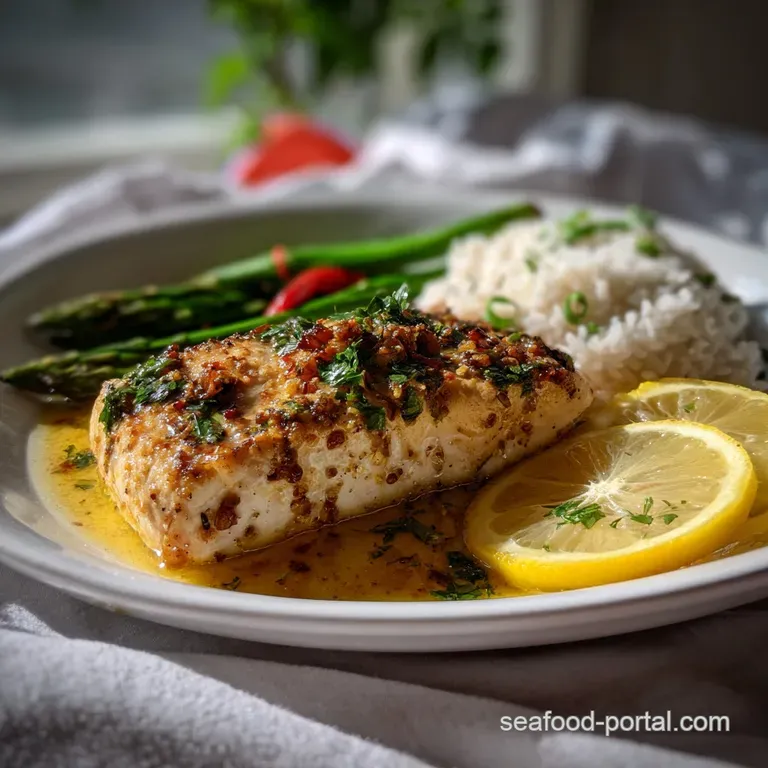
- Effort/Time: Minimal prep (10 minutes) / Rapid execution
- Flavor Hook: Zesty lemon-garlic butter with a smoky paprika finish
- Perfect for: Low-carb weeknight dinners or high-protein meal prep
- The Culinary Physics Behind Moisture Retention and Flavor Infusion
- Thermal Guidelines and Precise Timing for Success
- The Alchemy of Umami: Selecting Your Elements
- Technical Tools for Superior Heat Distribution
- Execution Protocol: From Preparation to Plating
- Overcoming Texture Failures and Temperature Fluctuations
- Flavor Architecture: Creative Modifications for Diverse Palates
- ⚗️ The Scaling Lab: The Physics of Quantity
- Common Myths
- Preservation Protocols and Thermal Recovery Methods
- Synergistic Pairings for a Balanced Seafood Plate
- Recipe FAQs
- 📝 Recipe Card
There is nothing quite as disheartening as spending money on premium fillets only to pull a tray of gray, rubbery protein out of the oven. I’ve been there staring at a piece of fish that had the texture of a pencil eraser because I didn't understand the narrow window between "raw" and "ruined." Wasted money and a ruined dinner are the ultimate kitchen gut-punches.
I’ve definitely paid my dues to the culinary gods by destroying at least a dozen batches of this Baked Mahi Mahi Recipe before finding the sweet spot. Early on, I used to think more time meant better safety, but I ended up with dessicated fibers that required a gallon of water to swallow.
It wasn't until I started treating fish like a thermodynamic equation accounting for surface moisture and internal energy that everything clicked.
The secret to this Baked Mahi Mahi Recipe isn't some expensive gadget; it’s the science of protein denaturation and moisture management. By patting the fish bone dry and using a high fat barrier like Kerrygold Unsalted Butter, we create a thermal shield that allows the interior to reach a velvety 145°F (63°C) without the exterior turning into leather.
You’re going to see a mahogany tinged crust and feel the segments shatter under your fork. Let’s crack on.
The Culinary Physics Behind Moisture Retention and Flavor Infusion
- Albumin Management: Slow heating lean fish causes muscle fibers to contract violently, squeezing out white albumin (moisture) and leaving the fish dry.
- Emulsion Stability: Mixing 2 tbsp lemon juice with 3 tbsp melted butter creates a temporary emulsion that coats the fish, preventing evaporation during the 15 minutes bake time.
- Surface Desiccation: Removing surface water via paper towels allows the 1 tbsp extra virgin olive oil to conduct heat directly to the protein rather than wasting energy evaporating surface moisture.
- Thermal Buffering: The 3 cloves garlic and smoked paprika suspended in fat create a "crust" that slows down the heat penetration, ensuring even cooking.
Thermal Guidelines and Precise Timing for Success
This Baked Mahi Mahi Recipe is a high speed protocol designed for efficiency. Unlike a slow roasted brisket, fish is unforgiving. You are working within a 25 minutes total time window. If you're looking for other quick, high impact seafood, you might also enjoy an Authentic Japanese Shrimp recipe for a different flavor profile.
| Parameter | Value |
|---|---|
| Preparation Time | 10 minutes |
| Active Cooking Time | 15 minutes |
| Target Internal Temperature | 145°F (63°C) |
| Yield | 4 Servings |
The Alchemy of Umami: Selecting Your Elements
Selecting your ingredients is the first step in the Baked Mahi Mahi Recipe. high-quality fat and fresh aromatics are non-negotiable for success.
Ingredient Chemistry Breakdown
| Ingredient | Chemical/Physical Role (Science) | The Pro Secret (Why This Matters) |
|---|---|---|
| Mahi Mahi Fillets | Myofibrillar protein structure | Lean fish requires external fat (butter/oil) to prevent fiber tightening. |
| Lemon Juice | Acid induced denaturing | Breaks down connective tissue for a tender, velvety mouthfeel. |
| Smoked Paprika | Phenolic compound infusion | Provides "fire roasted" aromatic cues without the need for a grill. |
| Garlic | Sulfur based flavor precursors | Allieae compounds intensify when heated in fat, building deep umami. |
- 4 Mahi Mahi Fillets (6 oz / 170g each): Why this? Lean, firm fleshed fish that holds its shape under high heat. Substitute: Halibut or Cod (slightly more fragile).
- 1 tbsp Extra Virgin Olive Oil: Why this? High smoke point and conductive properties for surface browning. Substitute: Avocado oil for a neutral profile.
- 3 tbsp Kerrygold Unsalted Butter (melted): Why this? Milk solids provide browning (Maillard) and rich mouthfeel. Substitute: Ghee for a nuttier, dairy-free-ish option.
- 3 Cloves Garlic (minced): Use a Microplane for a paste like consistency to maximize surface area.
- 2 tbsp Fresh Lemon Juice: The citric acid balances the 13.2 g of fat per serving.
- 1 tsp Diamond Crystal Sea Salt: Fine grains dissolve faster into the protein matrix.
- 1/2 tsp Smoked Paprika: Adds depth and a mahogany visual cue.
- 1/2 tsp Lemon Zest: Contains essential oils (limonene) that juice lacks.
- 1/2 tsp Cracked Black Pepper: Provides a sharp, biting counterpoint to the buttery sauce.
- 1 tsp Fresh Parsley: Finely chopped for a hit of chlorophyll and freshness.
Technical Tools for Superior Heat Distribution
Using the right gear ensures the Baked Mahi Mahi Recipe cooks evenly without sticking.
- Lodge 12 inch Cast Iron Skillet or Heavy Rimmed Baking Sheet: Heavy gauge metal retains thermal mass, preventing temperature drops when the cold fish hits the pan.
- Fish Spatula (Offset): The thin, flexible edge slides under the delicate fillets without tearing the cooked protein.
- Instant Read Thermometer (Thermapen): The only way to guarantee you pull the fish at exactly 145°F.
- Stainless Steel Mixing Bowl: For whisking the lemon butter emulsion.
Execution Protocol: From Preparation to Plating
Follow these steps precisely. This Mahi Mahi Recipe: Healthy and Delicious relies on the order of operations to maintain moisture.
- Preheat the oven to 400°F (200°C) to ensure immediate heat transfer.
- Dry the 4 Mahi Mahi Fillets thoroughly with paper towels until the surface feels tacky, not slippery. Note: Dry surface prevents steaming.
- Brush fillets with 1 tbsp extra virgin olive oil to create a conductive heat layer.
- Whisk 3 tbsp melted butter, 3 cloves minced garlic, 2 tbsp lemon juice, 1/2 tsp smoked paprika, 1 tsp sea salt, and 1/2 tsp pepper until the sauce is opaque and slightly thickened.
- Place fish on a Lodge baking sheet, ensuring at least 2 inches of space between fillets to allow for airflow.
- Spoon the garlic butter mixture over each fillet until fully submerged in the emulsion.
- Bake for 12–15 minutes until the thickest part of the fish reaches 145°F and the flesh is opaque.
- Rest the fish for 3 minutes until the juices redistribute throughout the muscle fibers.
- Garnish with 1/2 tsp lemon zest and 1 tsp fresh parsley until the aroma of fresh citrus hits your nose.
- Serve immediately while the butter is still in its liquid, velvety state.
Overcoming Texture Failures and Temperature Fluctuations
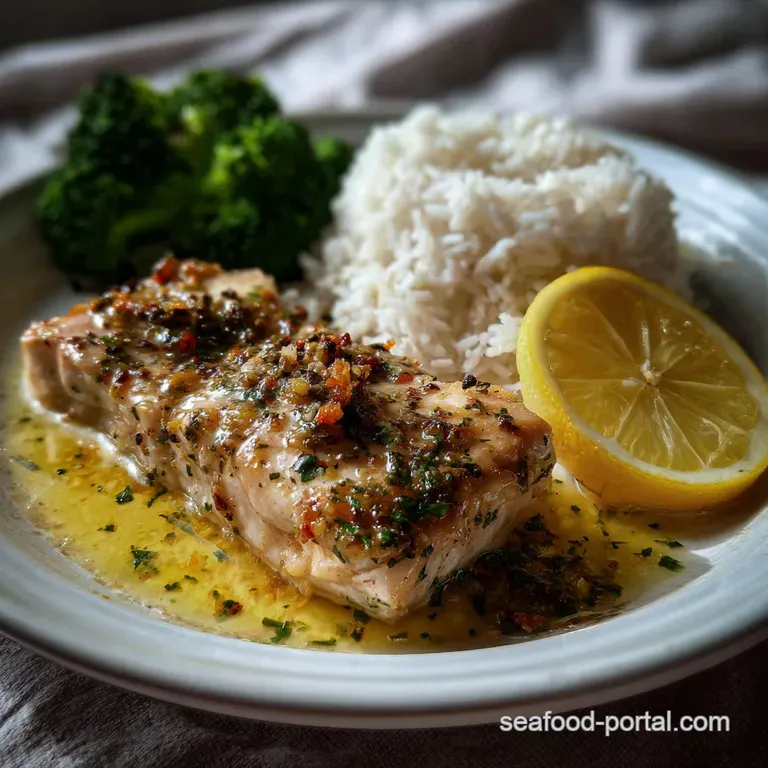
If your Mahi Recipe: Healthy and Delicious isn't hitting the mark, it's usually a matter of thermodynamics or moisture.
Why Your Mahi Mahi is Tough
When fish is subjected to heat for too long, the proteins undergo excessive denaturation. The muscle fibers shrink and squeeze out all internal moisture, resulting in a texture similar to leather. This is often caused by relying on a timer rather than an internal temperature probe.
| Problem | Root Cause | The Fix | Pro Protocol |
|---|---|---|---|
| White "Gunk" on Top | Protein (Albumin) squeezing out | Reduce oven temp or shorten cook time. | Pull fish at 140°F; let carryover reach 145°F. |
| Soggy Bottoms | Crowded pan/excess moisture | Use a wire rack or ensure fish is bone dry. | Pat dry 3x before oiling. |
| Bland Center | No salt penetration | Salt the fish 10 mins before baking. | Use Diamond Crystal for better coverage. |
Why Your Fish Sticks to the Pan
The proteins in fish are highly reactive. If the pan isn't properly lubricated or the temperature is too low, the fish will bond with the metal. This is common in this Baked Mahi Mahi Recipe if the oil is skipped.
Flavor Architecture: Creative Modifications for Diverse Palates
This Recipe: Healthy and Delicious is a blank canvas. You can alter the "why" of the recipe by changing the aromatics.
Mediterranean Flavor Twist
Swap the smoked paprika for 1 tsp of dried oregano and add 2 tbsp of capers to the butter sauce. The capers provide bursts of acidity that cut through the 251 kcal of richness. If you like this profile, you'll love the briny notes in my Cozy Clam Chowder recipe.
Spicy Tropical Style
Introduce 1/4 tsp of cayenne pepper and replace the parsley with fresh cilantro. This shifts the Baked Mahi Mahi Recipe toward a Pacific rim profile.
dairy-free Swap
If you need to skip the butter, use full fat coconut milk (the solid part) mixed with lime juice. It provides the same 13.2 g of fat but with a tropical, nutty finish.
⚗️ The Scaling Lab: The Physics of Quantity
When you double this Baked Mahi Mahi Recipe, you cannot simply double the time.
- The Evaporation Paradox: If you use one large pan for 8 fillets, the moisture released will create a steam filled environment. This prevents the Maillard reaction. Mandatory: Use two separate baking sheets.
- Flavor Saturation: For the spices, scale to 1.5x (NOT 2x). Smoked paprika and garlic can become acrid if doubled linearly in a confined oven space.
- Thermal Mass: 8 cold fillets will drop your oven temperature by up to 50°F initially. Preheat your oven for an extra 20 minutes to saturate the oven walls with heat before loading the fish.
- Carry Over Cooking: A larger tray of fish holds more collective heat. Pull the fillets at 138°F when doubling, as the thermal mass of the group will raise the final temperature more than a single fillet would.
Common Myths
- Myth: You must flip the fish halfway through.
Truth: Flipping fish in the oven is a recipe for structural collapse. The heat circulates around the fillets; leave them alone to maintain integrity.
Myth: Frozen fish is inferior to fresh.
- Truth: "Fresh" fish in most stores is actually "previously frozen." Flash frozen Mahi is often higher quality because it's processed at sea, stopping the enzymatic breakdown immediately.
Preservation Protocols and Thermal Recovery Methods
Storage
Store leftovers in an airtight glass container in the fridge for up to 2 days. The 31.6 g of protein will stay stable, but the texture will firm up significantly as the proteins continue to tighten in the cold.
Reheating
Never use the microwave it's a "Recipe: Healthy and Delicious" killer. Reheat in a 300°F oven with a splash of water and a cover (foil) to create a steam chamber. This prevents the fish from turning into jerky.
💡 ZERO WASTE
Don't discard the lemon rinds. Transform: Toss them into a jar with salt to make preserved lemons. Science: The salt breaks down the bitter pith, leaving you with an umami rich condiment that is incredible in a Garlic Butter Sauce recipe.
Synergistic Pairings for a Balanced Seafood Plate
To complete this Recipe: Healthy and Delicious, you need sides that respect the 1.2 g of carbohydrates.
- Asparagus with Hollandaise: The fat in the sauce mirrors the butter in the Mahi Recipe: Healthy and Delicious.
- Quinoa Pilaf: Use the leftover garlic butter from the pan to season the grains.
- Smashed Potatoes: The crispy edges provide a textural contrast to the flaky, velvety fish.
Trust me, once you master the timing on this Baked Mahi Mahi Recipe, you'll never settle for dry, overcooked seafood again. The combination of over high heat conductive oil and the protective butter lemon emulsion ensures a result that's structurally sound yet melts on the tongue.
This Baked Mahi Mahi Recipe: Healthy and Delicious is your new baseline for seafood excellence. Let's get cooking!
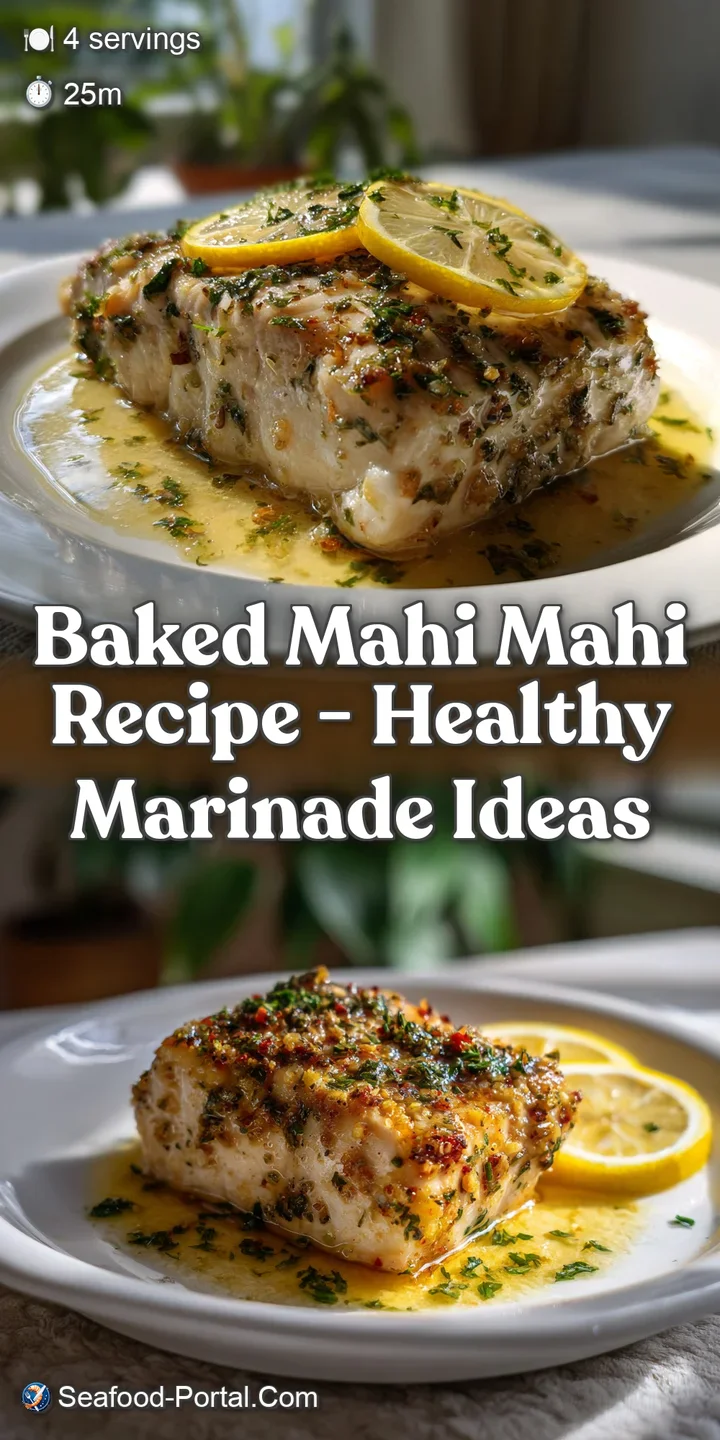
Recipe FAQs
how to make baked mahi mahi?
Pat fillets completely dry, brush with oil, then spoon lemon garlic butter over top. Bake at 400°F (200°C) until the internal temperature reaches 145°F (63°C), usually 12 15 minutes. If you enjoyed mastering the flavor infusion technique here, see how the same principle works when layering aromatics in our Baked Lobster Tail with Garlic Lemon Butter Sauce.
how to make grilled mahi mahi?
Use high, direct heat; clean and oil the grates well. Mahi requires high thermal transfer to achieve char quickly without drying the center. Aim for a sear followed by moving the fish to indirect heat to finish to 145°F.
how to prepare baked mahi mahi?
Thoroughly pat fish dry using paper towels to promote browning. Surface moisture must be removed; otherwise, the heat energy is wasted evaporating water instead of cooking the protein.
- Season lightly with salt pre-bake
- Apply fat coating evenly
- Use a thin baking sheet for minimal thermal lag
how long to cook baked mahi mahi from frozen?
Add 50% more time, aiming for 145°F internal temperature. Frozen protein drastically lowers the initial pan temperature, increasing thermal recovery time needed to reach full denaturing. It is best practice to thaw first, but if cooking from frozen, monitor closely after 20 minutes.
how to oven cook mahi mahi?
Bake at 400°F (200°C) using a high fat coating to buffer heat. The high oven temperature quickly sets the exterior proteins, creating a barrier against moisture loss. This method relies on accurate internal temperature checks, similar to checking doneness for a perfect filling consistency in recipes like Crab Imperial Recipe: The Ultimate Chesapeake Classic.
Can I use frozen mahi mahi fillets?
Yes, though thawing overnight in the refrigerator is ideal. Thawing slowly minimizes cellular damage from ice crystals, leading to less weep/moisture loss during the final bake. Quick thawing in water often results in a mushier texture upon cooking.
Is baking better than pan-searing for mahi mahi?
Baking yields more consistent internal moisture retention. Pan-searing relies on perfect stovetop management to prevent burning the outside before the center cooks through. Baking uses ambient heat, allowing for a more forgiving thermal gradient toward the core.
Baked Mahi Mahi Recipe Zesty
Ingredients:
Instructions:
Nutrition Facts:
| Calories | 251 kcal |
|---|---|
| Protein | 31.6 g |
| Fat | 13.2 g |
| Carbs | 1.2 g |
| Fiber | 0.2 g |
| Sugar | 0.3 g |
| Sodium | 615 mg |
