The Speedy Seafarer Sesamecrusted Ahi Tuna Steaks with Soyginger Drizzle
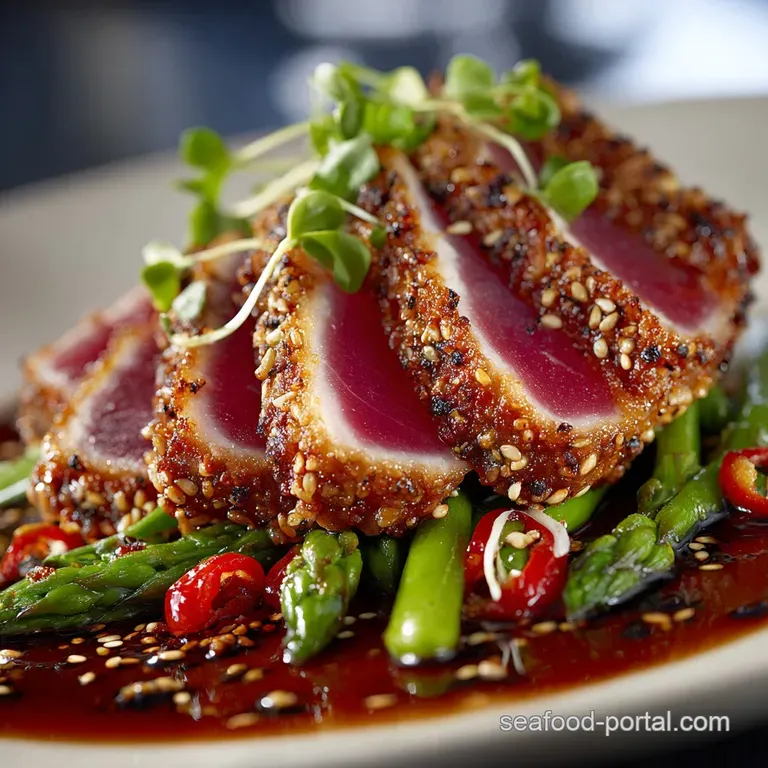
Why This 15-Minute Ahi Tuna Steak Recipe Beats Takeout
There are few dinners that deliver true restaurant quality and flavour complexity with the speed of this lightning fast recipe. In the time it takes most people to decide what delivery app to use, you can have two beautifully plated, perfectly cooked Ahi Tuna Steaks ready to enjoy.
This technique is designed to maximize flavour while minimizing effort, proving that gourmet seafood doesn't require hours in the kitchen. Not only is this an incredibly satisfying meal, but as a lean, protein rich dish, it excels as a naturally Low Carb Ahi Tuna Recipe .
We combine a high heat sear for texture with a vibrant, sticky glaze, ensuring every bite is a balanced interplay of crunch and umami sweetness. The entire process, from preparing the quick sauce to resting the fish, totals less than 20 minutes, making it the ultimate weeknight culinary victory.
Decoding the Best Quality Ahi Tuna for Searing
Because we are serving this fish with a raw or near raw center, the quality and preparation of the protein are non-negotiable. The term "Ahi" typically refers to Yellowfin tuna, prized for its firm texture and mild, almost beef like flavour.
For complete confidence, especially when preparing Pan Seared Ahi Tuna Steak , you must always source sushi grade tuna. This indicates that the fish has been handled, processed, and frozen to standards safe for raw consumption.
Look for two uniform steaks, each approximately 6 ounces and cut to a thick 1 inch (2.5 cm) width. This thickness is crucial because it allows enough thermal mass to maintain a cool center while the exterior quickly forms a crust the foundation of a perfect sear.
Mastering the Medium Rare Sear: A High Heat Tutorial
The key difference between a great Ahi Tuna Recipe Easy and a mediocre one lies entirely in the searing technique. This is where precision and confidence override complexity. Since tuna overcooks in seconds, we utilize extreme, high heat.
The goal is to create a thin, opaque layer of cooked fish on the exterior (a crisp, savory crust) while preserving the cool, vibrant red interior. We recommend aiming for rare to medium rare; searing for just 60 to 90 seconds per side is typically sufficient to achieve this ideal gradient.
If you allow the pan heat to drop, the fish will steam rather than sear, resulting in a dull, grey exterior and a tougher texture. Don't fear the heat it’s your best friend in achieving that beautiful, crunchy contrast.
Gathering Your Seafarer Supplies: Essential Ingredients and Tools
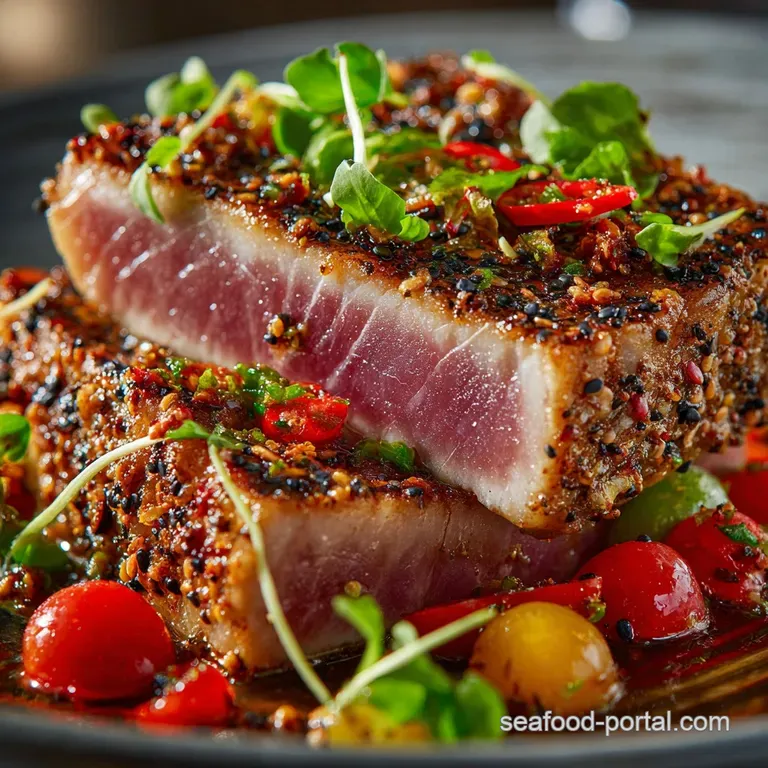
While the cooking time is minimal, prep work involves careful selection of quality components. Our streamlined ingredient list ensures maximum impact with minimal fuss, focusing on fresh ginger, quality soy sauce, and high smoke-point oil.
Building the Sticky, Umami Rich Soy-Ginger Drizzle
Unlike many recipes that require a lengthy ahi tuna steak marinade to infuse flavour, we opt for a rapid reduction drizzle that delivers concentrated flavour instantly. This sauce elevates the simple seared fish by adding crucial sweetness and viscosity.
To prepare it, whisk together low-sodium soy sauce (or Tamari for a gluten-free option), rice vinegar (unseasoned), a touch of honey or maple syrup for sweetness, and generous amounts of freshly grated ginger and minced garlic.
Simmering this mixture gently over medium heat for about three to four minutes concentrates the flavours and reduces the liquid by about one-third, leaving you with a perfectly syrupy, savory finish line sauce ready to be drizzled over the finished Ahi Tuna Steaks .
The Double Duty Sesame Crust: Black, White, and Brilliant
The sesame crust serves two important purposes: it provides a stunning visual contrast and a necessary textural crunch to counter the tender fish. We use a 50/50 blend of black and white sesame seeds.
The white sesame seeds provide the classic toasted flavour, while the black seeds offer a dramatic, sophisticated aesthetic and a slightly earthier crunch. Mixing these seeds on a shallow plate creates the perfect bed for coating the tuna immediately after seasoning, ensuring a thick, comprehensive layer adheres to all sides before they hit the heat.
Cast Iron vs. Stainless Steel: Choosing Your Searing Weapon
The equipment used for searing is just as vital as the heat level. For maximum heat retention and even cooking across the surface, a heavy bottomed pan is mandatory. A cast iron skillet is the undisputed champion here, as it gets screaming hot and stays that way, making it ideal for the swift, high intensity Pan Seared Ahi Tuna Steak technique.
If you don't have cast iron, a high-quality stainless steel pan will suffice, provided you allow it ample time to preheat completely. In addition to the searing pan, you will need a small saucepan specifically for the sauce reduction and a set of long tongs for safely maneuvering the fish in the sizzling oil.
Related Recipes Worth Trying
- Perfect Seared Ahi Tuna with Marinade Zesty SoySesame Crust — Master the Seared Ahi Tuna with Marinade recipe Achieve a thin flavourpacked crust and rubyred centre in just 35 minutes Our Ahi Tuna Steak Recipe Seared is...
- Proper Ahi Tuna Poke Recipe The 15Minute Hawaiian Classic — Master the perfect buttery classic Tuna Poke Bowl This foolproof 15minute Ahi Tuna Poke recipe focuses on clean cuts a vibrant marinade and pristine texture...
- The Best Homemade Hamburger Steaks with Silky Onion Gravy Recipe — This classic Hamburger Steaks with Gravy recipe delivers tender patties and deep flavourful mushroom and onion gravy perfect for spooning over creamy mashed...
step-by-step Guide to Perfectly Seared Ahi Tuna Steaks
Achieving perfection requires strict adherence to this sequence. If you follow these three steps precisely, you will succeed in creating a truly magnificent dish.
Prepping the Steaks: Drying, Seasoning, and Crusting Protocol
First, the most crucial preparatory step: using kitchen paper, meticulously pat the 6-ounce Ahi Tuna Steaks completely dry on all surfaces. Any remaining surface moisture will cause the temperature in the pan to drop and will impede the formation of a crisp crust.
Once dry, season the fish evenly with kosher salt and freshly ground black pepper. Next, press all four sides (the top, bottom, and edges) of the seasoned steaks firmly into your combined sesame seeds until they are robustly coated.
Do this just before searing to prevent the salt from drawing moisture out of the fish and compromising the crust integrity.
The 90-Second Sear Rule: Achieving Crisp Edges and Rare Centers
Place your heavy bottomed pan over high heat and add two tablespoons of neutral, high smoke-point oil (like canola or grapeseed). Wait patiently until the oil is shimmering and just begins to faintly smoke. This confirms the pan is ready for the sear. Carefully place the crusted tuna steaks into the pan.
Do not touch or move them. Allow them to sear undisturbed for 60 to 90 seconds. Flip using tongs and repeat the sear on the second side. The outer layer should look golden, deeply crusted, and opaque, while the edges show only a thin, grey band of cooked fish.
Immediately remove the Ahi Tuna Recipe Seared steaks from the pan and place them on a cutting board to rest for two minutes. This brief rest period helps the internal temperature stabilize and keeps the flesh tender.
Carving the Steaks and Drizzling the Finish Line Sauce
The final step is presentation. Using a sharp carving knife, slice the rested tuna steaks against the grain into thin strips, ideally about a quarter inch thick. Slicing against the grain ensures maximum tenderness.
Arrange the beautifully sliced fish on your plate and lightly drizzle the reserved Soy-Ginger Reduction over the top. The sauce is powerful, so use it sparingly to complement, not drown, the delicate flavour of the Ahi Tuna Steak . Serve immediately while the crust is still warm and crisp.
Beyond the Plate: Storage, Safety, and Serving Suggestions
This dish is meant to be enjoyed immediately, but understanding proper food handling and exploring variations ensures ongoing success and versatility.
Navigating Leftovers: Is Seared Ahi Tuna Safe the Next Day?
Since this Ahi Tuna Steak is served rare, safety is paramount. The recommendation for consuming seared tuna leftovers is primarily to eat them cold, provided the fish was truly sushi grade and handled properly throughout the process.
The USDA advises caution with reheating rare seafood, as attempting to reheat will inevitably cook the center, resulting in a rubbery texture and defeating the purpose of the initial perfect sear.
If you have leftovers, they are best sliced and served cold atop a salad or integrated into a chilled Ahi Tuna Bowl Recipe the following day, provided they were refrigerated quickly and securely. Always trust your senses; if the fish smells remotely ‘fishy’ the next day, discard it.
Alternative Crusts and Sauces for Maximum Flavour Flexibility
While the sesame crust is a classic choice, there are many ways to diversify your Ahi Tuna Recipe Seared experience. For a spicy kick, replace the sesame seeds with Shichimi Togarashi, the Japanese seven spice blend.
For a less traditional approach, try a Mediterranean crust using finely chopped lemon zest, oregano, and parsley. If you are looking for a completely different cooking method, while it won't yield the same deep crust, preparing your ahi tuna steak air fryer style (after a light oil spray) offers a lean, hands off approach to cooking the steaks through to medium.
What to Serve Alongside Your Speedy Sesame Crusted Ahi
To transform your sesame crusted tuna into a balanced, complete meal, pairing it with complementary textures and flavours is key. Simple steamed Jasmine rice works beautifully to soak up the residual sauce, or for a lighter, refreshing contrast, consider a vibrant slaw of shredded cabbage and carrots dressed in a mild rice vinegar vinaigrette.
Another excellent side is quickly wilted baby spinach or bok choy, sautéed with a whisper of garlic and a dash of rice vinegar. For beverage pairings, a crisp, high acid white wine, such as Sauvignon Blanc, cuts through the richness of the fish and complements the ginger soy sauce perfectly.
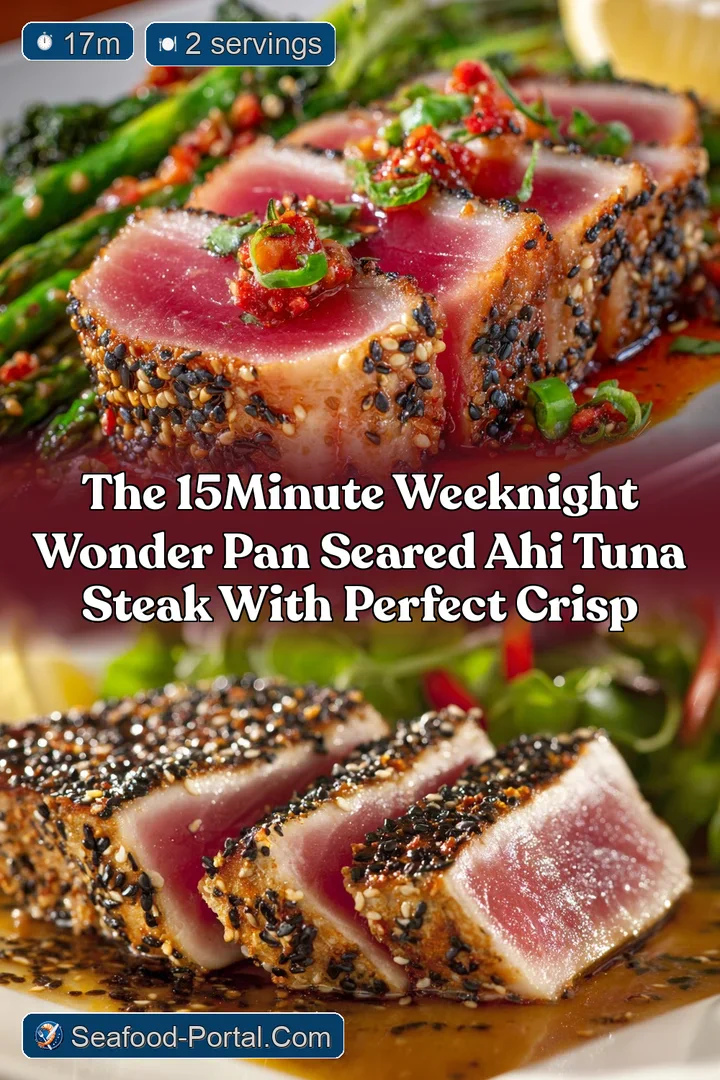
Recipe FAQs
Is sushi grade tuna really necessary when making Ahi Tuna Steak at home?
Yes, it is absolutely non-negotiable, mate! Because this recipe relies on serving the Ahi Tuna Steak extremely rare or raw in the centre, you must ensure the fish has been handled and flash frozen specifically to eliminate any potential parasites.
Using regular supermarket tuna for a rare sear is a big safety risk; stick to certified sushi grade for proper peace of mind.
My pan gets hot, but how do I guarantee that perfect crispy sesame crust?
The secret here lies in two things: heat and dryness. First, you must meticulously pat the tuna bone dry with kitchen paper before seasoning, as moisture is the absolute enemy of crispiness. Secondly, your pan needs to be smoking hot seriously, crank up the gas!
This allows the sesame crust to caramelise and crisp instantly without penetrating and overcooking the fish’s interior.
I need to save time! Can I prep the sauce or crust the tuna ahead of cooking?
You can definitely prep the Soy-Ginger Reduction earlier; it keeps beautifully in an airtight container in the fridge for several days, making weeknight cooking a doddle. However, do not crust the tuna until the very last moment before searing.
Salt and seasoning draw moisture out of the fish over time, which would result in a soggy crust and a poor sear.
How can I tell if my tuna is perfectly rare without fiddling about with a food thermometer?
Keep your eyes peeled for the visual cues on the sides of the steak. For a recommended rare sear, look for a thin, opaque grey/cooked ring running only about a quarter inch deep around the edges. The rest of the steak should still look vibrant ruby red and raw.
If that grey cooked ring starts moving toward the centre, you’ve gone too far remember, the change happens in mere seconds, so timing is key!
I’ve got leftovers how long will this beautiful seared tuna keep in the fridge?
While best eaten immediately, cooked tuna leftovers are perfectly safe to enjoy cold the next day, perhaps sliced over a salad, but they should be consumed within 48 hours maximum. Be aware that the tuna will continue to ‘cook’ slightly from residual heat and oxidization once stored.
This means the centre will turn a little greyer and firmer than when you first carved it, losing some of that vibrant rare texture.
15minute Pan Seared Ahi Tuna Steak Recipe
Ingredients:
Instructions:
Nutrition Facts:
| Calories | 1848 kcal |
|---|---|
| Protein | 45.2 g |
| Fat | 52.5 g |
| Carbs | 116.6 g |
| Fiber | 27.5 g |
| Sodium | 2267 mg |
